In reality, the plan now is for us to travel from Khiva into Turkmenistan. But that’s such a special experience that we’ll come back to it a little later in a separate post. Instead, we’ll skip ahead to the next city in the Uzbek string of gems along the Silk Road: Bukhara. It’s perhaps the most touristy of them all, but on the other hand, it’s more inviting and feels more like a regular city, with local life, cafés, and restaurants.
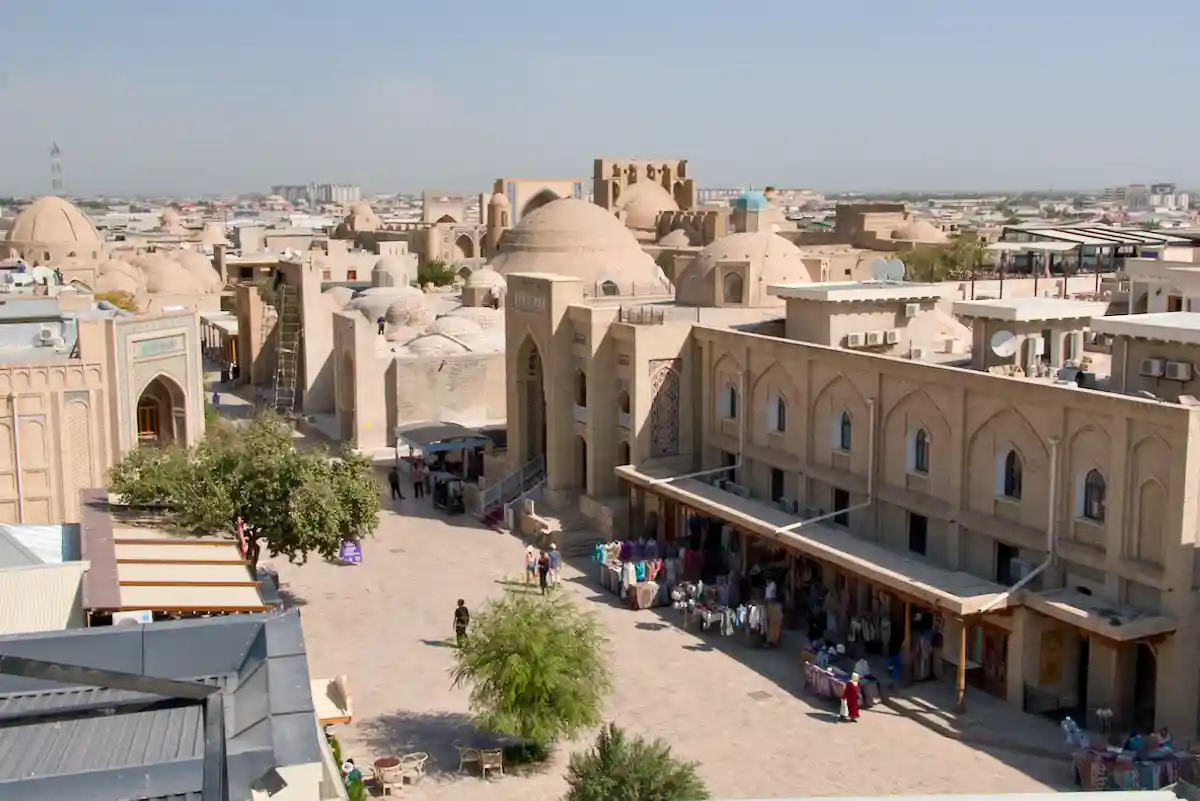
We’re staying in a fantastic, central location in Bukhara. When we open the bedroom window in the morning, we’re greeted by this view:
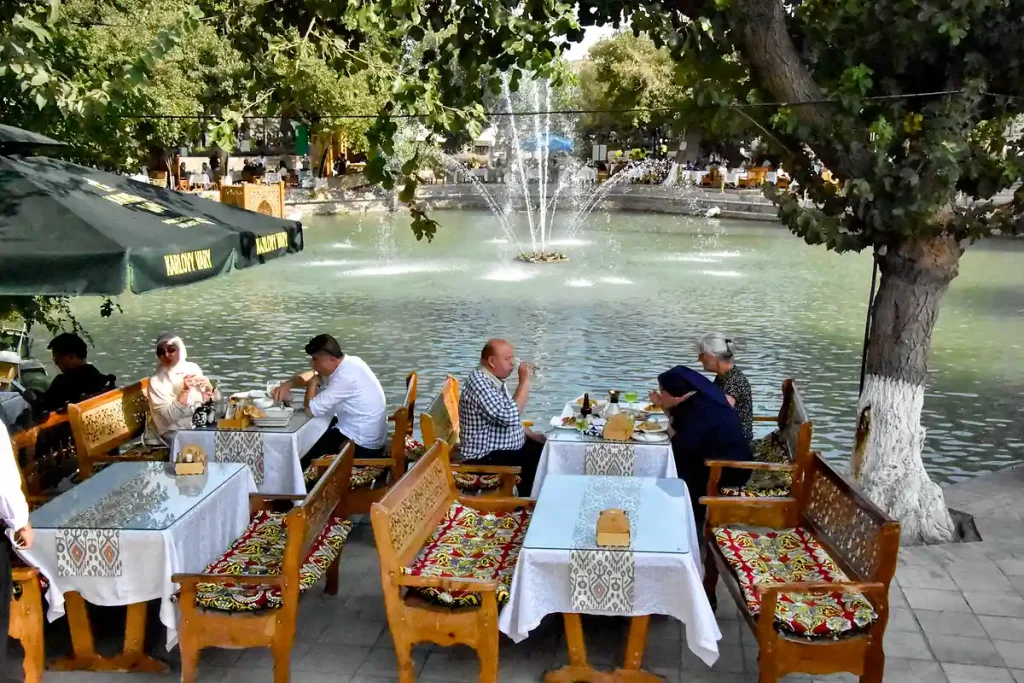
Bukhara’s sights are scattered all over the place and aren’t hidden behind city walls. The upside is that we get to see more of the city—both its squares and its back streets. We find a lovely spot to hang out at Labi-hauz, a pond surrounded by outdoor dining areas. Ponds like this can be found near many old religious buildings, but this is the only one with water in it. It’s refreshing and cozy after a day of walking in the heat!
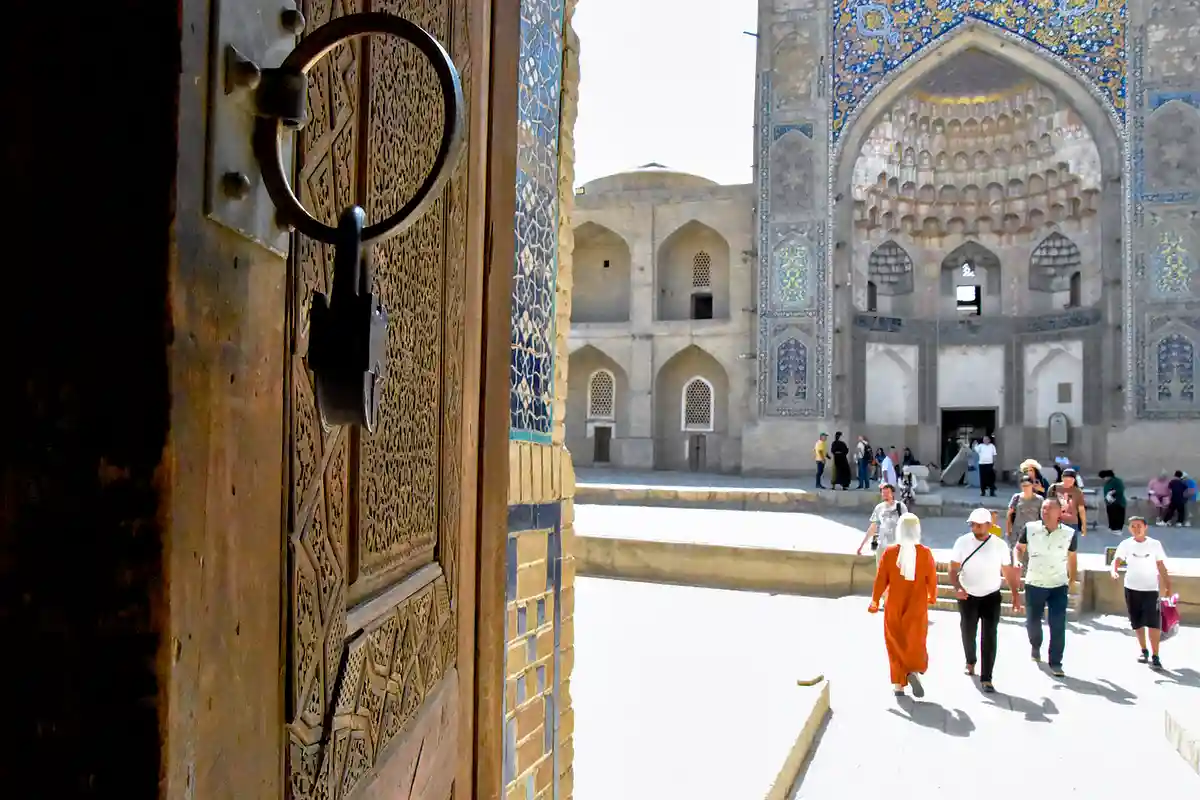
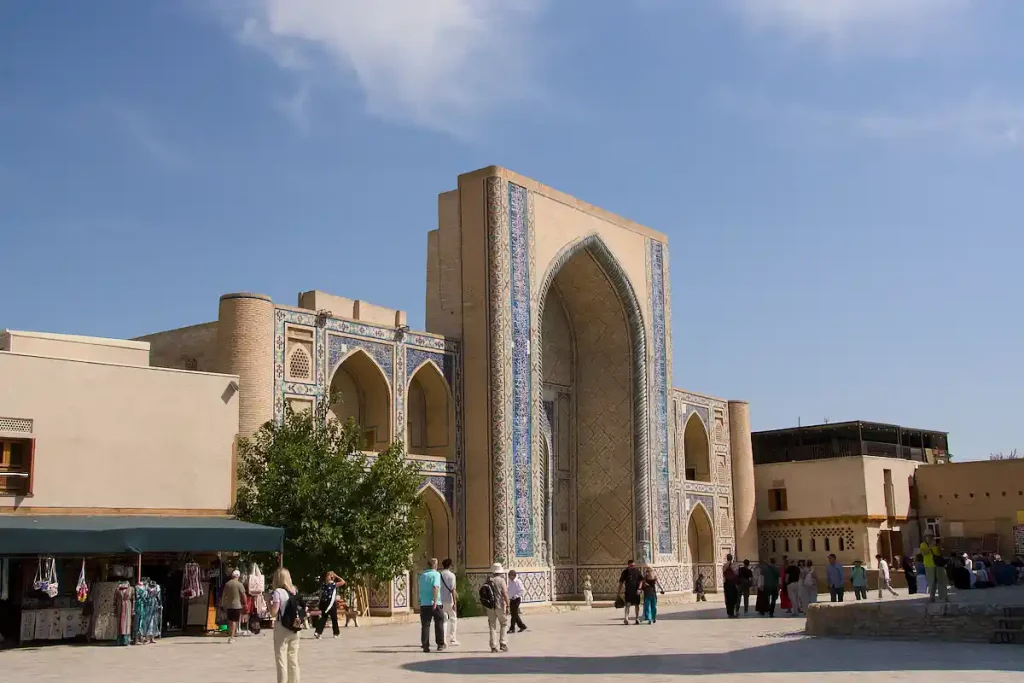
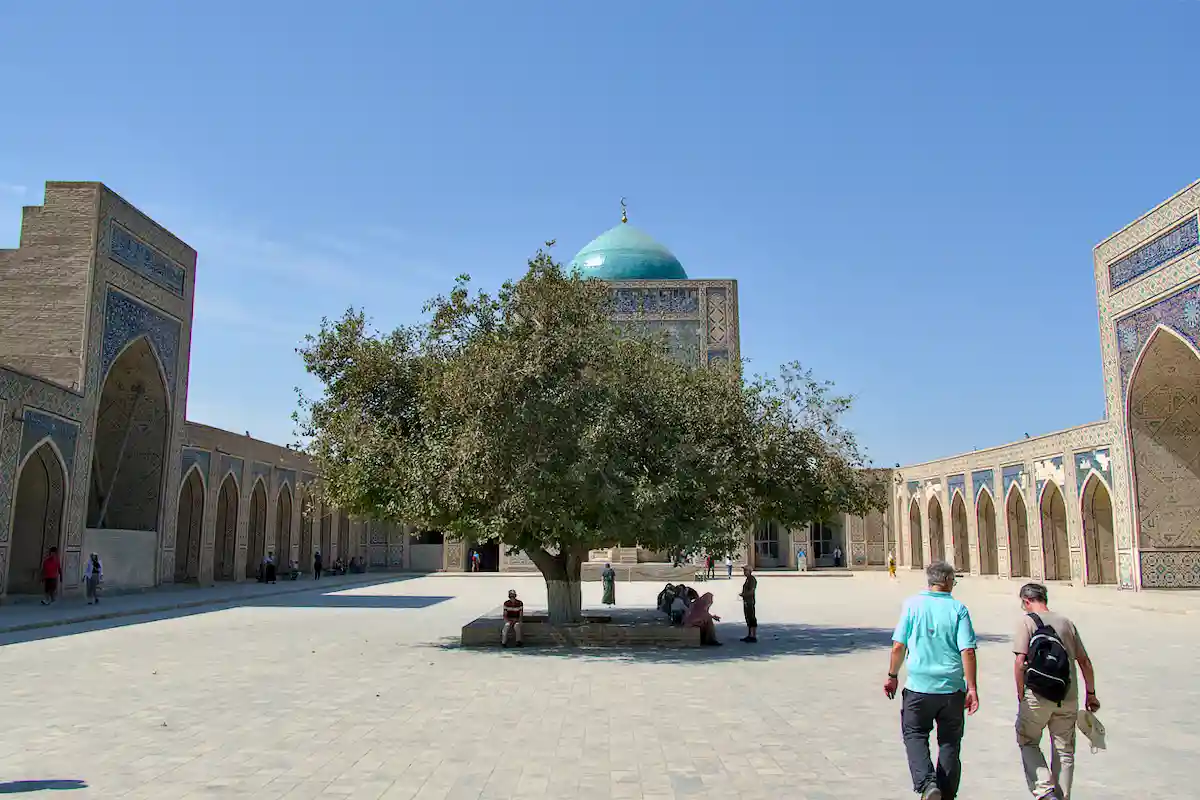
Mosques and madrasas are the main attractions in Bukhara as well. Just a few steps from the hotel, we find the famous Abdulaziz Khan Madrasa and Ulugbek Madrasa, which stand like mirror images of each other on opposite sides of the street. The Ulugbek Madrasa, built in 1417, is the oldest surviving madrasa in Central Asia.
A madrasa is essentially a Koranic school, but during Ulugbek’s reign it was more like a university. Here, students studied mathematics, astronomy, philosophy, and medicine. Eighty students lived and studied here, many of them sons of the social elite who were being educated to become the next generation of leaders. Engraved on the gate are the words: “It is obligatory for every Muslim man and woman to pursue an education.” Ulugbek, who was the grandson of Timur Lenk, was himself one of the foremost astronomers of his time.
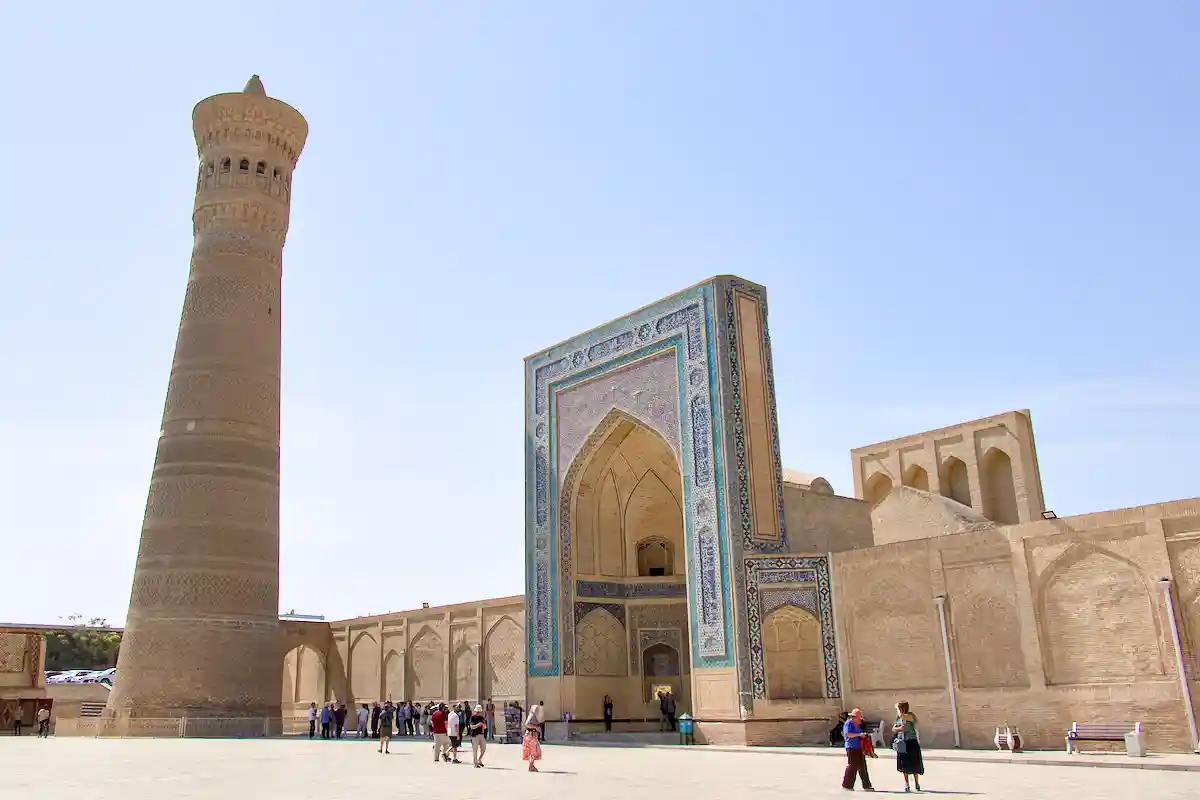
The Kalyan (or Kalon) Minaret is to Bukhara what the Kalta Minor is to Khiva—an iconic structure visible across much of the city. Standing 48 meters tall, it was built in 1127 and was used not only to call the faithful to prayer but also to warn of danger or to gather people for meetings where the khan’s decrees would be read aloud. The tower was damaged when the Red Army attacked and captured Bukhara in 1920, but was restored in the years that followed.
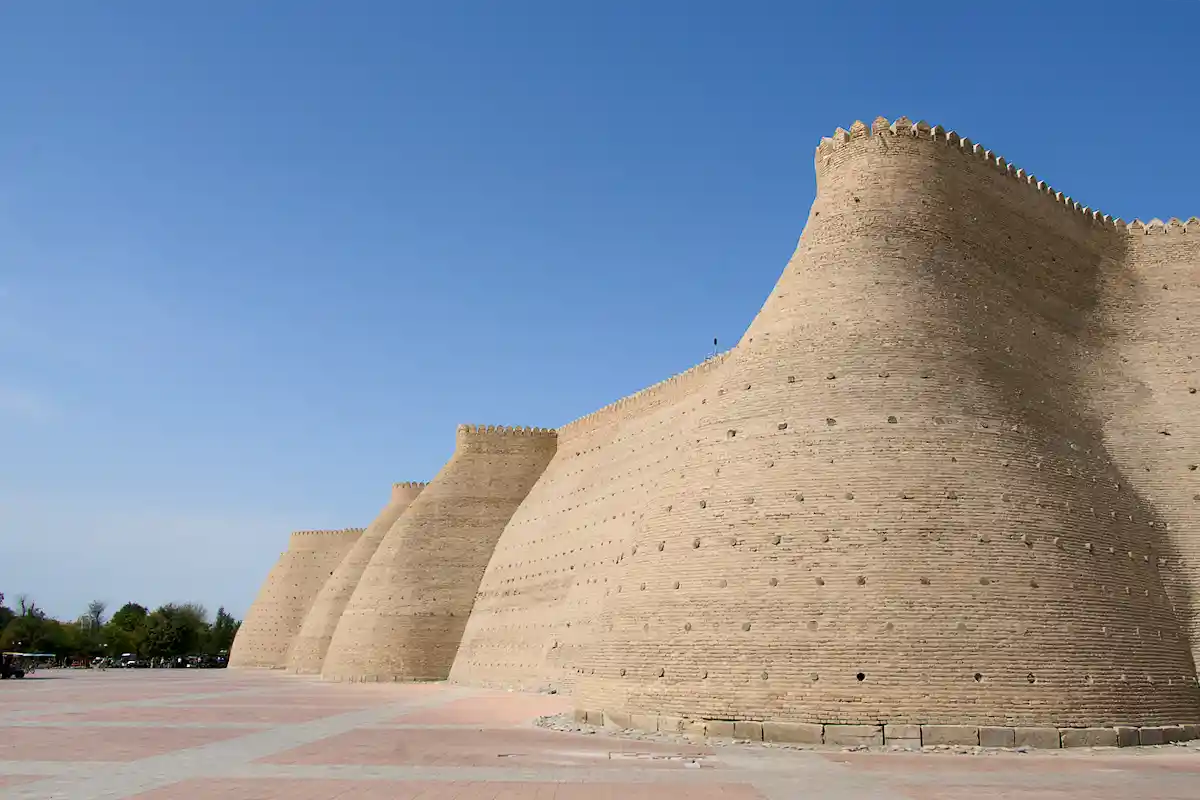
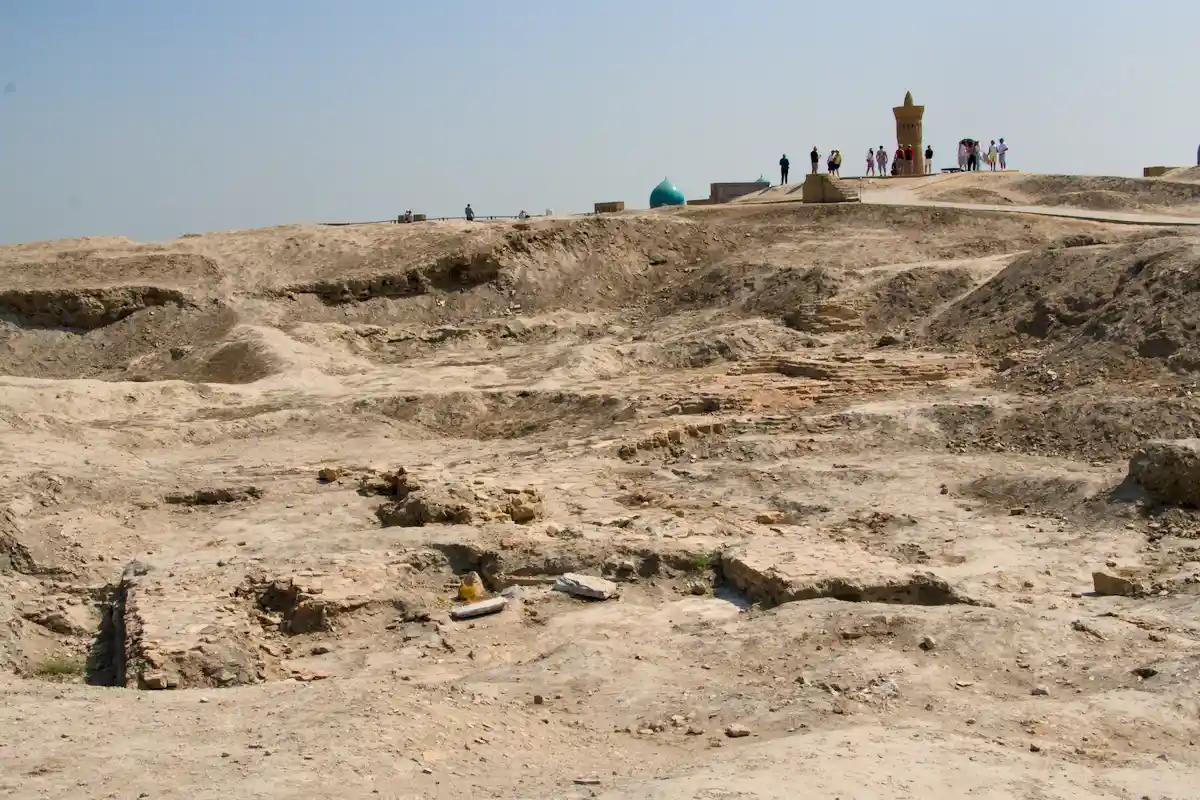
What was, however, reduced to ruins for all time during that same attack was Ark, Bukhara’s fortress, with walls similar to those surrounding Khiva’s Itchen Kala. Today, there is only an administrative building and open excavation sites there. It looks impressive from the outside but is hardly worth a visit.
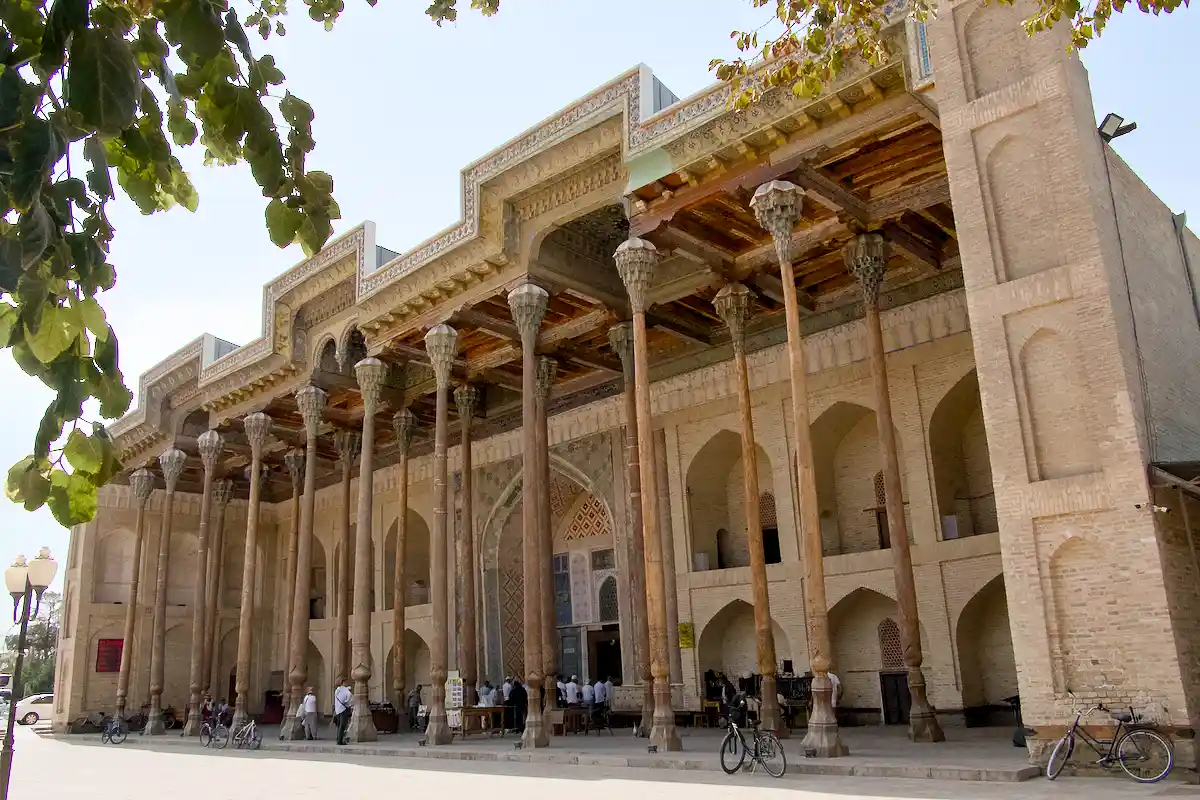
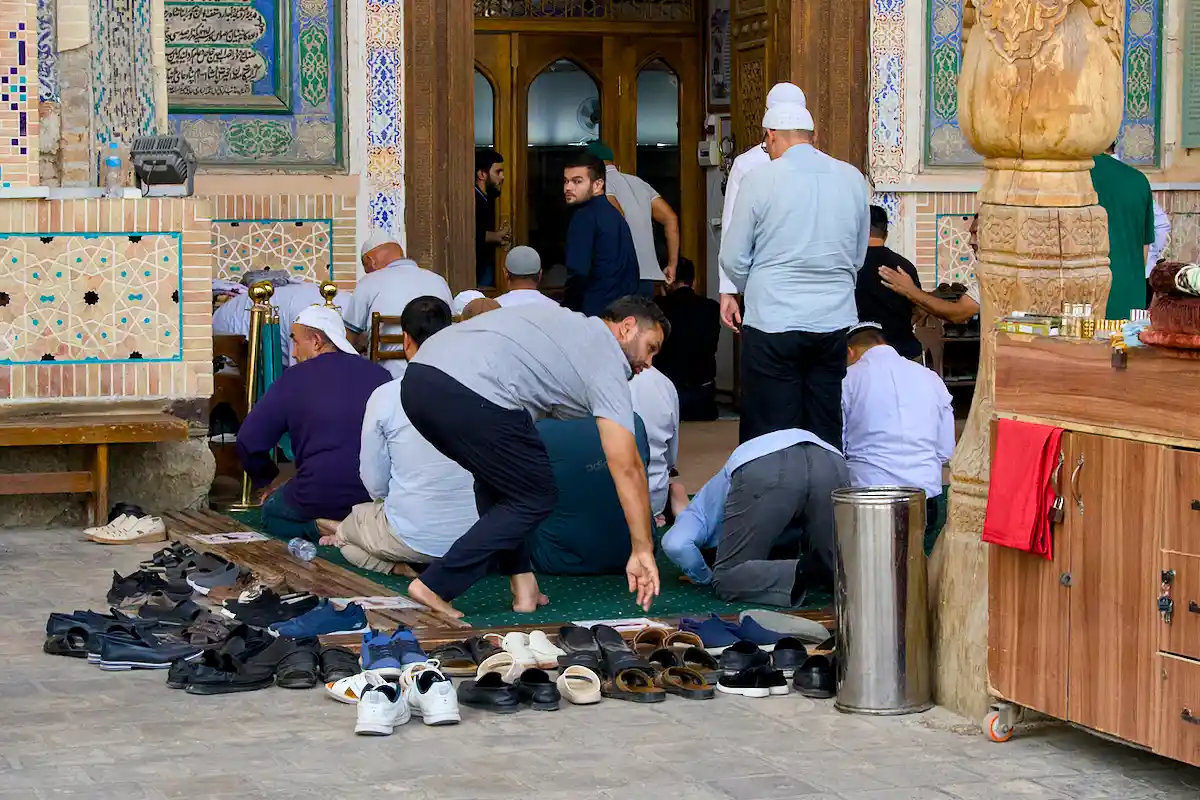
Not far from Ark, we find the Bolo Haouz Mosque, an unusual and beautiful building where a projecting roof over the entrance and an outdoor prayer hall are supported by twenty carved and ornate wooden pillars. When we arrive, Friday prayers are in session, and the worshippers are kneeling behind a sea of shoes.
In Bukhara, there used to be a large and significant Jewish population as well, which may seem strange today. But in the past, Muslims and Jews generally lived together in respect and harmony. For over a thousand years, there was a significant Jewish community in Bukhara. Some believe they arrived there as early as the time of the Babylonian Captivity, but it is more likely that they were merchants drawn by the riches of the Silk Road.
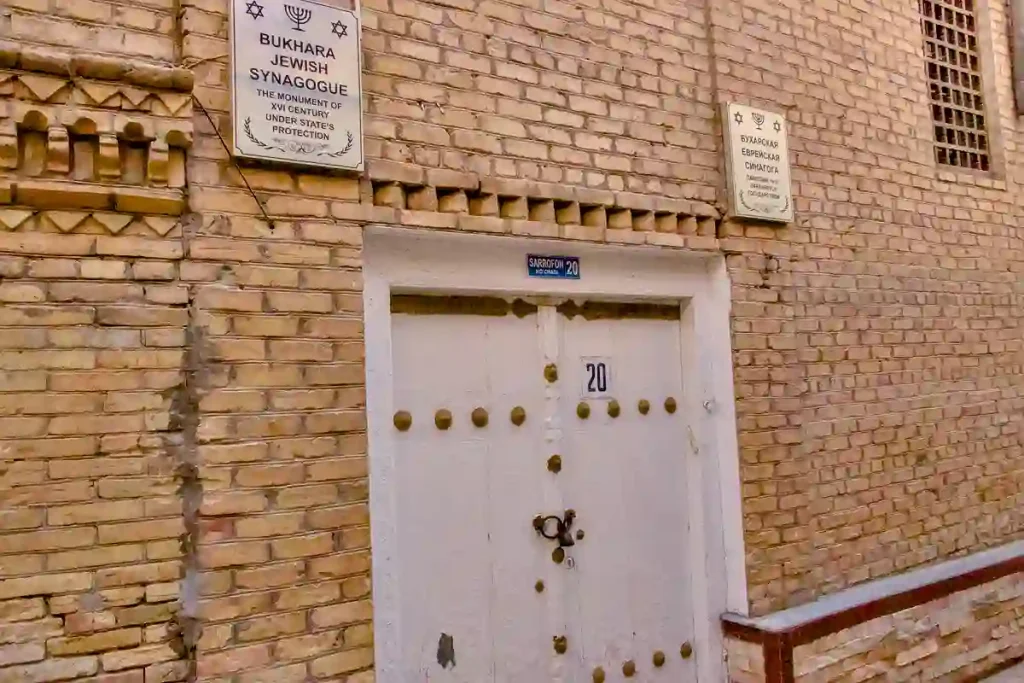
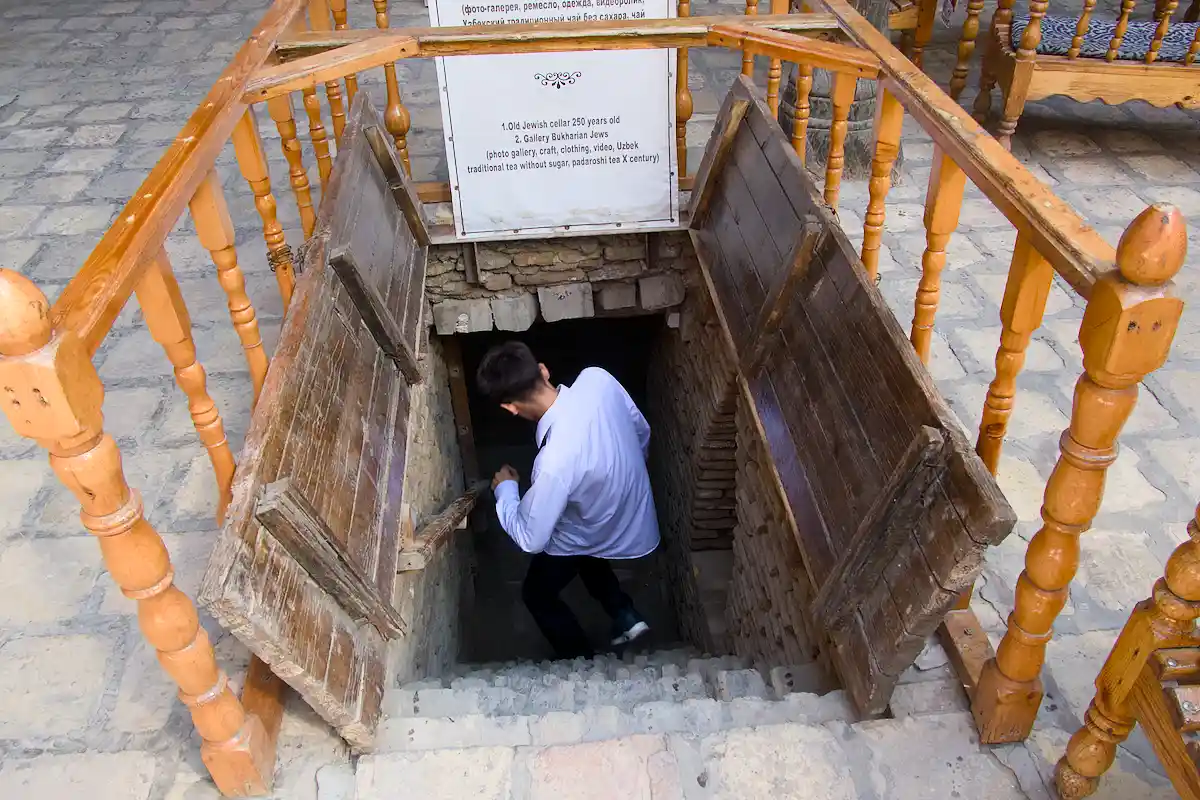
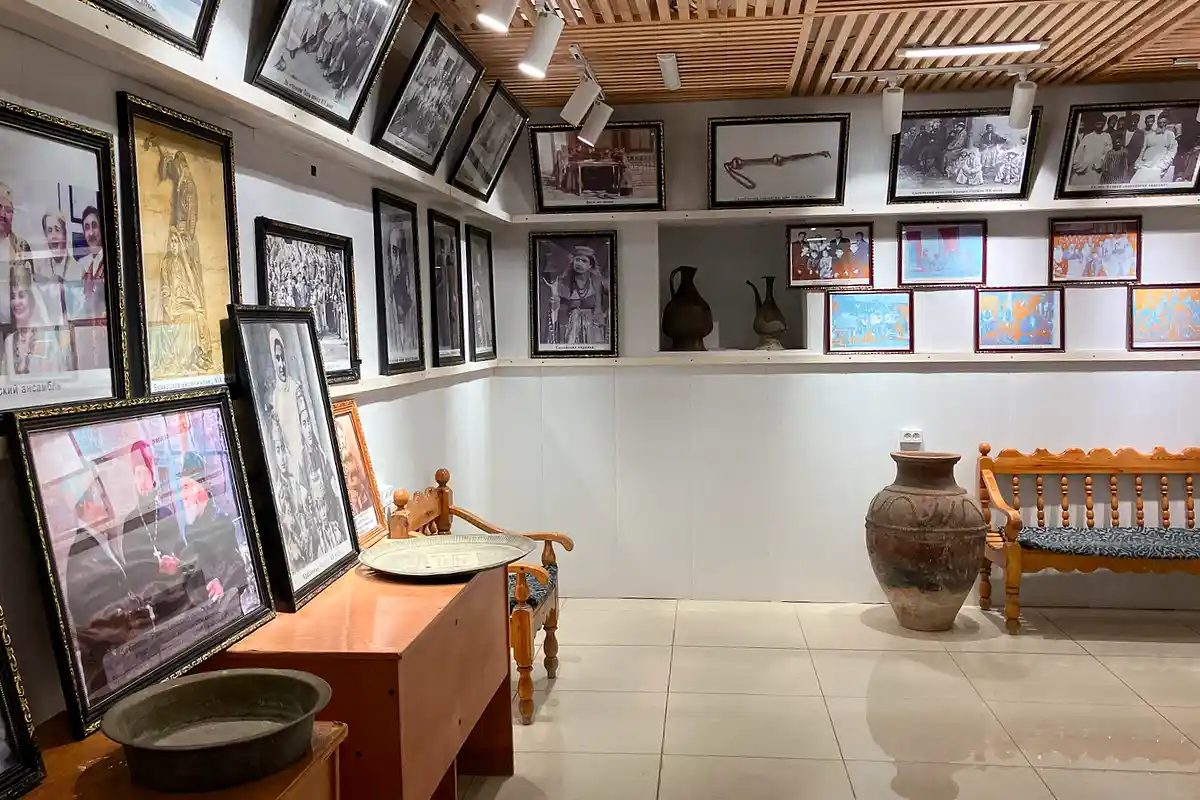
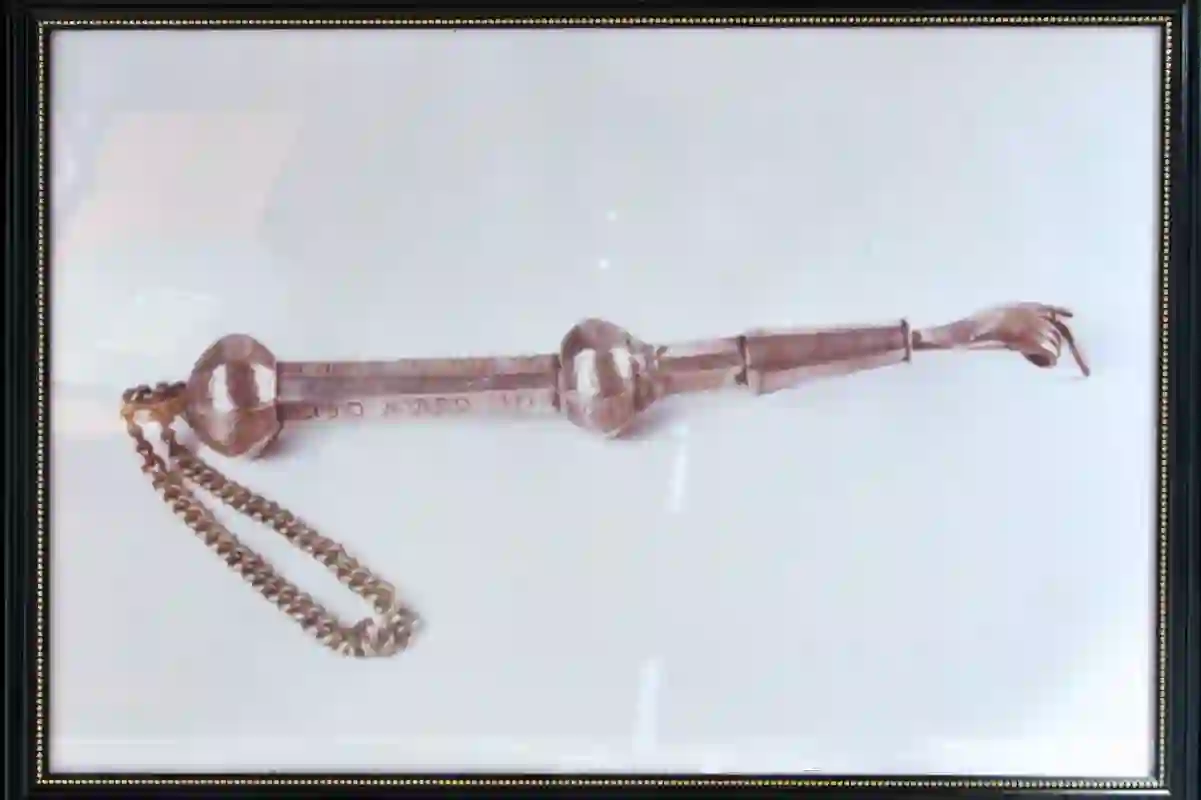
We visit the Jewish quarters, which today show few traces of their history. We find a small synagogue that is closed and locked, and in an adjacent hotel—which was formerly a Jewish merchant’s house—they display rooms filled with old artifacts and photographs from the past. Most of the Jews in Bukhara moved abroad after the fall of the Soviet Union; many went to the United States.
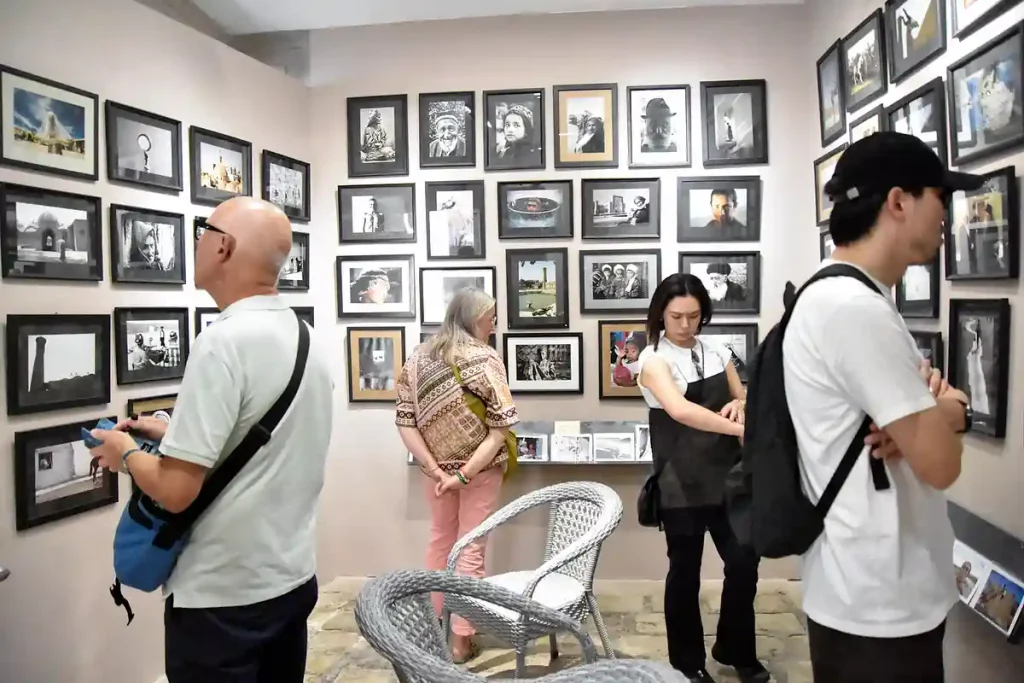
We stumble upon a surprise – a wonderfully charming little photography museum in one of the alleys of the former Jewish quarter. The exhibition features works by photographer Shavkat Boltaev. Boltaev passed away a few years ago, and his family is honoring his memory with these photographs, which are mainly from Bukhara but also from his travels in Eastern Europe. He has a superb eye for photography, so this museum is not to be missed!
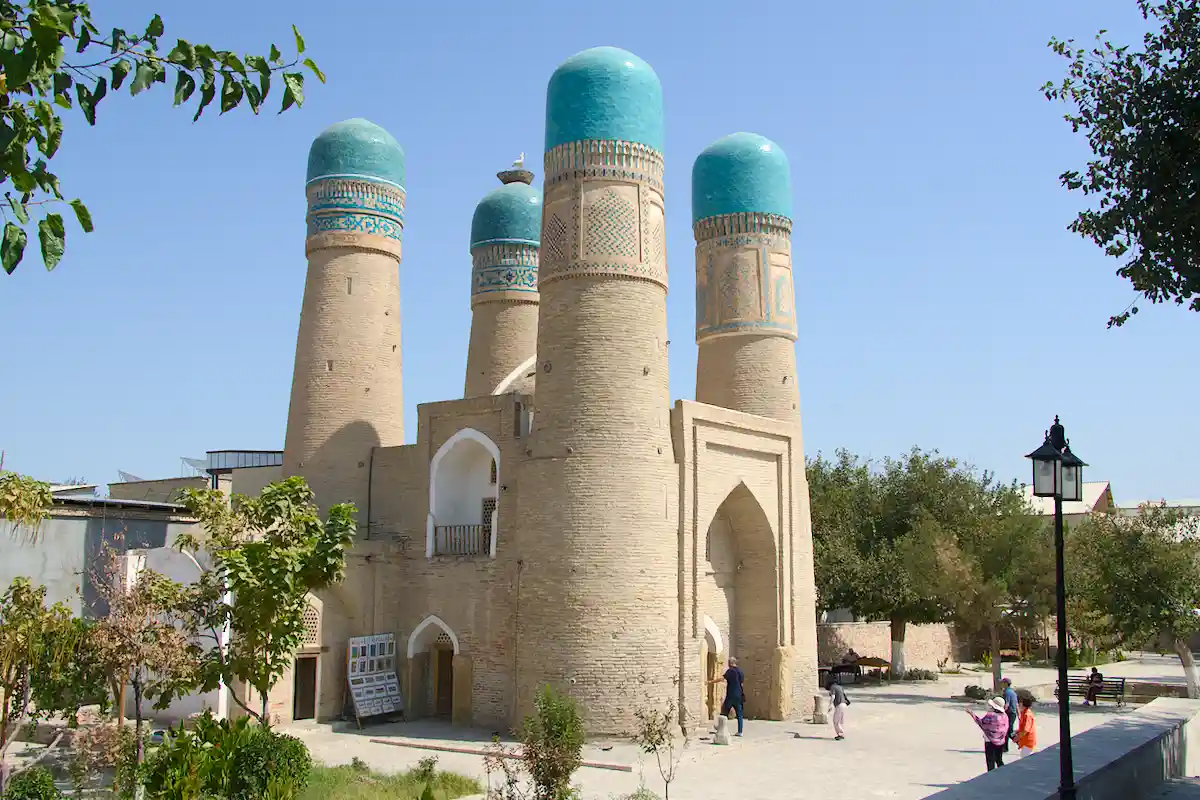
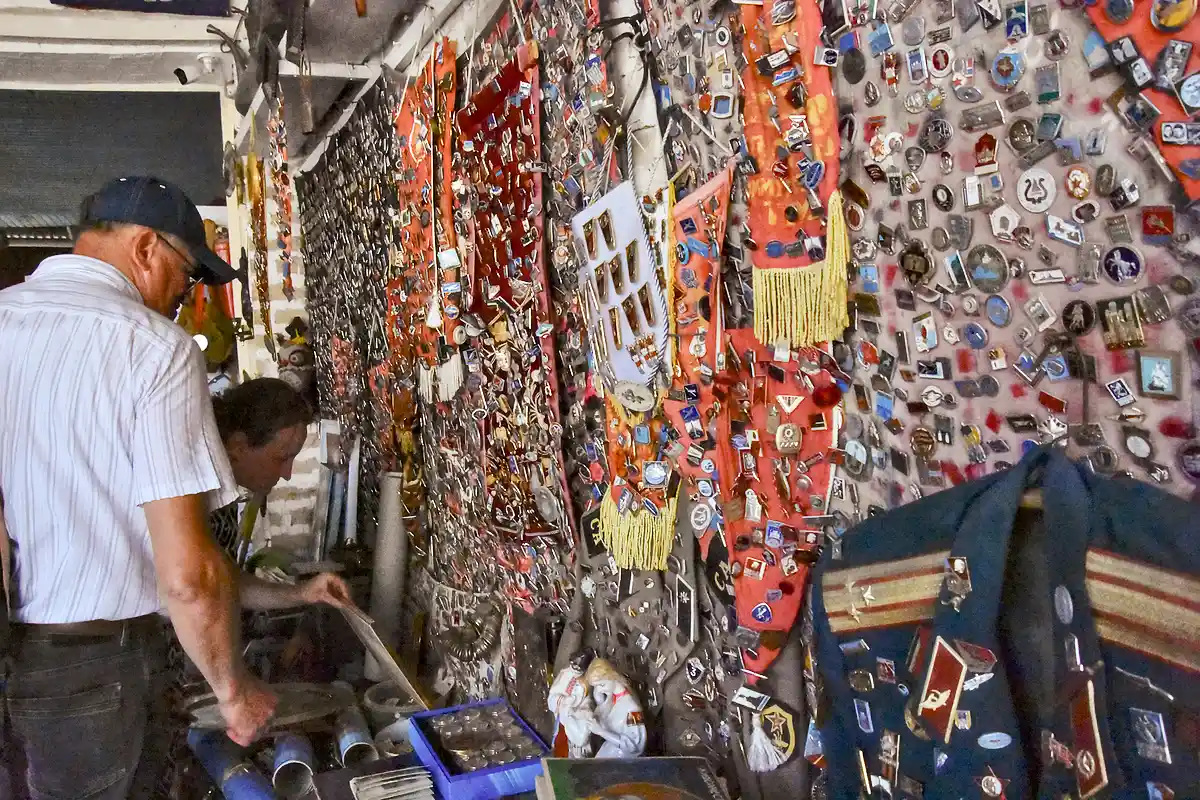
Chor Minor is a small mosque-like building that is a surprisingly popular tourist destination. It is actually a madrasa, but most of the rooms have been destroyed and only the foundations remain. The four towers are minarets, but only one is open to the public. They have sometimes been interpreted as representing four religions: Islam, Christianity, Zoroastrianism, and Buddhism. The mosque building itself now houses a souvenir shop. Next door, you’ll find a stall with a surprisingly large selection of Soviet memorabilia.§
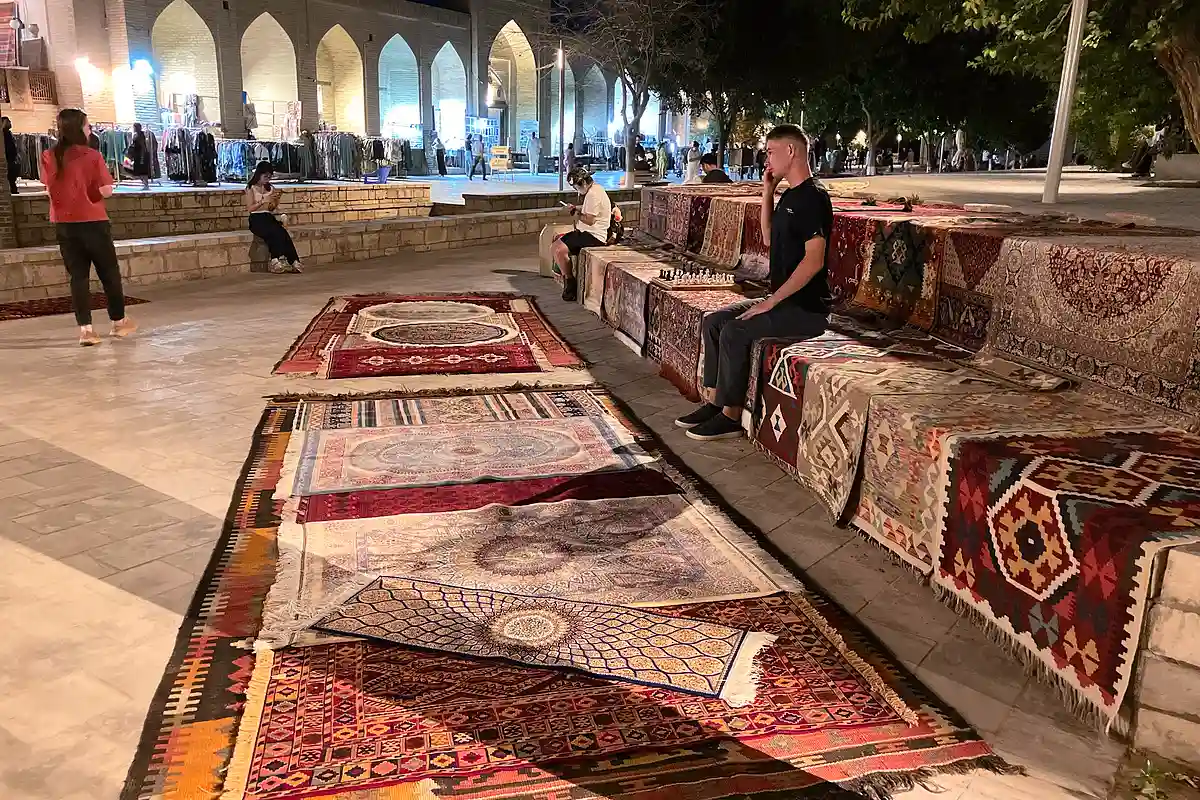
During our visit in September, it was still hot during the day in Uzbekistan’s cities. Street life doesn’t really get going until after the sun has set. But then there’s a lot going on, and the children, in particular, get to let their love of dancing run wild.
Now it’s time to visit the third of Uzbekistan’s Silk Road cities, the legendary Samarkand. Does that fairy-tale glow still remain?