Yet another border crossing. We take the bus from Samarkand eastward toward the border with Tajikistan. There, we have to get off, grab our bags, and first go through the exit procedures from Uzbekistan, then walk 100 meters across no man’s land, and finally go through the entry procedures into Tajikistan. Here, as at every border, you have to show your passport about ten times. But the immigration process goes much more smoothly than in Turkmenistan.
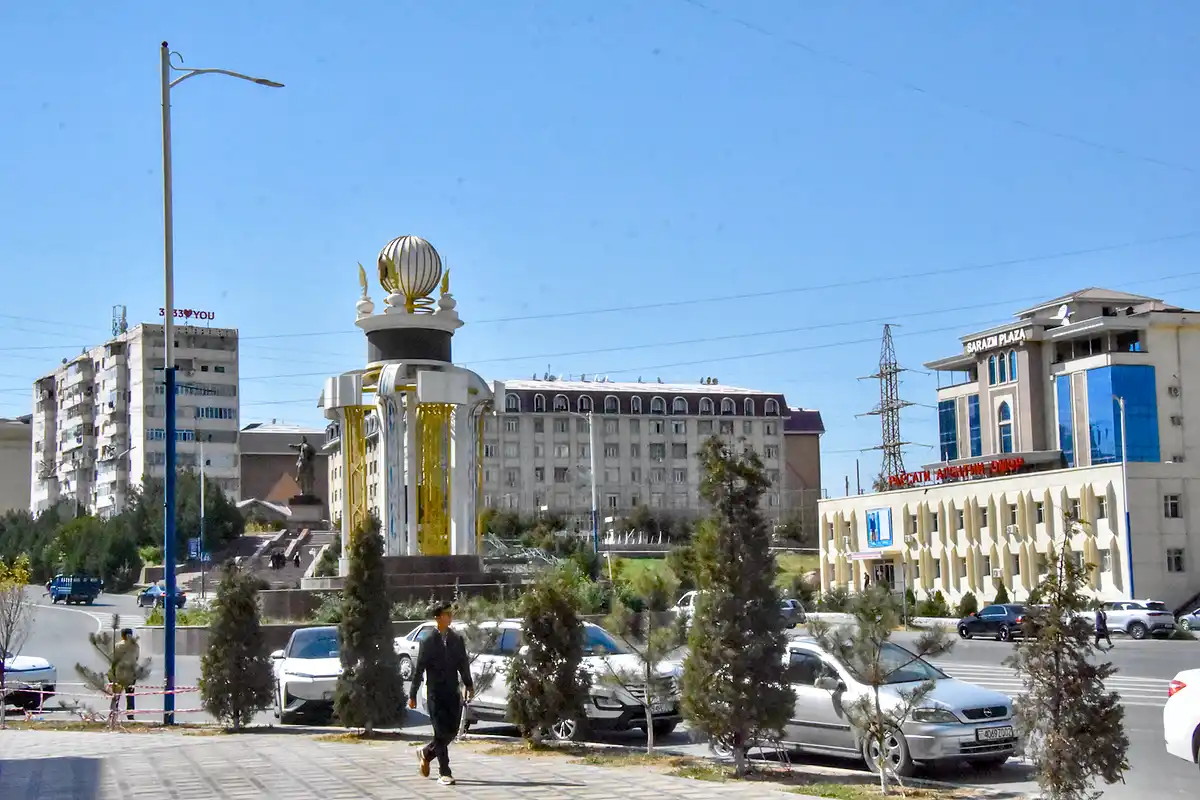
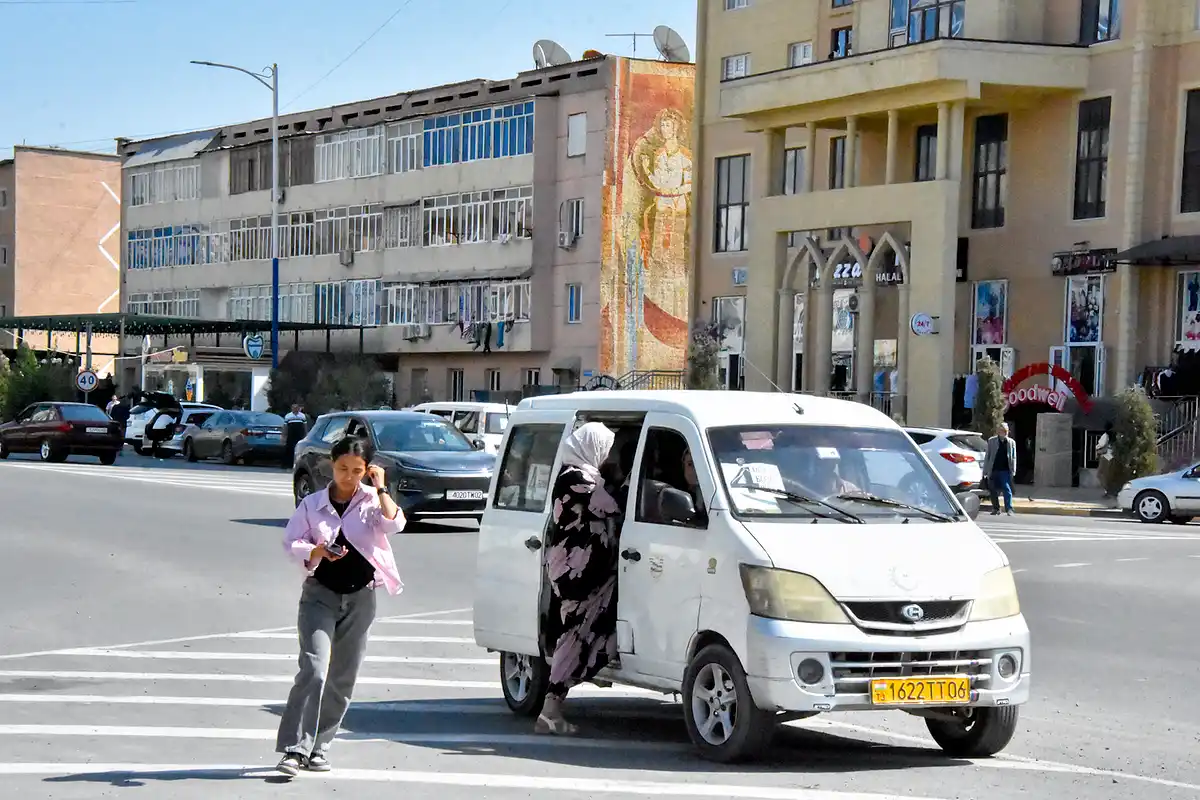
Once inside, we take a taxi to the border town of Penjakent, once a very important commercial and cultural hub on the Silk Road. Today, it’s just a dusty little town.
Crossing a border and getting money in the new country’s currency is always a gamble, but Penjakent nearly breaks us. There are plenty of ATMs here, but we can’t get money out of any of them. We’re hungry and thirsty, and we ask everyone we meet where we can exchange money or withdraw cash. Finally, we realize we have to walk much farther toward the city’s market district, and there we finally find a reliable ATM. And we walk away with bulging wallets containing about 200,000 somoni. That’s roughly 20 dollars.
Our hotel seems to have been bought for a song from someone who went bankrupt. It’s stylish, with large windows and shiny floors. But if you look closer, you’ll see that floor tiles are cracked, large empty spaces have been made smaller by placing rows of chairs that no one sits on, nightstands and bedside lamps are missing from the room, and the toilet paper is some kind of rubbery sandpaper. On top of that, the breakfast is probably the most meager we’ve ever had, it’s mostly cookies. But we make up for it with yogurt we bought in a shop, so we manage to get by.
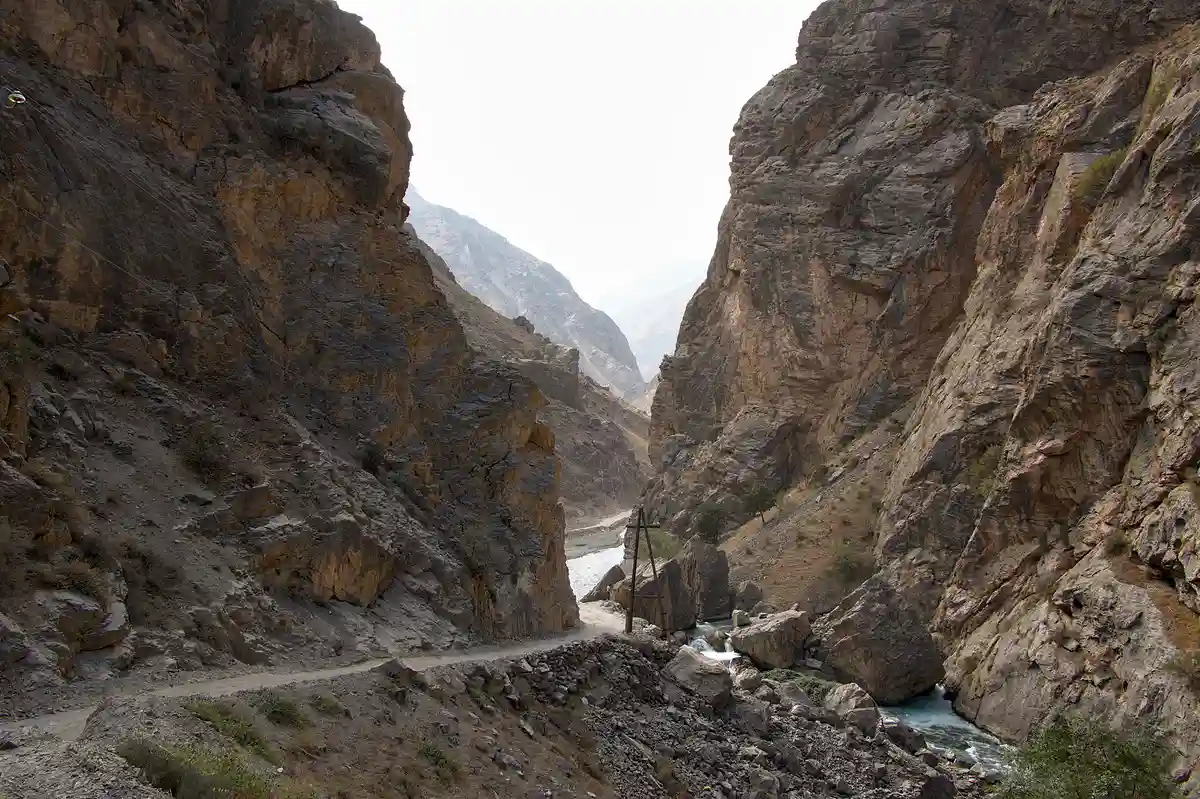
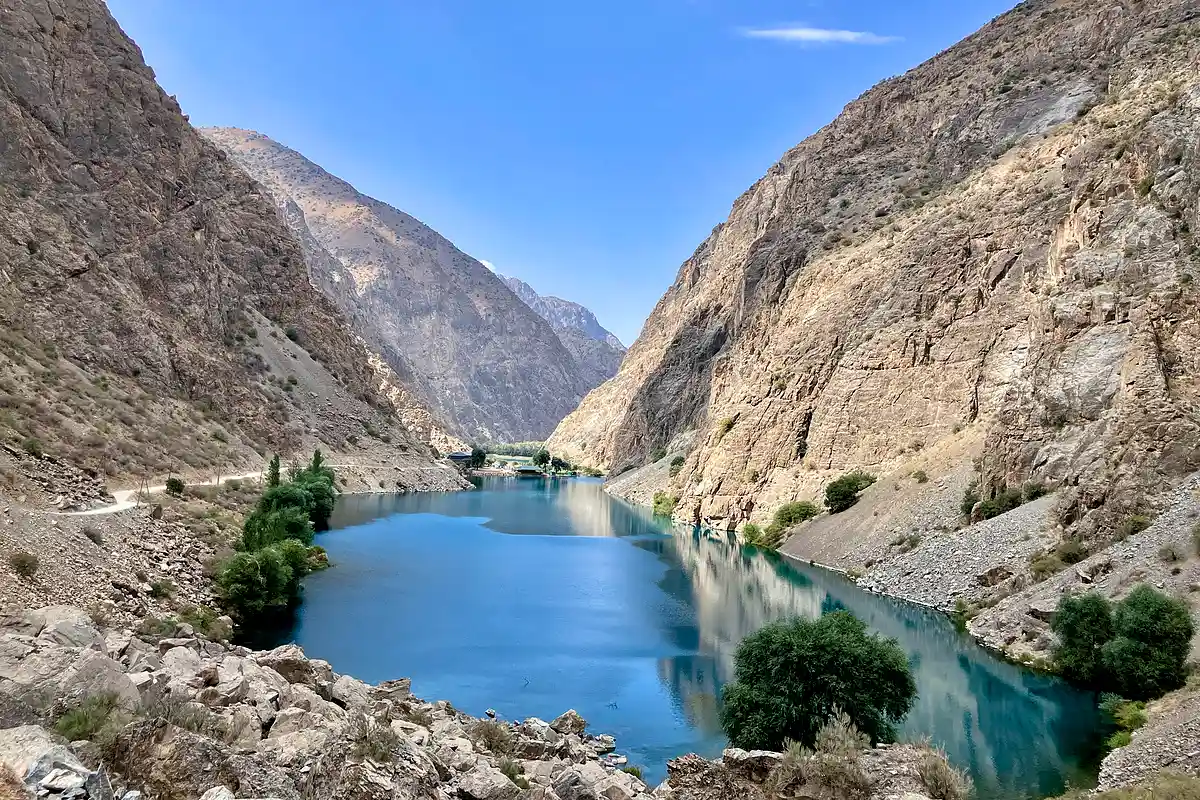
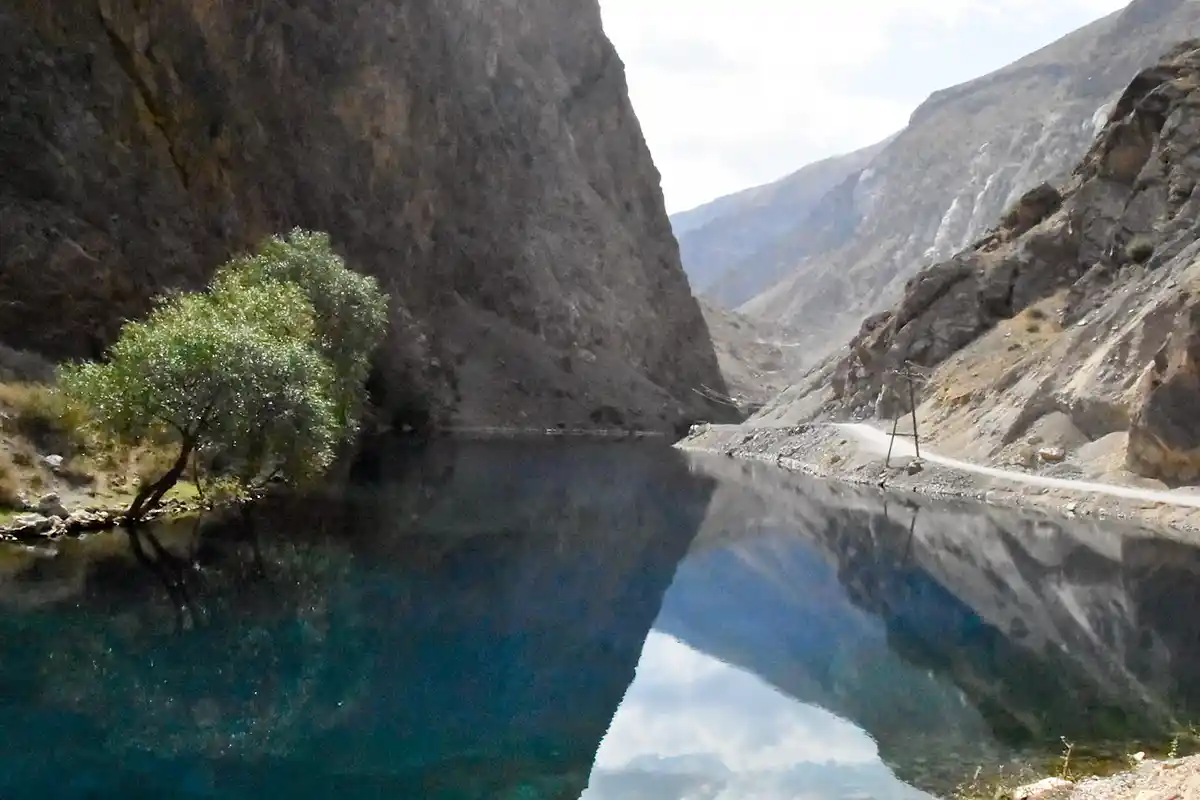
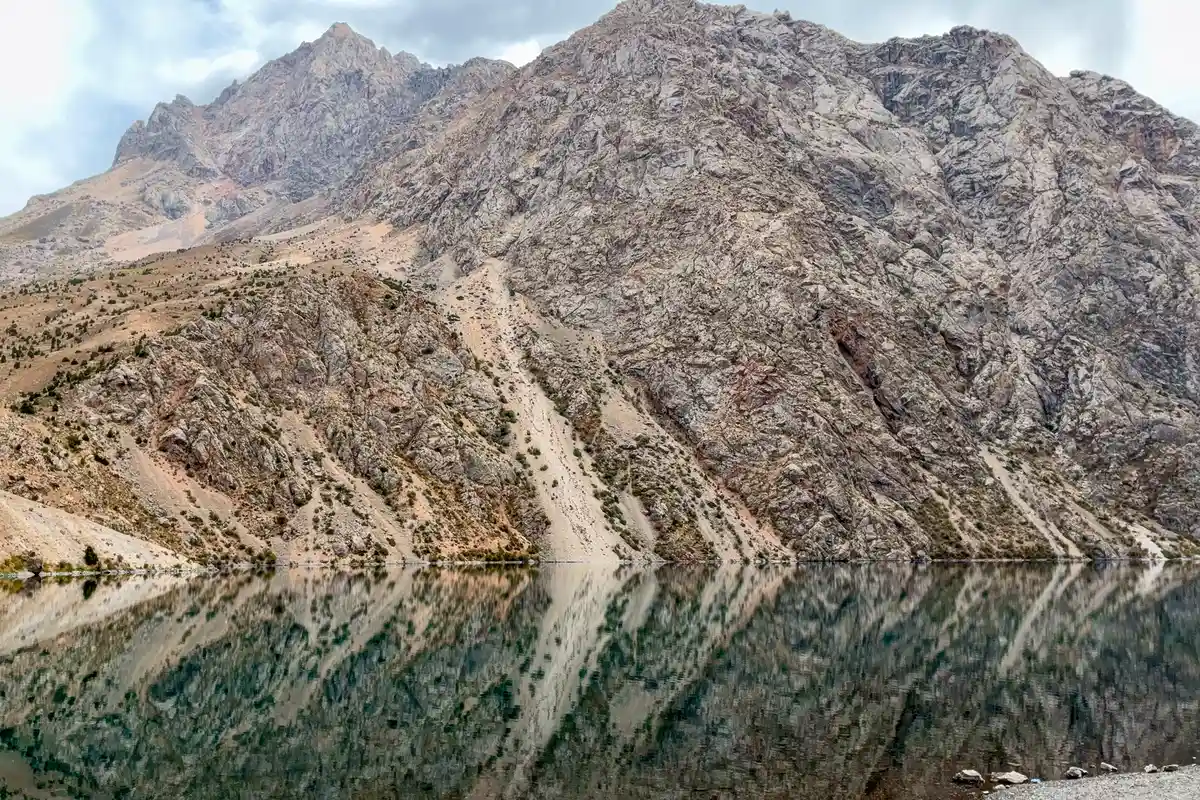
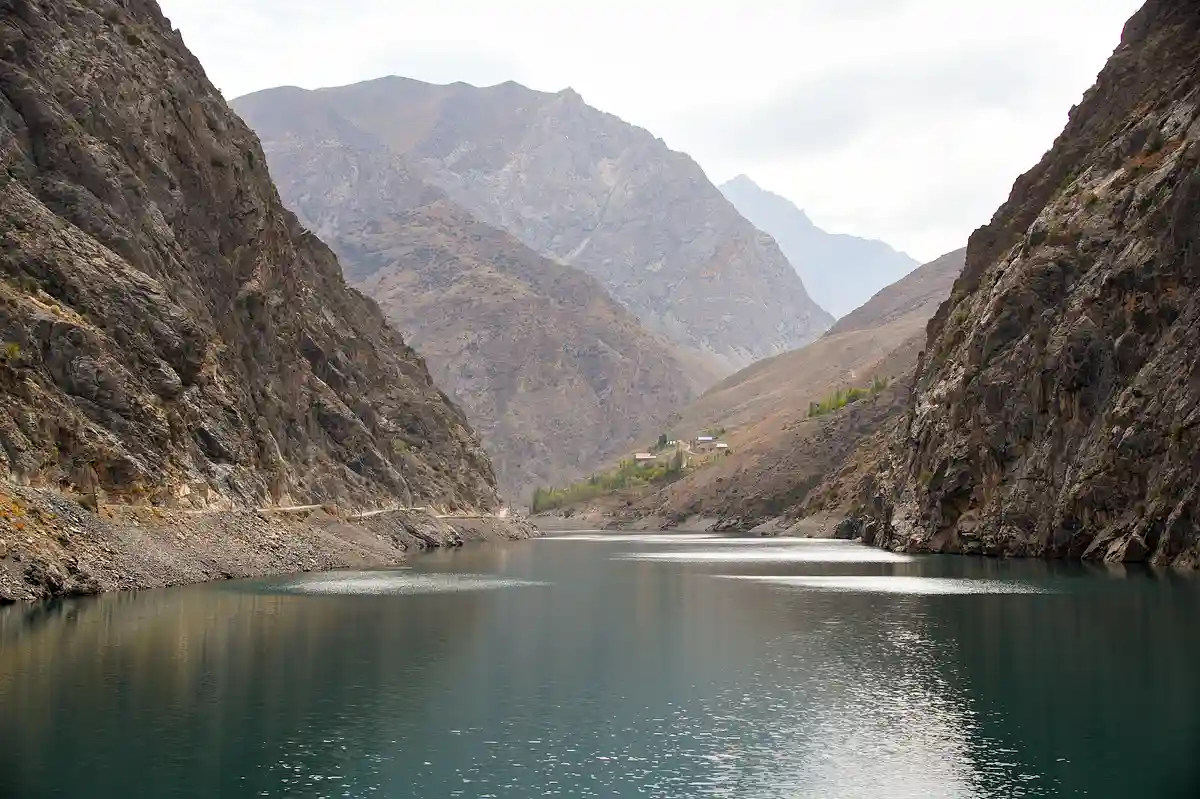
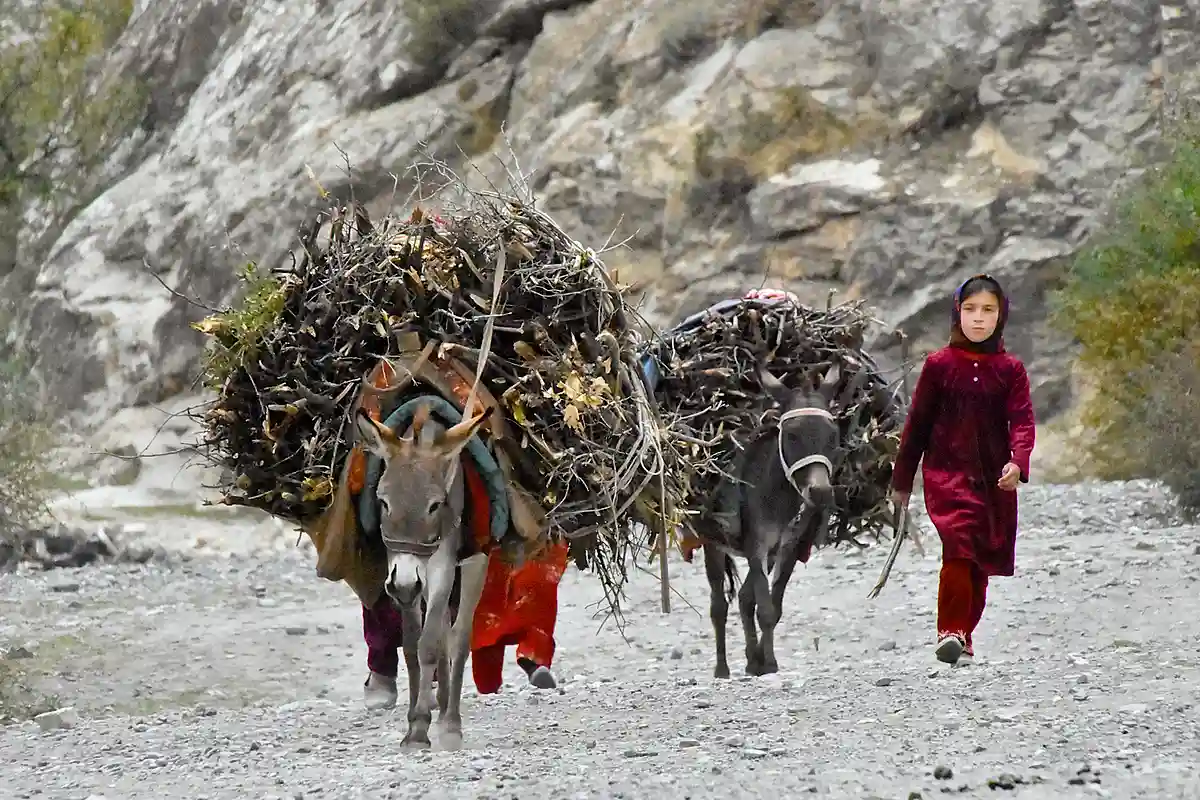
Many tourists visit Penjakent, but almost no one stays overnight here. People often go on daytrips from Samarkand to the “Seven Lakes,” a beautiful water landscape in the high mountains east of the city. We go there too, and it’s truly special. We drive through small, gray villages nestled beneath the jagged mountain peaks. We come across herds of goats with shepherds carrying large bundles of hay on their backs and talking on their cell phones. We see the world reflected in the clear mountain lakes.
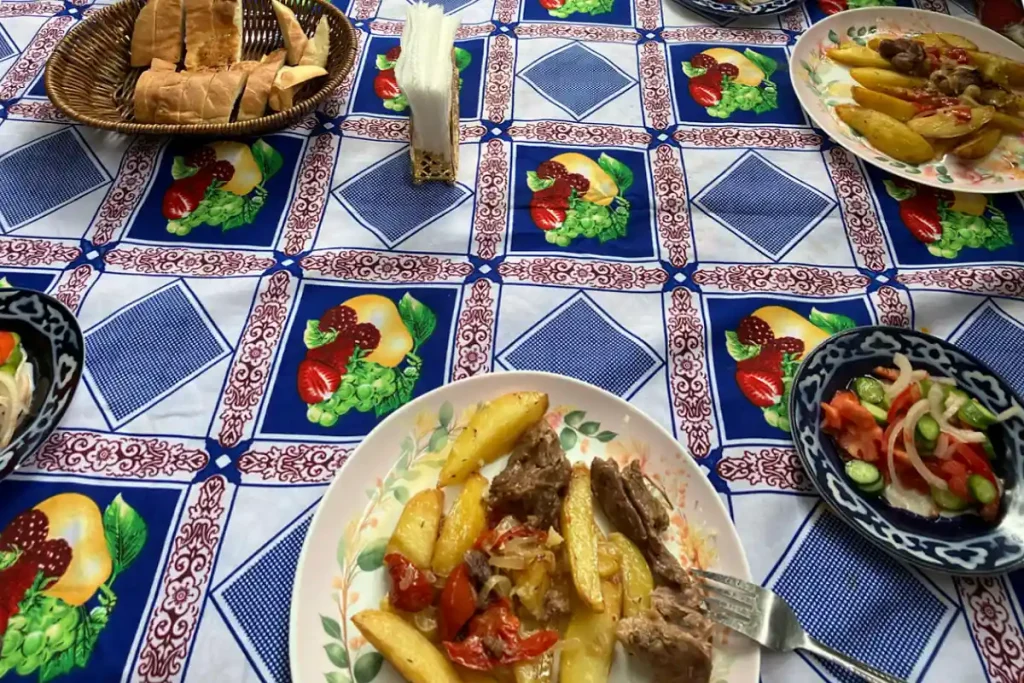
There’s just one problem: food. We have a driver and an English-speaking guide with us, and apparently they’d planned that we could have lunch at a restaurant beautifully situated by one of the lakes. But for some reason, that’s not going to happen. We end up being taken back to the driver’s home, where we’re treated to a traditional lunch in a sort of tent with a raised floor covered in rugs and pillows. A delicious salad, tea, tasty fried potatoes, and steak are served, and boy, do we enjoy it!
Here’s a clip about driving in the Tajik mountains. Fasten seatbelts!
Back in Penjakent, we face the same problem as in Nukus, Uzbekistan—where can we eat? In small, poor towns, there isn’t much of a market for restaurants, but our hotel concierge advises us to visit Beshazor. On Google Maps, it looks like a hotel, but “no” he says, “it’s both a hostel and a restaurant.”
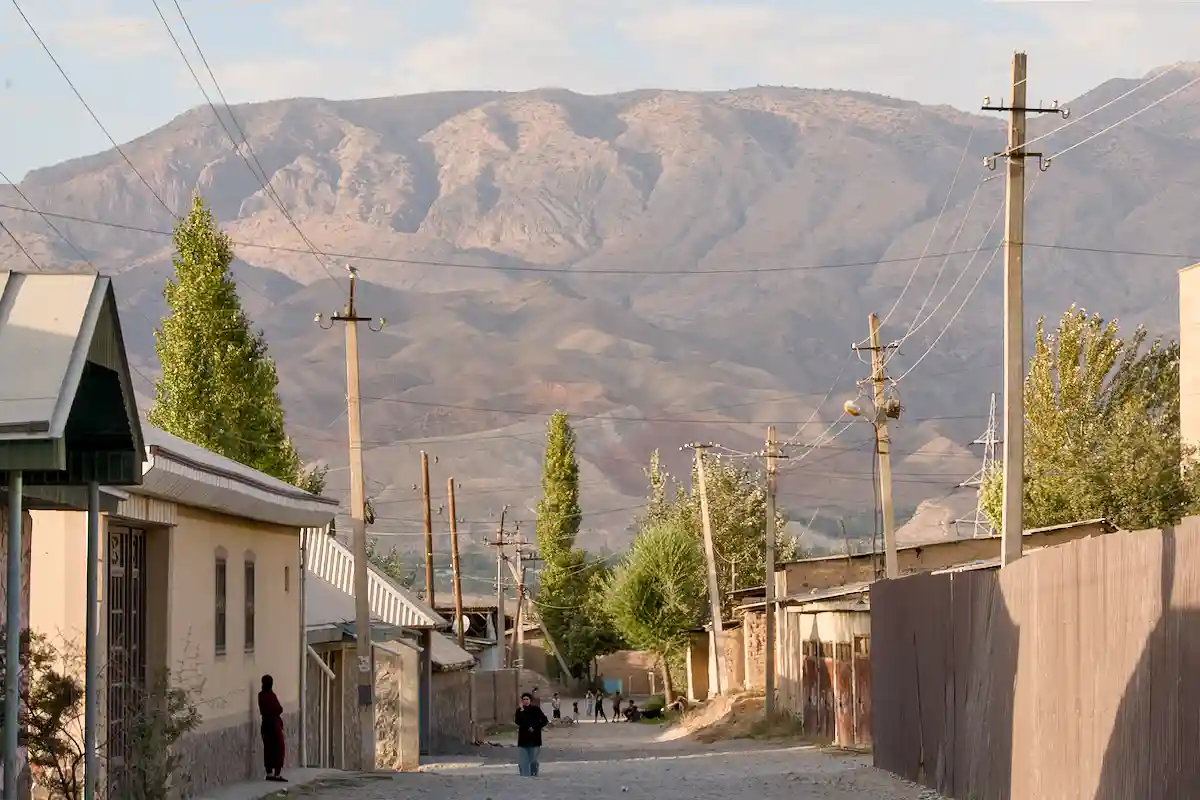
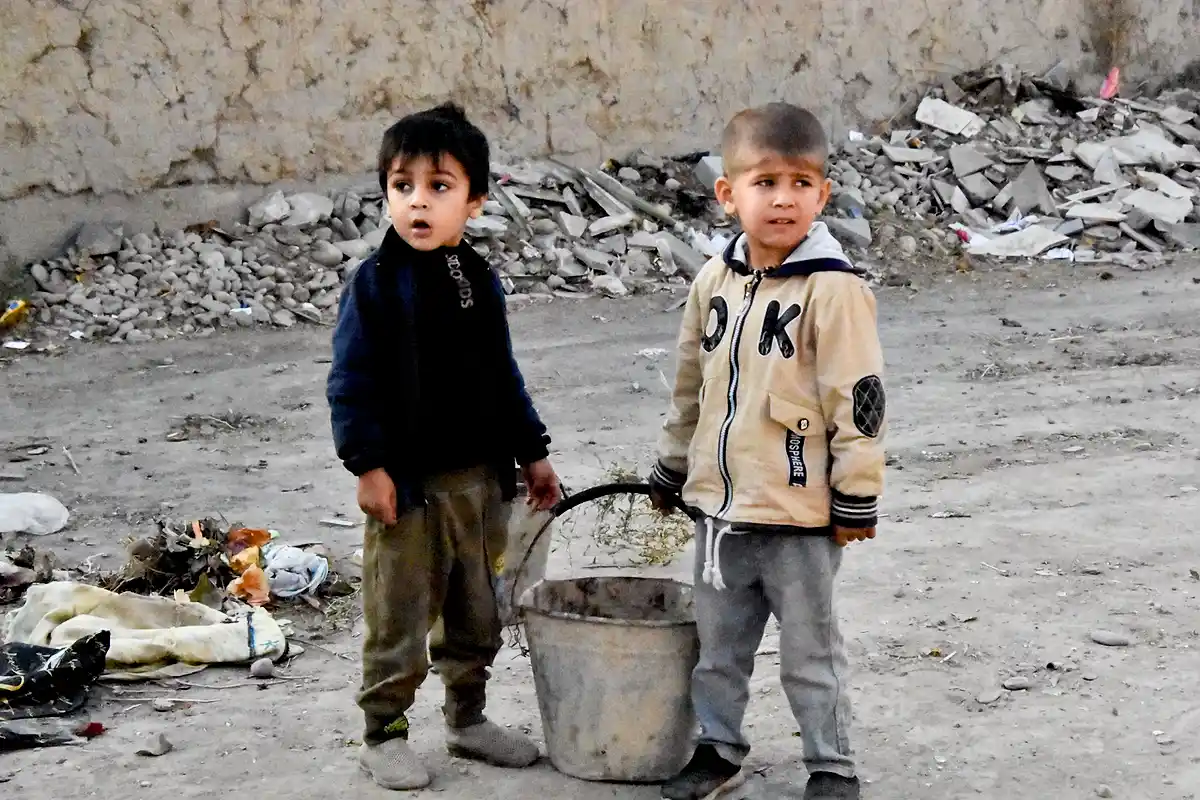
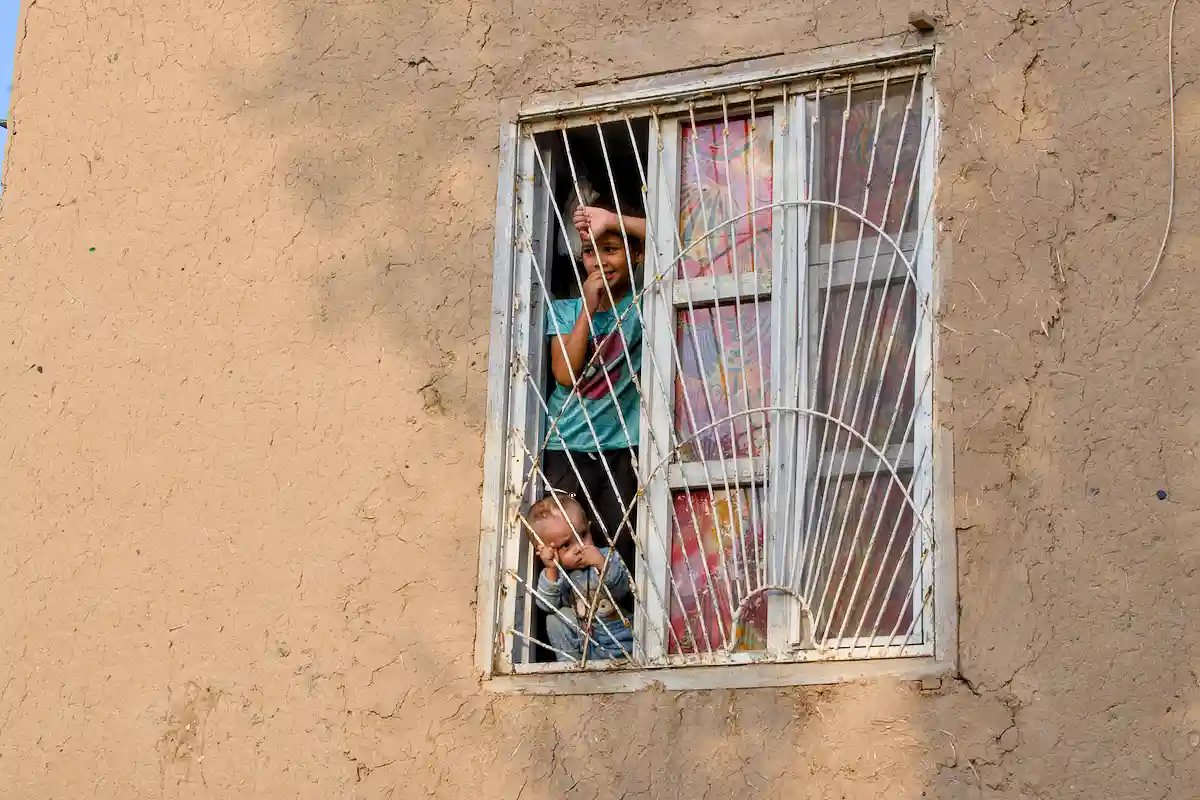
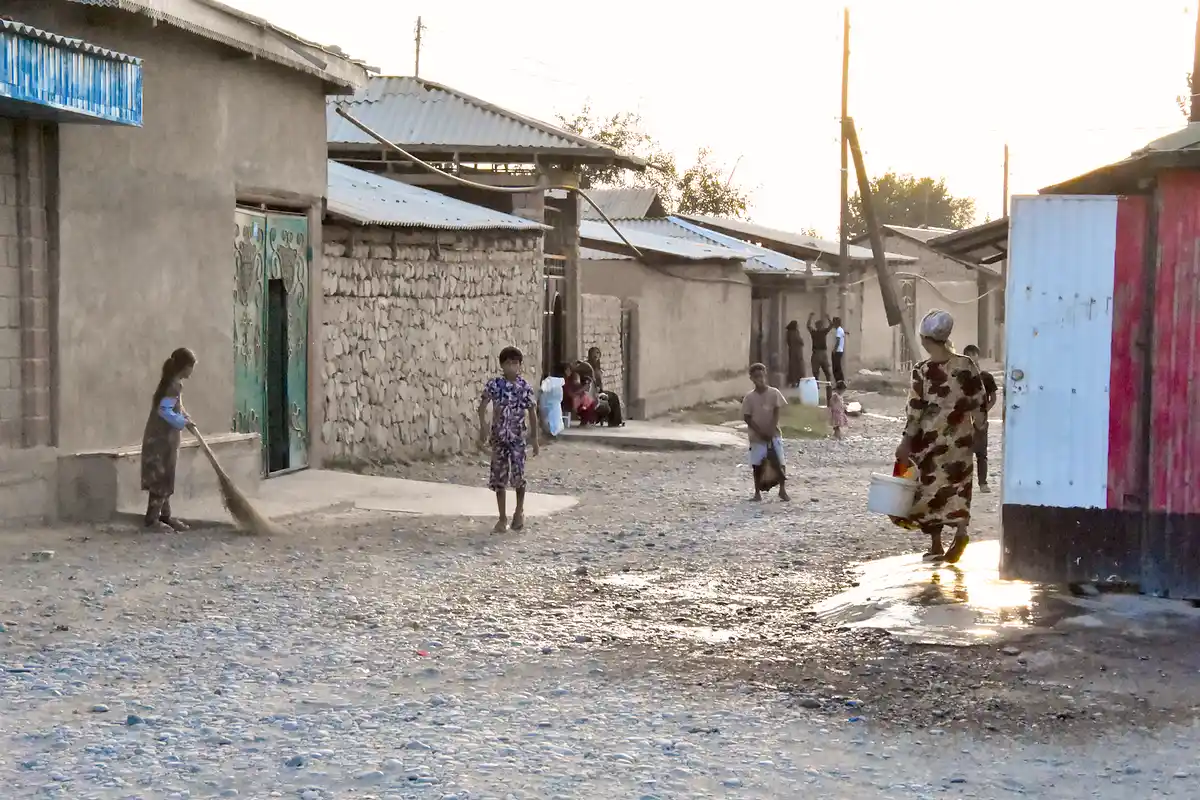
We have plenty of time, so we take a tour of the town first. When we turn off the main thoroughfare, we suddenly feel like we’re in a different country. Dusty, unpaved streets, small, nondescript brown-gray houses, and a swarm of children who light up and shout, “Hello!” as we approach.
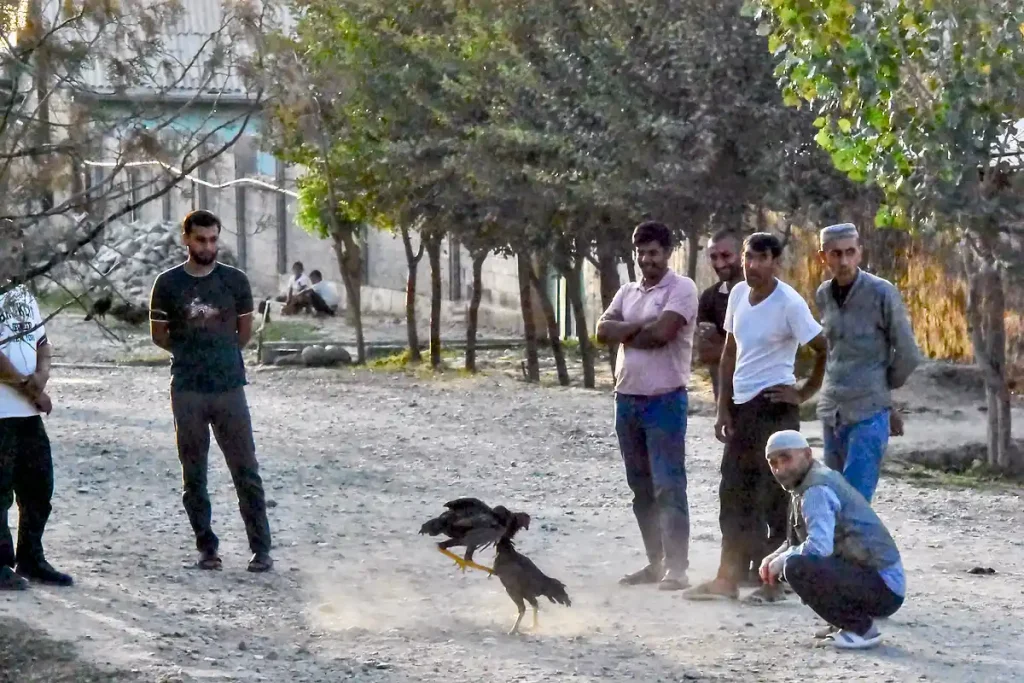
A little further on, we see a group of men standing in a circle around what turns out to be two aggressive roosters. They turn around and look at us as we pass by, but quickly return to their cockfight. We haven’t seen anything like this before in this part of the world.
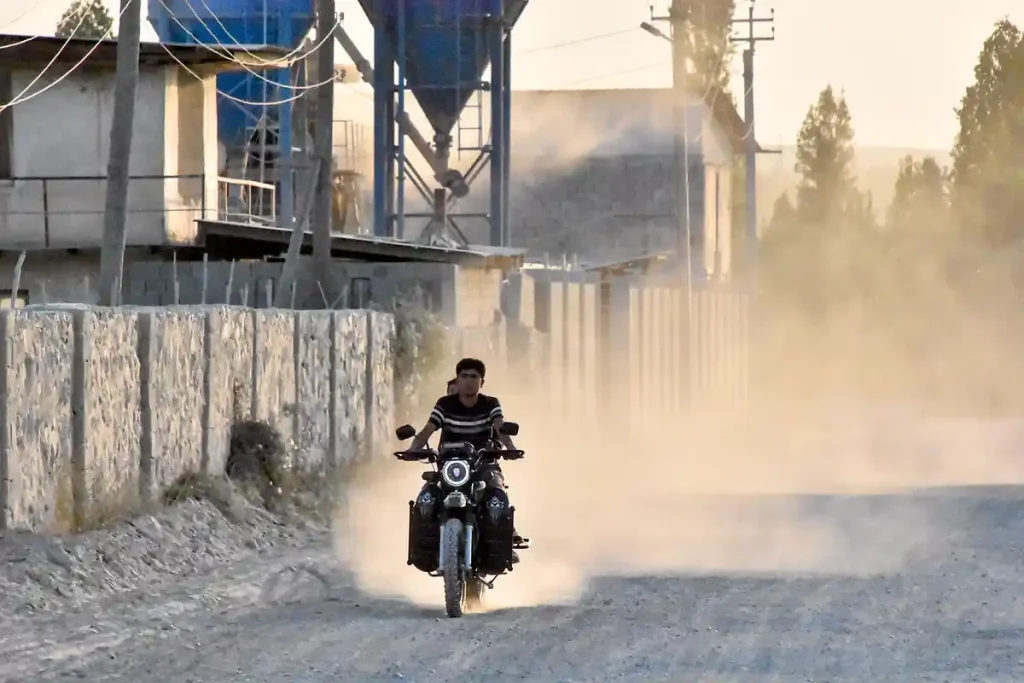
Then the road leads out into the wilderness. On one side, we follow a river that we can’t see behind all the vegetation, and on the other side, a high wall with some kind of stone-crushing operation behind it. Aside from a moped rider, we don’t see a single person. The sun is setting, and V is getting annoyed. But suddenly we’re standing in front of a few houses; we make our way between them, and a man asks what we want. We answer, “Food.” And just like that, we’ve arrived.
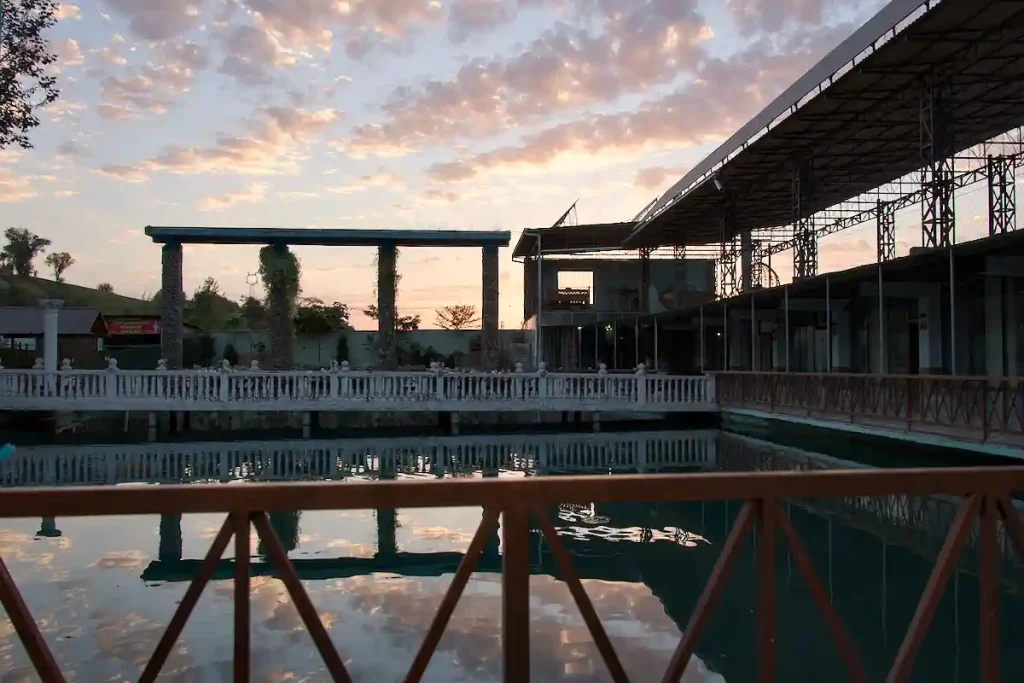
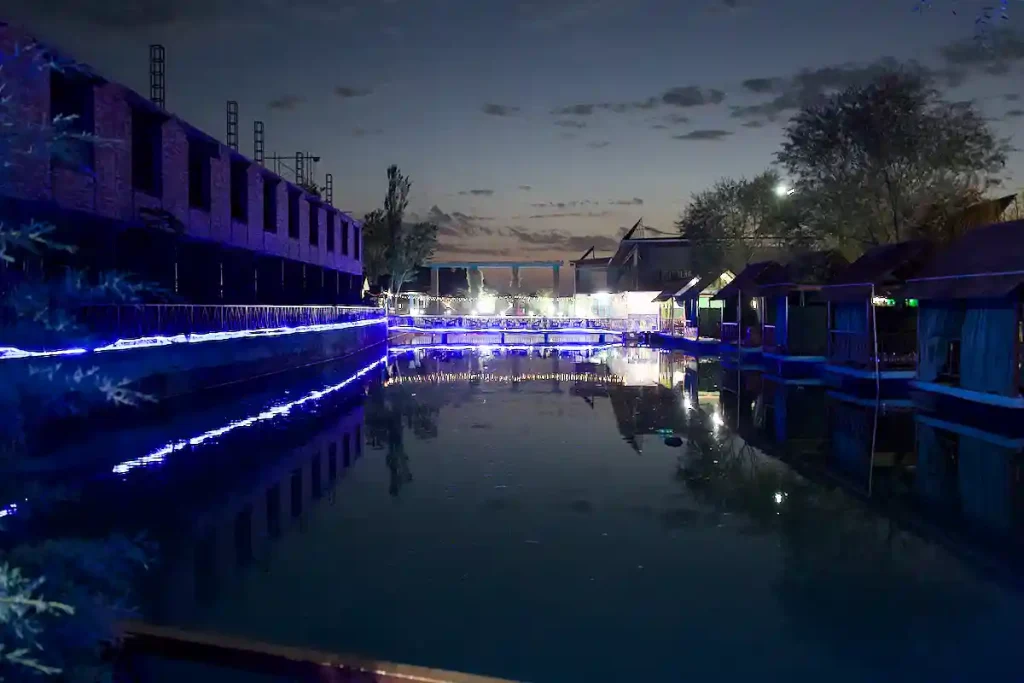
Beshazor turns out to be a maze of rooms, houses, kitchens, restrooms, and tents with dining tables. But then we’re led out onto a bridge over a pond, where there are a few tables, and we sit down. The menu isn’t exactly exciting, but we each get a decent lamb shish kebab and a cold beer. And satisfied we walk home in the dark.
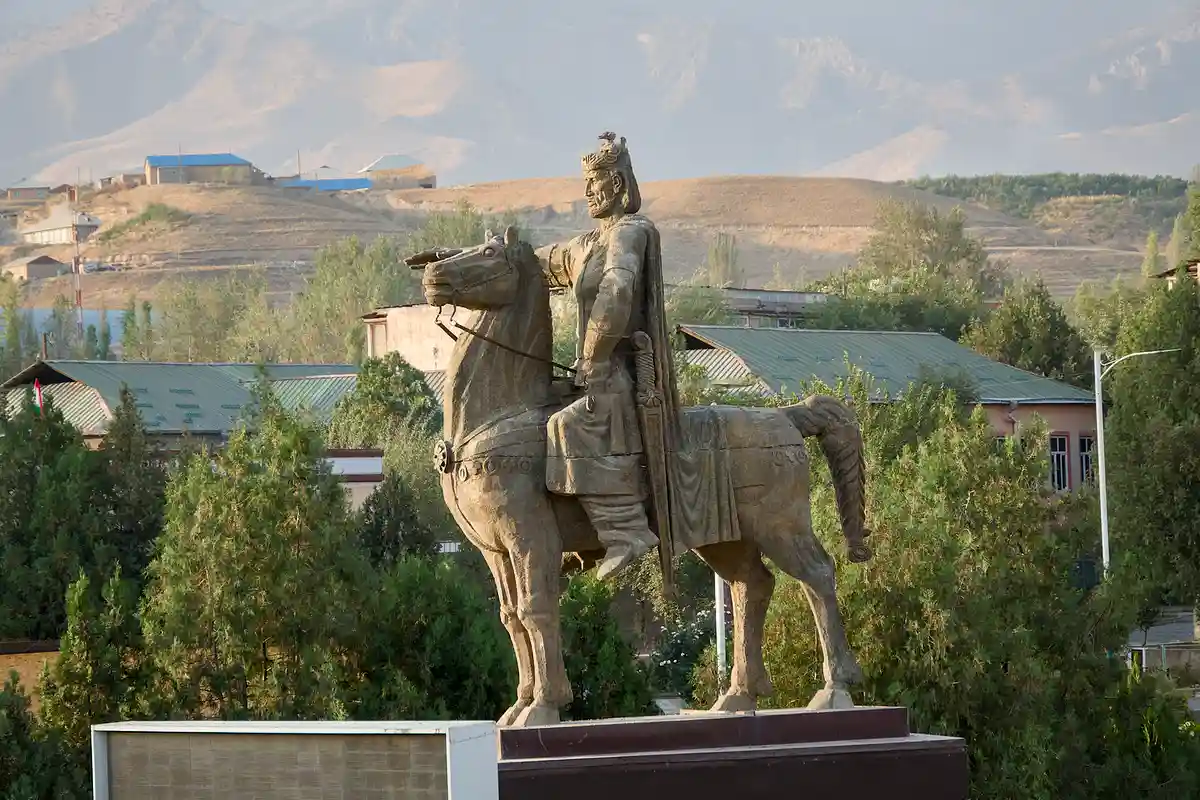
It seems that every city in Central Asia must have a Ferris wheel and a statue of a warrior horseman. Penjakent doesn’t have a Ferris wheel, but the statue is right outside the hotel window and depicts King Dhewashtich, who ruled the flourishing city-state of Penjakent in the early 700s. We later find an older and perhaps more contemporary portrait of him at a museum in Dushanbe, where we’re now headed.