Our tour begins in Uzbekistan’s capital, Tashkent, a major city with a population of 2.4 million, dating back to 4000 B.C. Our hotel isn’t located in the city center, but then again, it’s not entirely easy to tell what constitutes the city center here. It’s more like a collection of suburbs that are connected to one another.
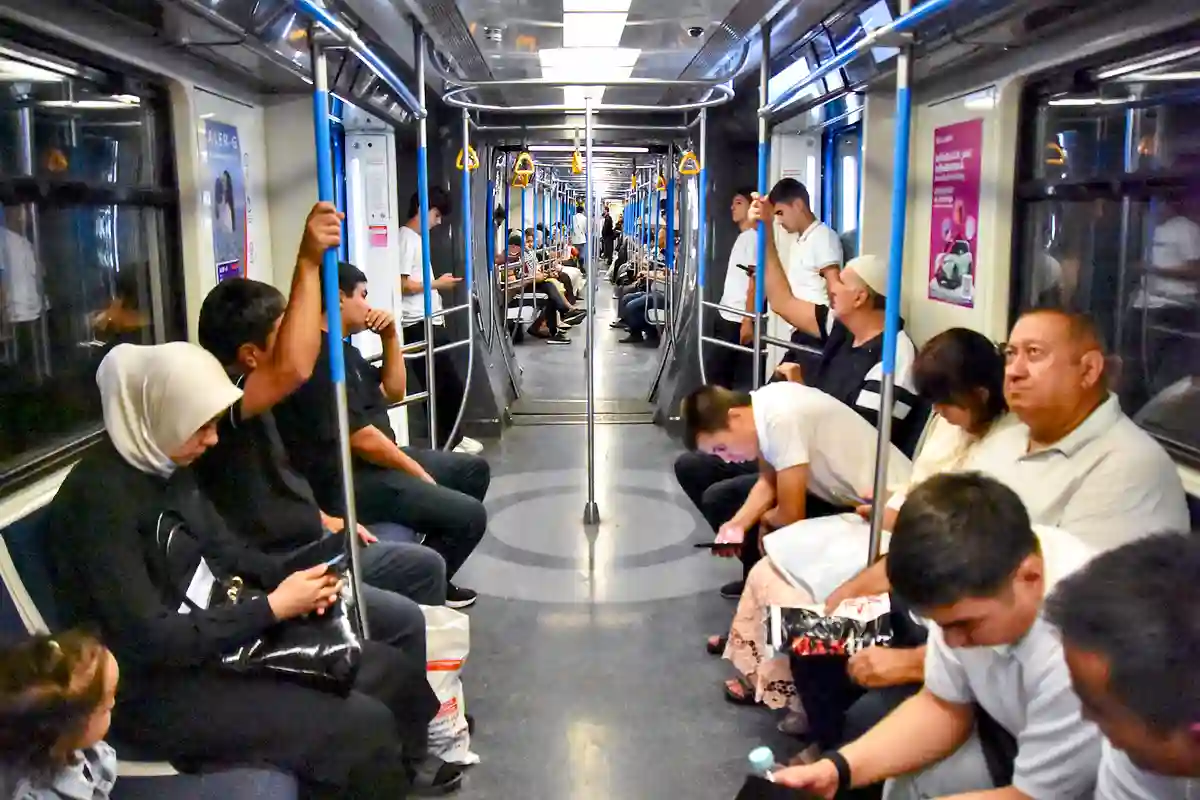
But we’ve picked a few places we want to visit, and they’re usually easy to reach by subway—a mode of transportation that Tashkent is one of the very few cities in this part of the world to have. And it’s incredibly cheap; a ticket costs less than US$ 0,1 and with it, you can go anywhere you want throughout the entire system.
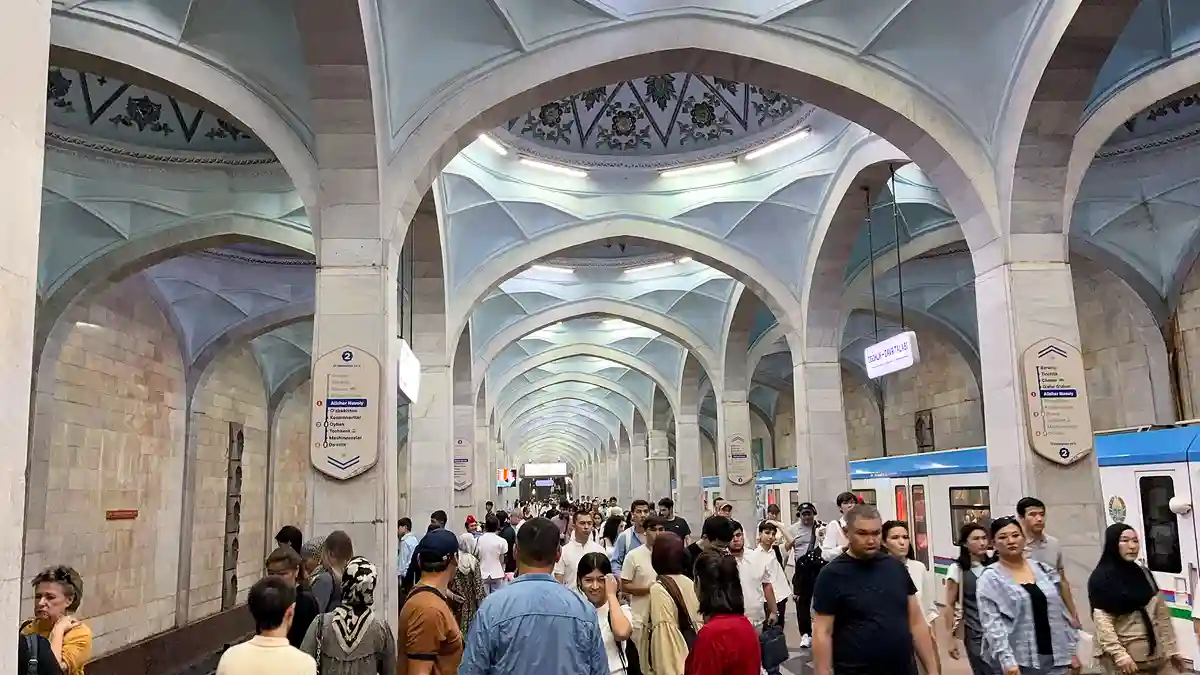
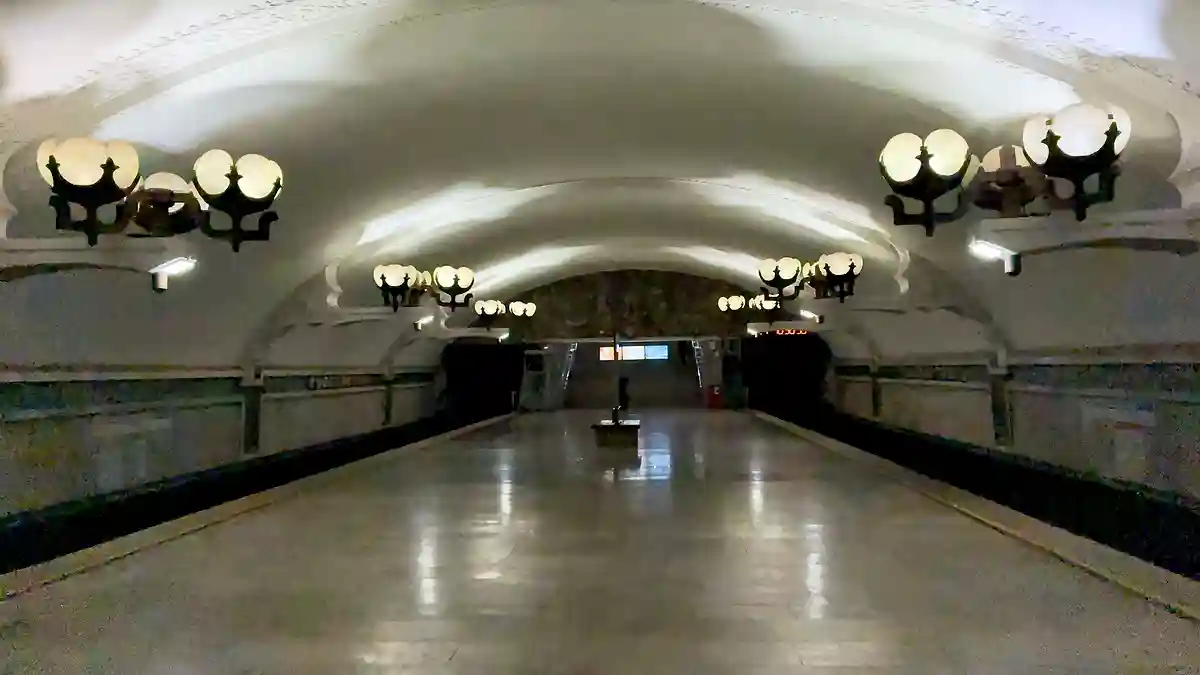
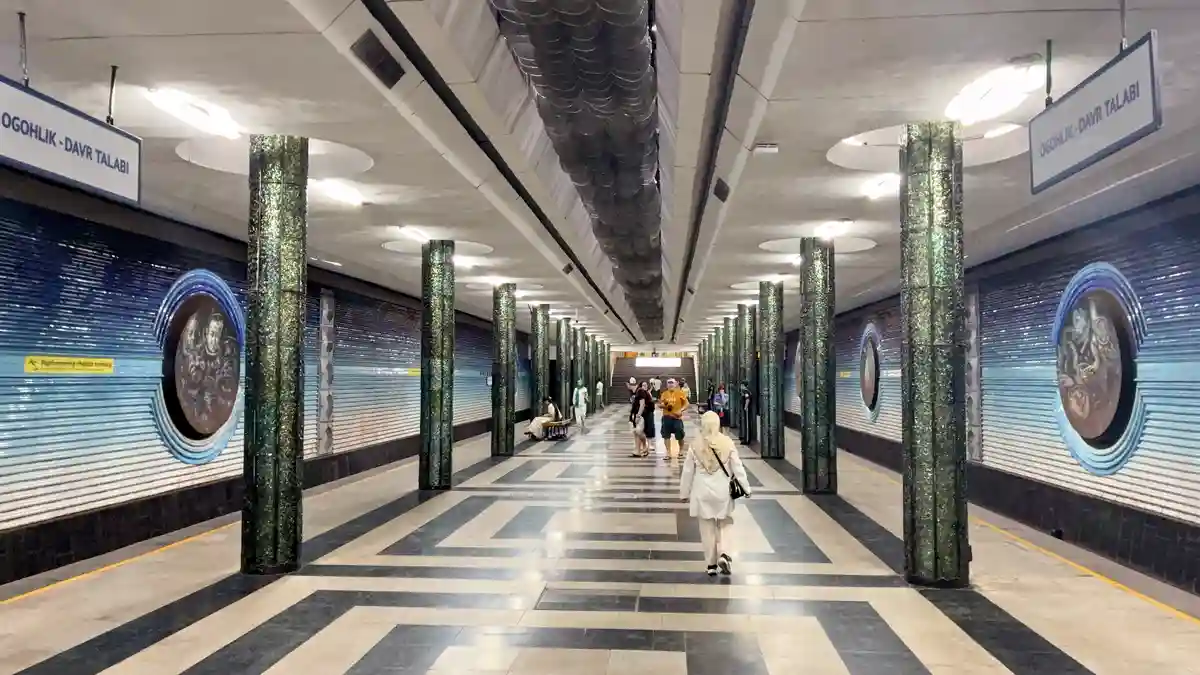
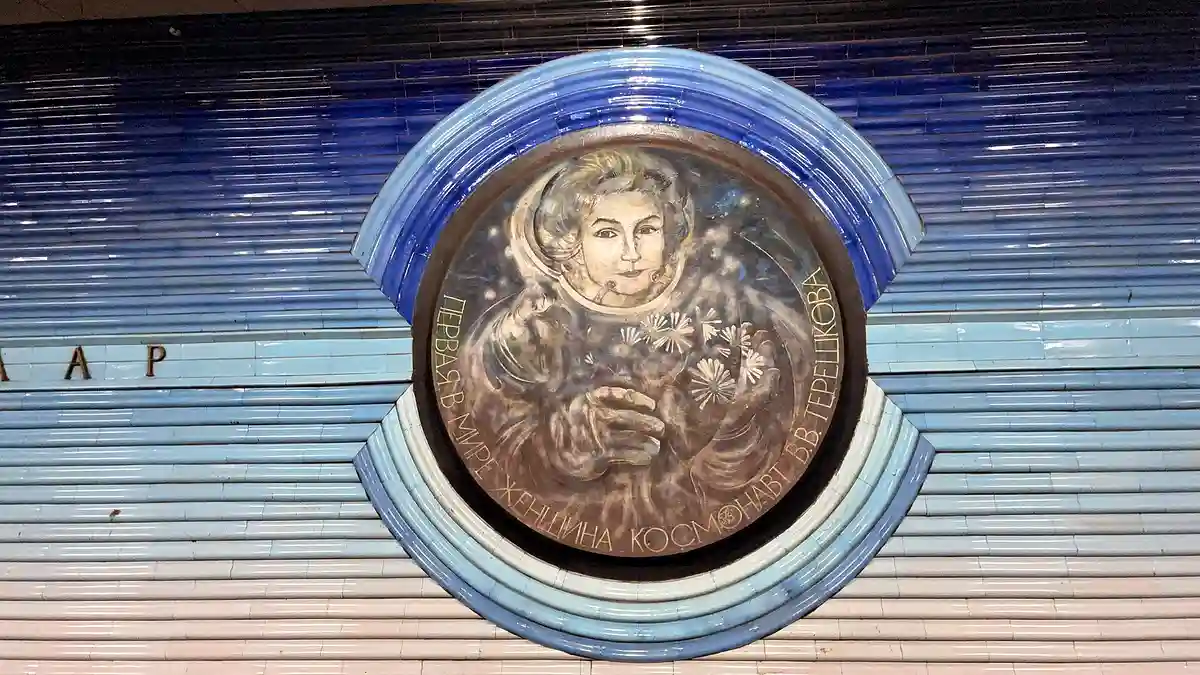
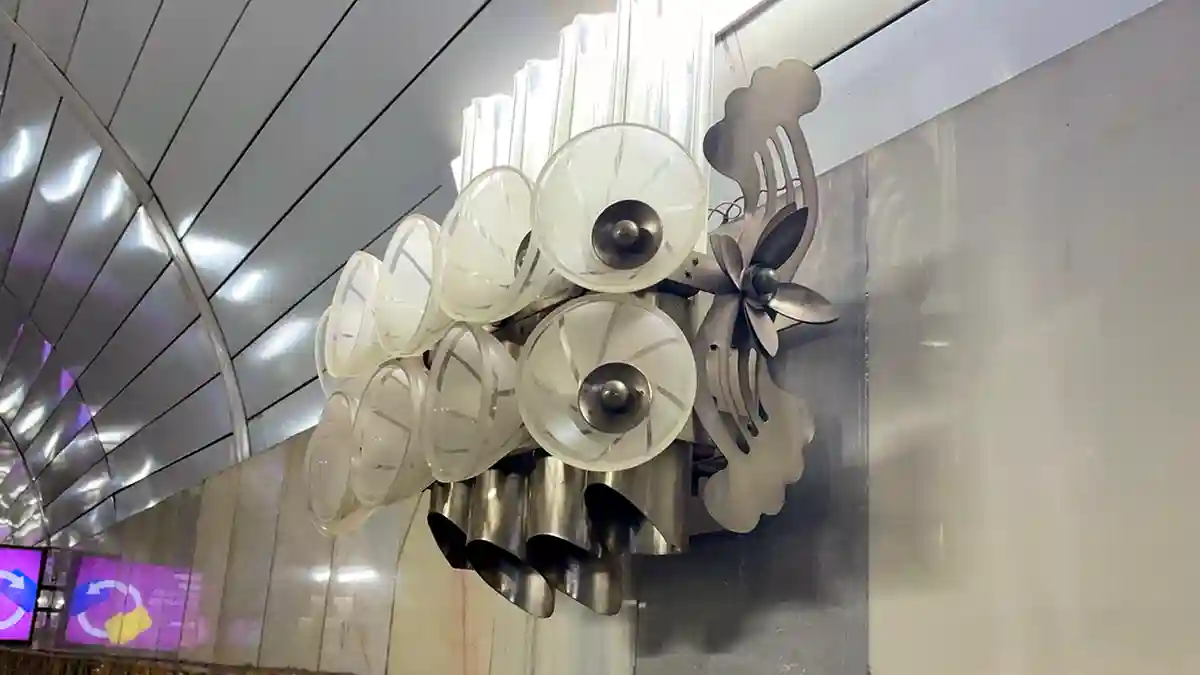
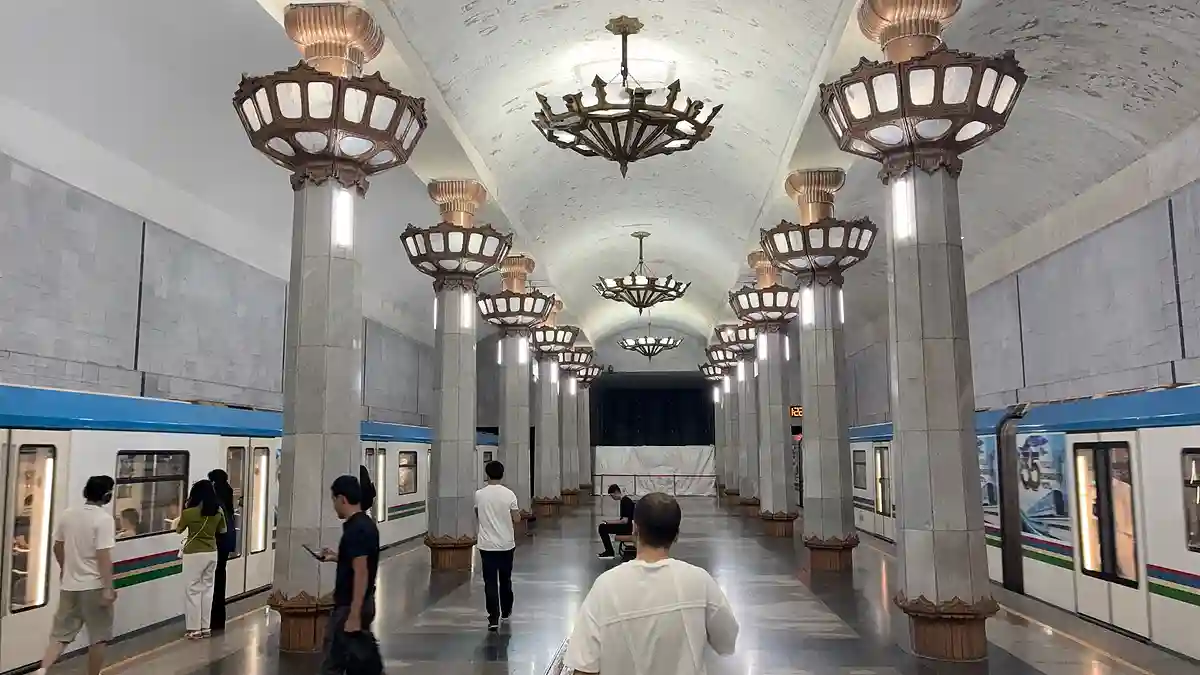
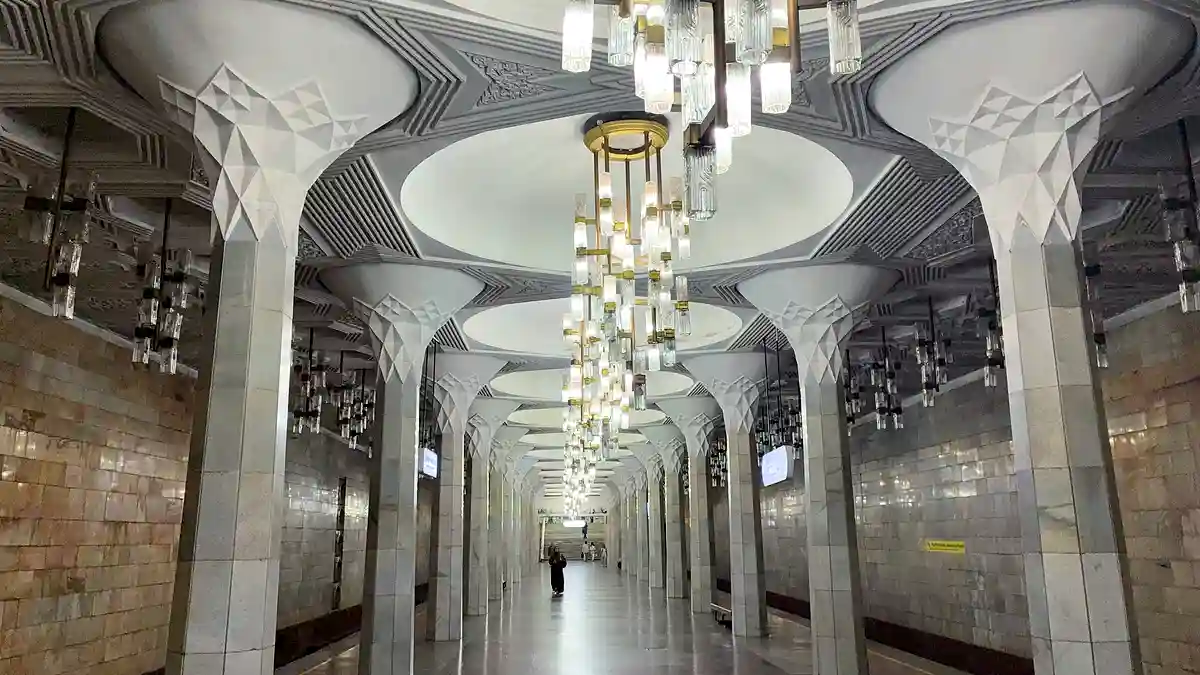
Ok, it’s not a very big system, but the Tashkent metro has a surprise in store for travelers. Some stations are spectacularly adorned with breathtaking art, unusual lighting, glass installations, and whimsical themes. So simply riding the train and getting off at stations along the way is a journey of discovery in itself.
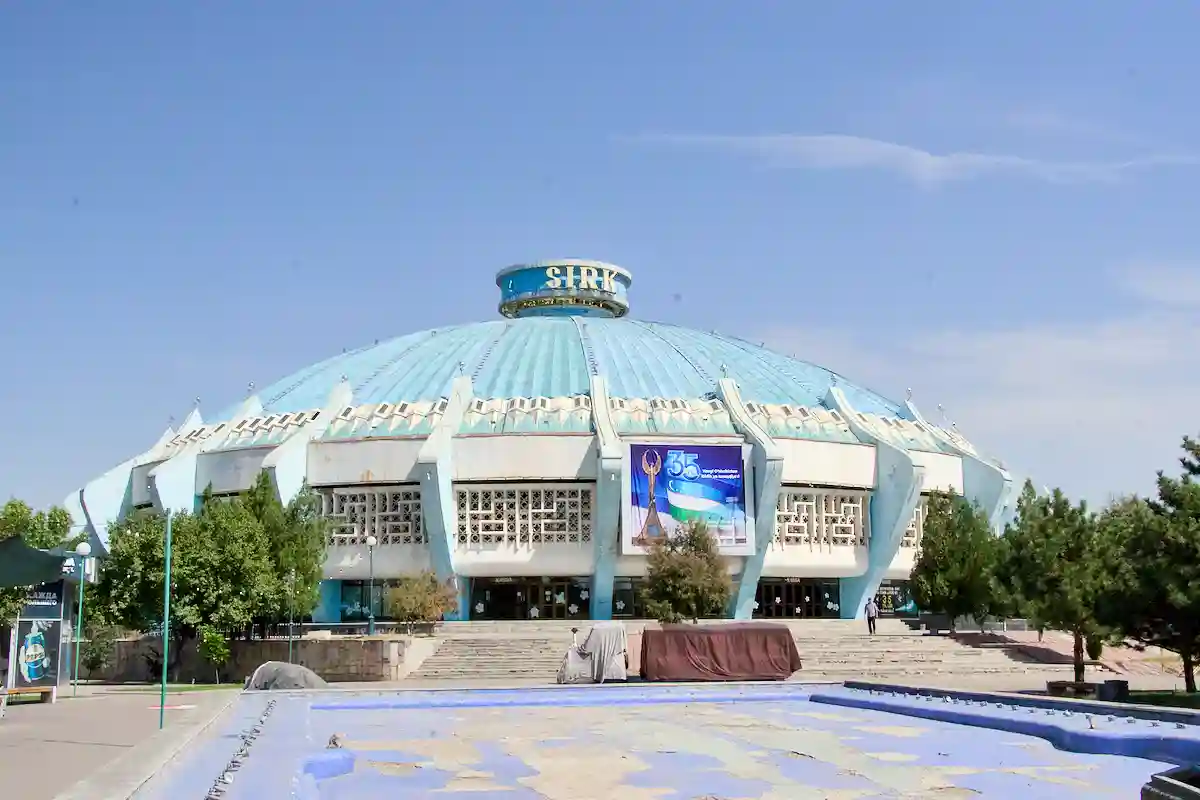
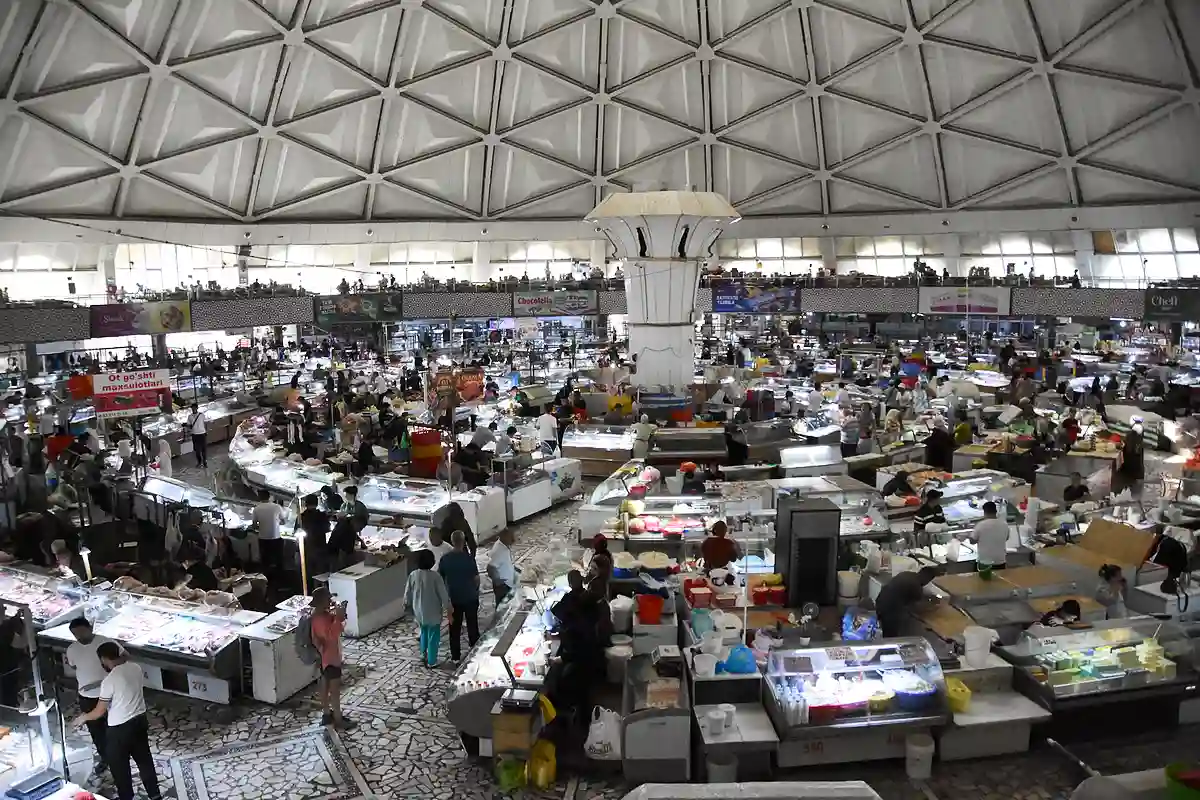
To reach our first destination (above ground), we walk a couple of kilometers in 30-degree heat. We’re on our way to the large Chorsu market, which is located in and around a large circular building with a domed roof. After walking for quite a while, we think we see it and head in that direction. But there’s “SIRK” written on the roof, and it turns out to be a closed and deserted circus venue, so we have to keep walking.
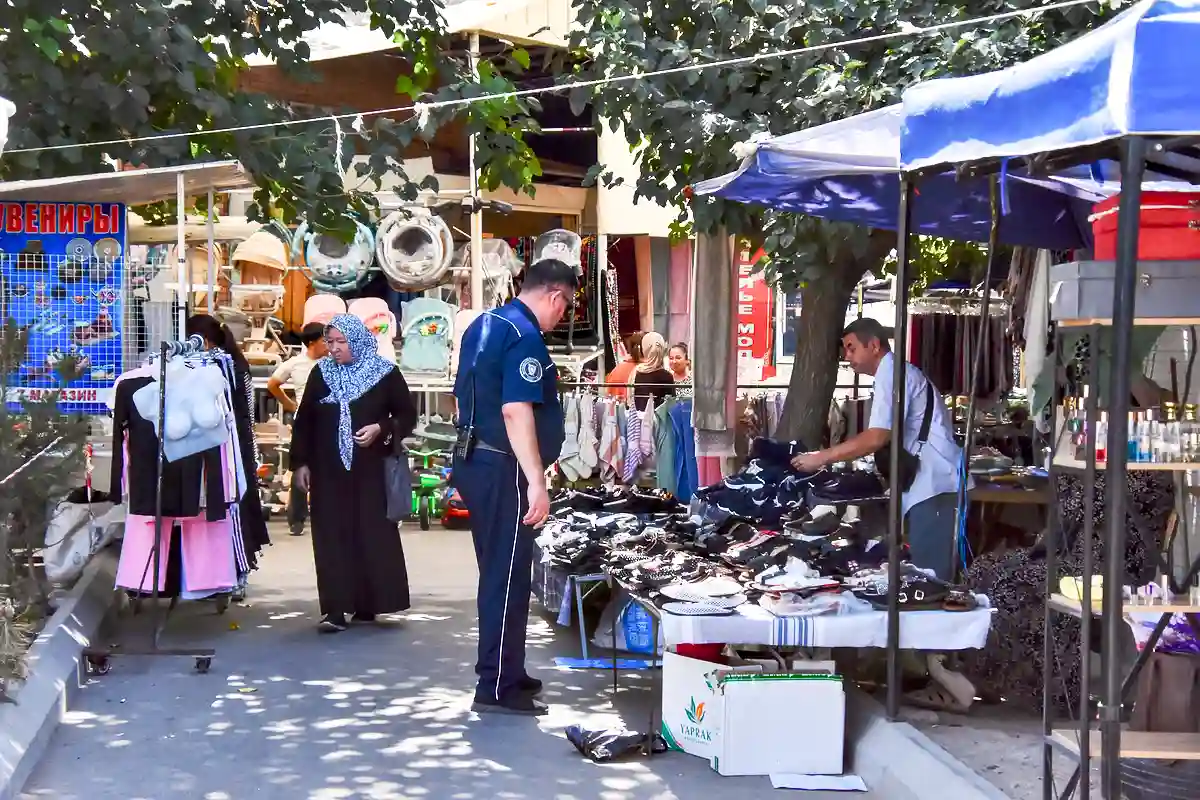
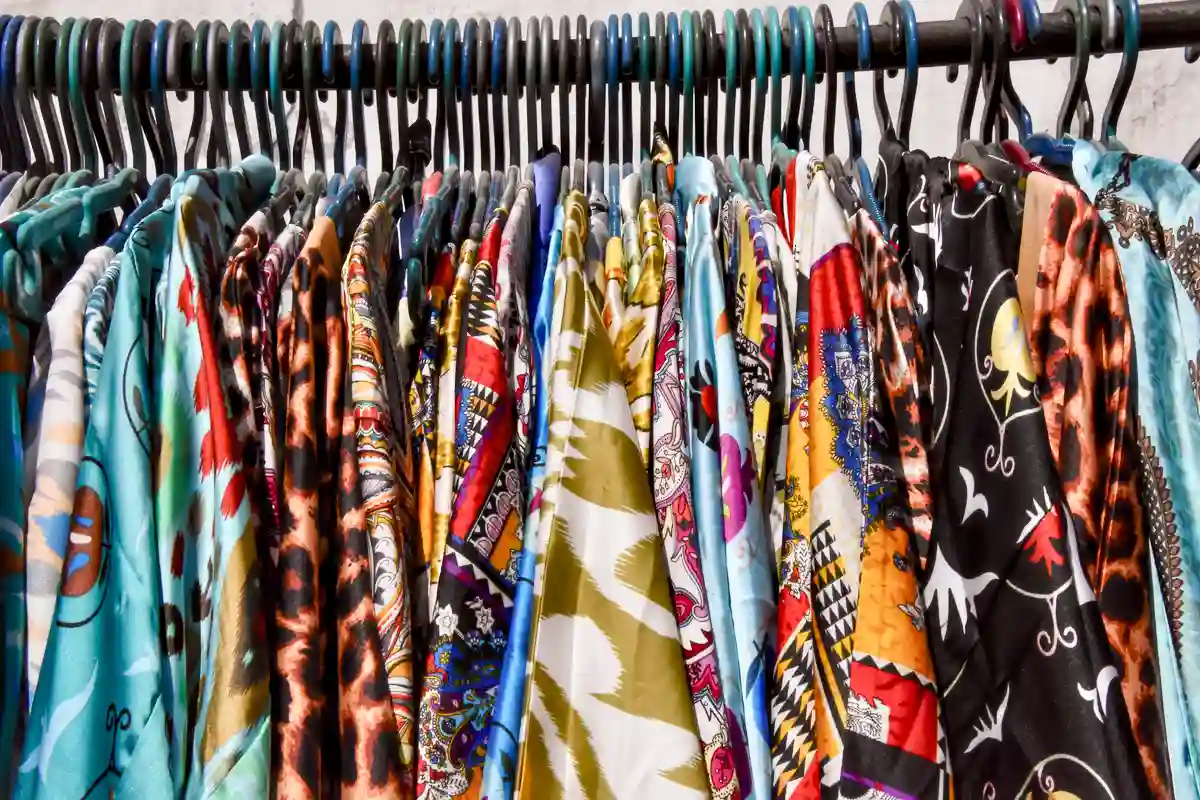
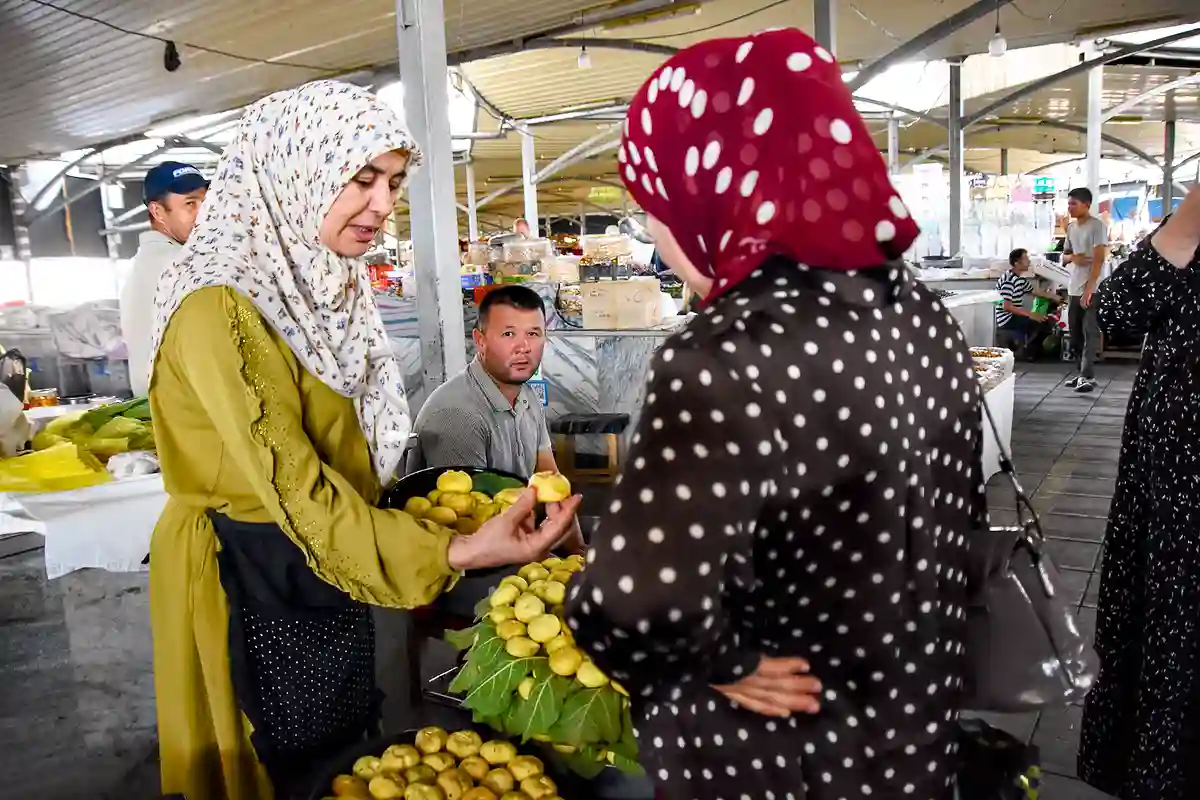
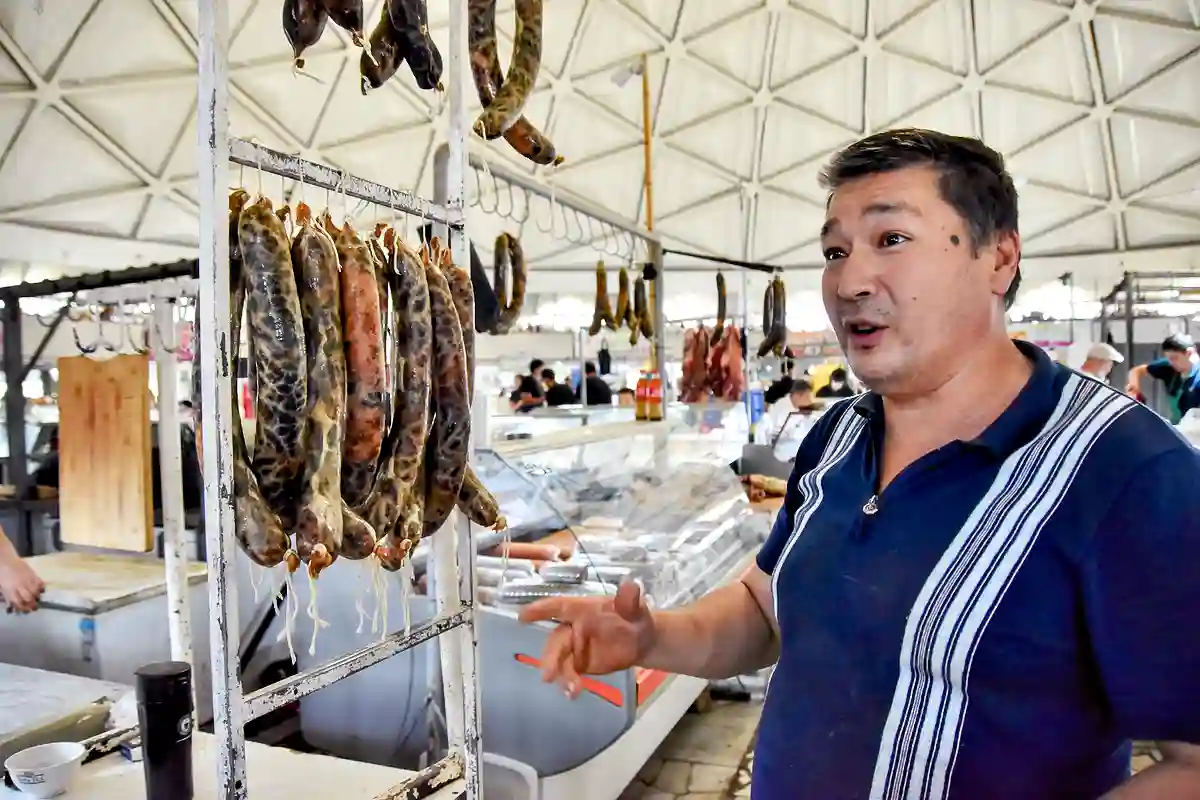
Gradually, stalls selling clothing and carts with nuts and spices spilling out of bags on the flatbed appear. The closer we get to the large market building, the more densely packed the stalls become and the more hectic the pace. Once we’re inside the massive dome, we’re met by endless rows of meat counters. Large and small cuts of thighs, shoulders, fillets, and offal are piled high on the counters. A man proudly displays his leopard-spotted sausages. “Horse meat!” he shouts cheerfully.
On the second floor, they sell spices, sweets, and bread. There are also a couple of bakeries here where fires burn in ovens so large that the bakers have to climb inside them with the loaves to be baked.
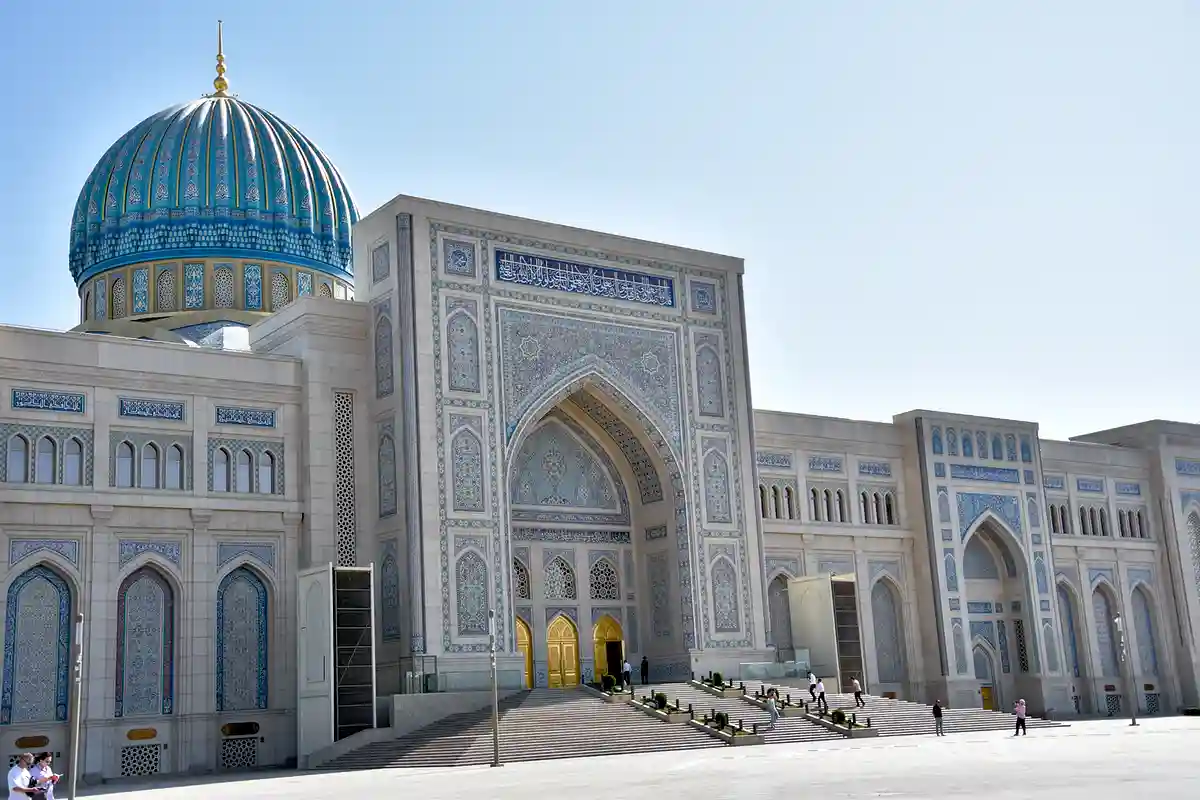
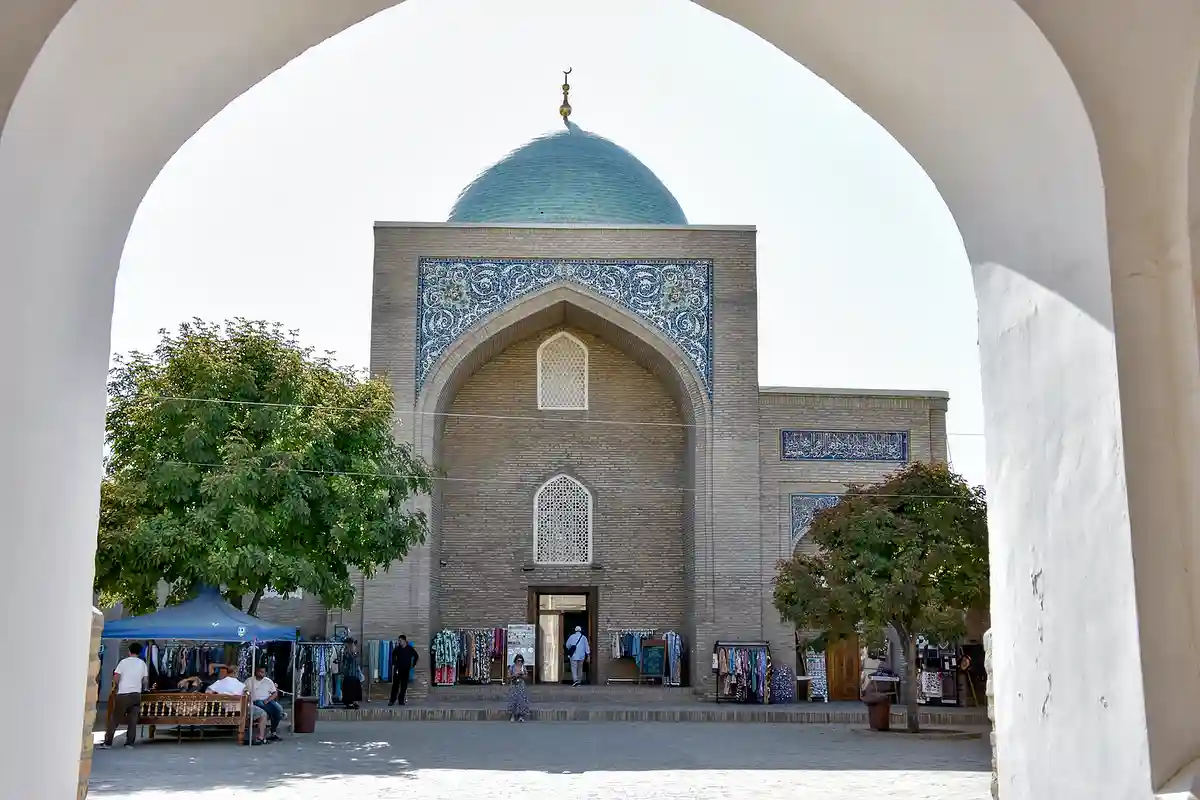
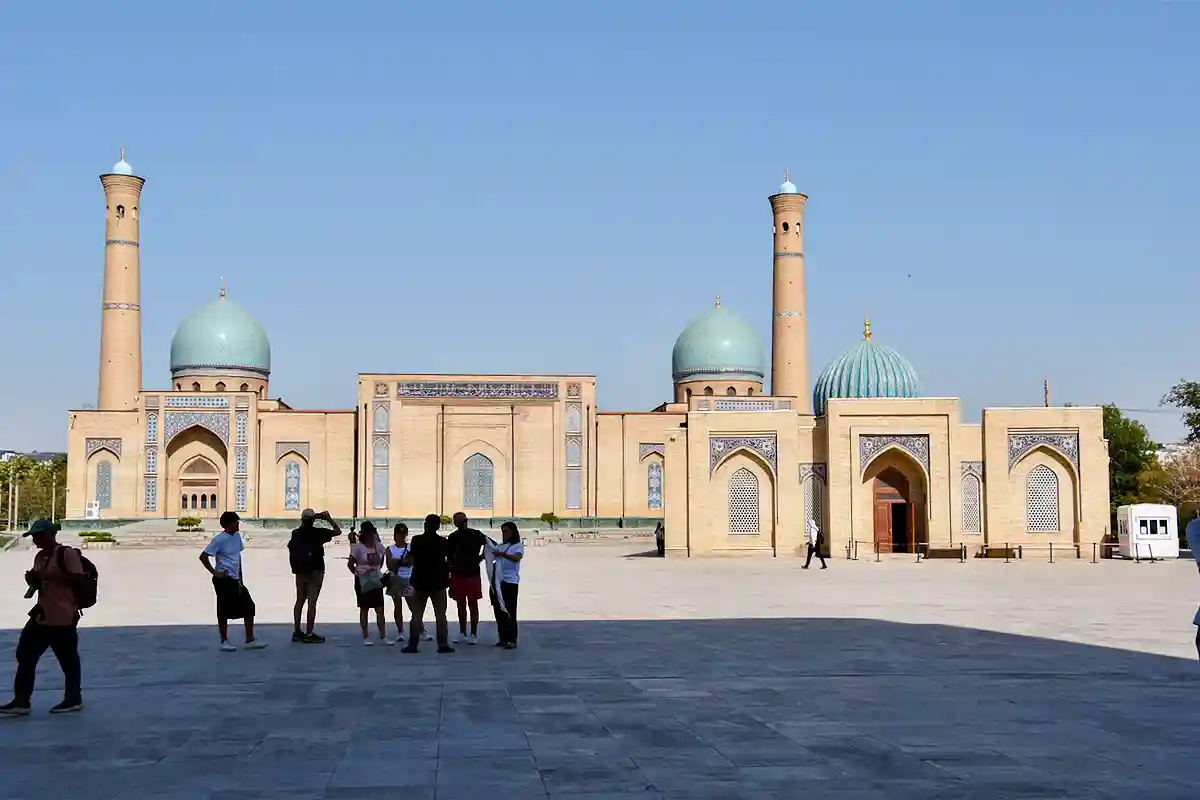
Uzbekistan seems to be striving to play some kind of central role in Islamic culture, and they have recently built a gigantic replica of the kind of mausoleum found in Bukhara or Samarkand. It is an “Islamic Civilization Center” with a museum and research on Islam’s role in culture, education, innovation, and more. We never go inside; we’d already walked a long way in the heat, and the admission fee is quite expensive, so we contend ourselves with wandering around the area, which is home to several mosques, mausoleums, and madrassas (Koranic schools).
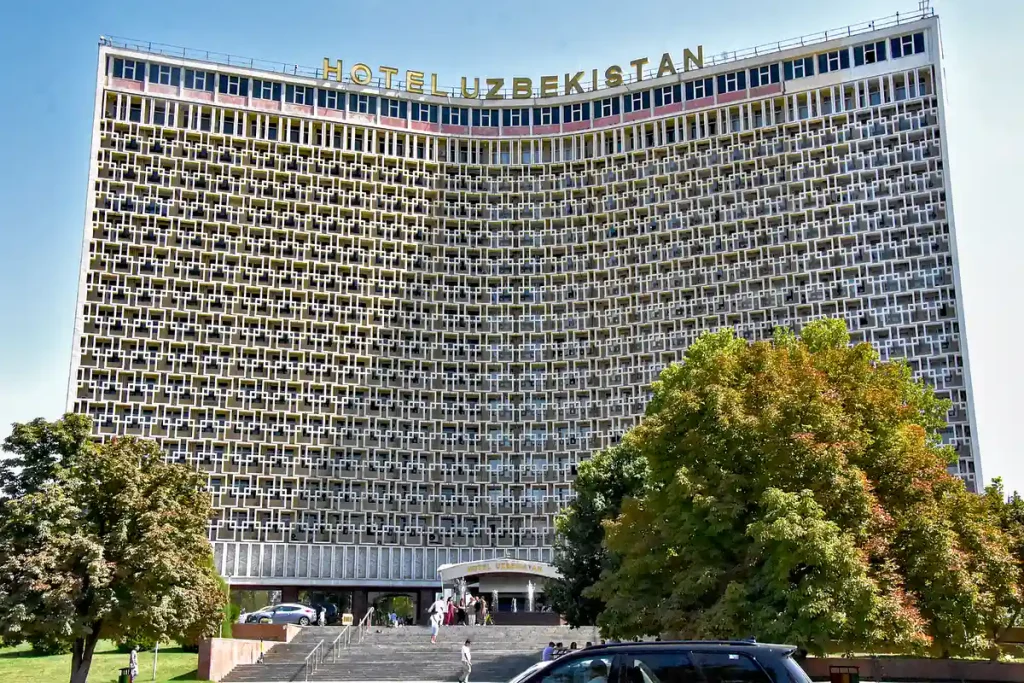
There is, however – perhaps not exactly a city center, but a sort of heart of the city called “the boulevard”. A promenade that leads from a cluster of administrative buildings through a park to the iconic Hotel Uzbekistan. A Soviet concrete colossus that has a quirk – it’s folded in the middle.
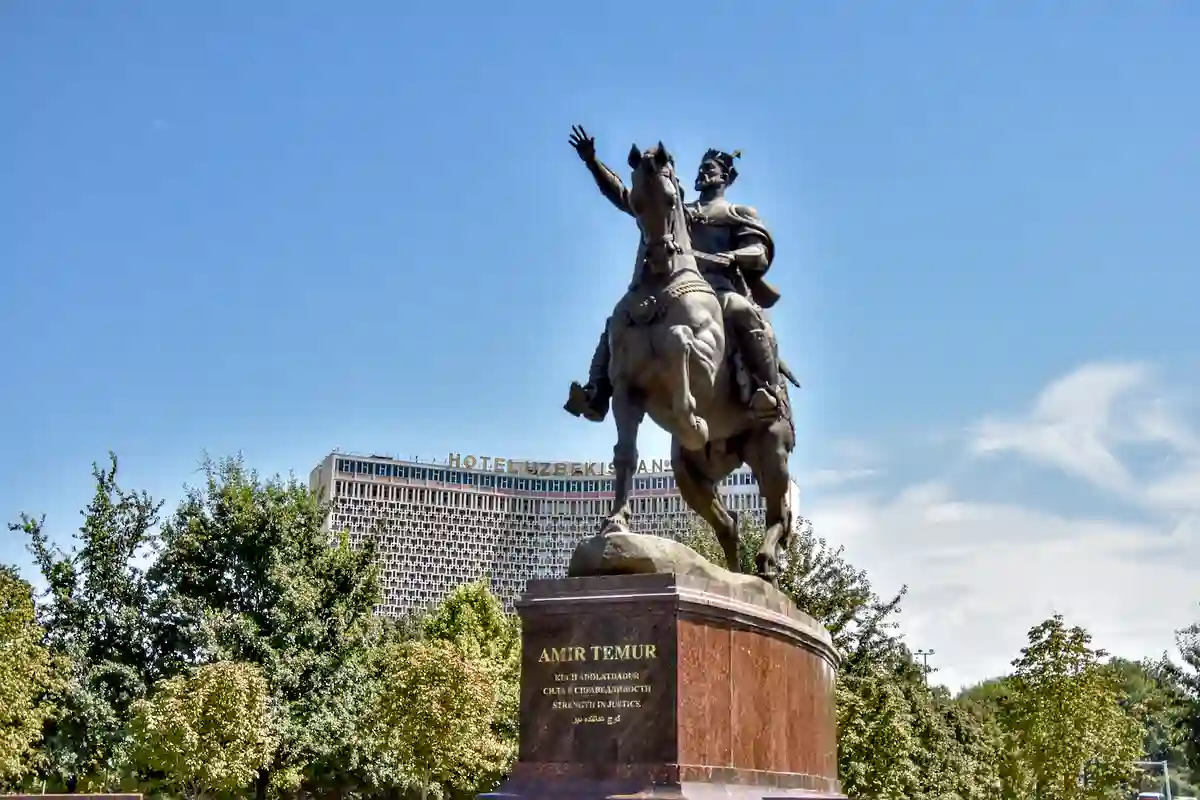
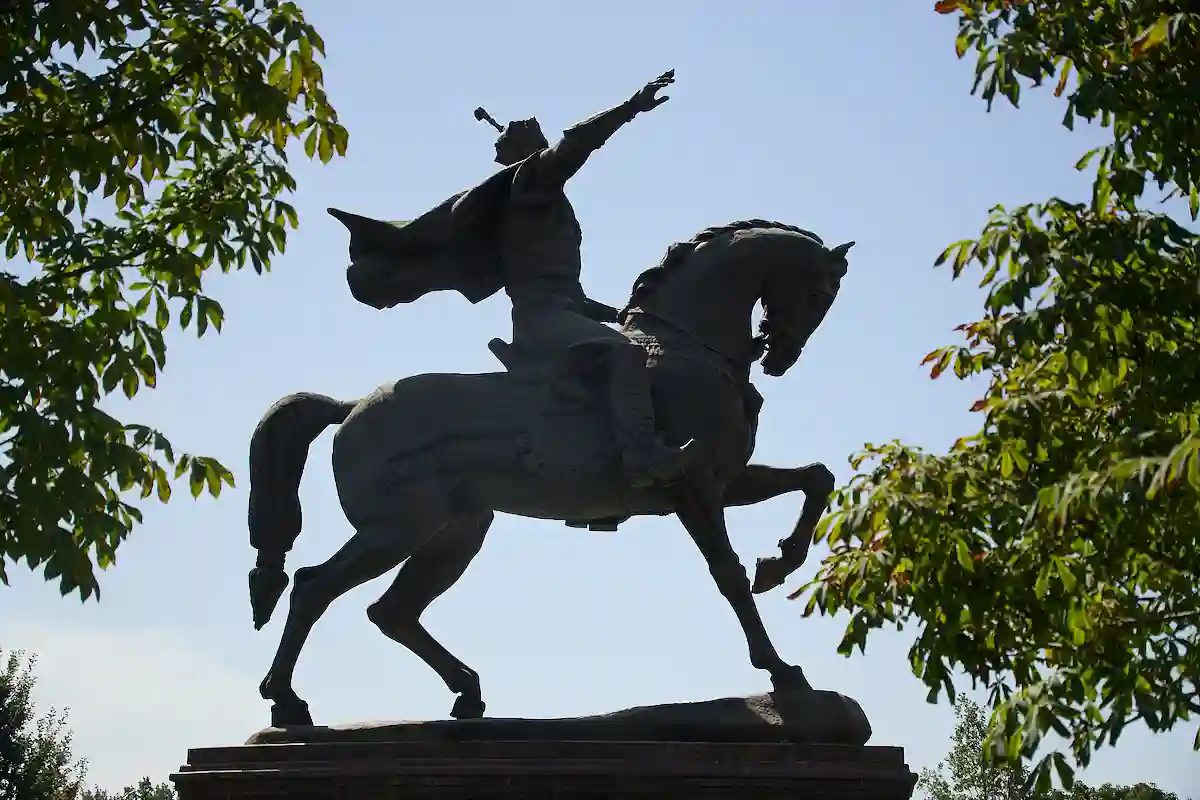
Nearby stands a statue of a man on a horse. The man is making a gesture that would not be permitted today. But this is one of several tributes in Uzbekistan to one of history’s most ruthless rulers and conquerors, Amir Timur. Or, as he is commonly known in Europe, “Timur Lenk.” He was born in what is now Uzbekistan and, during the 14th century, waged a series of wars that created a vast and powerful empire. We’ll tell you more about Timur here.
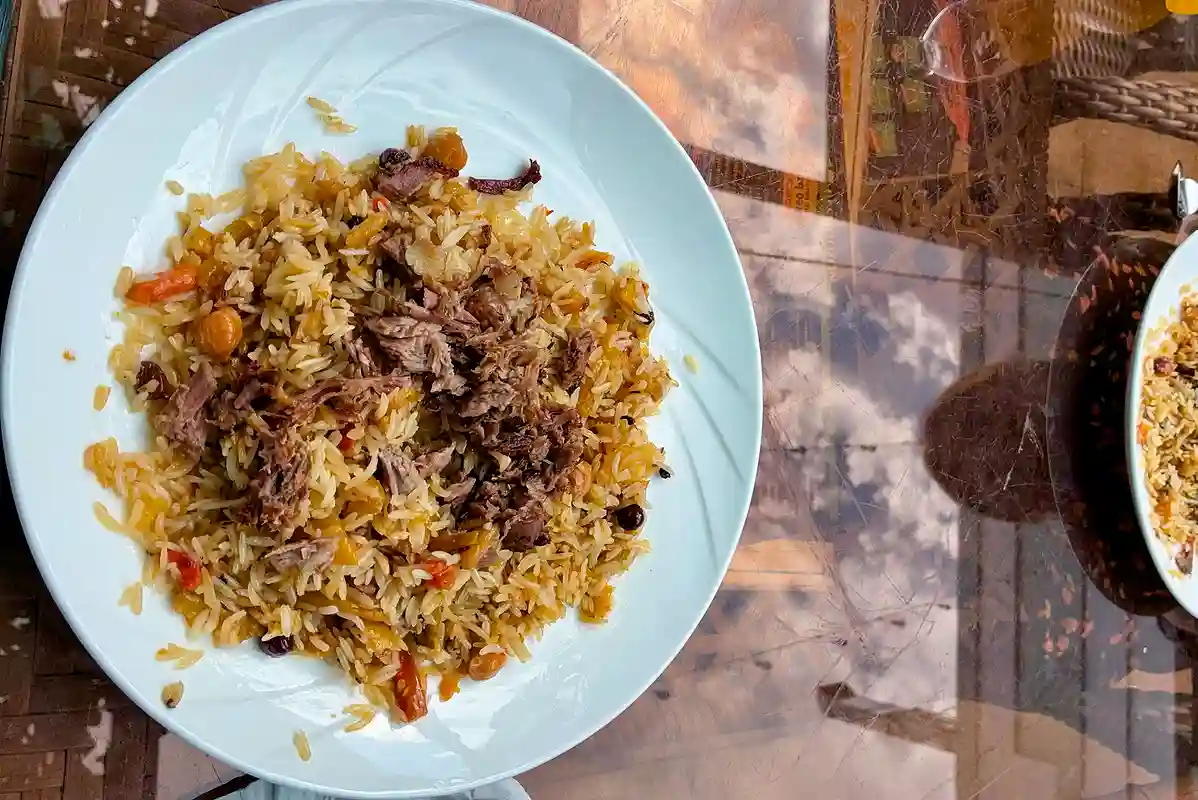
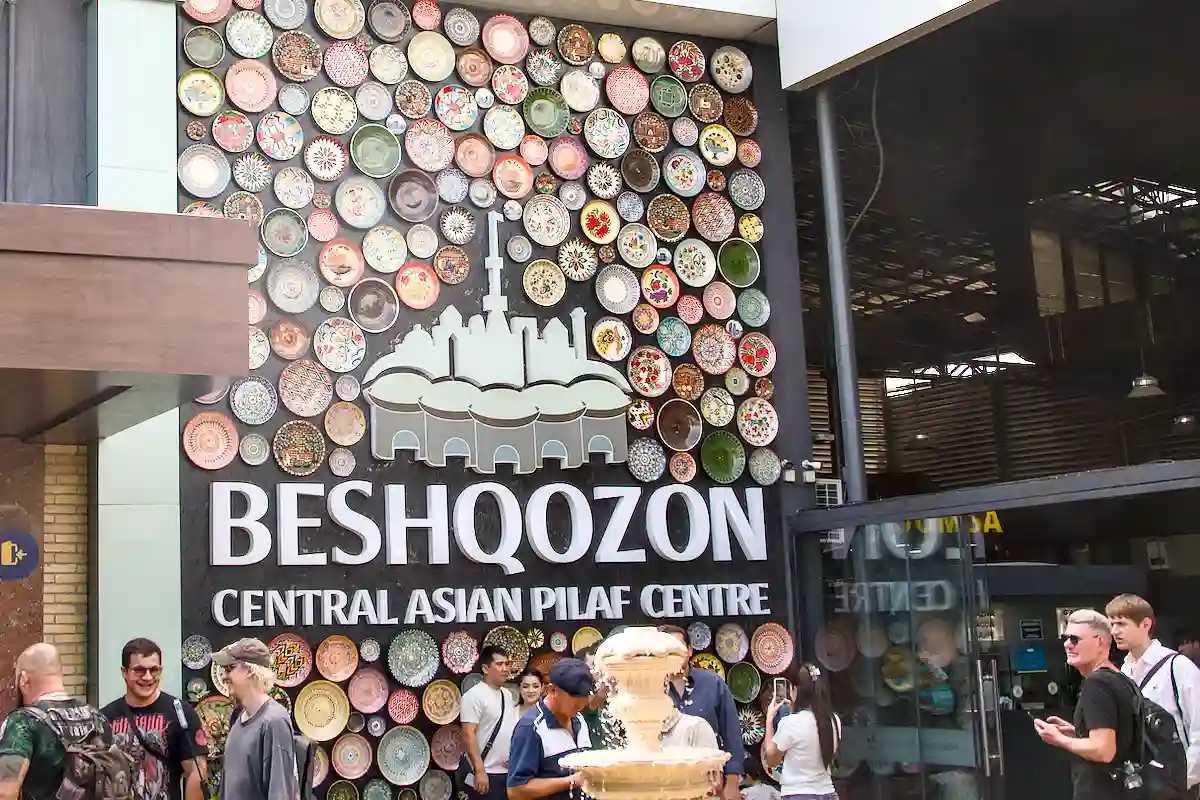
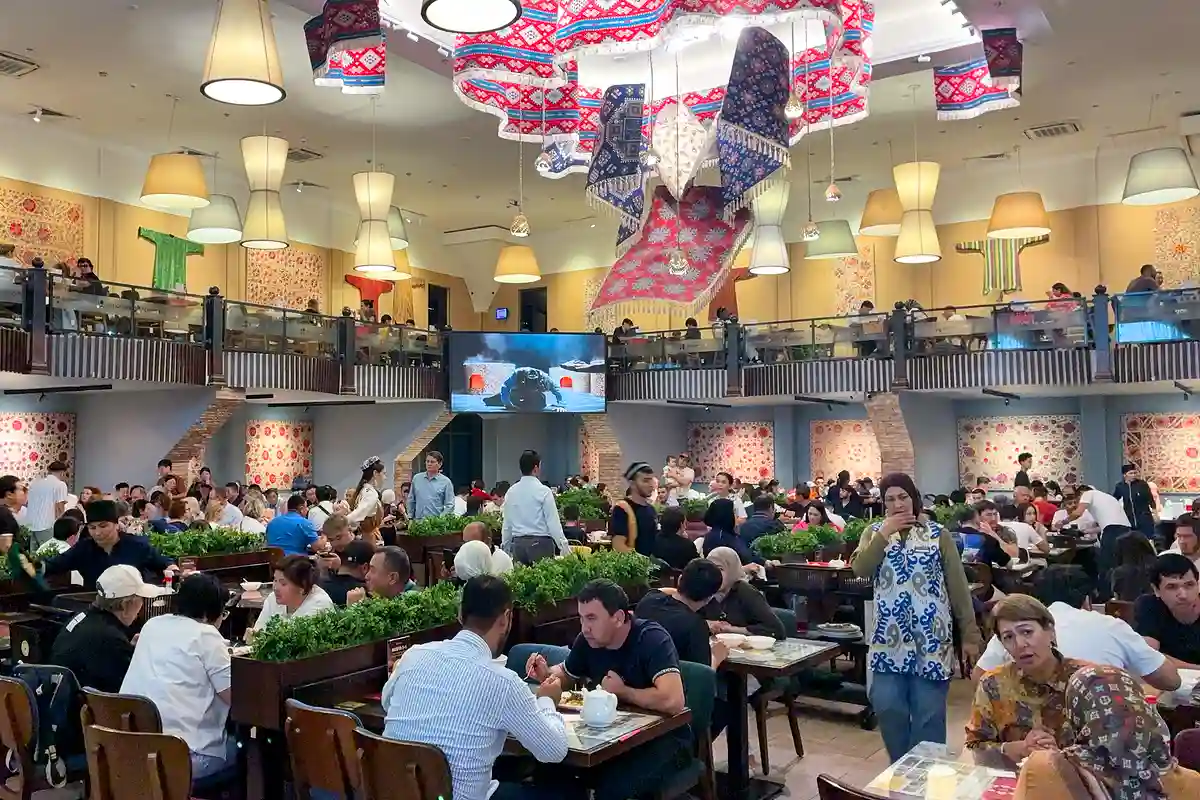
Plov is probably Uzbekistan’s national dish. It’s on every restaurant menu, and some places even serve nothing but plov. Essentially, it’s the same dish as pilaf: rice with vegetables and meat. We visit Tashkent’s undisputed plov temple, Beshqozon, a huge restaurant where plov is cooked in large cauldrons. We choose one of the simpler plovs and find that it tastes absolutely exquisite. In fact, it’s the best plov we’ll have on the entire trip.
We hear that there is a Korean population in Uzbekistan and that Tashkent has a Korean community. The background to this is quite tragic. People from Korea moved to southern Siberia in Russia in the 19th century to find land to farm and make a living on. But a hundred years later, Soviet leader Joseph Stalin ordered the 500,000 Koreans in the country to be forcibly deported to Central Asia; paranoid as he was, he suspected they were spies. And foolish as he was, he didn’t realize that the Koreans actually hated the Japanese for having occupied Korea.
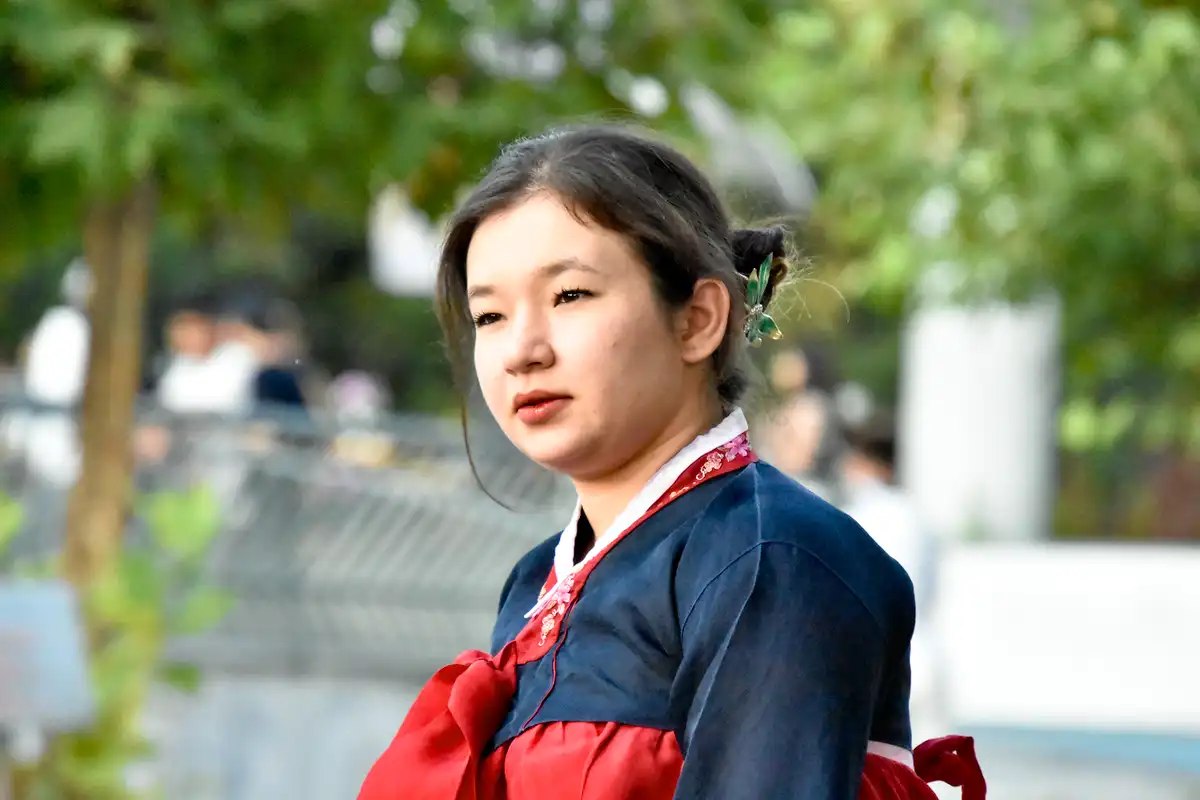
In Central Asia the Koreans began building irrigation systems and established themselves as rice farmers in their new homelands. Today, it is estimated that approximately 150,000 Koreans, or “Koryo-saram” as they are called, live in Uzbekistan, Kazakhstan, Kyrgyzstan, and Tajikistan. Their presence today is most noticeable in the excellent Korean restaurants found in several cities across the region.
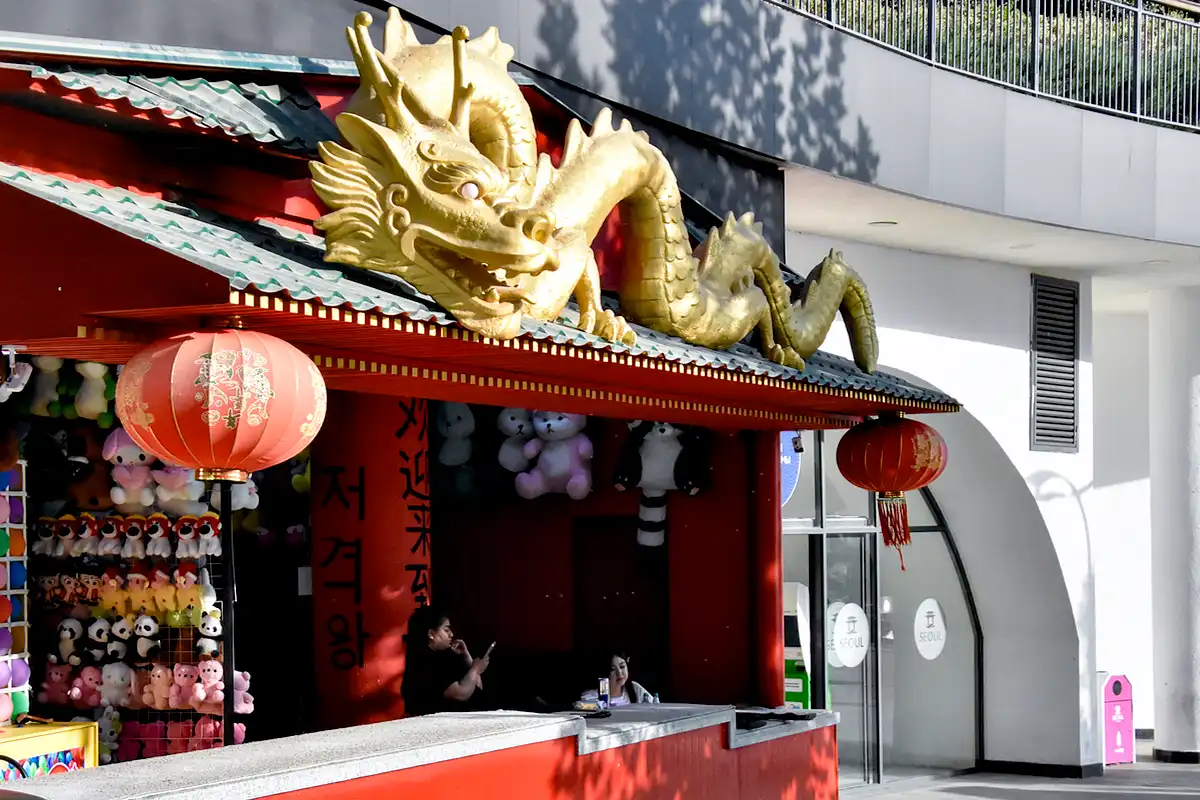
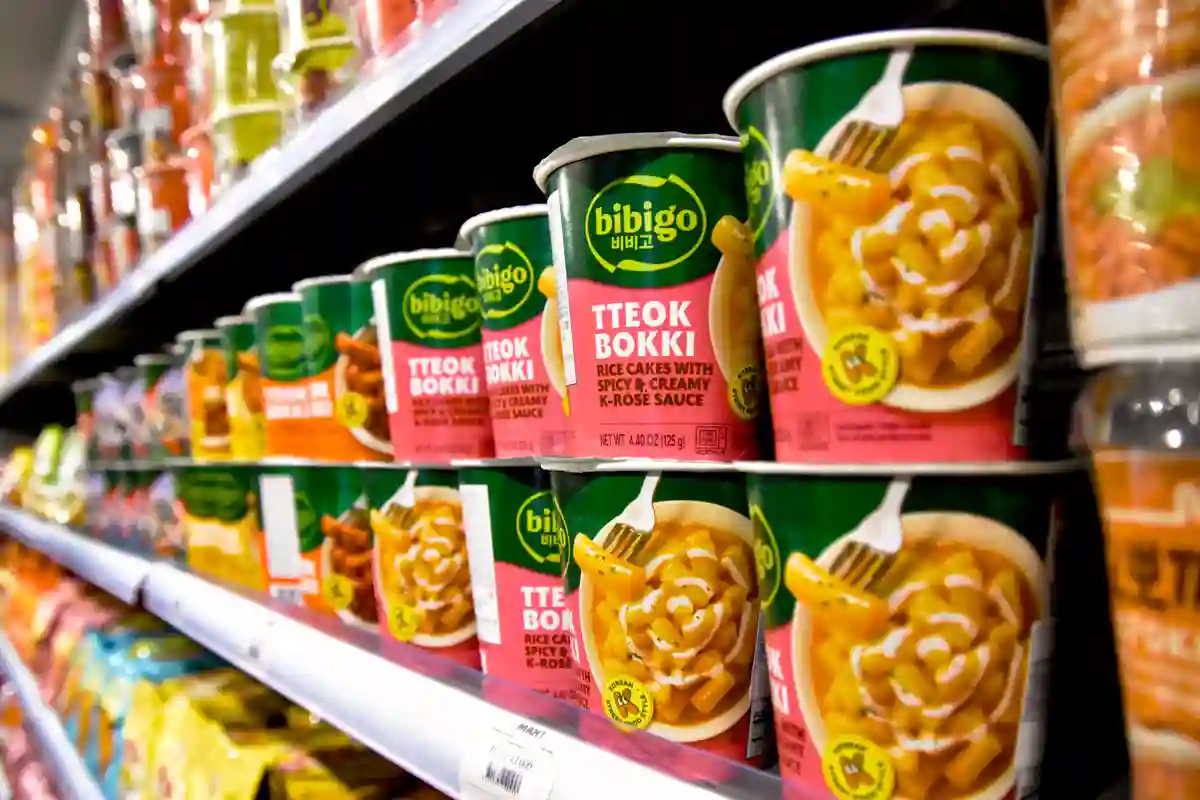
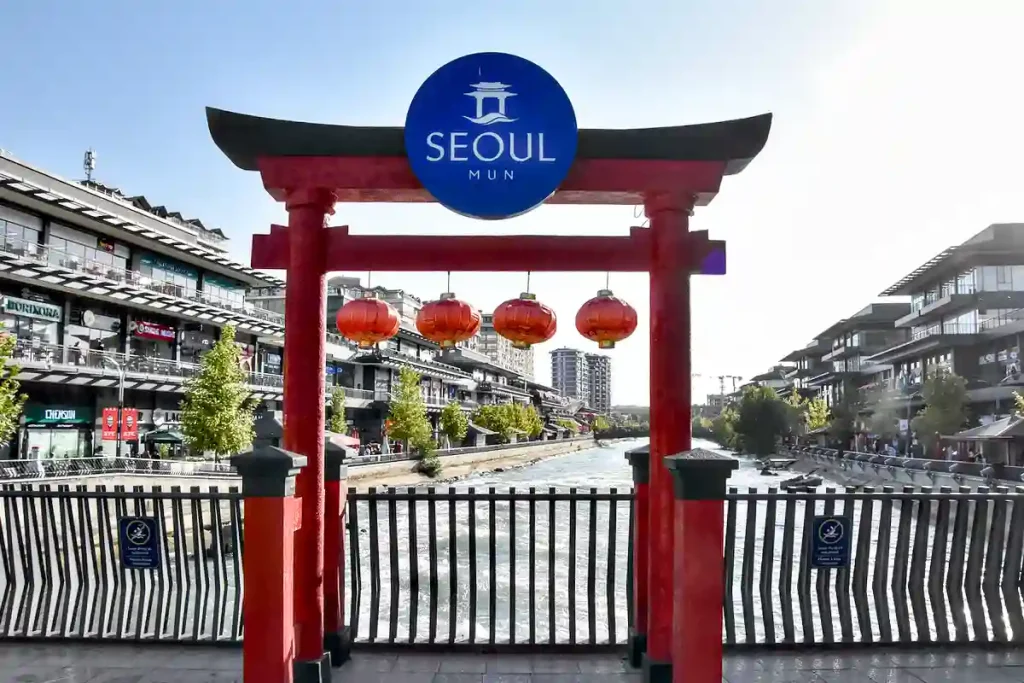
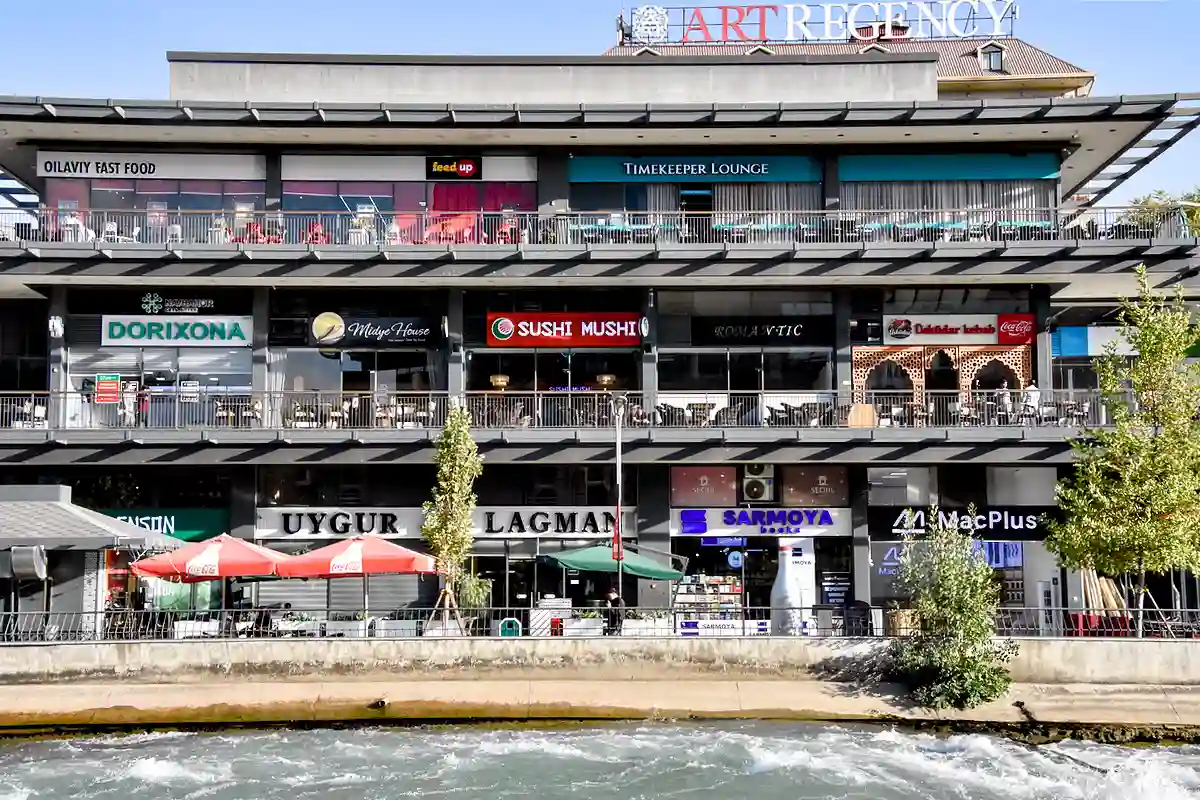
We took the subway to the southern parts of Tashkent where the Koreans were said to live. But when we got there, we found a gleaming new restaurant and shopping district on both sides of a canal. Although the area is called “Seoul mun,” we didn’t perceive it as particularly Korean, except for a few East Asian restaurants.