For many years Albania was a white spot on the map. The country was hermetically closed and very little information seeped out. The only visitors welcome here were from “friendly societies” and from them you would either hear that Albania was a paradise on earth or that it was a gigantic prison camp.
But since more than 25 years everyone can visit the country, and more and more people do. Most tourists go to the beaches and stay there, but Albania has so much more to offer, and we wanted to see that. Mountains, cities and plains, and the beaches.
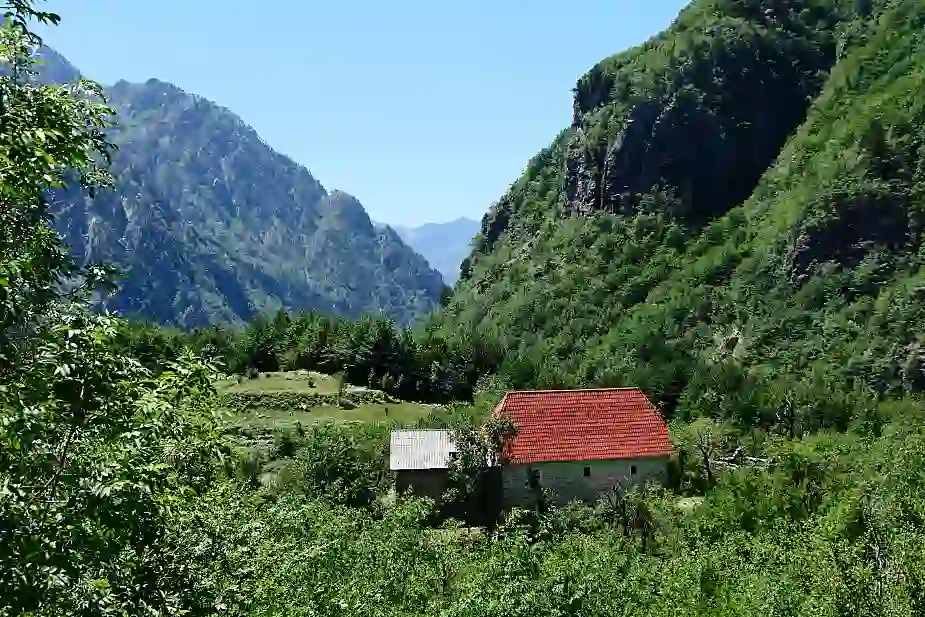
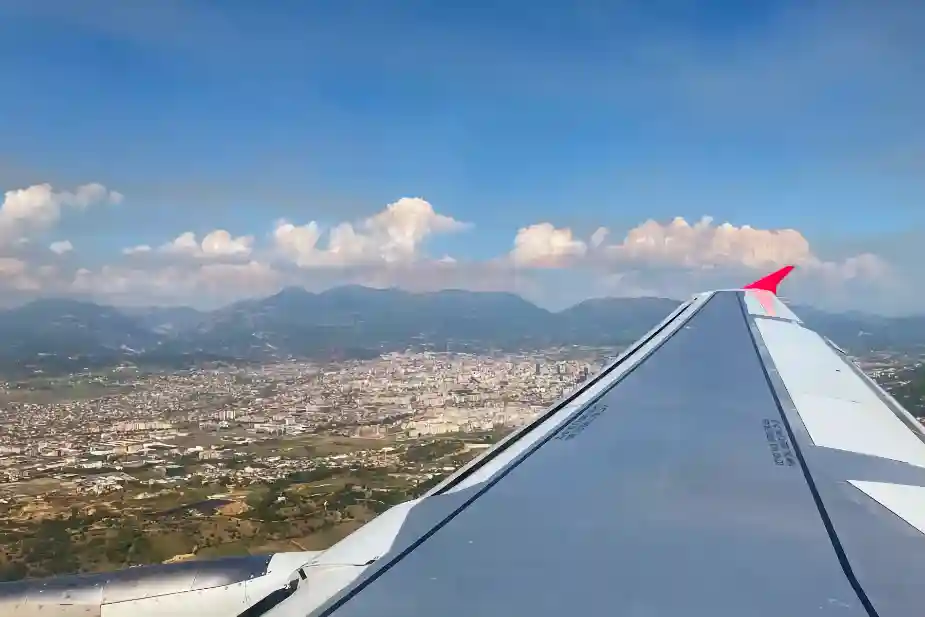
Albania is probably one of the most mountainous countries we have ever seen. And these mountains are steep and tall, the highest summit is at 2.751 meters. The mountains in the north look quite similar to the Dolomites in Italy, with their prickly and evil-looking tops where snow is still seen in high summer. In the more southerly ranges mountains are lower but still impressive. They form dramatic backdrops almost everywhere in the country.
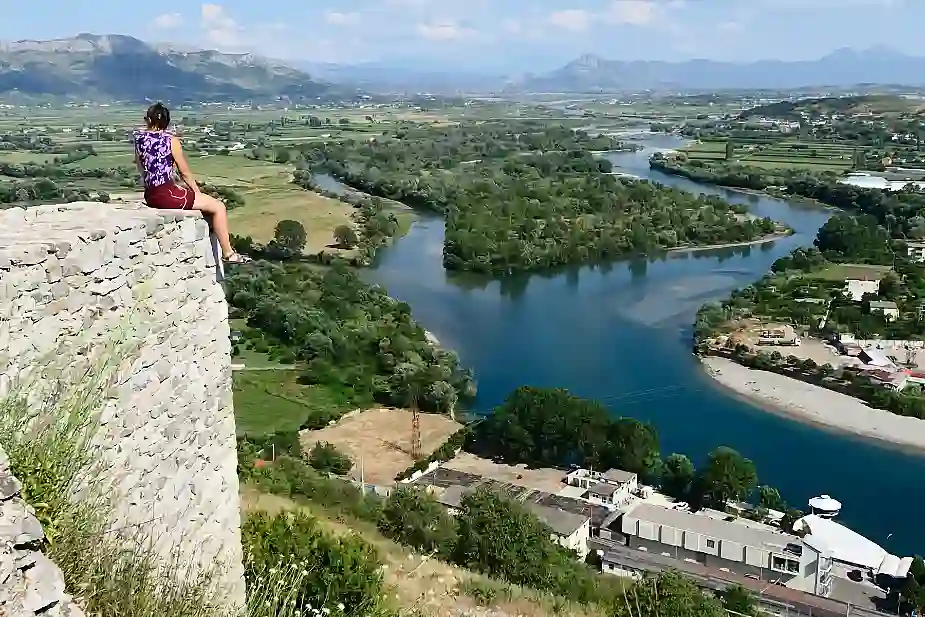
Between the mountain ranges there are fertile valleys watered by melting snow from the hills. Winters can mean lots of snow, in the north it can be five meters thick. Albanians use the mountain water for electricity and for watering plants, but also for tap water, and it’s a rich resource that people actually seem to use in excess. Washing your car every day is not unusual. The tap water is fresh but we don’t drink it, for safety we stick to bottled water.
Albanians are well-known for their hospitality. It’s a tradition from ancient times that many still respect. Actually a guest should be treated like a god, so says the same set of ancient laws that also regulate the horrible bloodfeud, Albania’s form of vendetta. More on this here.
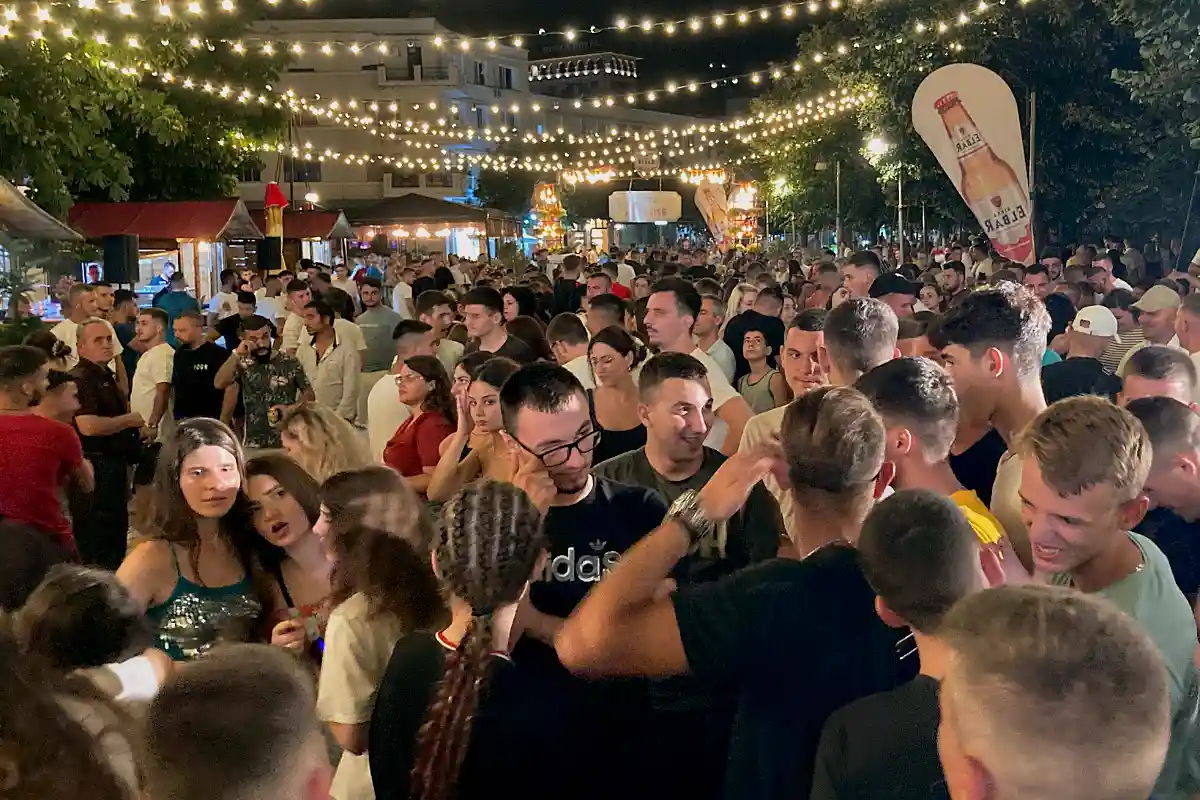
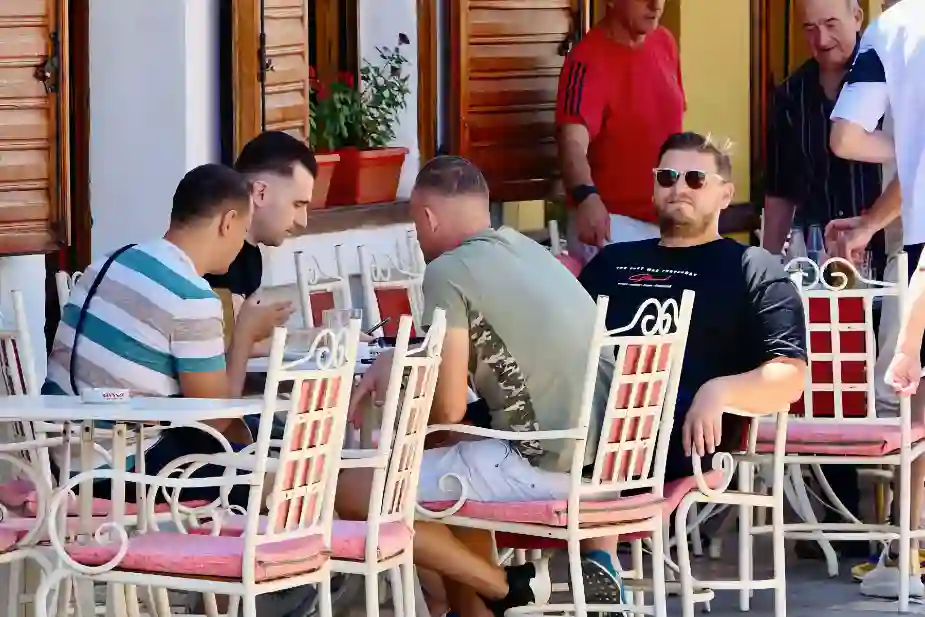
It’s easy and risk-free to travel around Albania, even though the country has one of the most ruthless mafia clans in Europe. But it’s nothing that a tourist will notice. You probably will note however that the “gangsta” style of hair and clothes is very popular with the cities’ young men.
This is a land of contrasts. One of them is this: Albania is one of the poorest countries in Europe, yet everyone we see has good-looking modern clothes and their cars look shiny and new, many of them are expensive black Mercedes.
But the weak economic status is evident when it comes to the prices for food and hotel rooms, that are often between a third and half the prices we see in west European countries. And they are kept low by young albanians slaving 12-hour shifts for pocket money.
Down on the riviera however, the prices are roughly the same as at home.
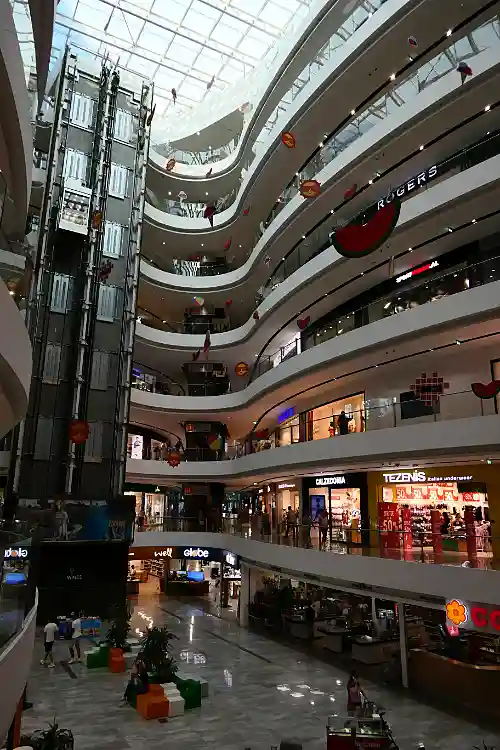
It’s almost surreal, but just 40 years ago Albania was a bankrupt and stagnated dictatorship. Today in Tirana and other major cities office buildings with glass facades spring up everywhere, on major roads petrol stations are found every 100 meters, and cafés and restaurants all have wireless Internet.
We ask people if there has been some kind of Marshall plan funding for all this, but they deny this. Probably the increasing tourism gives a healthy financial injection. And many Albanians live and work abroad and send money home.
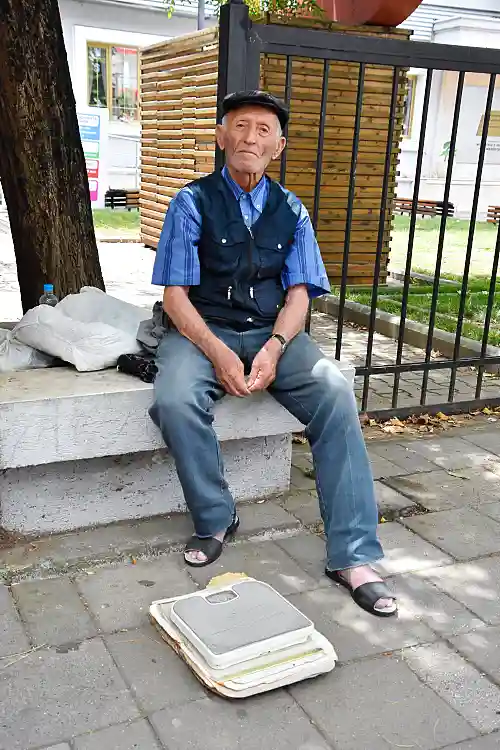
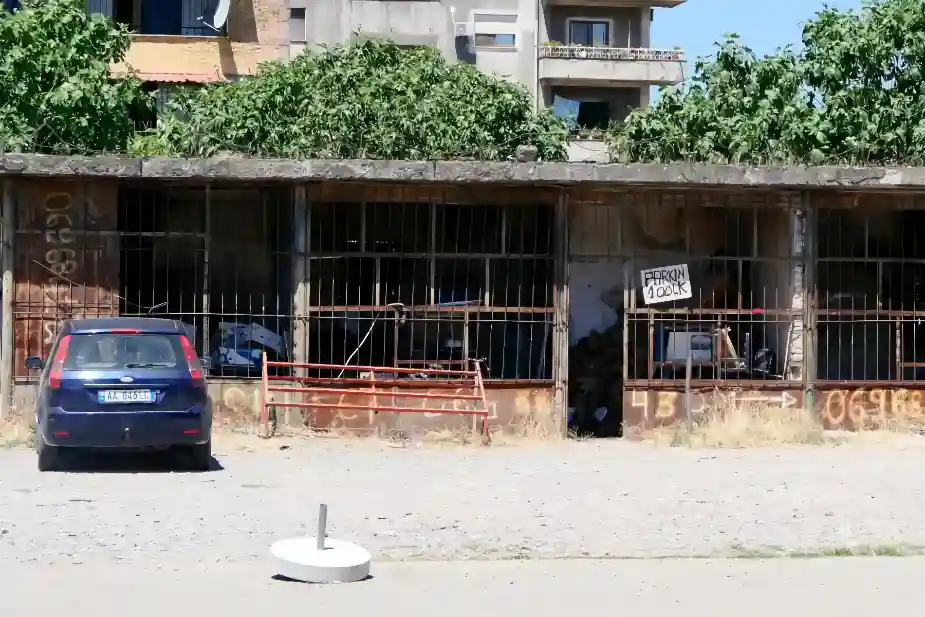
But we also find that there’s plenty of inventive ways to make money here. Rent out parking space on some unused piece of ground for example. Sell homemade “raki” in PET bottles*). Claim a part of a beach and rent out deck chairs. Build a hotel. There are lots of attempts at finding a pot of gold, but many also fail. Closed down petrol stations are abundant. Unfinished buildings are everywhere, in the cities and along the roads. Concrete skeletons being buried in bushes and grass. People say it’s “illegal” buildings, stopped by the authorities.
*) Raki is a form of brandy.
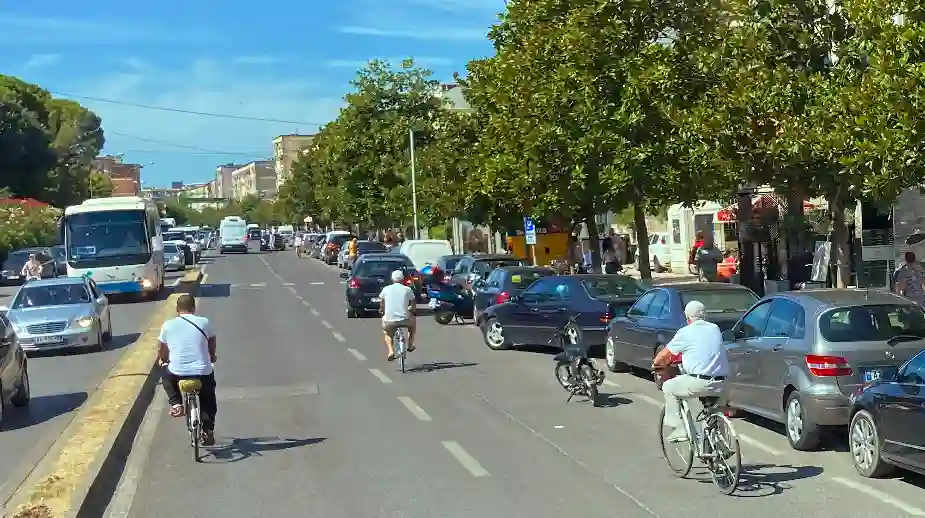
Finally – the most striking contrast is how the traffic works. No rules whatever are followed here. Every driver tries to get ahead at all costs, cars are parked in the middle of the street, bikes are pedalled on the wrong side of the road, etc. Driving through a roundabout is a nightmare with cars moving in from every direction all at the same time.
Policemen are present everywhere, but they never interfere. But to be fair the drivers seem to have adapted to this chaos, and the traffic flows for the most part without severe accidents. It’s a kind of a mutual law-of-the-jungle understanding. Just look at this car ballet in a narrow street corner i Gjirokaster:
And this view of everyday traffic in Tirana:
So Albania has seen dramatic events the last 30 years, but it seems the Albanians have developed a kind of social agreement that most people are in on, to get them through the chaos, the corruption and the sad economic prospects. And maybe that creates some informal national bond. And this could be the reason why Albania has probably the wold’s most tolerant attitudes when it comes to religion. Mosques and churches lie side by side in the cities and there is obviously no hatred or prejudice against the other religion or its worshippers. And every morning the cafés fill up with men talking and drinking strong coffee, new houses are built, the government governs on and most things work if not perfect so at least satisfying.
In the next chapter we reflect on the extraordinary times when a paranoid dictator locked up his fellow countrymen and wanted to hide them all underground.