What do you expect when going to a place like Vienna? Probably a lot of thing that all start with “old”. Old palaces, old fine art, old traditions. And sure enough this town with its grand history is very busy nurturing its memories of the old times when Austria was a mighty empire and its capital city a major cultural and intellectual hub in Europe. But it isn’t today and that’s why a visit to Vienna feels a bit like stepping into another dimension. A parallell age.
Buildings, decoration, food traditions and anything from the Kaiser’s days is cared for and preserved, and in many areas palace and castles dominate with their multitudes of baroque statues and gardens. Sure, Vienna has room for the modern life also, but it’s not allowed to dominate as much as in other cities we have visited.
We arrive in Vienna on a sunny spring day before the real warmth has arrived. Our hotel is quite near most of the city sights and right by a Metro station. This place is actually called “Schwedenplatz”, the Swedish square, so named in gratitude for aid sent to needy Austrians after WW1. The Donaukanal running by is a popular hangout with several bars and restaurants.
Only a few blocks away we find the mighty St. Stephen’s Cathedral. What is spectacular about it is the overwhelming amount of decorations inside the church. From every part of the interior cherubs peep out, holy men with funny faces stare and even the architect leans out of a wall.
And it’s the same situation outside, in Vienna’s old town, there’s statues and monuments everywhere. Often depicting people in dramatic and violent situations, with twisted facial expressions. We have sometimes seen something similar in Rome and Madrid, but not by far so abundant as in Vienna.
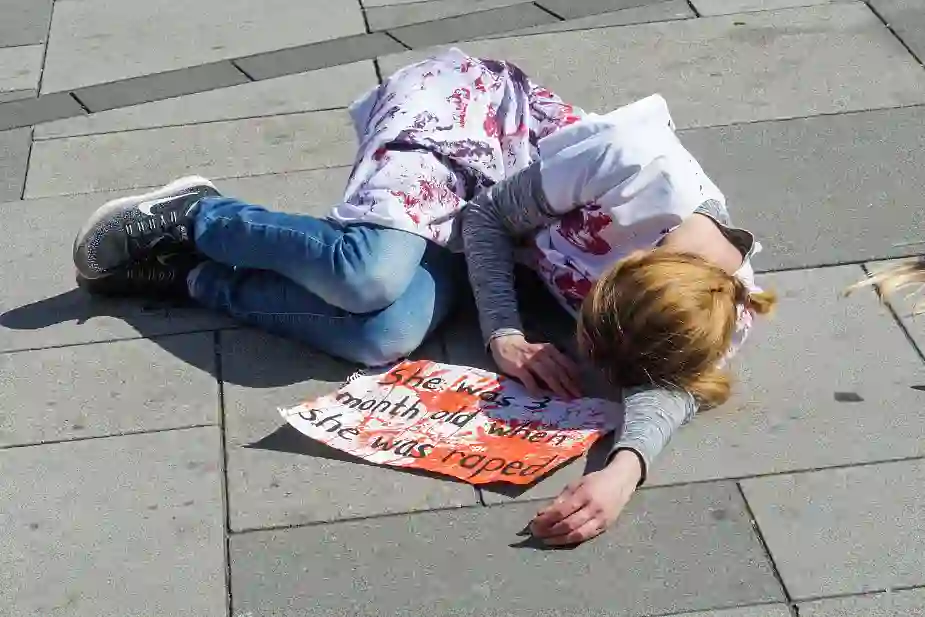
In an open space next to the St Stephan’s Cathedral the ground is littered with young girl’s bodies. We are of course shocked, but soon realize that it’s a manifestation against the war in the Ukraine. Which is fought not so far away from here. The manifestation is a very silent and very moving action.
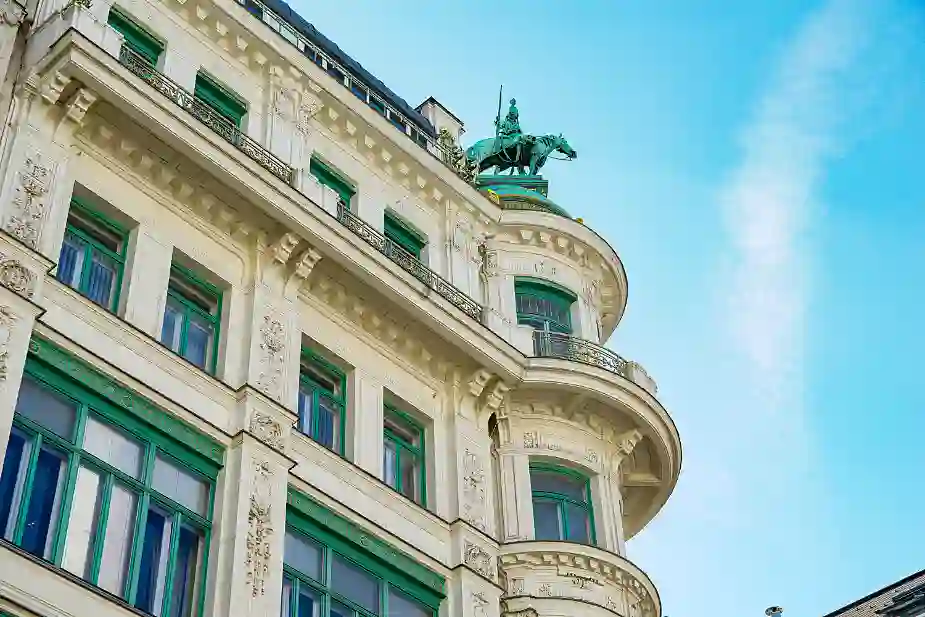
Statues look down on us from almost every roof or facade as we wander through the old town. We pass a horrific monument on a square (it’s a bubbly heap that commemorates the plague) and reach Hofburg, the enormous castle complex that was the Kaiser’s residence of old and is now the seat for the president and the parliament. Here we also find the Spanish riding school, an art museum and a theater, and also the Palmenhaus restaurant. More about that later.
The castle buildings are quite straight and not very spectacular, maybe with one exception. A relatively late add-on called “Neue Burg”, facing the “Heldenplatz” is a bombastic semicircle expressing power and glory. Adolf Hitler stood on the balcony in 1938 and declared “Anschluss”, a term meaning that Austria was now a part of Germany.
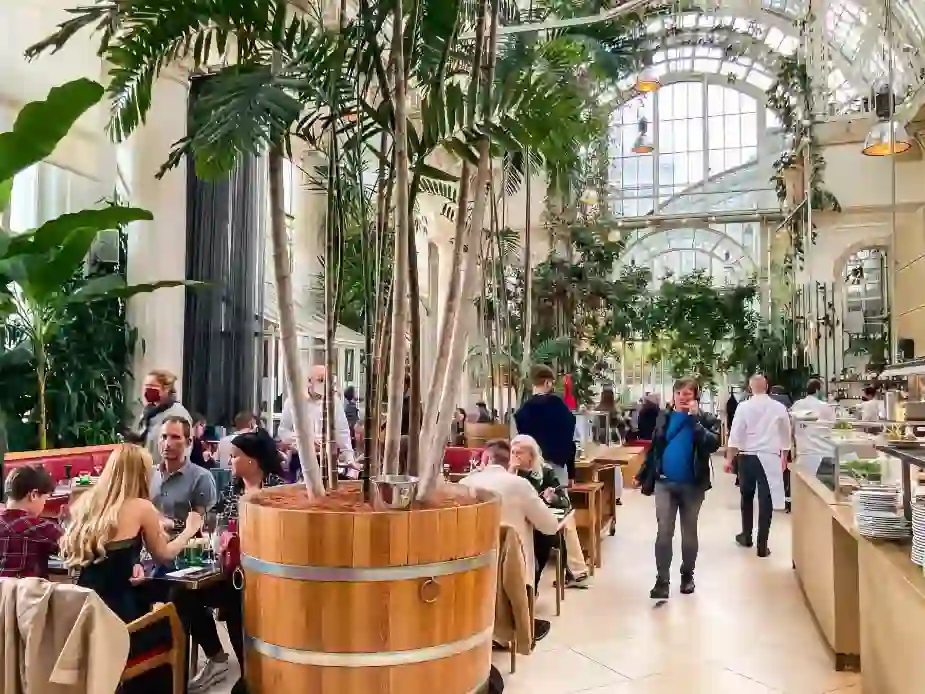
In the Hofburg complex one of Vienna’s best and nicest restaurants is located. The Palmenhaus, actually a converted giant greenhouse. And in a park that was once a castle garden we find a monument over Austrias great composer, Wolfgang Amadeus Mozart. On the lawn below the statue there’s a G-clef made of daffodils.
Vienna is of course the city where modern café culture was born. In the 19th century the classic grand cafés were where the intellectuals, the political activists and exiled revolutionaries met and had endless discussions about the major issues of the day and the future to come. You can still feel the atmosphere of those days in a place like Central Café, probably the most classic one of them all.