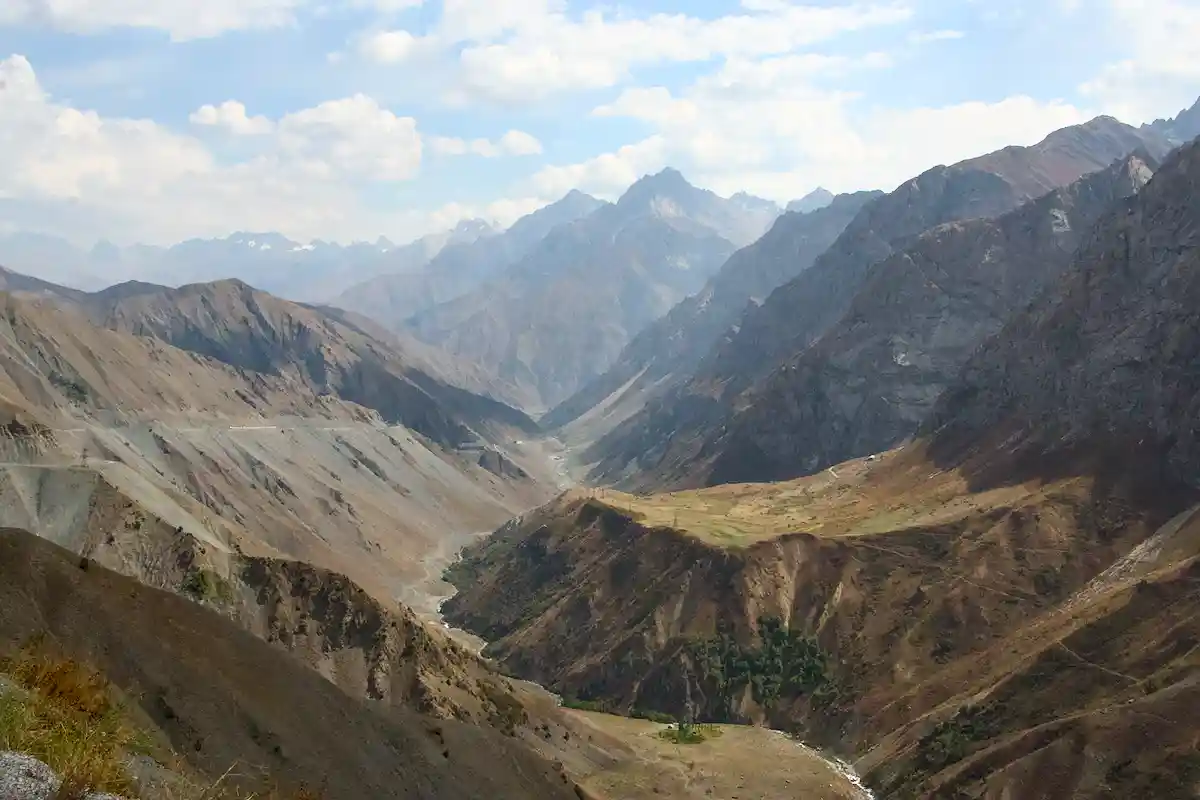
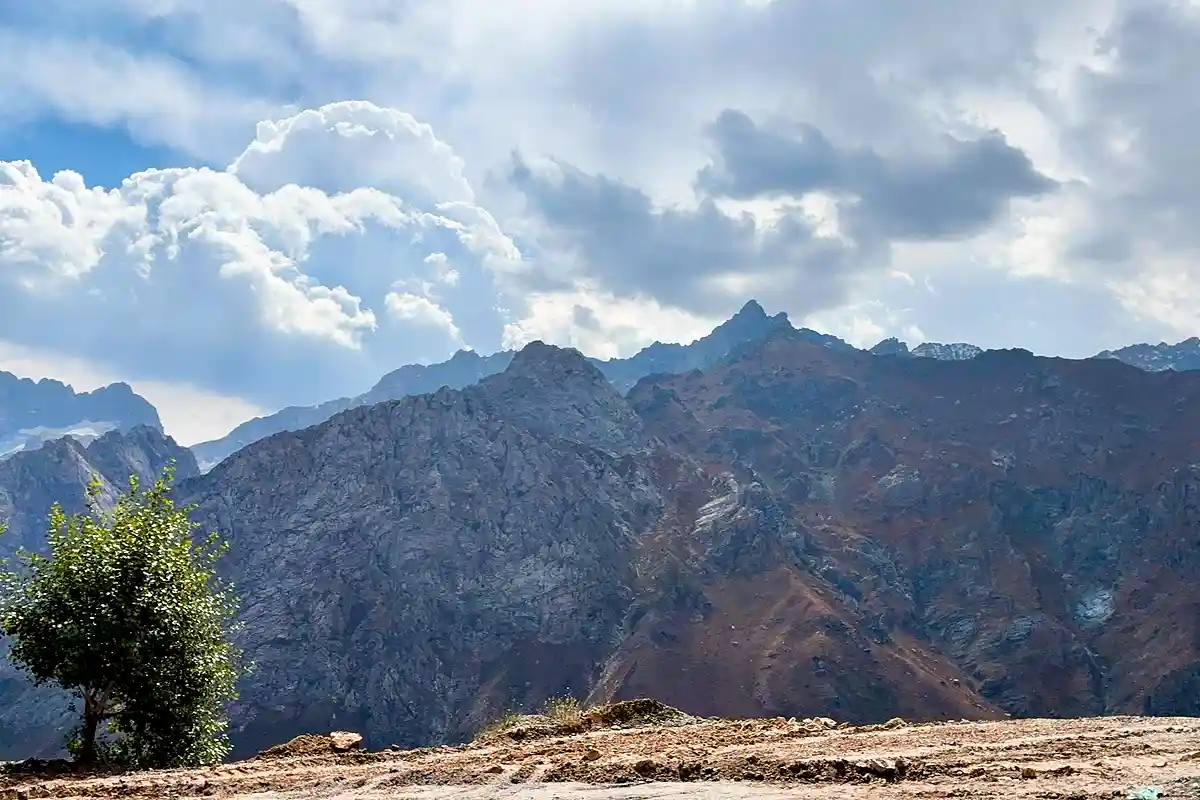
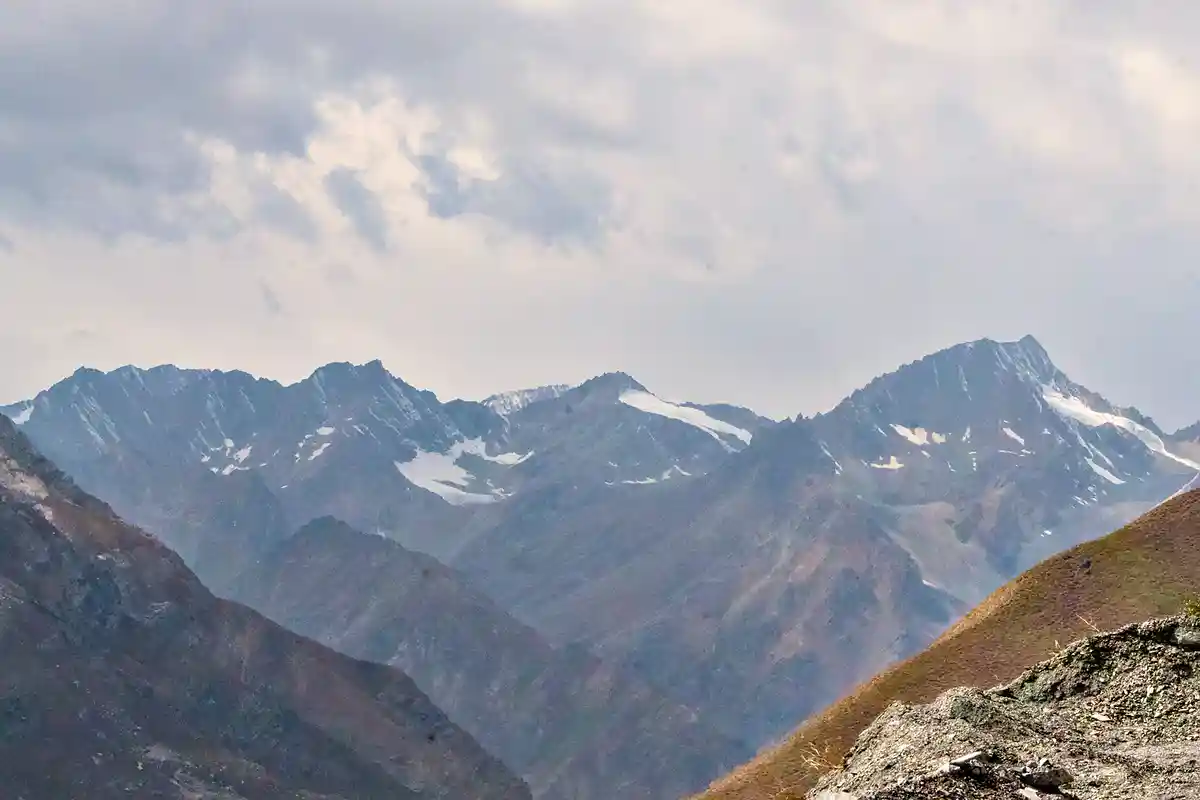
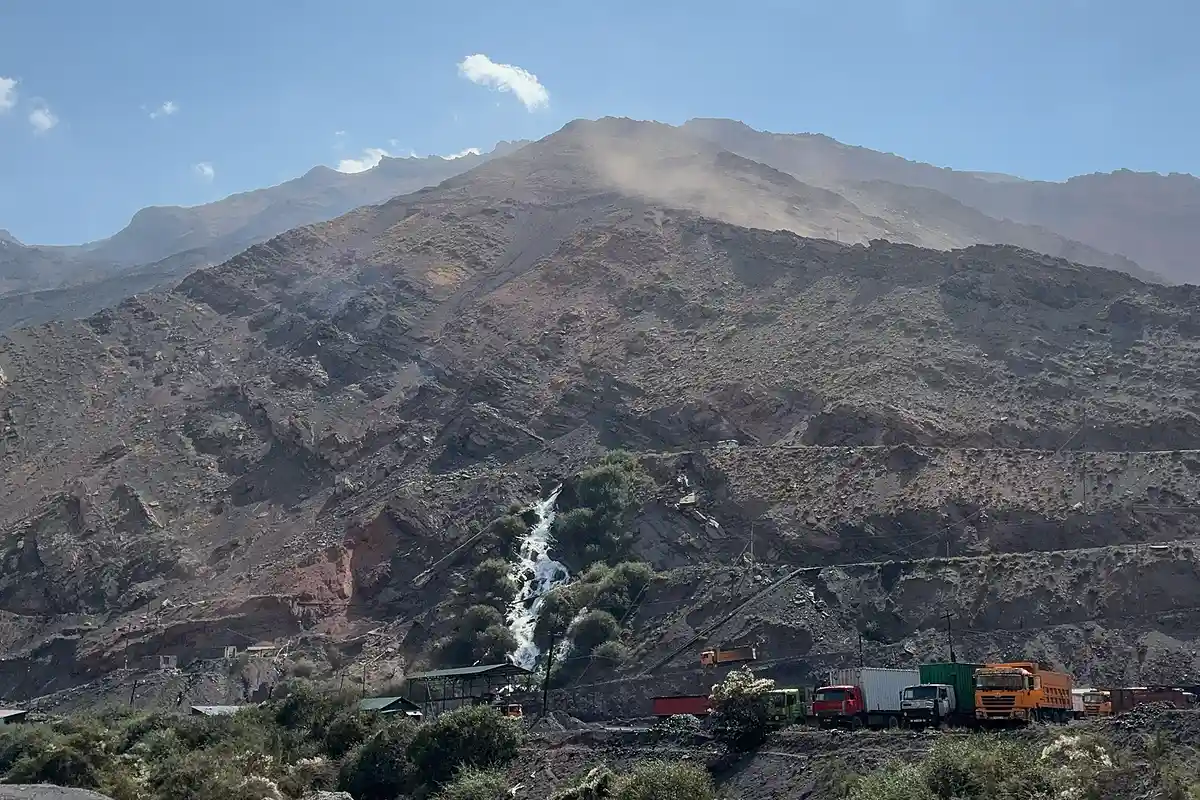
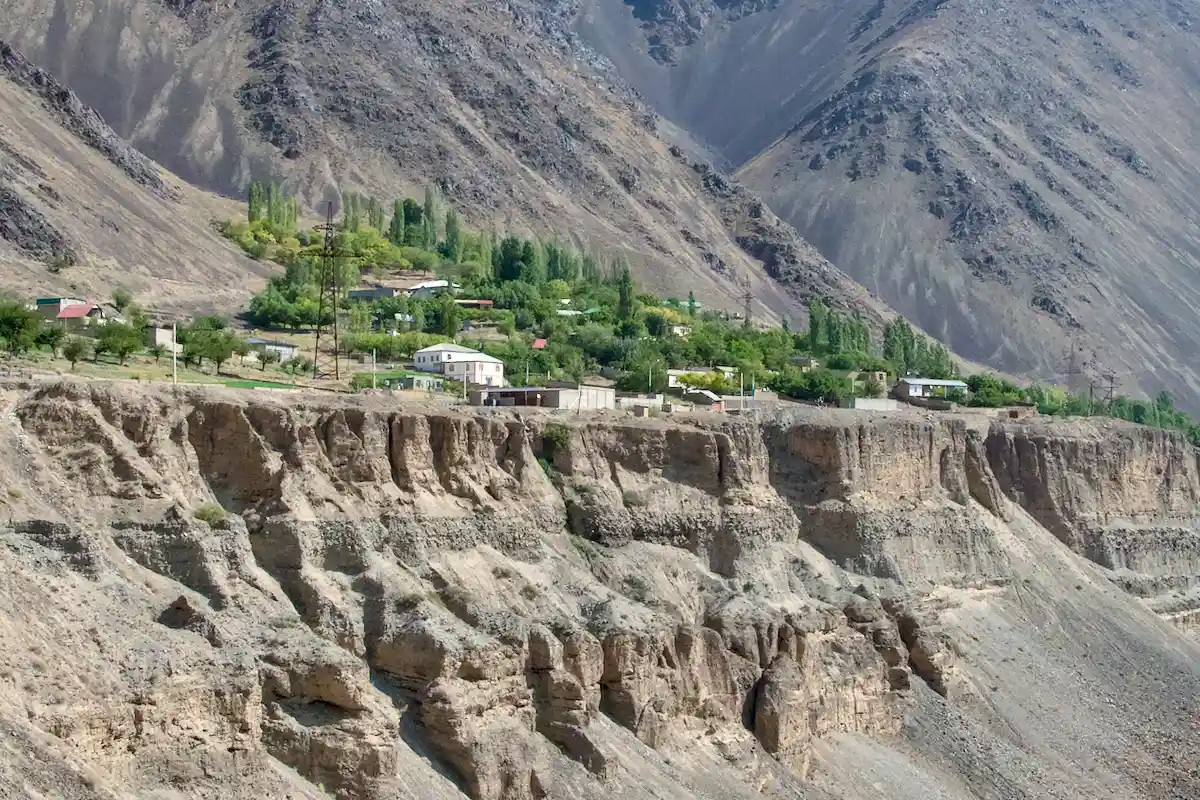
The road from Penjakent to Dushanbe, the capital of Tajikistan, winds through the dramatically beautiful Hissar Mountains, one of the most breathtaking landscapes we’ve ever seen. Steep mountain slopes, narrow passes, snow-capped peaks in the background, and babbling mountain streams that accompany us along the way. Occasionally, high up among the barren slopes, you can see a village with lush trees and grazing livestock between the houses. At its highest point, we’re at 2,700 meters above sea level.
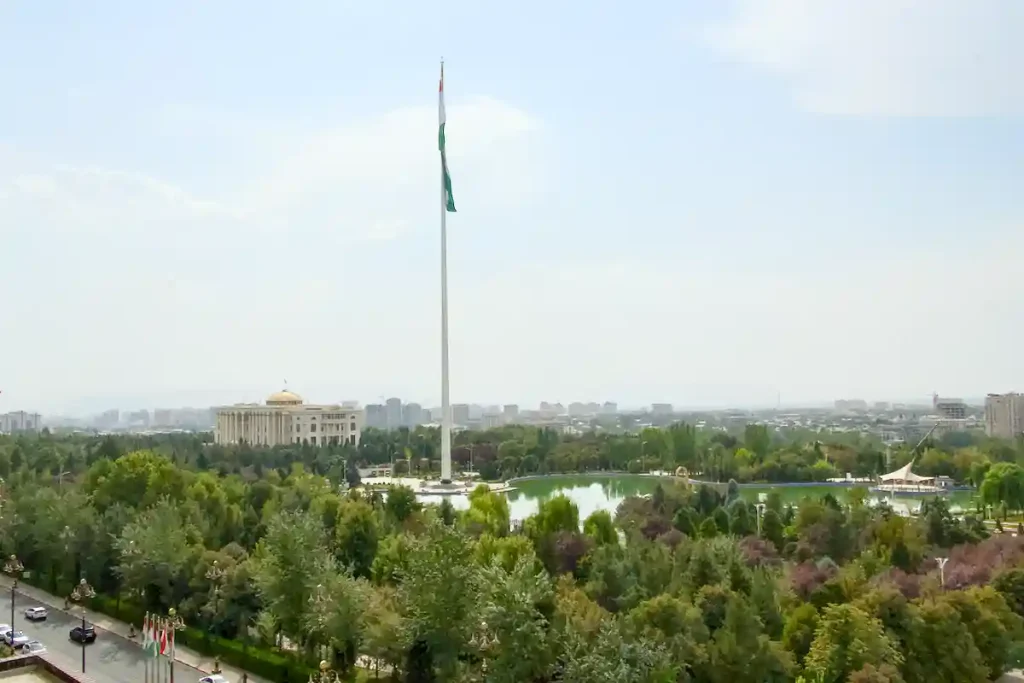
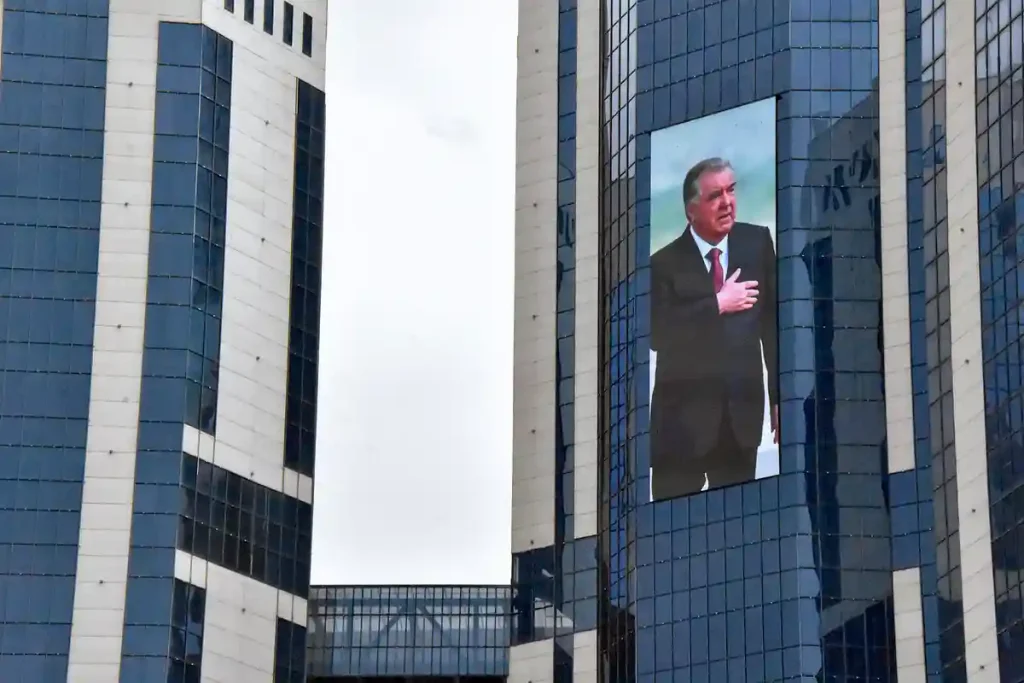
After four hours, we arrive in Dushanbe and almost immediately experience a sense of déjà vu. There’s a lot here that reminds us of Ashgabat in Turkmenistan: the grandiose buildings and wide boulevards, the extremely exaggerated flagpole (165 meters high, with a flag measuring 30 by 60 meters), and the ostentatious presidential palace in the background. The deserted parks and, last but not least, the TV screen on one of the city’s skyscrapers that displays images of the president around the clock. On top of that, my phone beeps and a message pops up saying “Welcome to Russia!”
Traffic is heavy in Dushanbe, but strangely enough, at least half – if not more – of the cars are taxis. They all belong to the same company, “Jura,” which started out as an Uber-style service with app-based booking. But it quickly drove all the other taxi companies in Dushanbe out of business. So now the easiest thing to do is just hail a Jura from the sidewalk. There are plenty of them available.
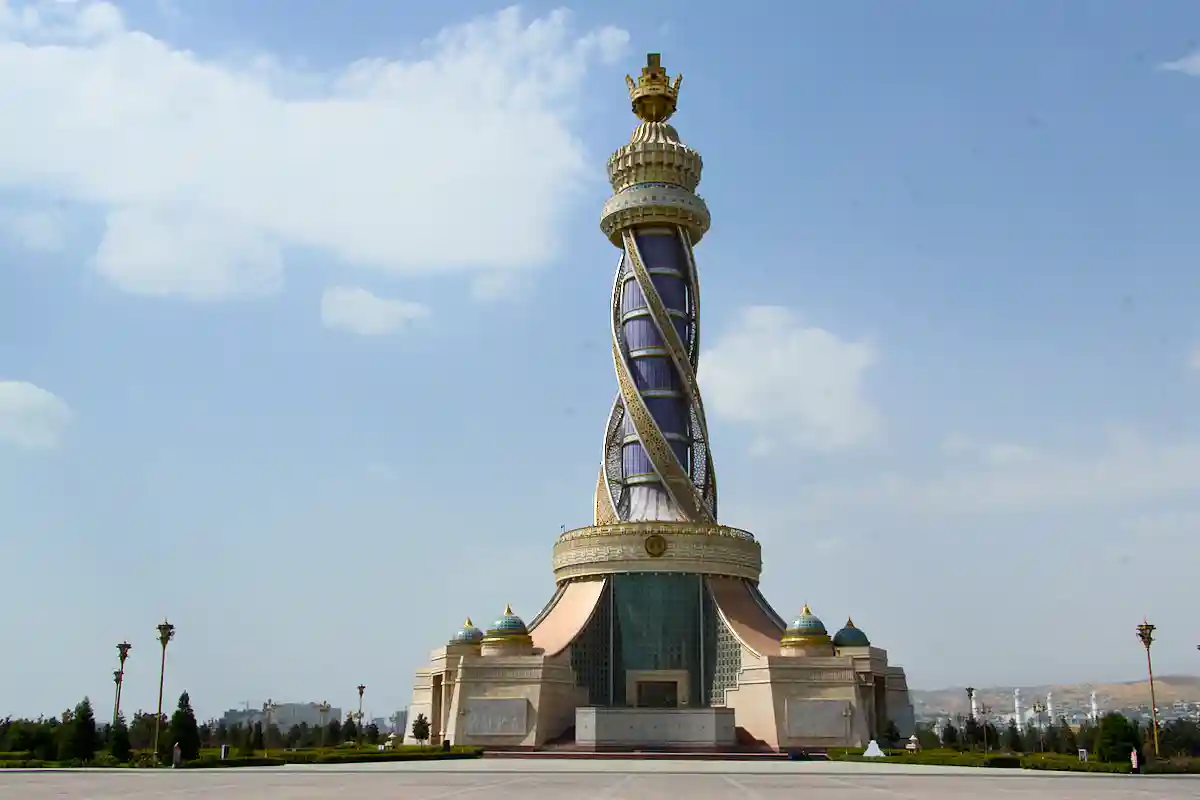
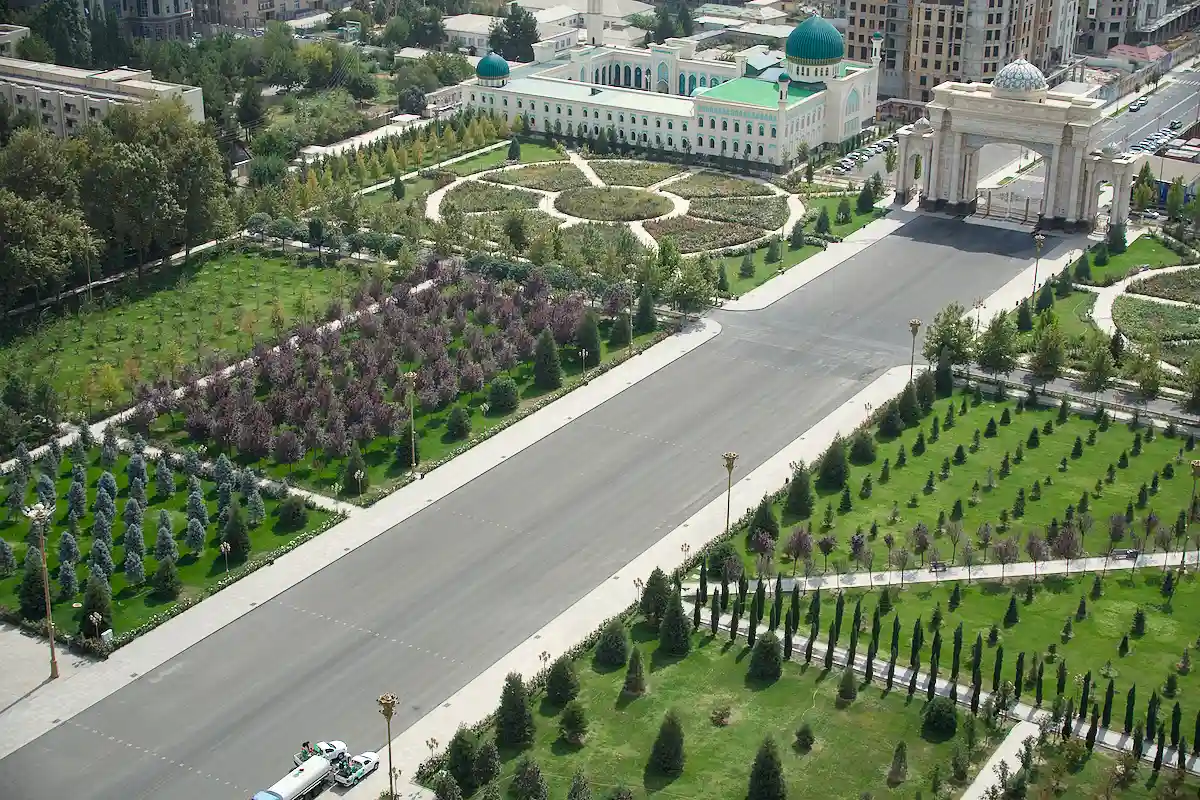
Another parallel to Ashgabat is the penchant for “rocket-shaped” monuments. In Dushanbe, one of them—the Independence Monument—stands just north of downtown, in a vast, deserted square with triumphal arch-like gates facing three cardinal directions. One might think this is a legacy of the Soviet era, but it was actually inaugurated in 2022. The lower section is 30 meters high to celebrate 30 years of independence, and the upper section is 91 meters high to commemorate independence in 1991.
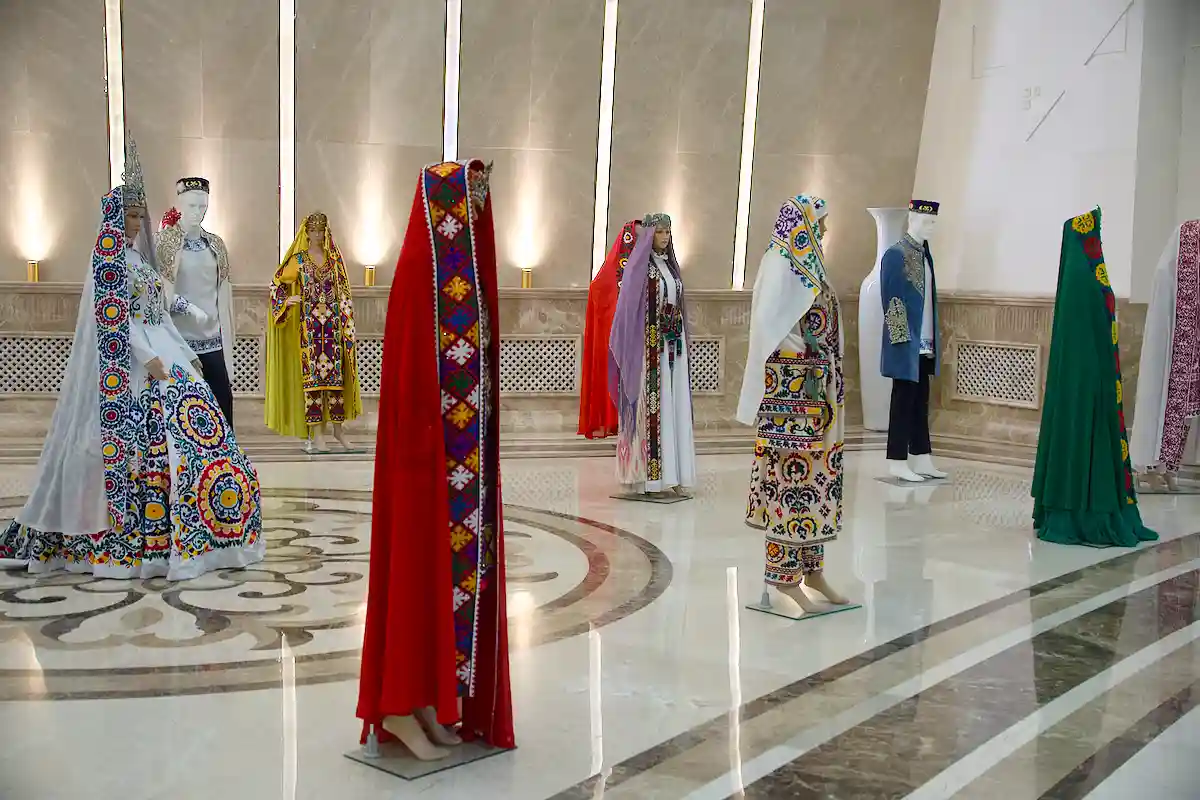
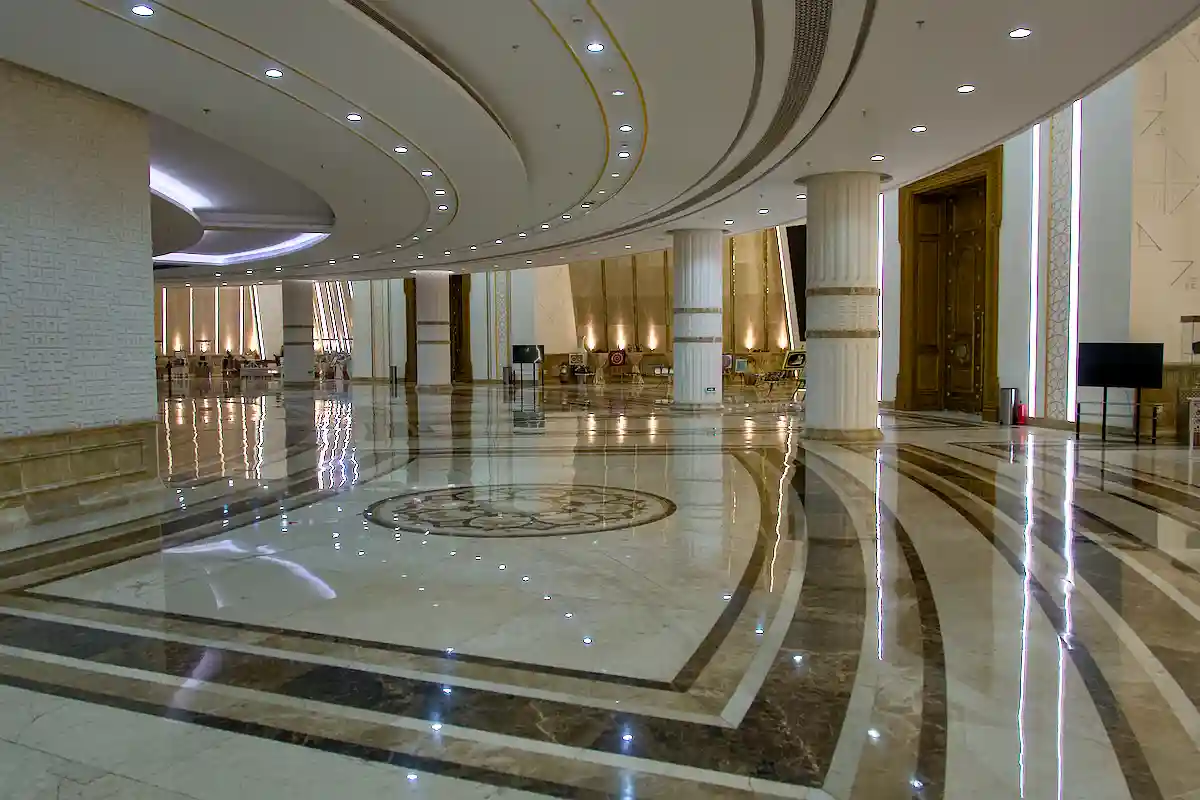
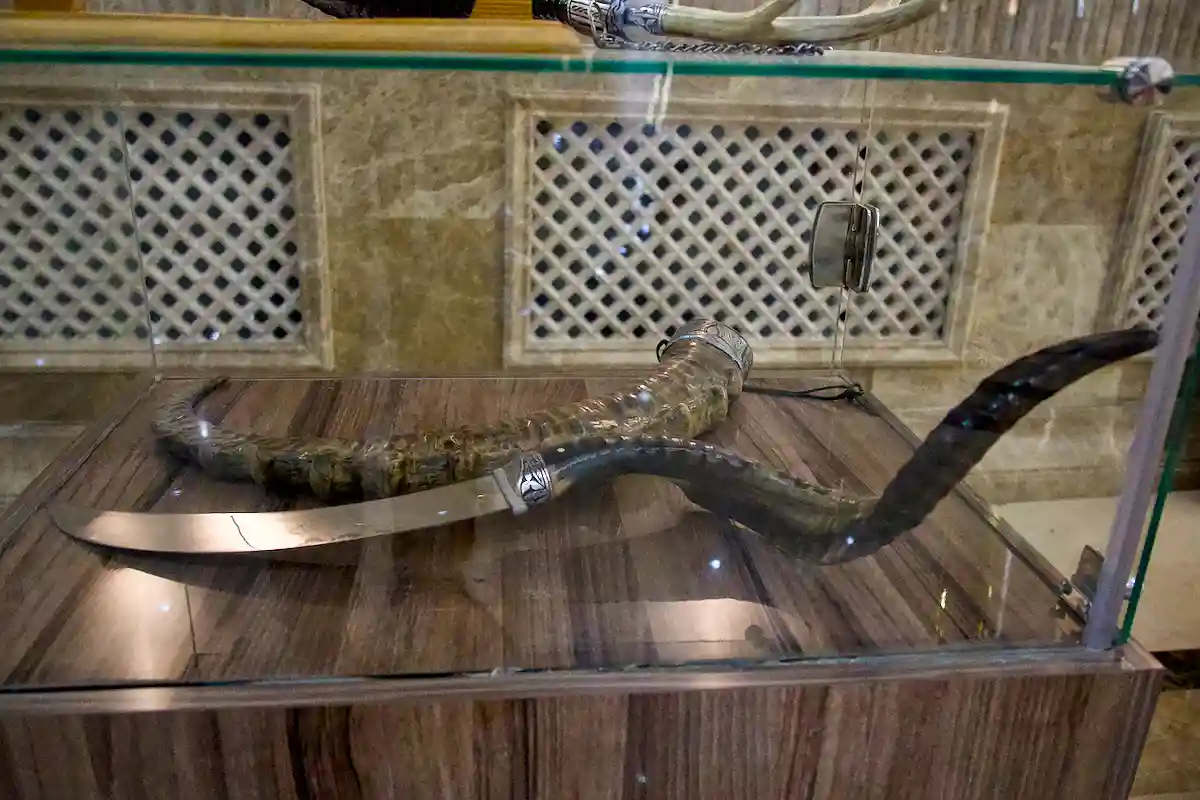
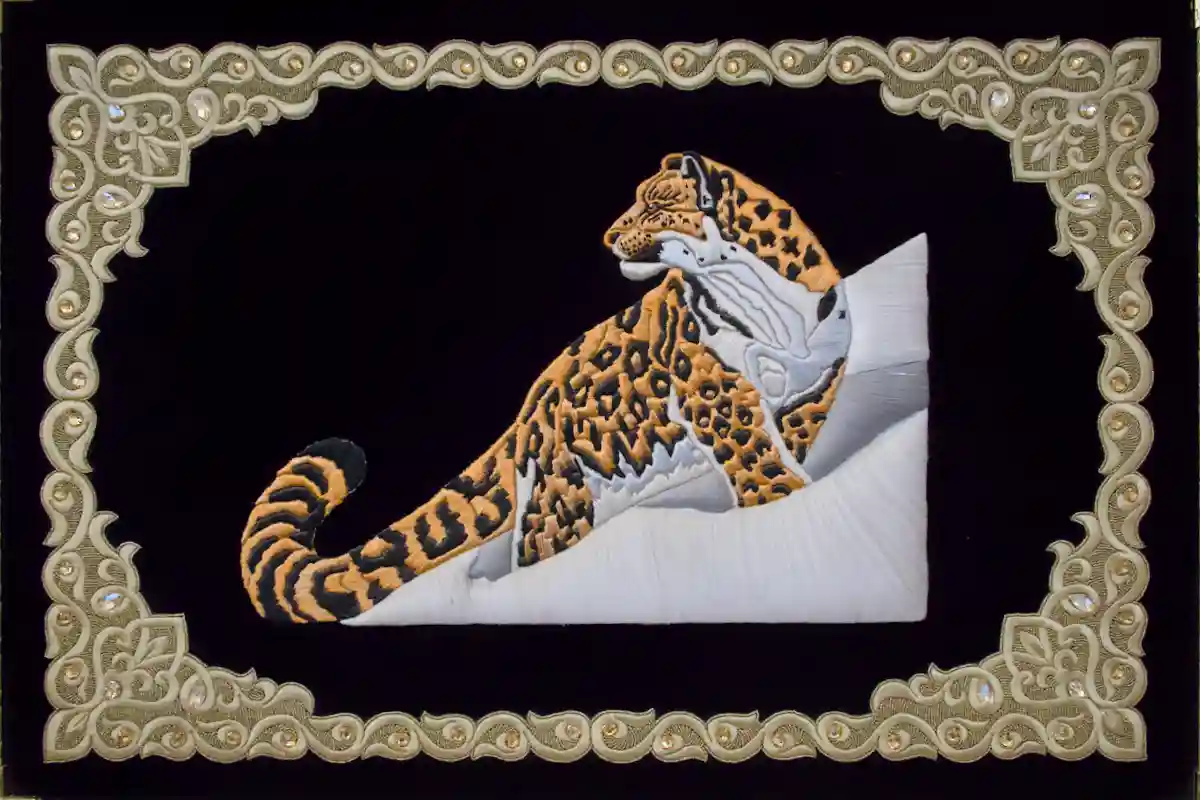
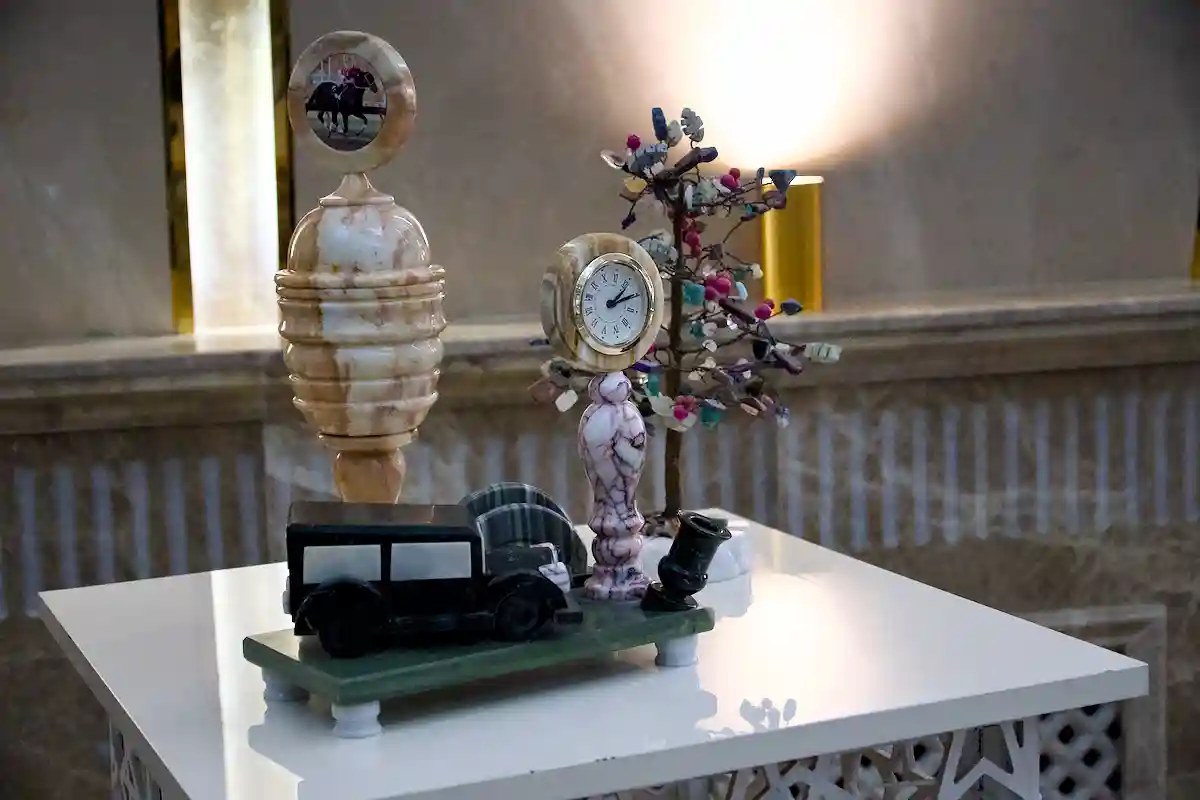
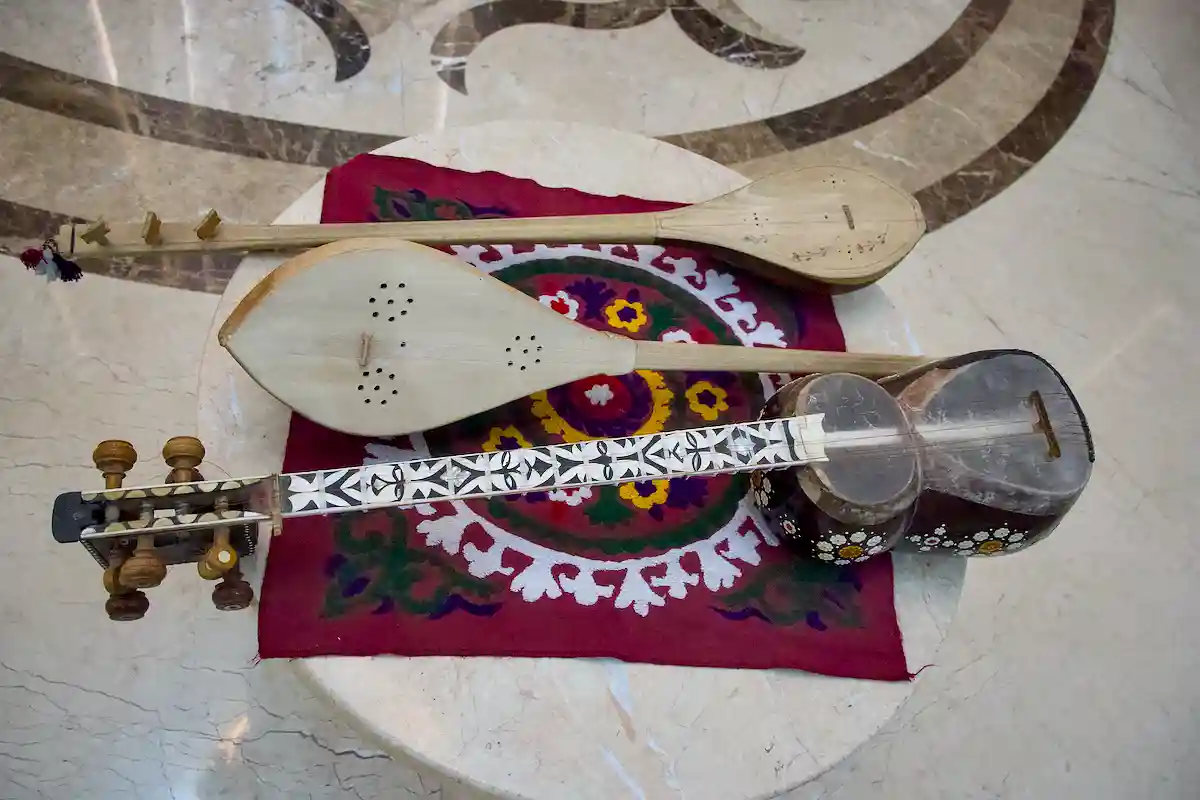
Inside the lower part of the monument there’s a museum of the let’s-put-all-kinds-of-stuff-there type. So here we see traditional clothes, musical instruments, “handicraft” and paintings of local artists. And some Dushanbe historical facts. It’s just us and a mother with two kids there.
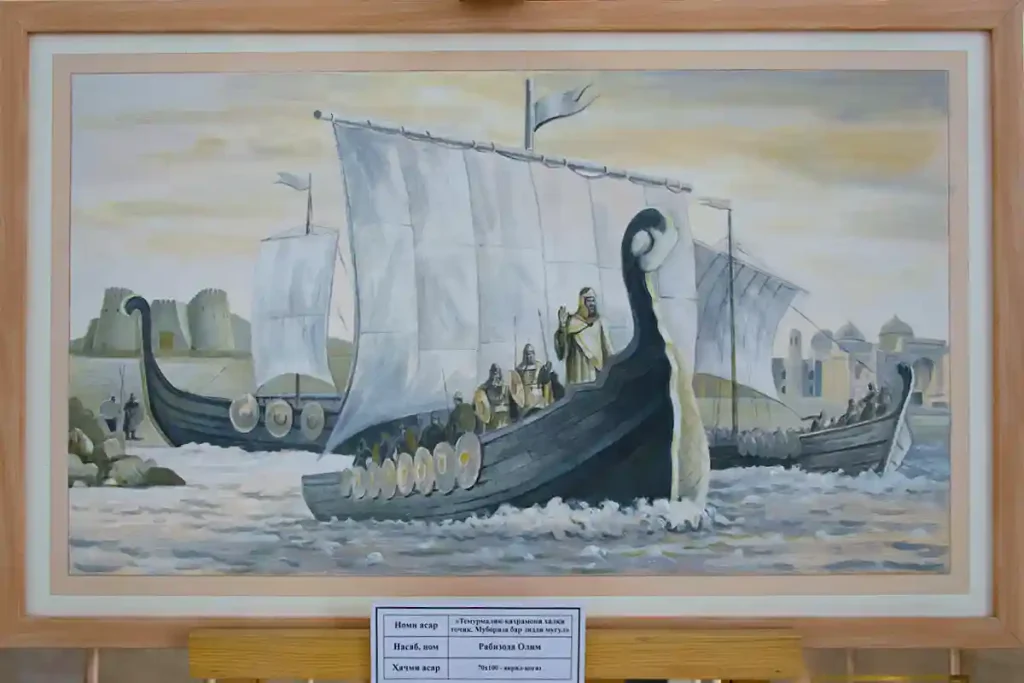
The art on display isn’t much to write home about, but one painting really gets us thinking. The painting appears to depict some Viking ships in a Central Asian setting, but how is that possible? It’s true that Vikings traveled eastward to “Särkland,” as they called the Muslim lands. We know that; it was in the 900s. The painting’s title is “Temur Malik Against the Mongols” and depicts a national hero fighting the Mongol invasion of Central Asia. But that happened much later, in the 1200s, and there were no Vikings there at that time.
According to the story, the Mongols had captured the city of Kujand, and Temur Malik and his soldiers had retreated to a fortified island in the Syr-Darya River. There, they built boats covered with cloth and mud to protect themselves from the Mongols’ arrows. In other words, these were not at all like the Viking ships depicted in the painting. Google’s AI interprets this to mean that the artist wanted to emphasize the image of battle and naval combat and therefore placed the hero on a more “European” warship.
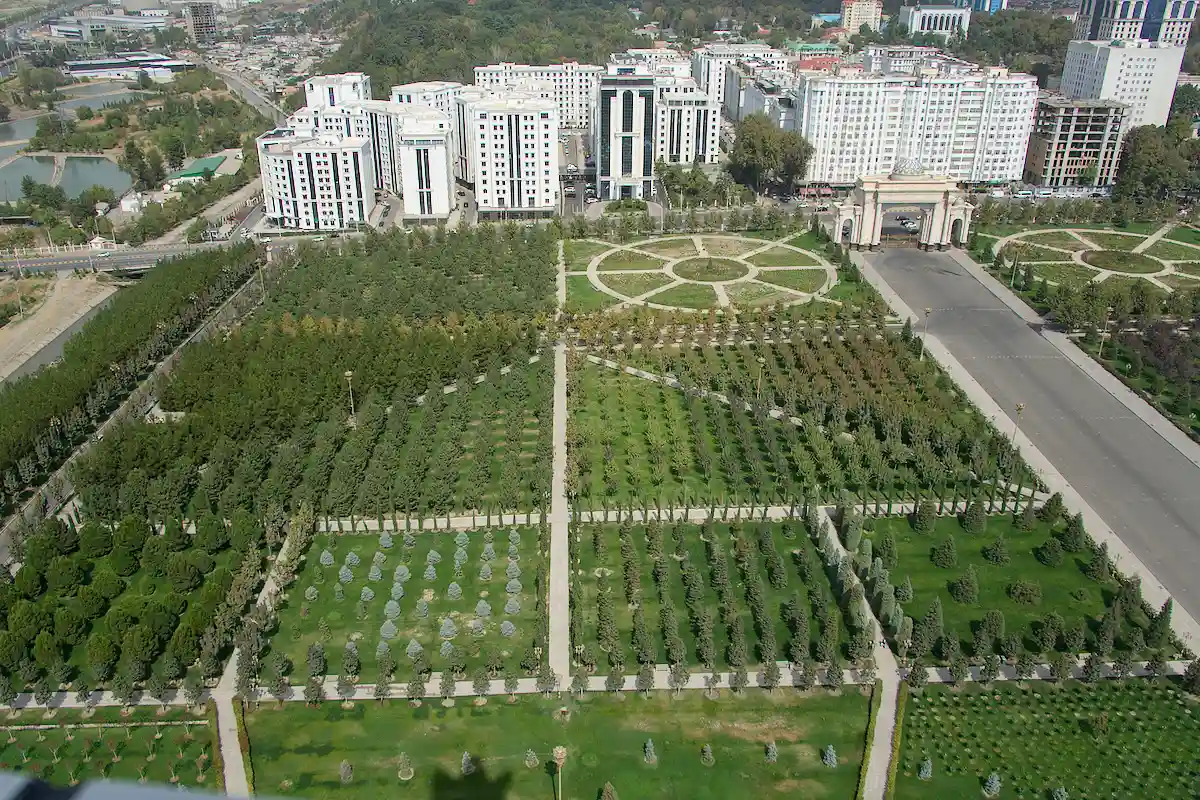
You can take the elevator up to an observation deck; it costs you half a dollar extra, but it’s worth it. Not least because from up there you can see just how unimaginatively a park can be built when everything is supposed to look “grand.” From above, you can see how all the trees and shrubs have been planted in perfectly straight rows. Like soldiers in a parade.
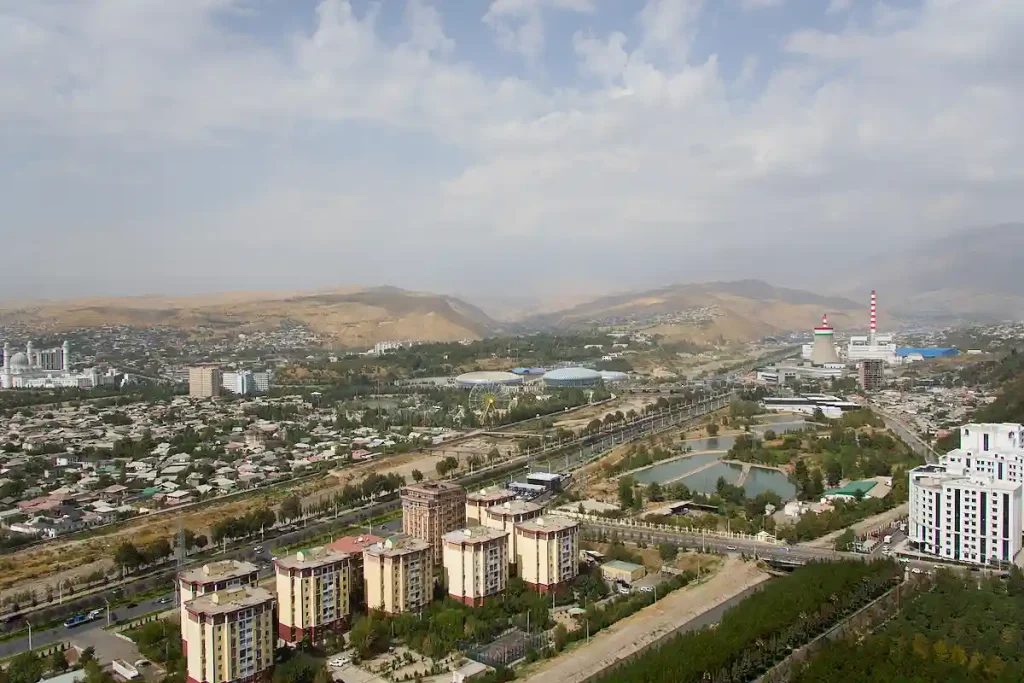
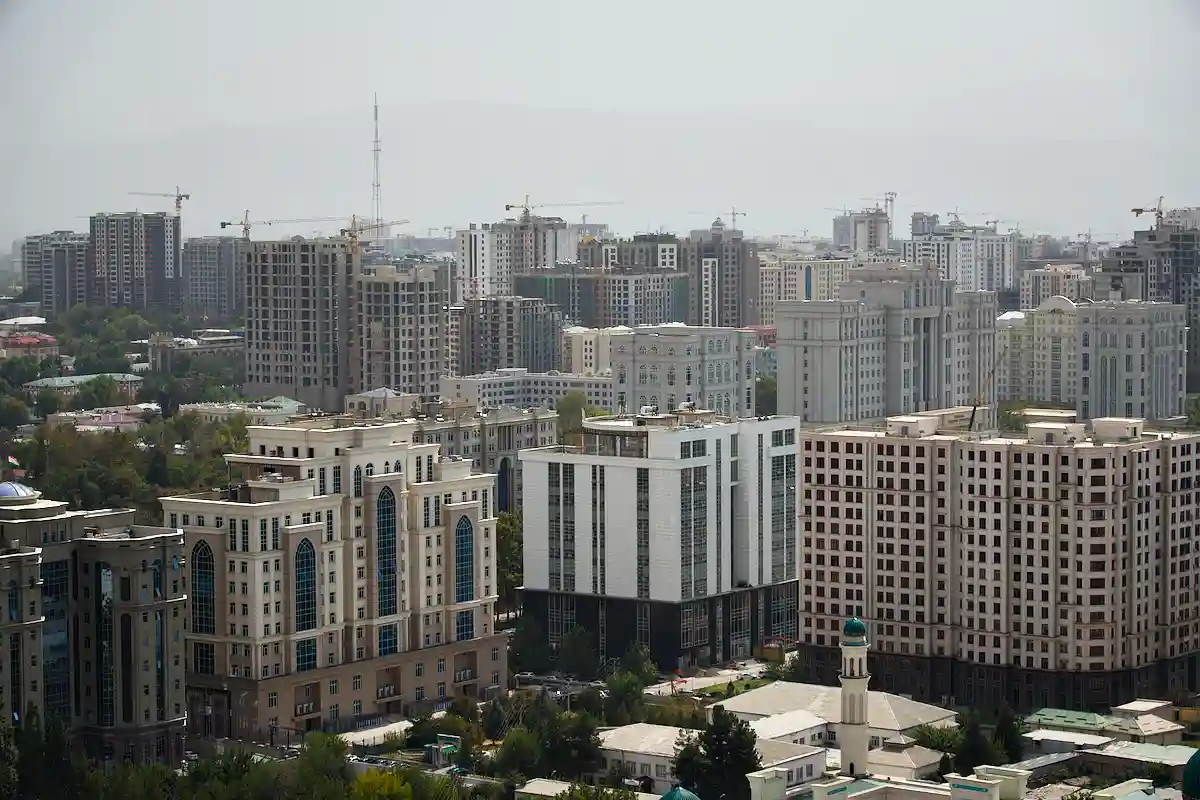
You can also see from the tower that Dushanbe is a relatively small city, even though construction is in full swing here, just as it is in the other capitals.
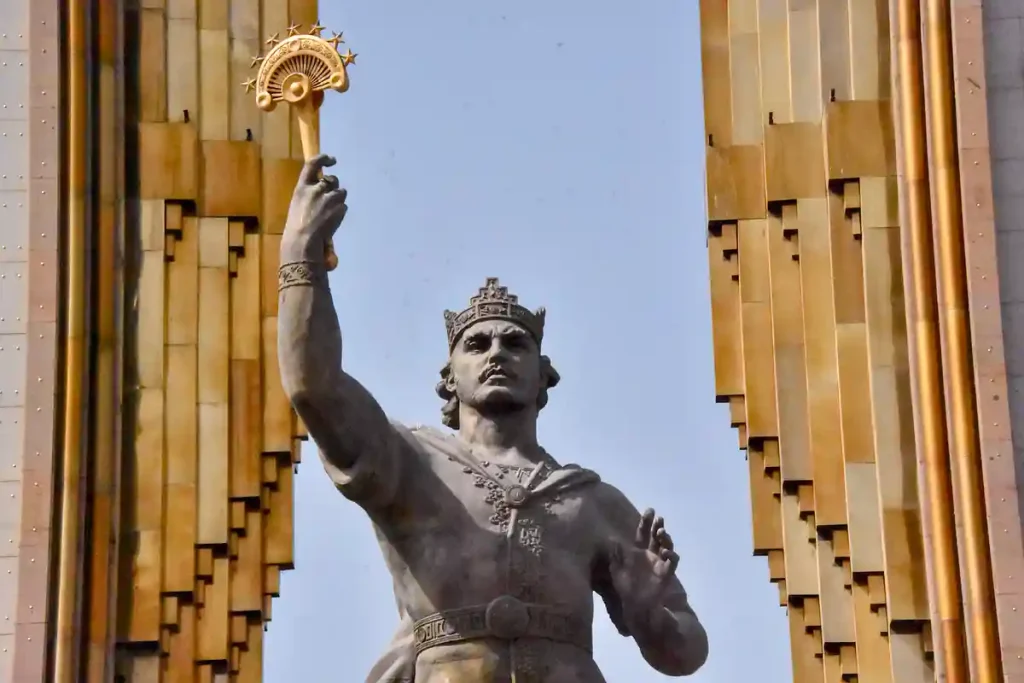
In Tajikistan, too, there is a national hero from a distant past, commemorated by a statue and intended to foster unity. Here, it is Ismael Somoni who appears in a couple of places in Dushanbe. He was an emir (prince) and later king in the late 10th century in the Samanid Empire, which had Bukhara as its capital. For some reason, he became popular in Tajikistan after independence; several statues were erected in his honor, and he even lent his name to the new country’s currency, the somoni.
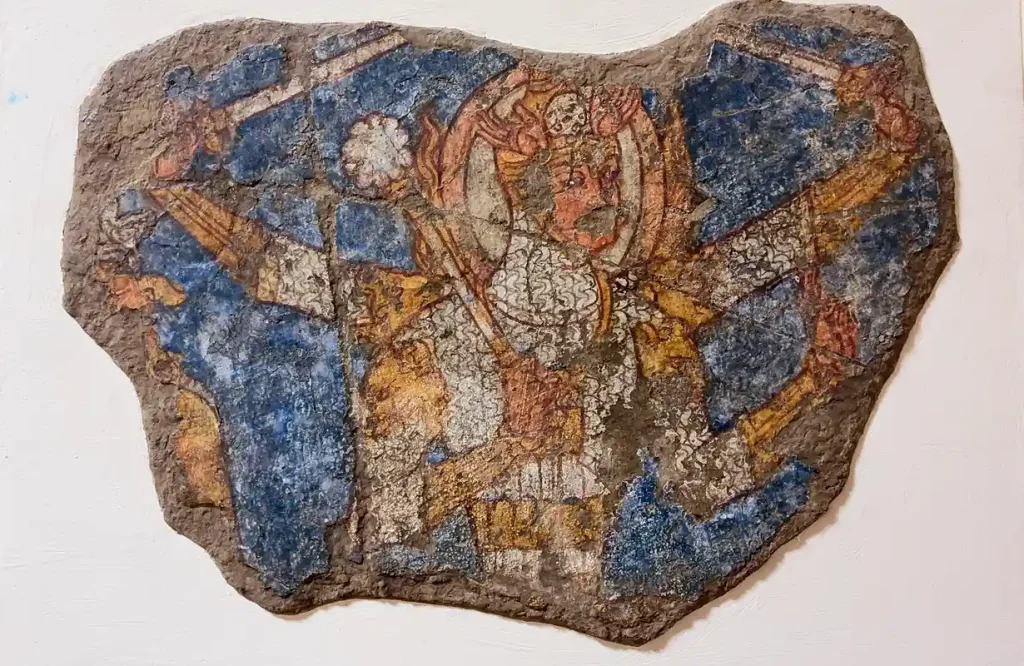
An interesting historical museum in Dushanbe is the Tajikistan National Museum of Antiquities, where many of the artifacts from the excavations at Penjakent and other sites are on display. These include, among other things, a wealth of jewelry and other small objects. But the highlight is a number of murals that were miraculously preserved when the Mongols burned down Penjakent.
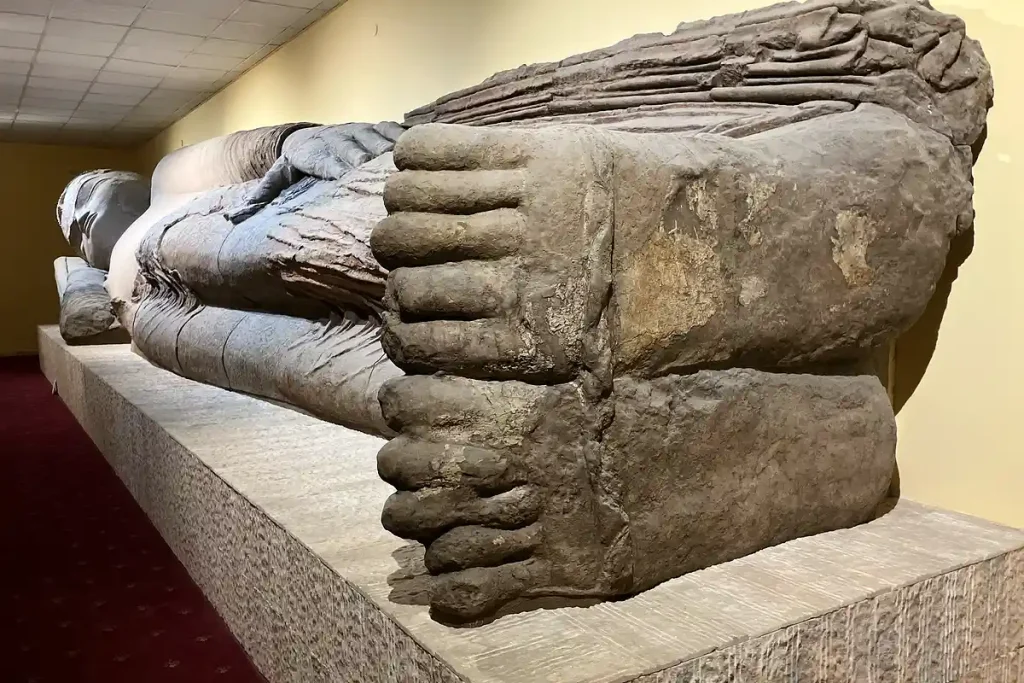
In the museum we also find a reclining Buddha, actually the largest in Central Asia. Because buddhism and buddhist monasteries have existed here since before Islam. This particular Buddha is not asleep, but in Nirvana. You can tell by the position of the feet.
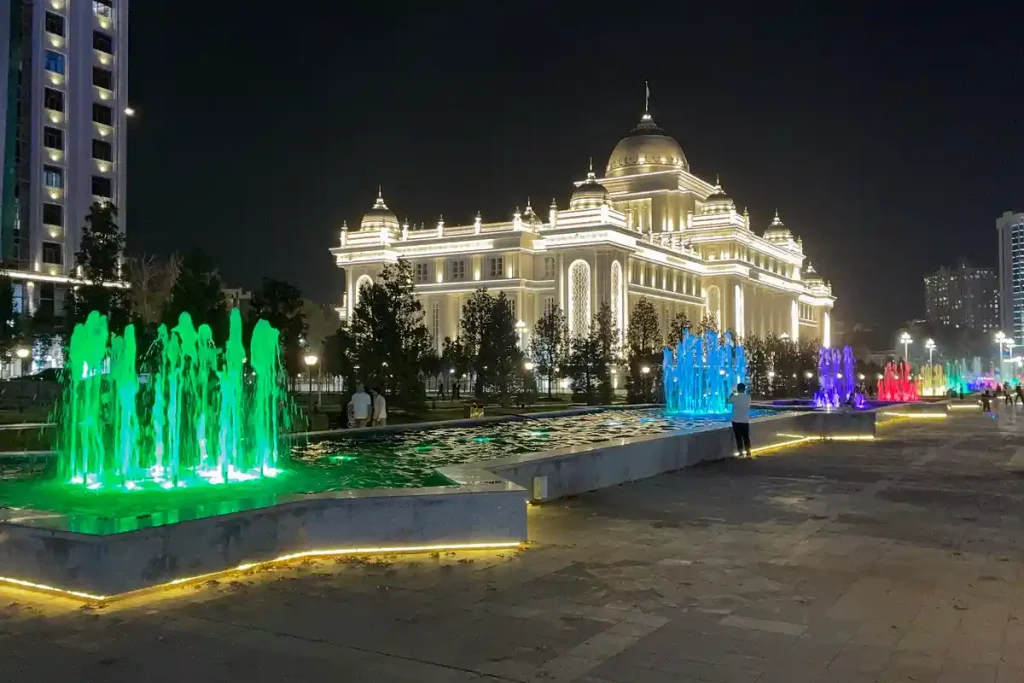
All the big cities in the region compete with the most advanced facade lighting, displaying bright colours and animations. In Dushanbe the palace-like buildings look like it’s christmas all year.
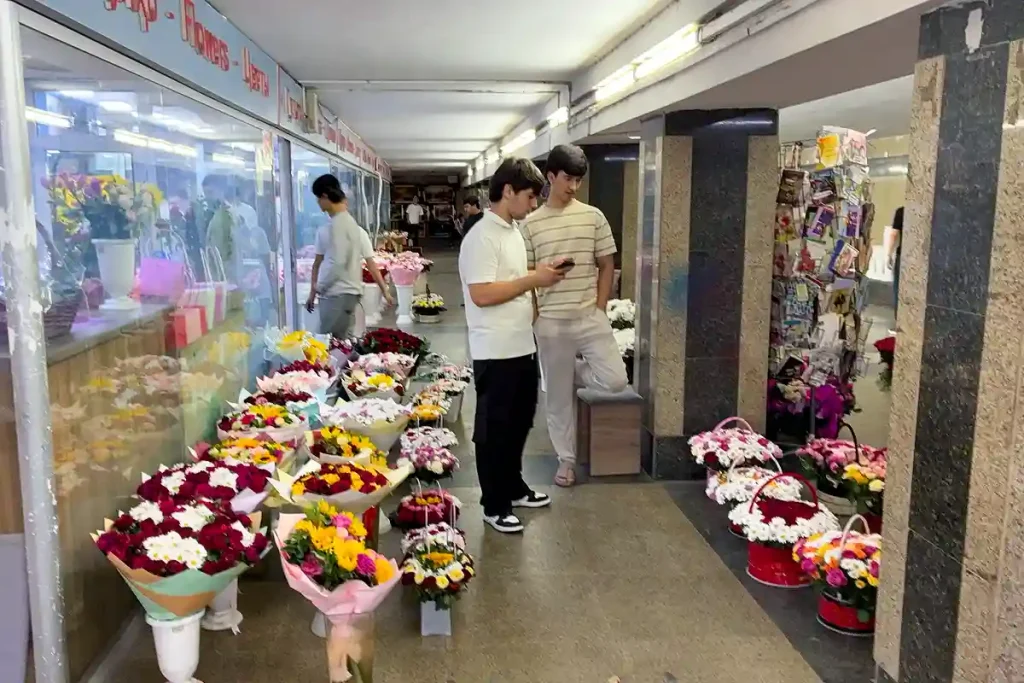
Finally, a tip. Where do you go if, for some reason, you suddenly need to buy a bouquet of flowers in Dushanbe? Answer: In the underpasses at the major intersections. There are plenty of flower vendors there.
Leaving Dushanbe we cross yet another border and find ourselves in the biggest country in Central Asia, Kazakhstan. What happens there?