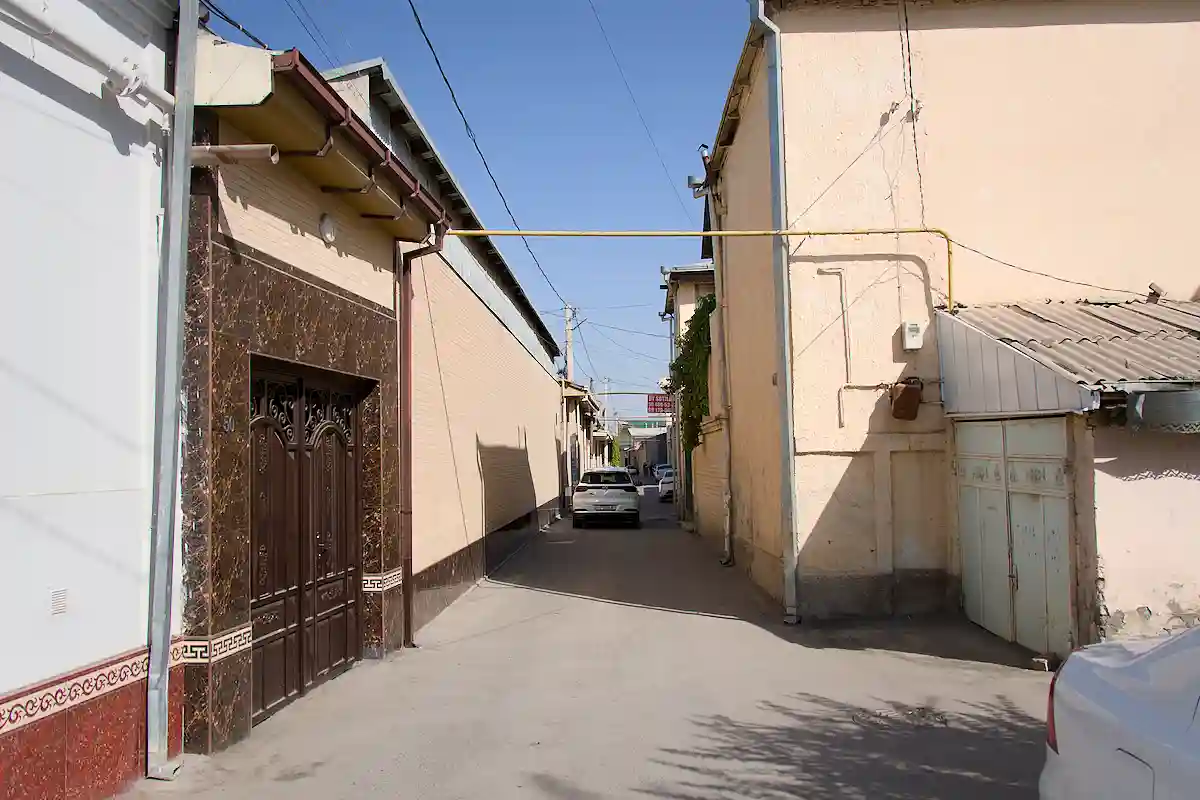
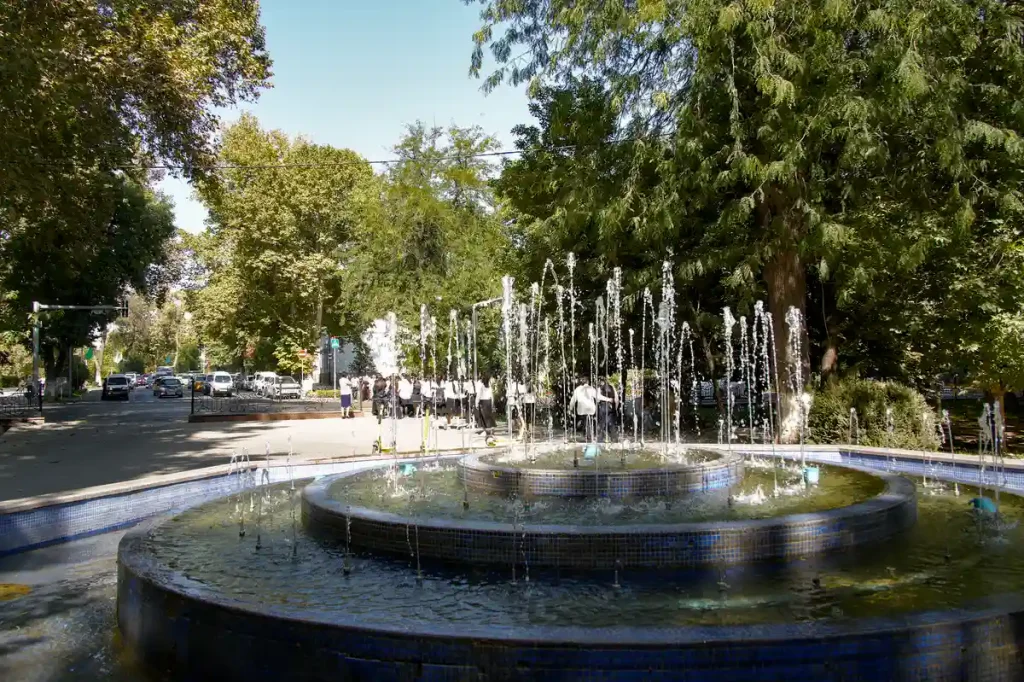
“If you ever make it to Samarkand,” was a popular song in Sweden song some fifty years ago. Now we’re here. After a long bus ride from Bukhara, we actually made it to Samarkand. And we’re surprised by all the greenery bursting forth from parks, tree-lined avenues, and gardens. Samarkand is a green city. A metropolis with hectic traffic and stressed-out people, yet it still feels harmonious in some way.
Though it doesn’t start off well at all. Samarkand’s new bus station is quite a ways outside the city center, so we call a Yandex taxi to take us in. But the driver can’t find the hotel, despite the GPS. He pulls up next to another taxi, negotiates with that driver, and drives off. We continue on for two blocks and are charged more than the entire fare from the bus station. We’ve been ripped off!
The hassle continues at the hotel, where they want to put us in a room that we didn’t book and don’t want to stay in. After some argumenting we win that battle, but after that the atmosphere is a little subdued every time we walk up to the front desk. We don’t let it bother us, though, and quickly head out to explore the city.
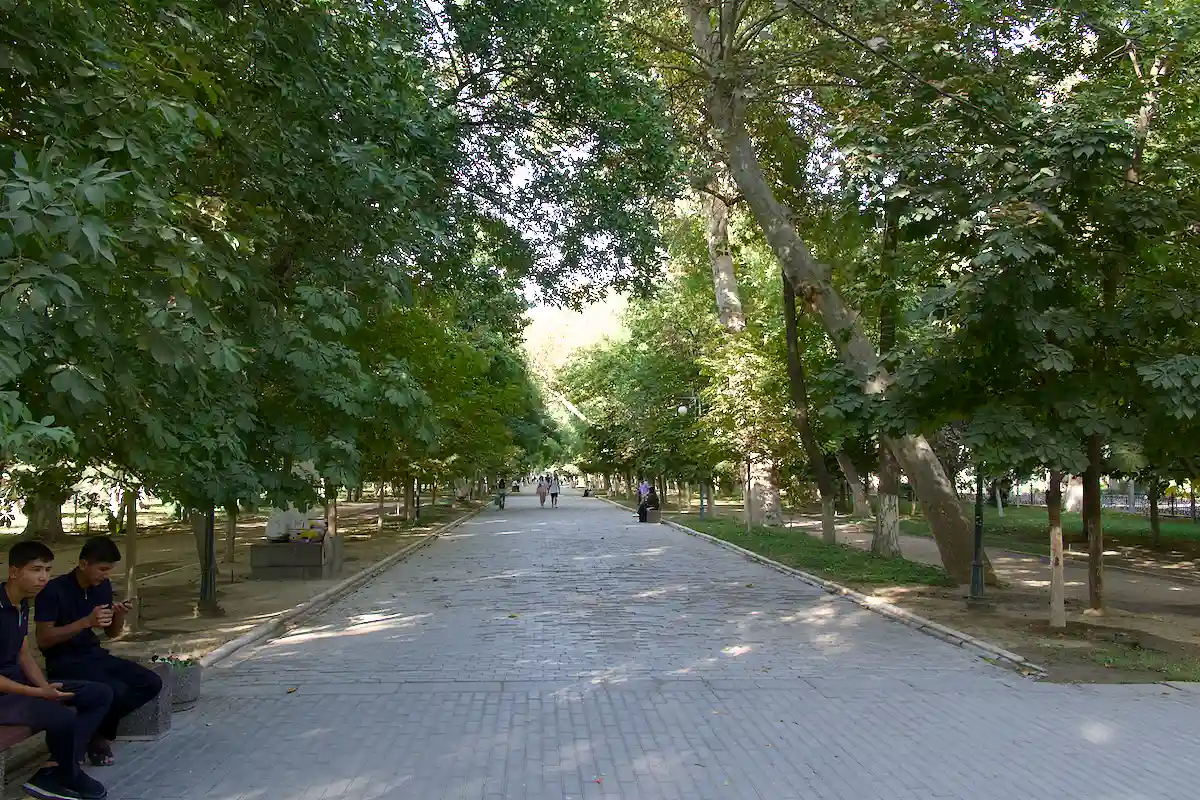
Right outside the hotel begins a wide boulevard, the “University boulevard,” which can be described as the backbone of the city, with three promenade lanes in the middle and traffic lanes on the sides. The university and many other educational institutions are located here. Students and other residents enjoy strolling beneath the tall trees that line the sidewalks.
The boulevard was built by the Russian administration that took over after Tsar Alexander III’s forces captured Samarkand in 1868. At the time, it was regarded as a sort of boundary between the old Muslim city and the new, Russian one.
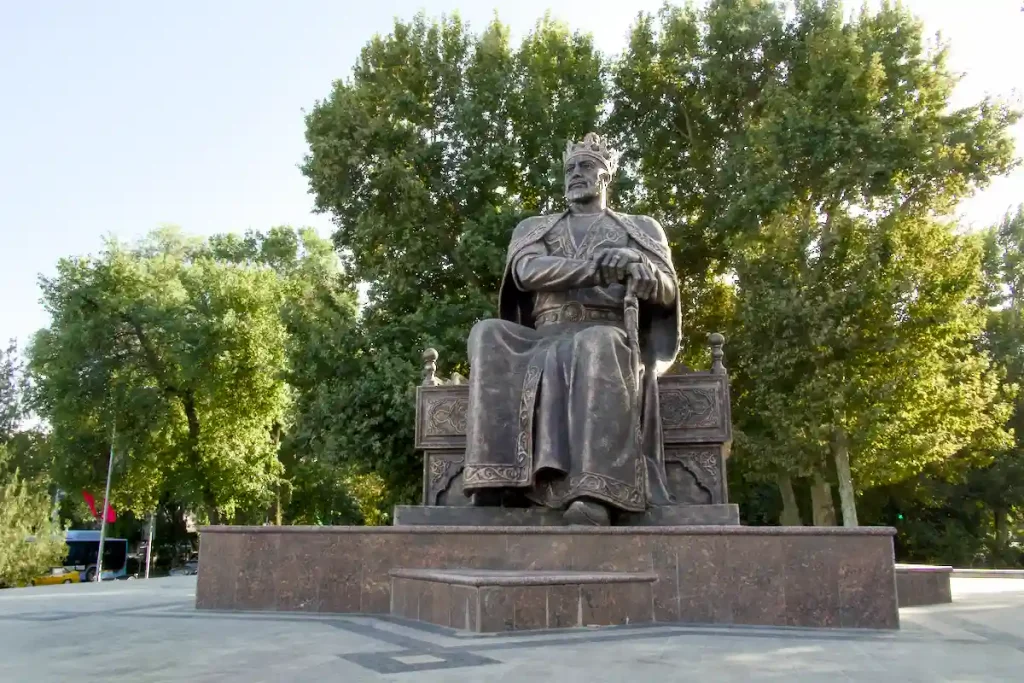
We walk the entire length, 128 meters, of the University boulevard, and at its far end we find a giant statue of a seated man in an oriental robe. It depicts Timur Lenk, who made Samarkand the capital of his great empire. Scholars have disagreed about whether he was in any way related to the Mongol leader Genghis Khan, but he himself was convinced that his legacy was to restore Genghis’ empire.
And he would prove to be just as ruthless as Genghis; it is estimated that more than 10 million people died during Timur’s wars of conquest. At the height of his empire, it stretched from present-day Turkey and Egypt in the west to Tibet and India in the east.
Timur died during a military campaign (of course) aimed at conquering China. He only made it as far as Kazakhstan, where he died of pneumonia in 1405. Today, he rests among his relatives in a large mausoleum not far from his statue. What is visible in the picture are tombstones; the bodies are in a crypt beneath the floor.
When Timur’s tomb was opened in 1941, an inscription was found that read: “When I rise again, the world shall tremble.”
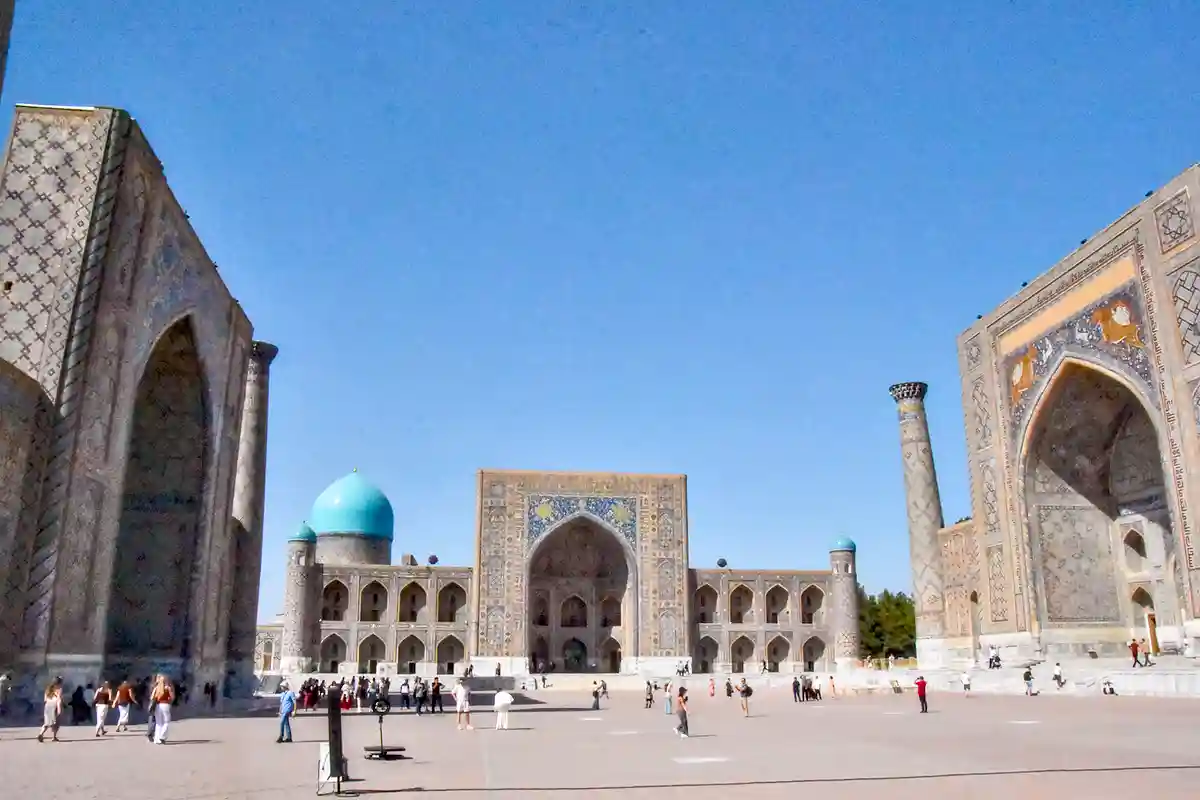
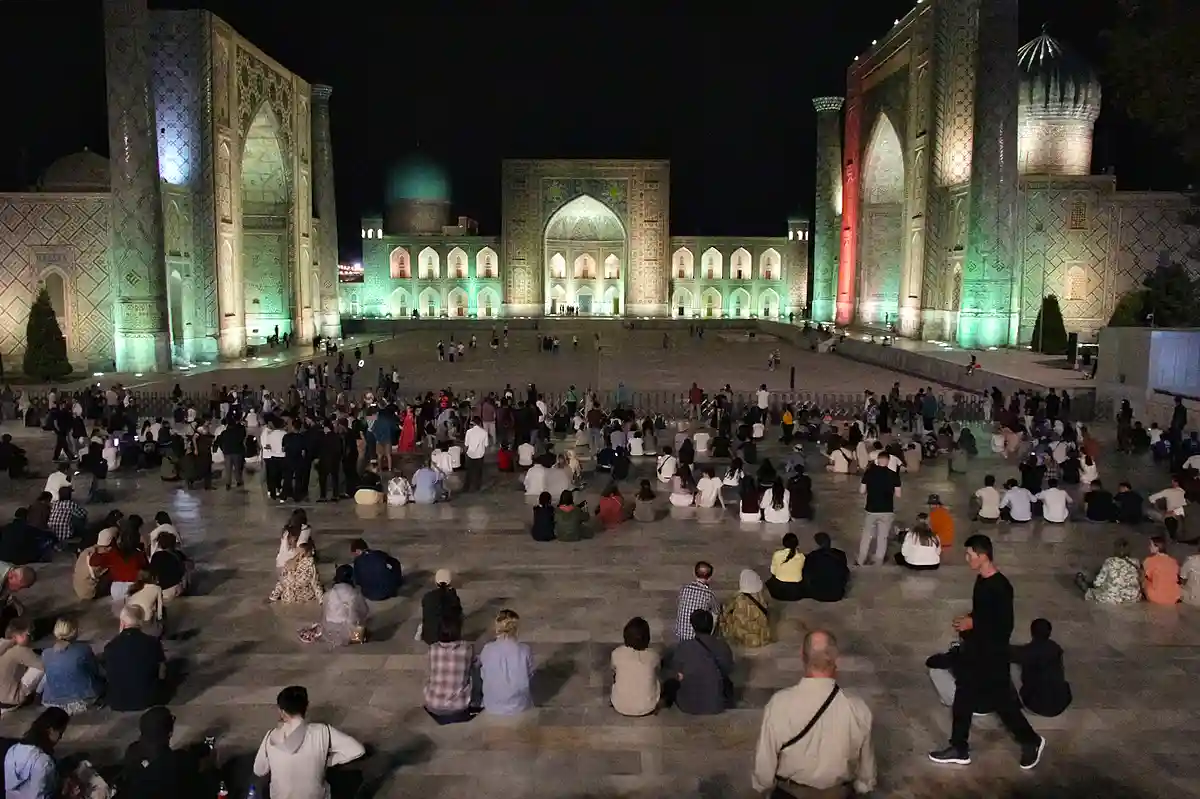
Tourism in Samarkand essentially revolves around a single site, the Registan, where three enormous buildings surround an impressive square. It is so impressive that a large staircase has been built on the fourth side of the square, where people sit day and night to admire these marvels.
The buildings are three enormous madrasas: on the left is the Ulugbek Madrasa (again!), in the middle is the Tillakori Madrasa, and on the right the Sherdor Madrasa. The square between them was once a bustling trading hub on the Silk Road.
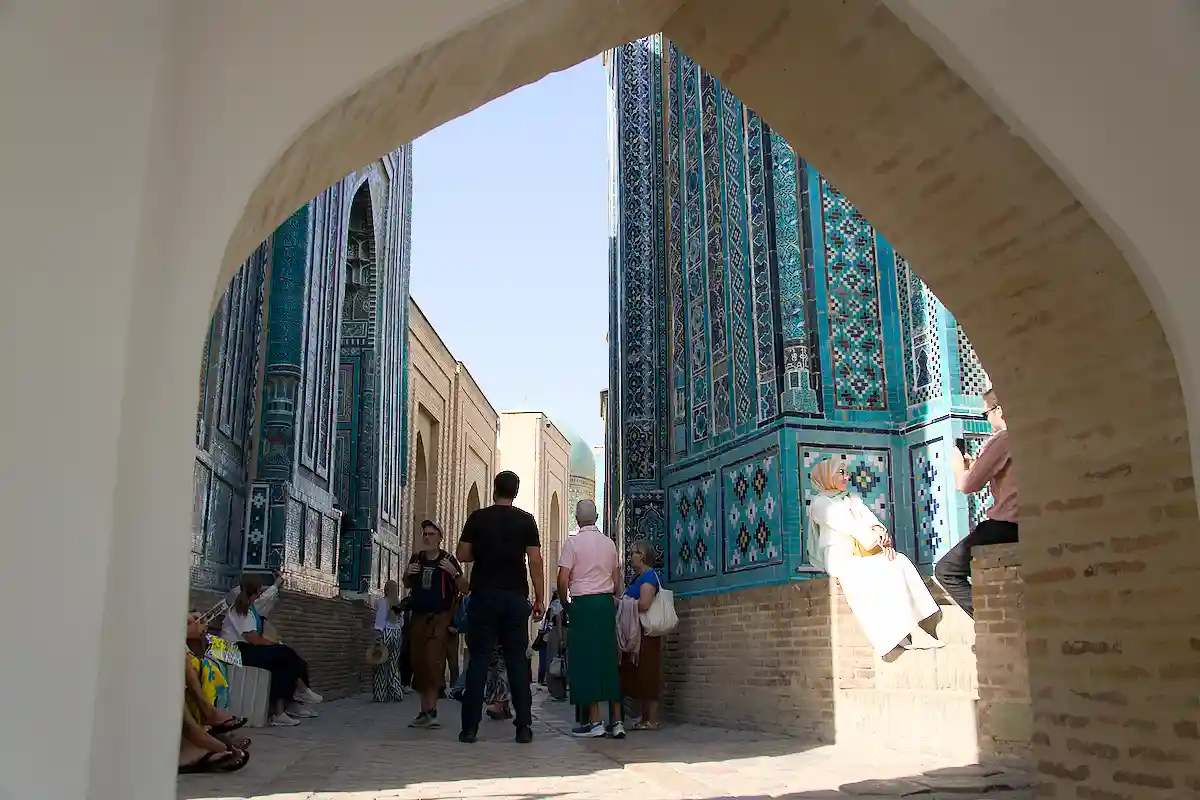
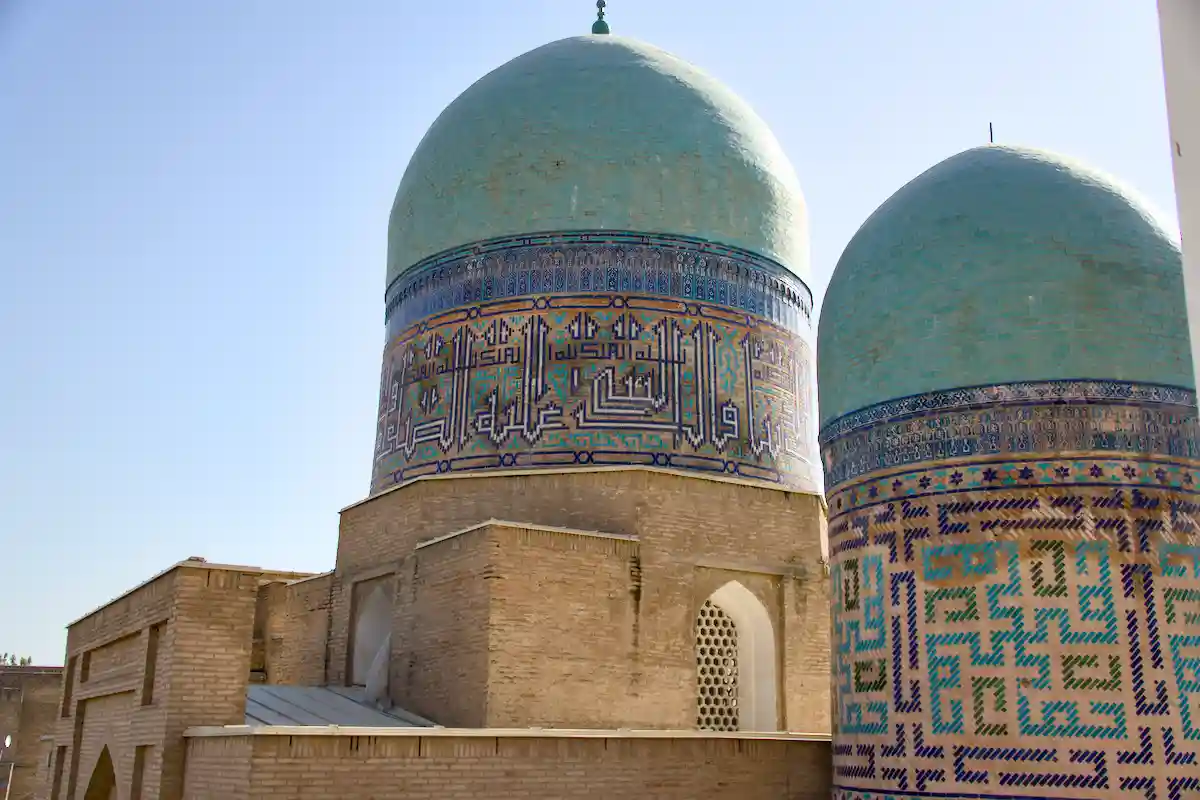
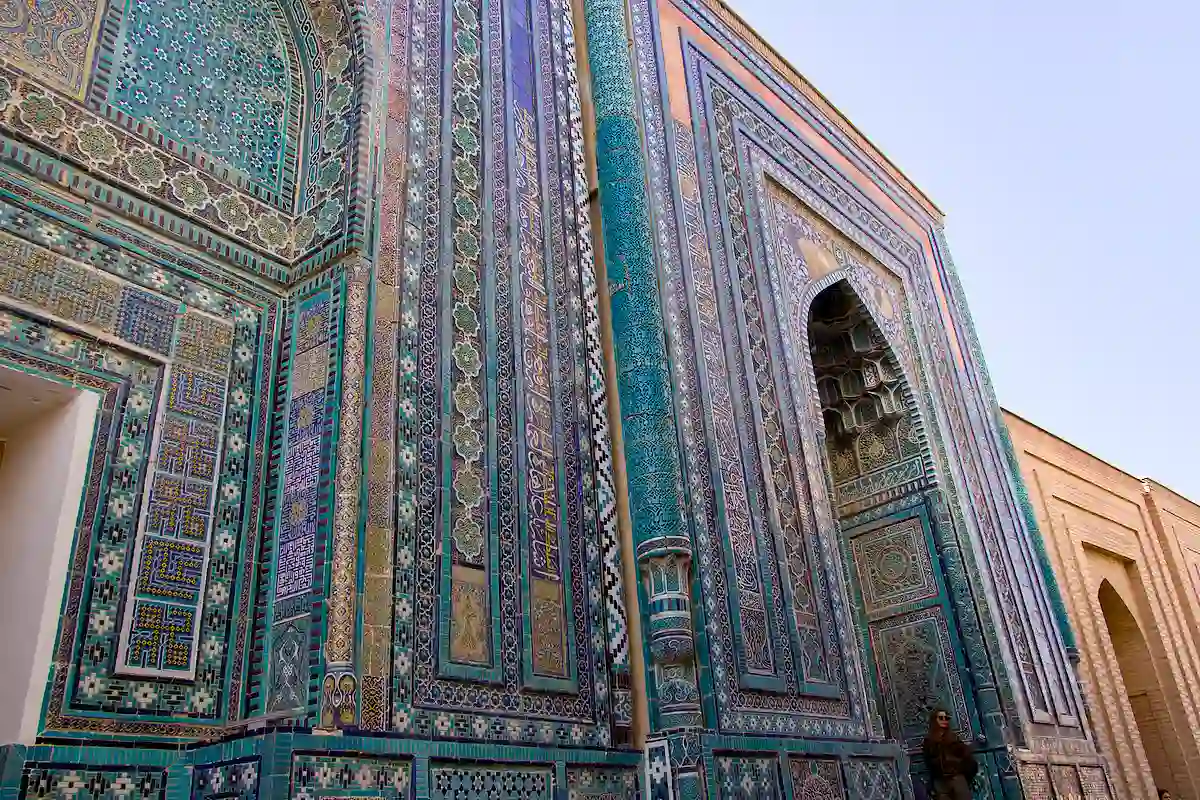
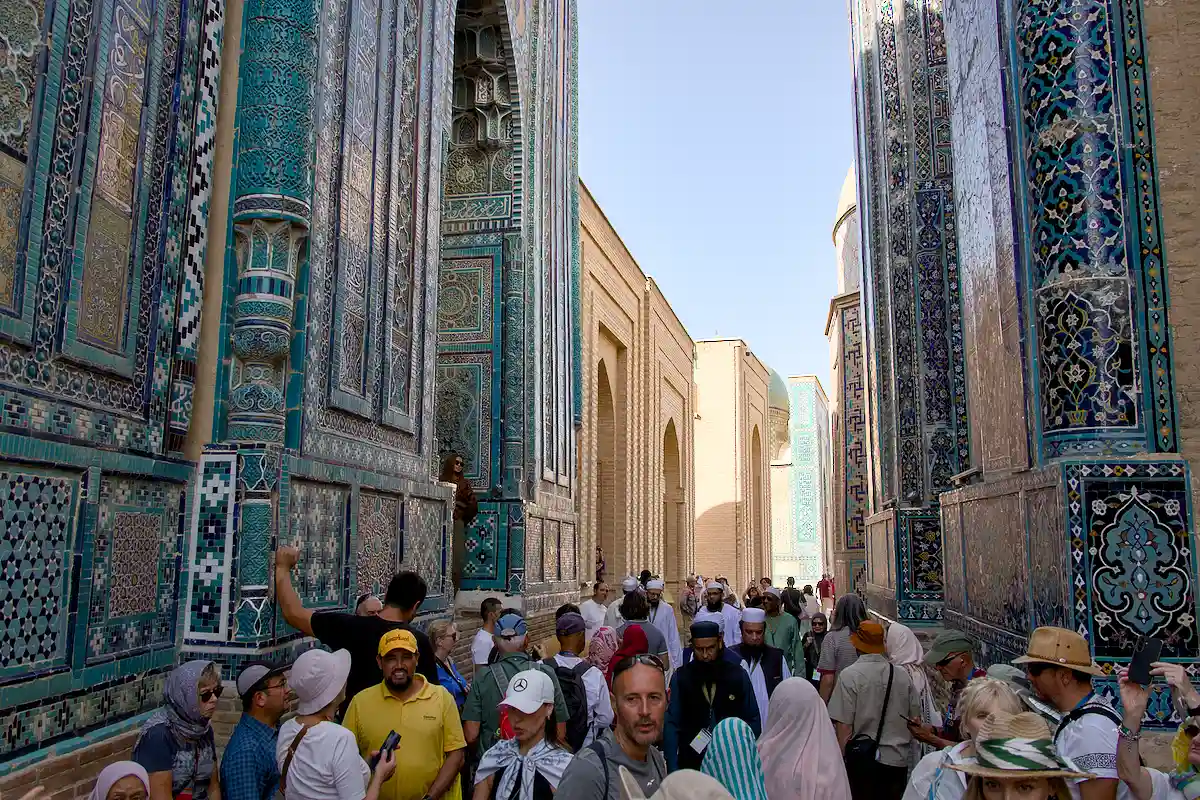
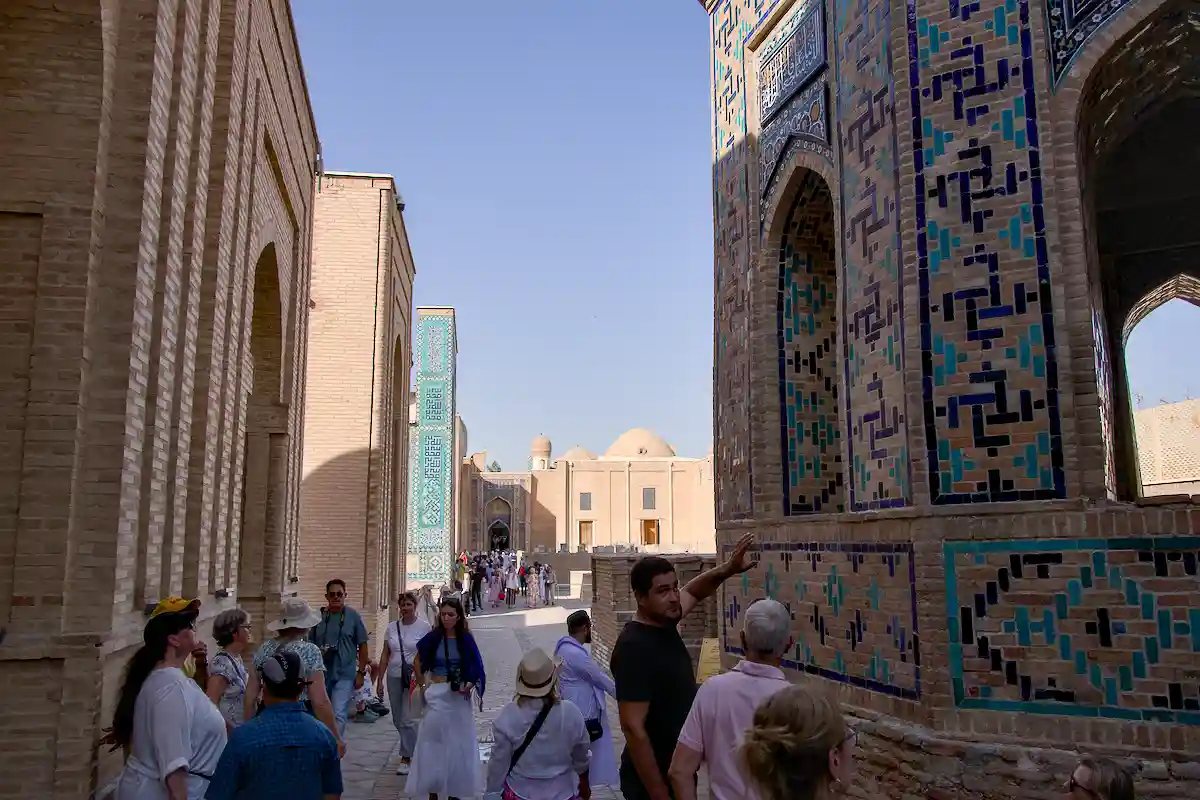
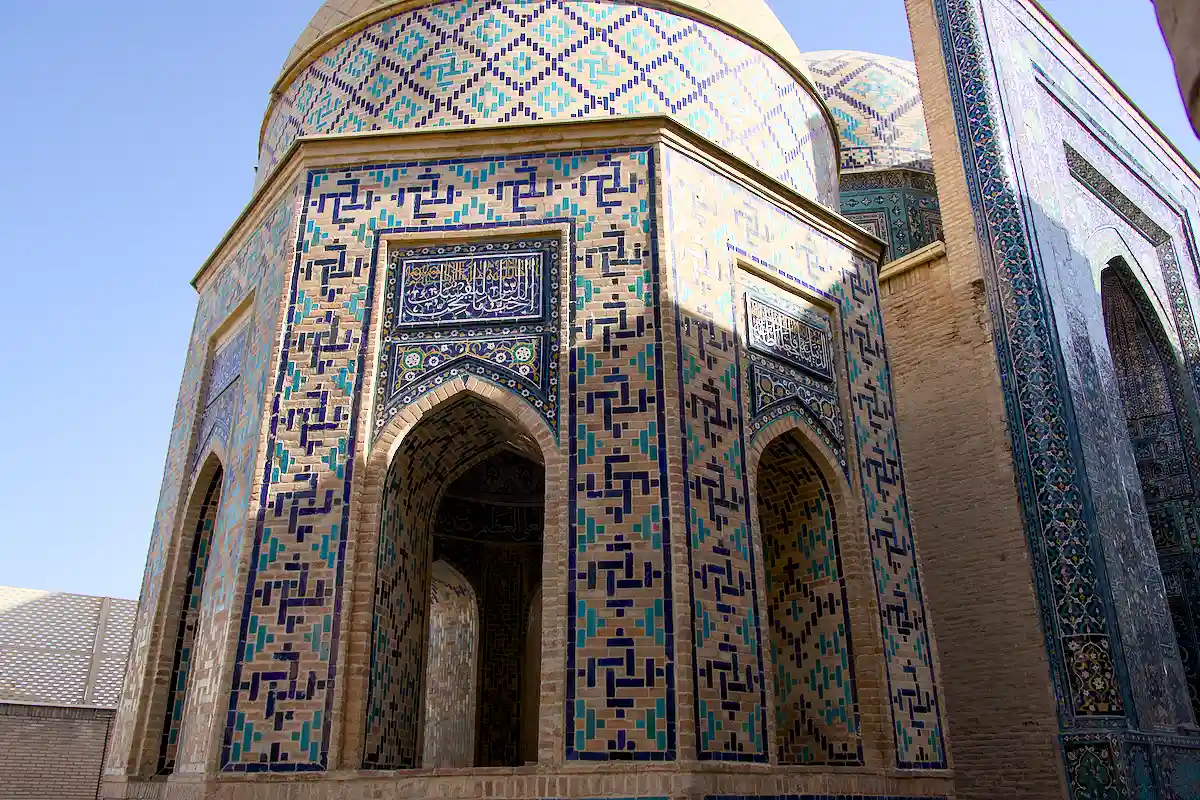
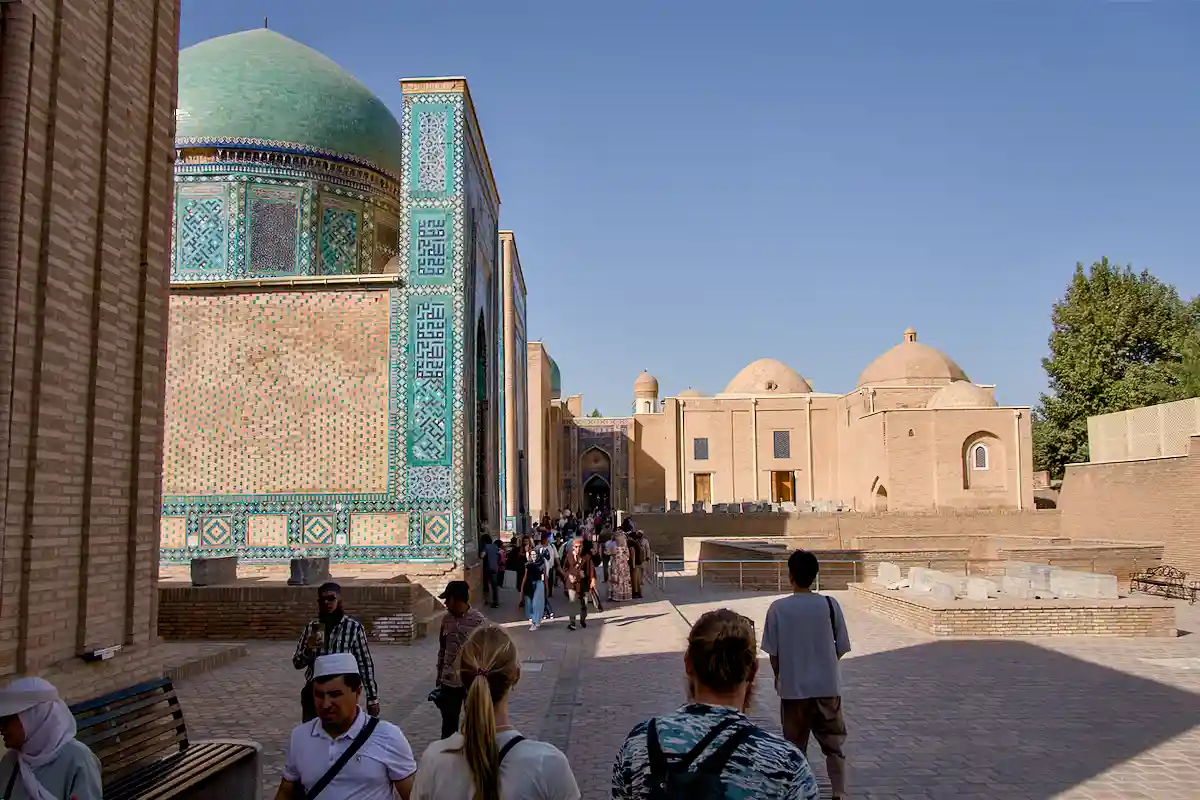
But there is more to discover in the city. The Shaki Zinda necropolis is a burial ground where royalty and nobility rest in magnificent mausoleums covered in glazed tiles and featuring lavishly beautiful interiors. A “city of the dead” that is so crowded with tourists that it is often difficult to get around.
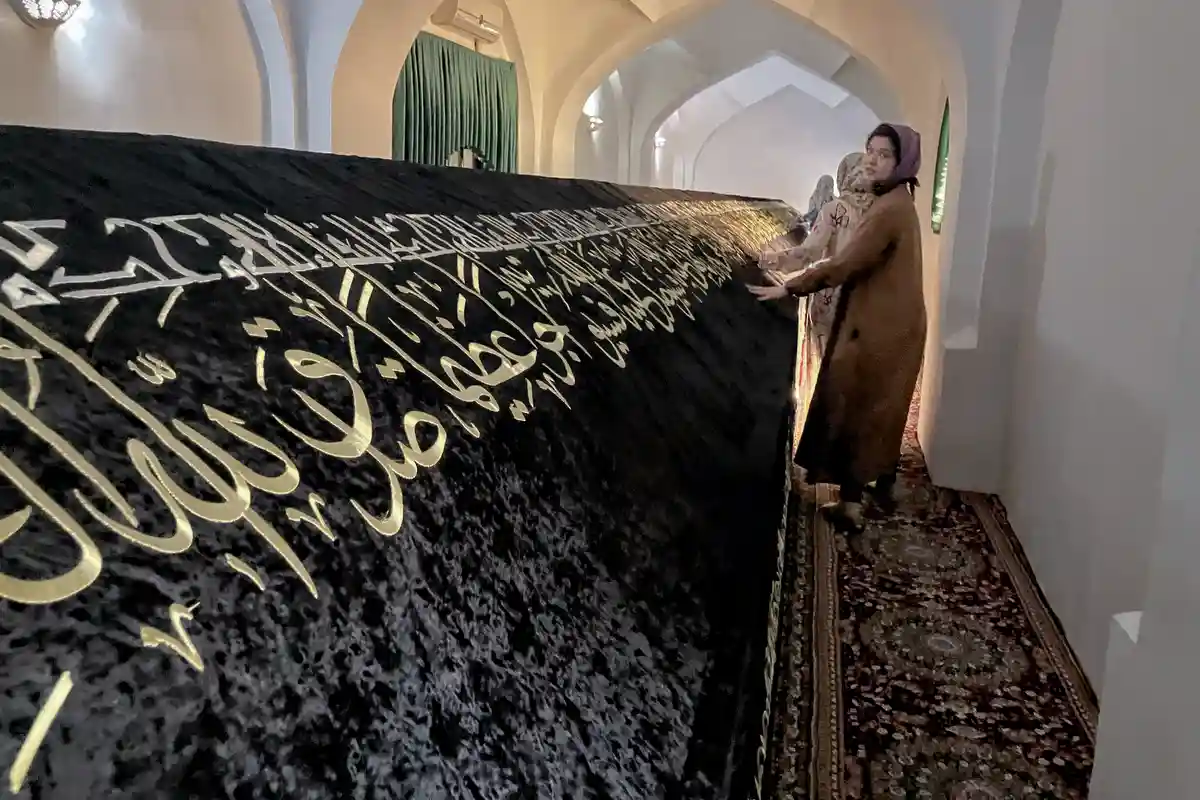
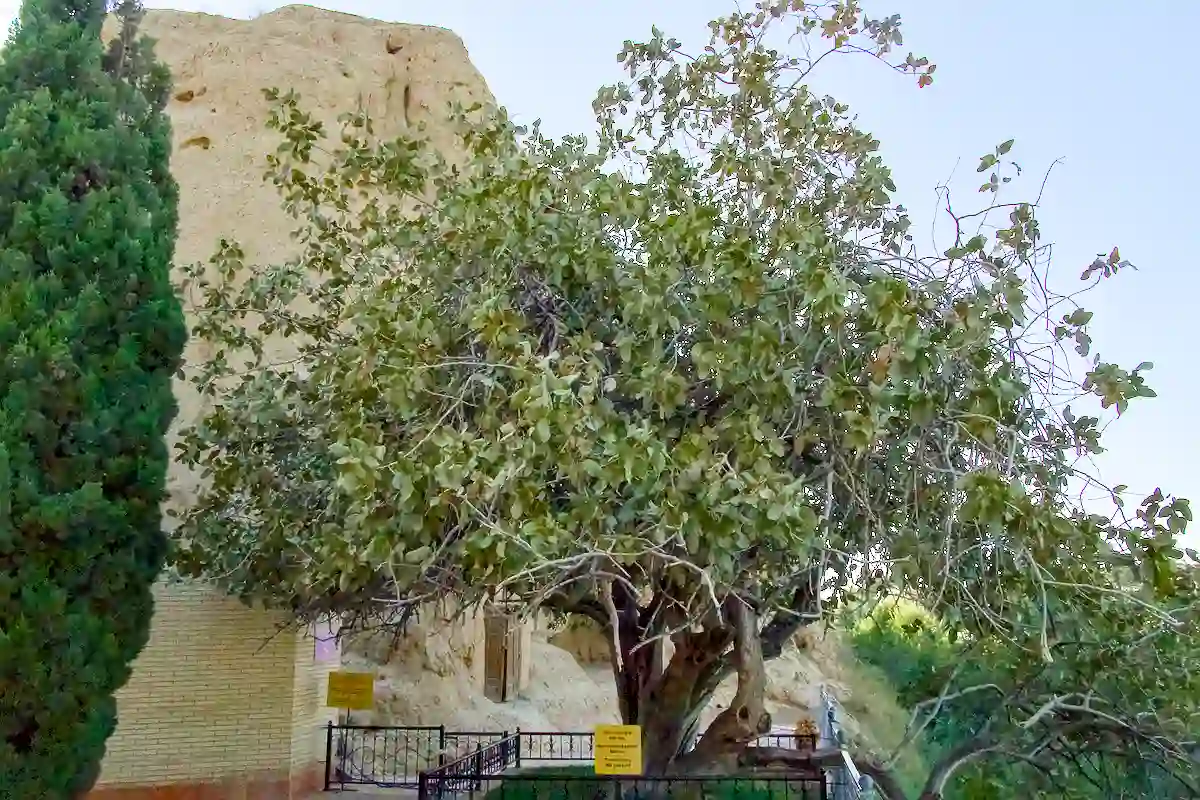
Another, more interesting little mausoleum is located in a rather secluded spot in the old neighborhood known as “Afrosiab.” The mausoleum is connected to a story we actually recognize from the Bible. It concerns the prophet Daniel, who was a descendant of King Solomon of Israel but was held captive in Persia by King Nebuchadnezzar. Daniel was a highly regarded dream interpreter and could predict the future. But he never renounced his Jewish faith, and for that he was thrown into a lions’ den. At which point God intervened, and the lions became as tame as house cats.
Daniel is also considered a prophet in Islam, and according to legend, Timur Lenk found his grave and transported his bones back to Samarkand. But the corpse continued to grow and grow, and anyone who visits his mausoleum today will be astonished to see a twenty-meter-long coffin. The faithful walk around the coffin and touch the black velvet cloth that covers it. But you must not linger; if you do, you’ll be reprimanded by the old man who guards the mausoleum and who also leads the prayer afterward.
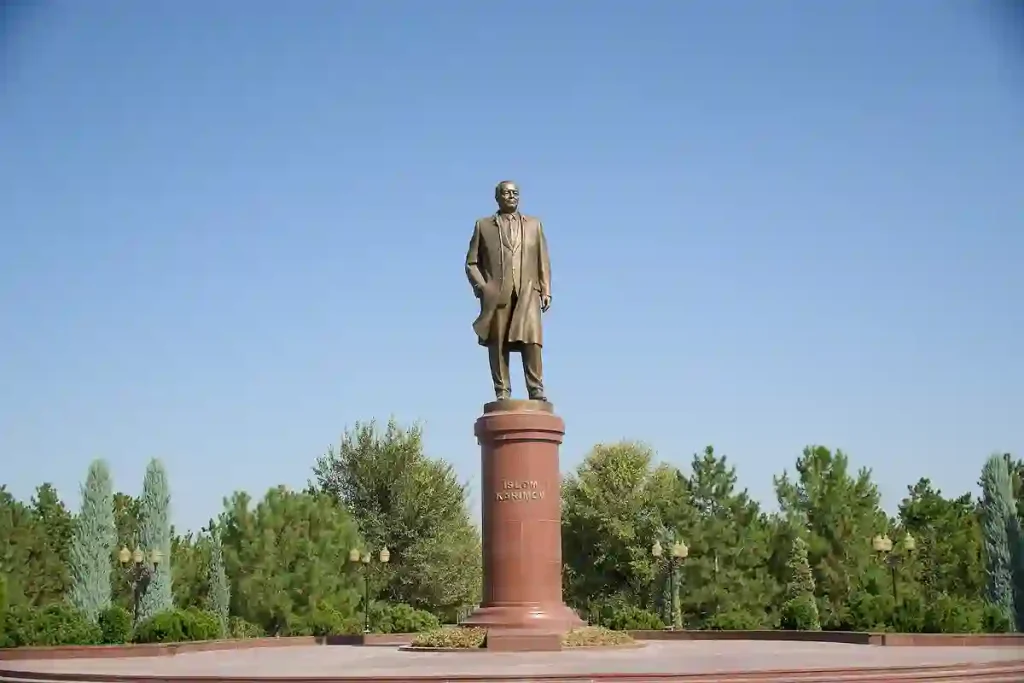
A few hundred meters north of Registan Square stands a statue of Uzbekistan’s first president, Islam Karimov. The Swedish company Telia was involved in shady deals with his daughter, deals that involved bribes amounting to millions. Today, the president is Shavkat Mirziyoyev. Typically enough, he, too, is a party loyalist from the Soviet era. International observers believe that no elections in Uzbekistan are conducted fairly and that citizens have no influence in the political process. Nevertheless, Mirziyoyev is credited with modernizing the country and fostering better relations with the outside world.
On our last day in Samarkand, we head out to a small village called Konigil. There’s a sort of artists’ village there, and right in the center of it is an interesting paper mill that uses an ancient technique to make paper. It relies on hydropower and is, quite literally, a craft. It’s not a quick process, but the paper is said to last for several hundred years.
This method of papermaking came to Uzbekistan via the Silk Road in the 700s. The raw material is bark from the mulberry tree, which is cleaned and boiled in large cauldrons. It is then ground in water-powered stamp mills into a gray pulp that is dissolved in water. The wet pulp is caught in a net, then pressed and dried. Finally, it is polished smooth with marble, cowhorn, or seashells. The result is a very beautiful paper.
Elsewhere in the village, water powers an oil mill where cooking oil is produced from sesame seeds, sunflower seeds, apricot kernels, and flaxseed. We didn’t really like the taste of the oil, but it’s probably healthy!
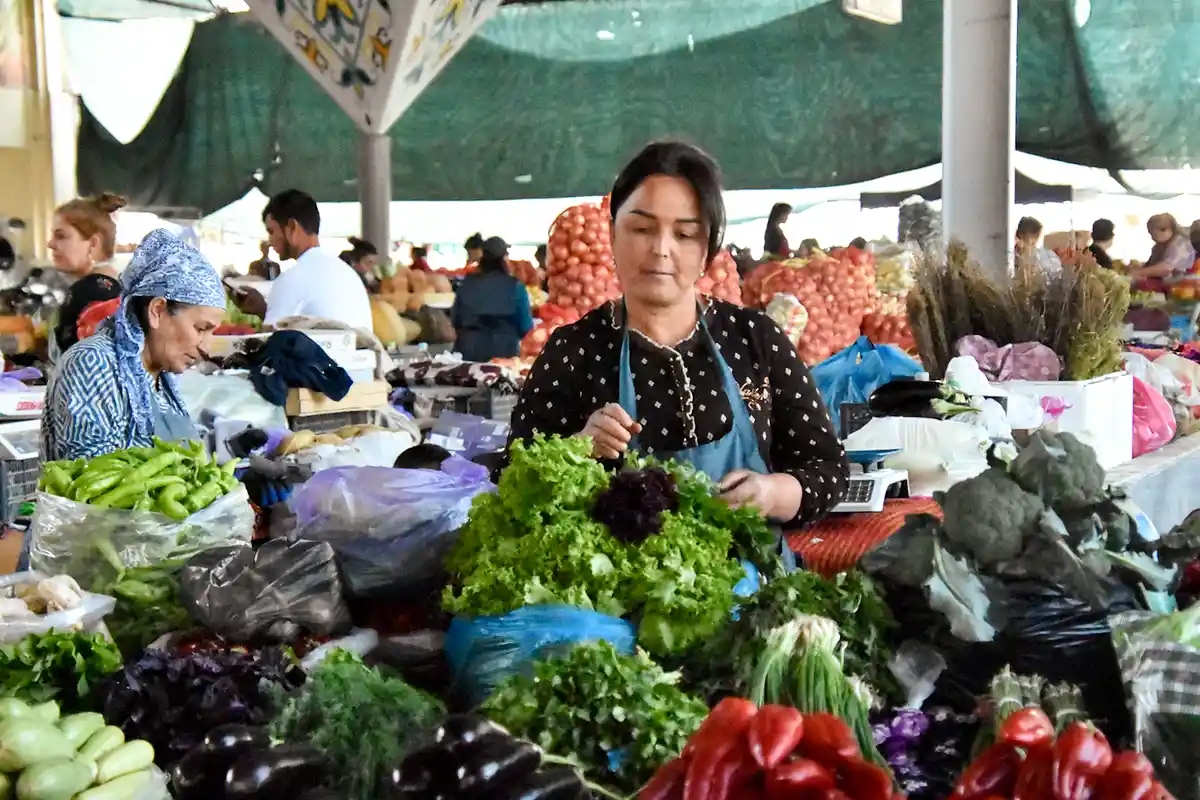
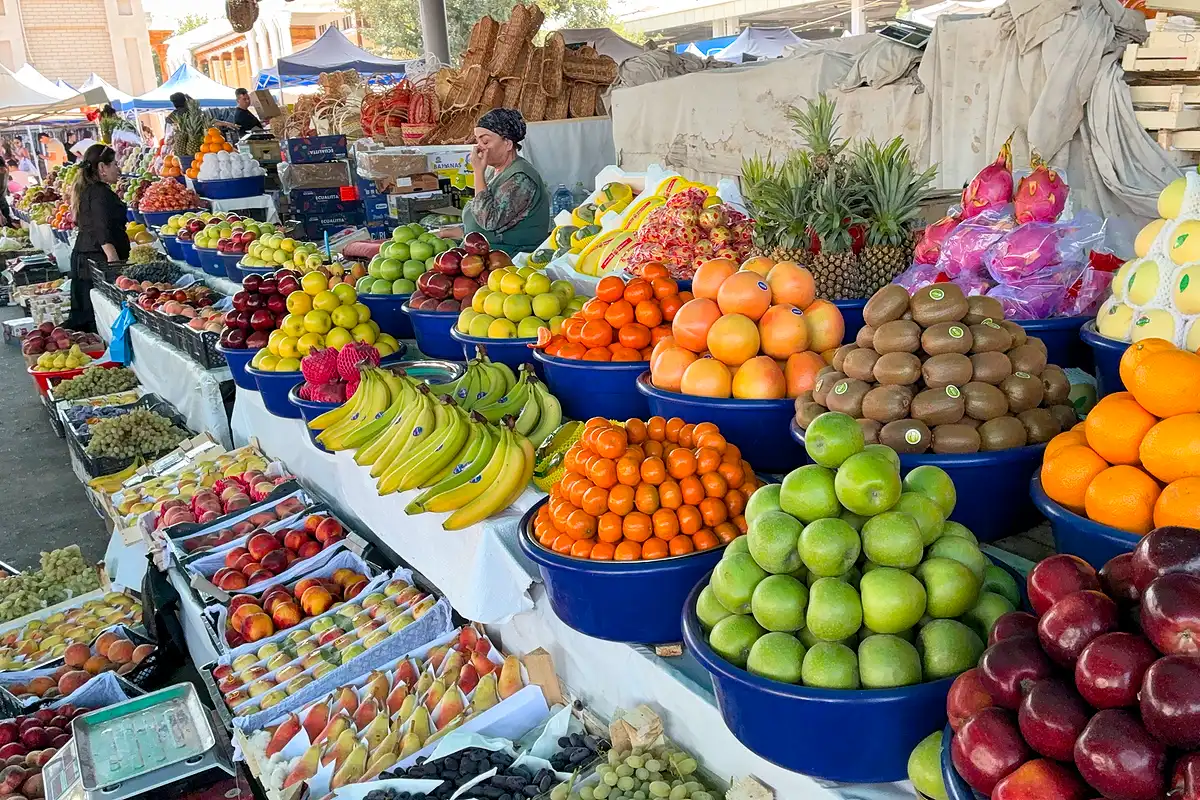
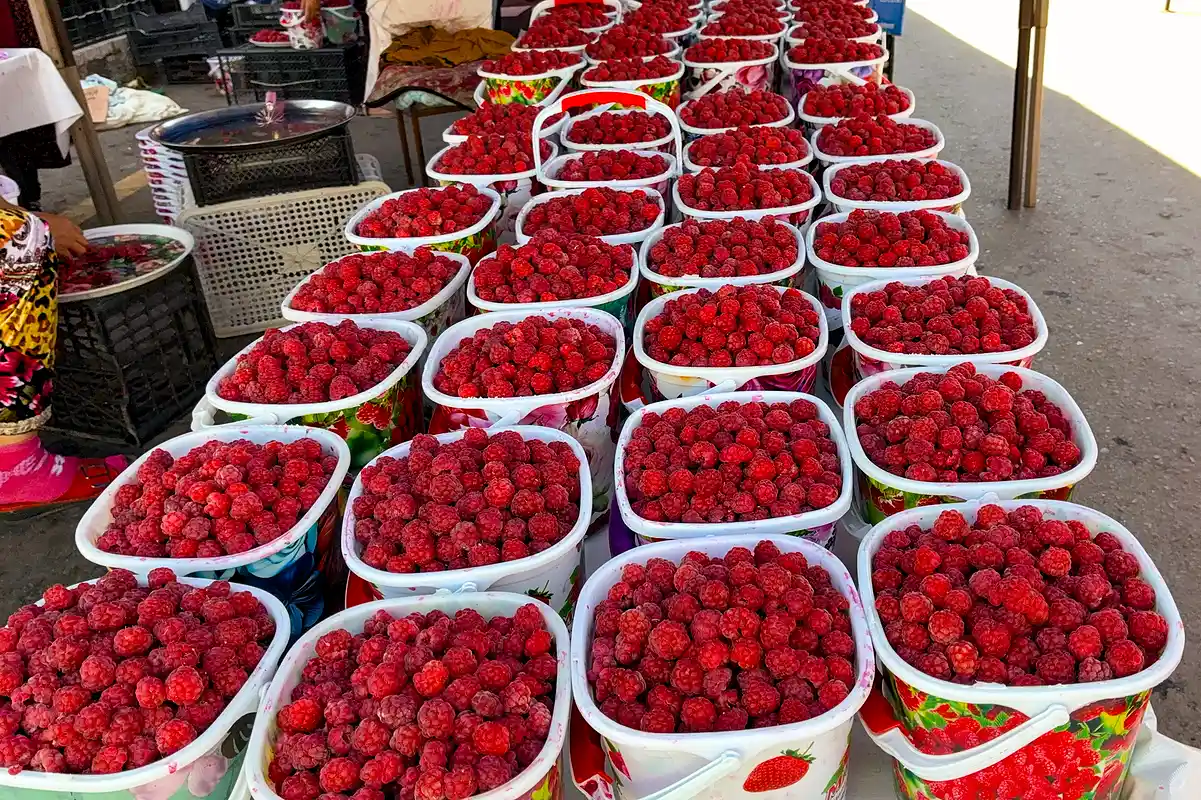
Before leaving Samarkand, we listen to this blind singer on the steps of Samarkand’s colorful and bustling food market, who accompanies himself on the tritar.
Now let’s go back a week in time to visit a strange country that has somehow lost touch with reality – perhaps because of its first president’s bizarre whims. Welcome to Turkmenistan!