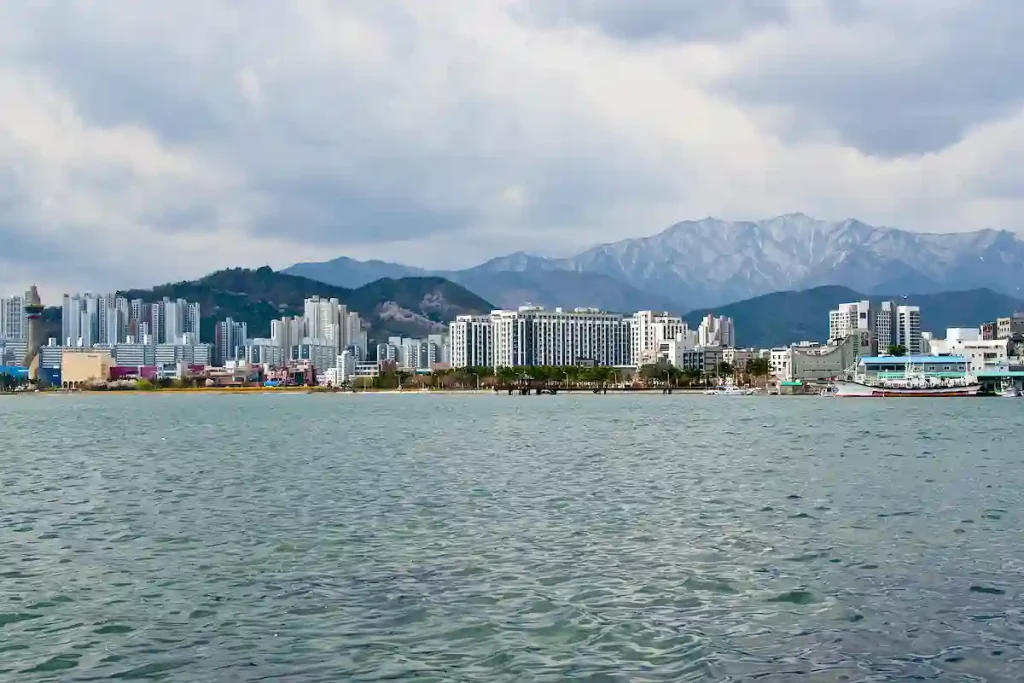
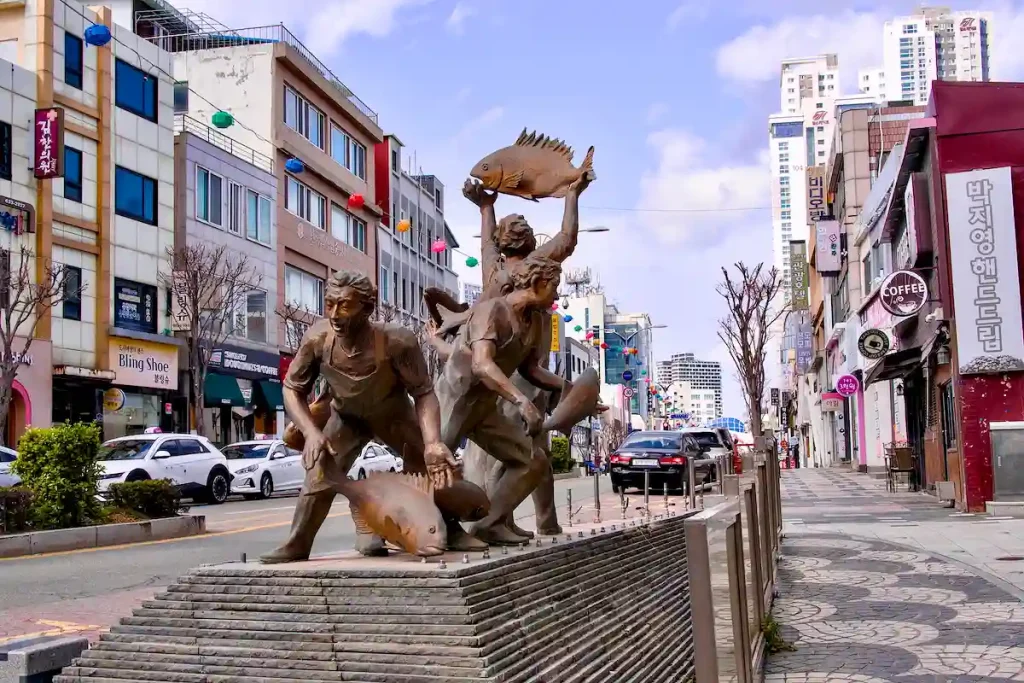
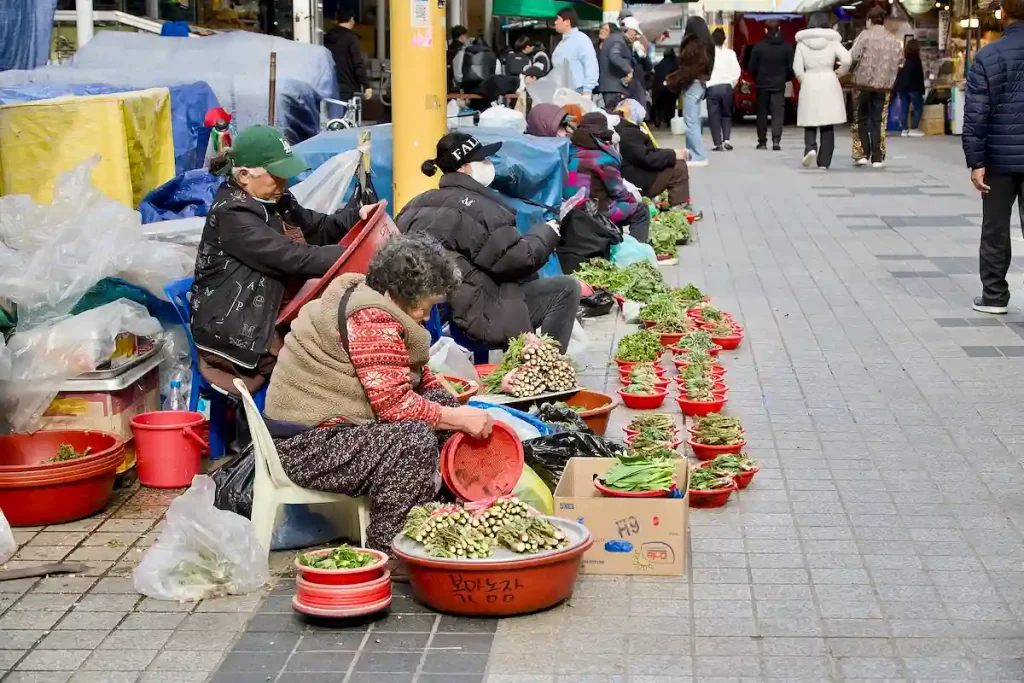
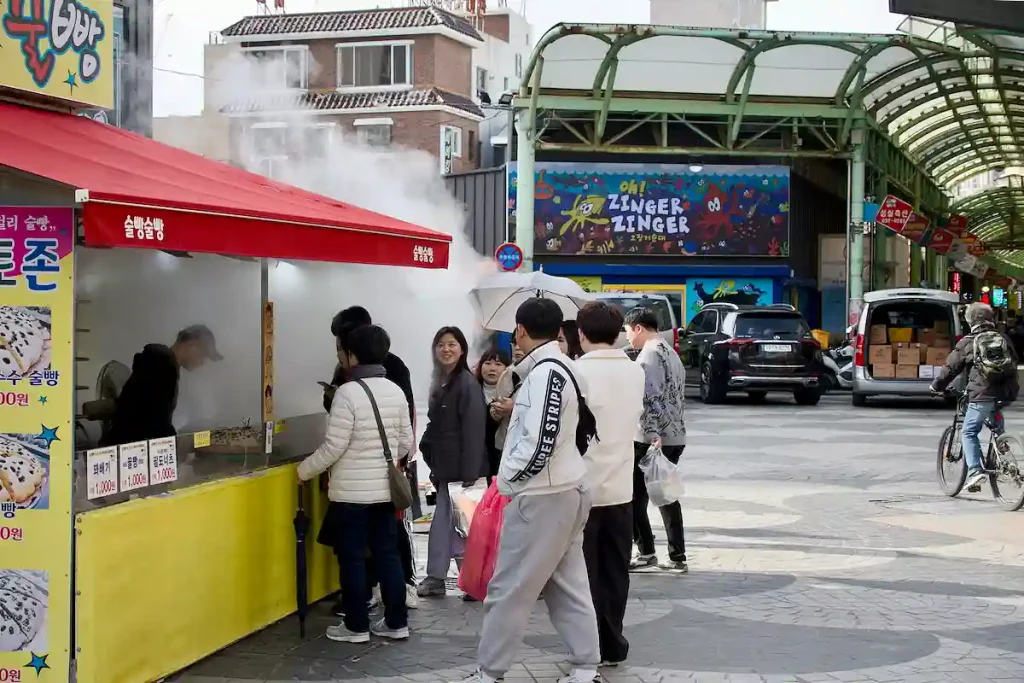
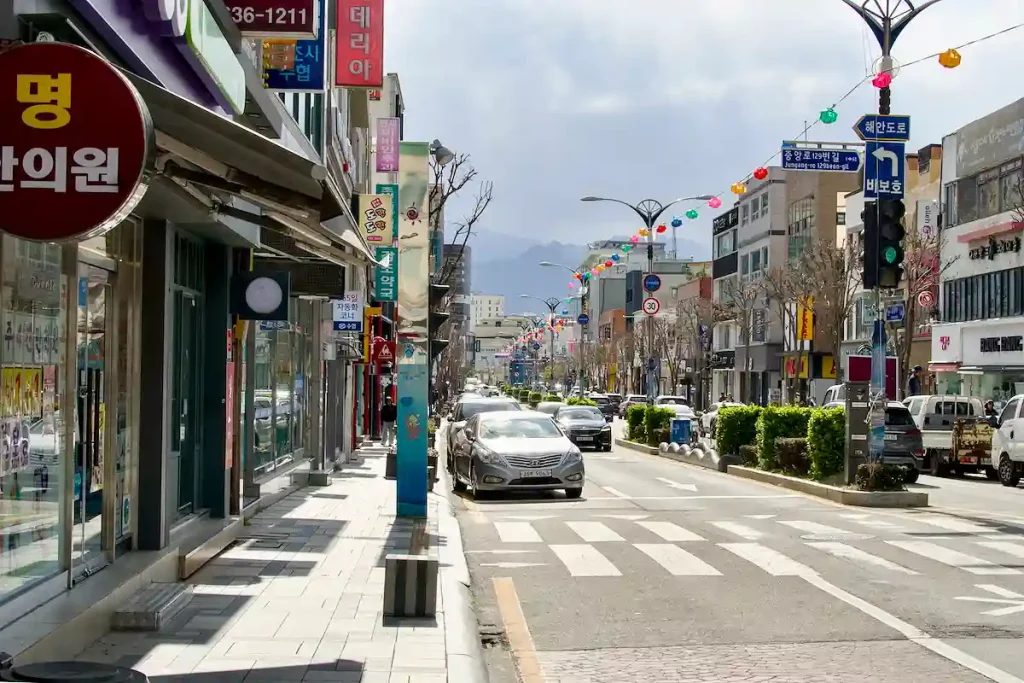
Leaving Seoul, we head straight across the Korean peninsula to the northeastern coastal city of Sokcho, which we know almost nothing about. The plan is to hike in a famous nearby national park. But it falls through, spring is still early and as far north as this, there is still snow on the mountains and the park is closed. We have to make the best of the situation and instead focus on other discoveries, such as food, which in Sokcho is super fresh fish, often grilled right at the table.
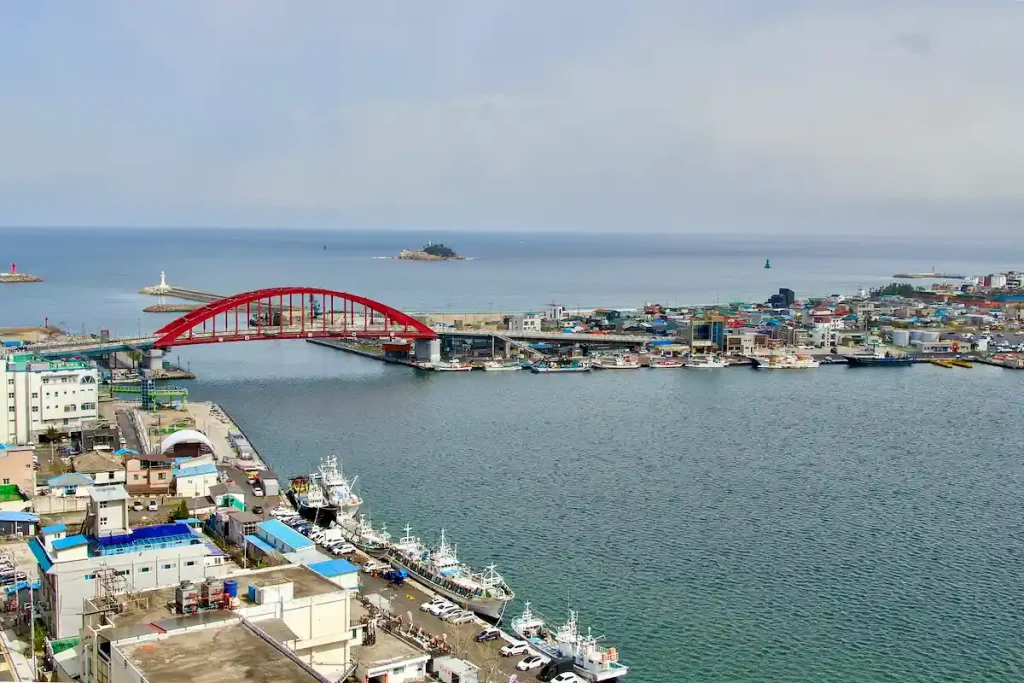
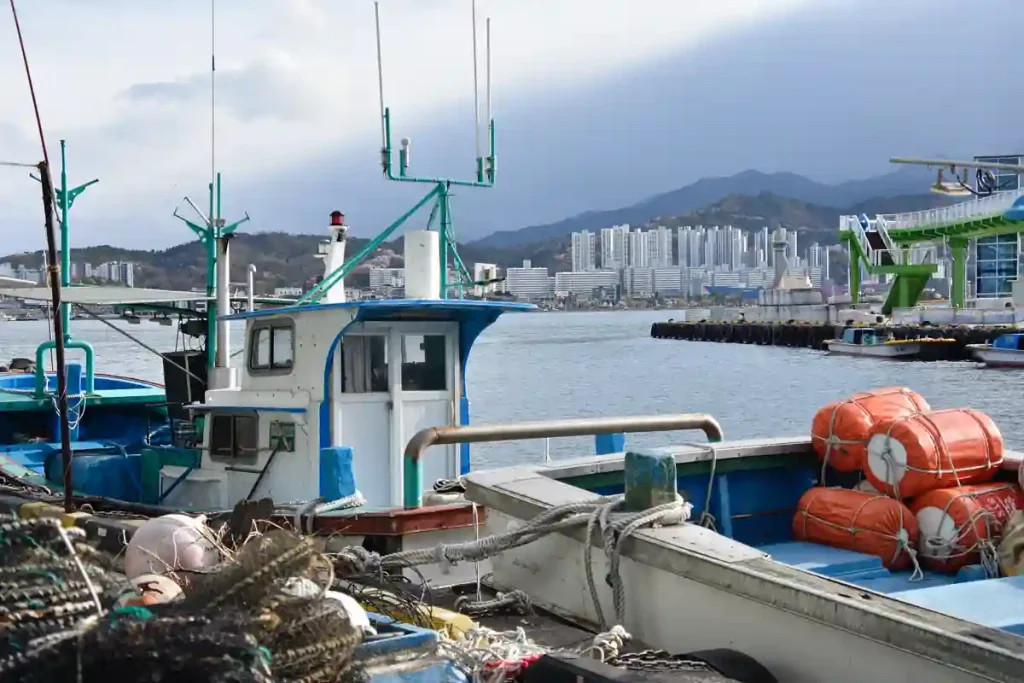
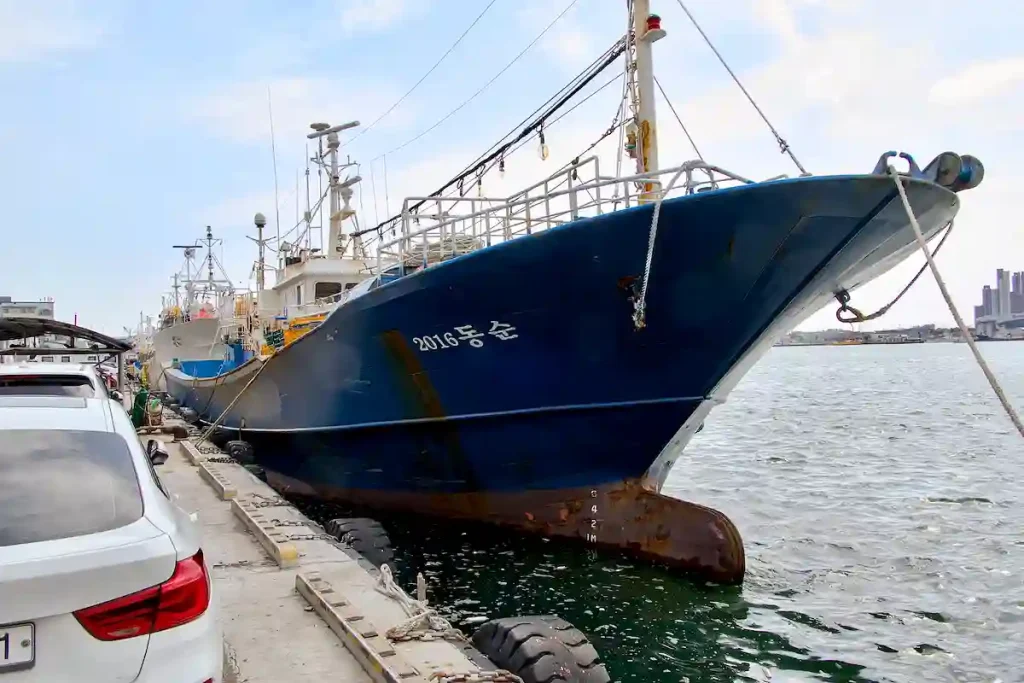
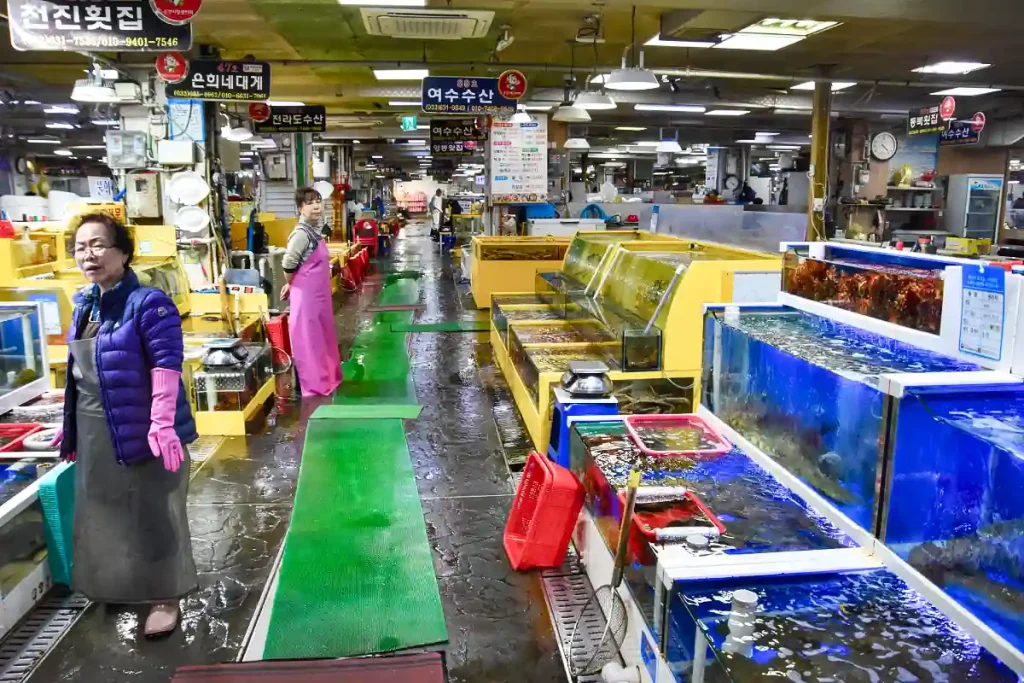
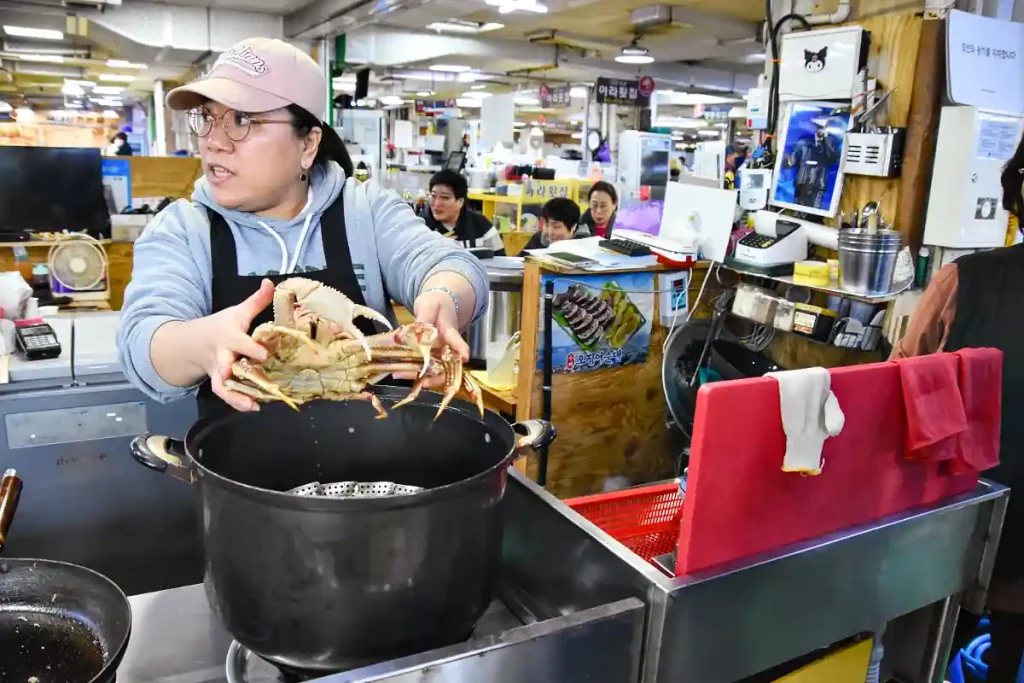
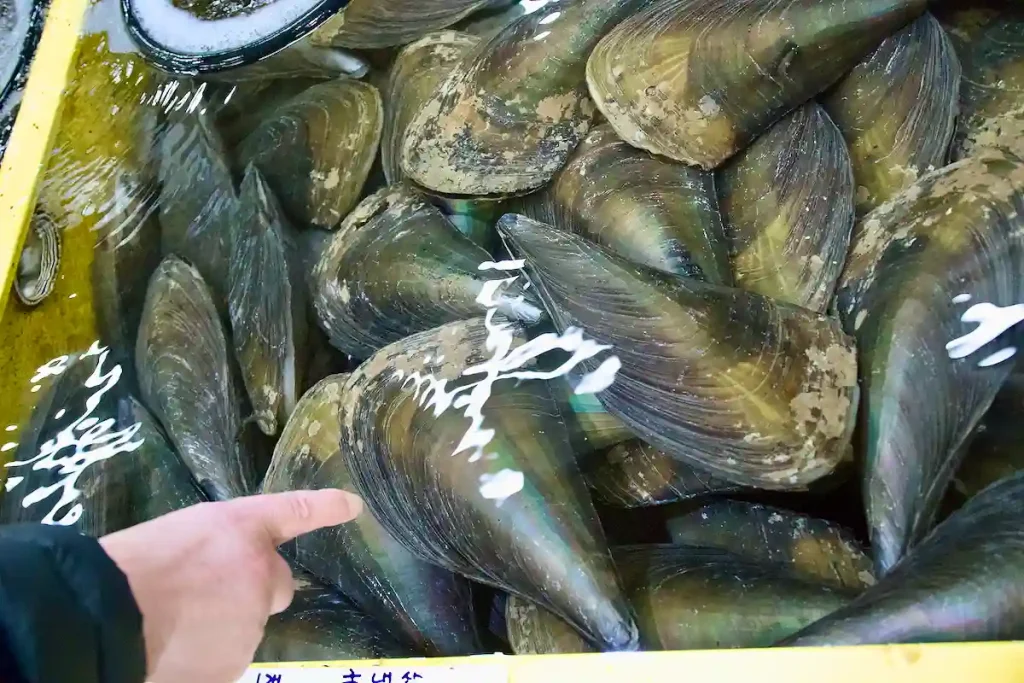
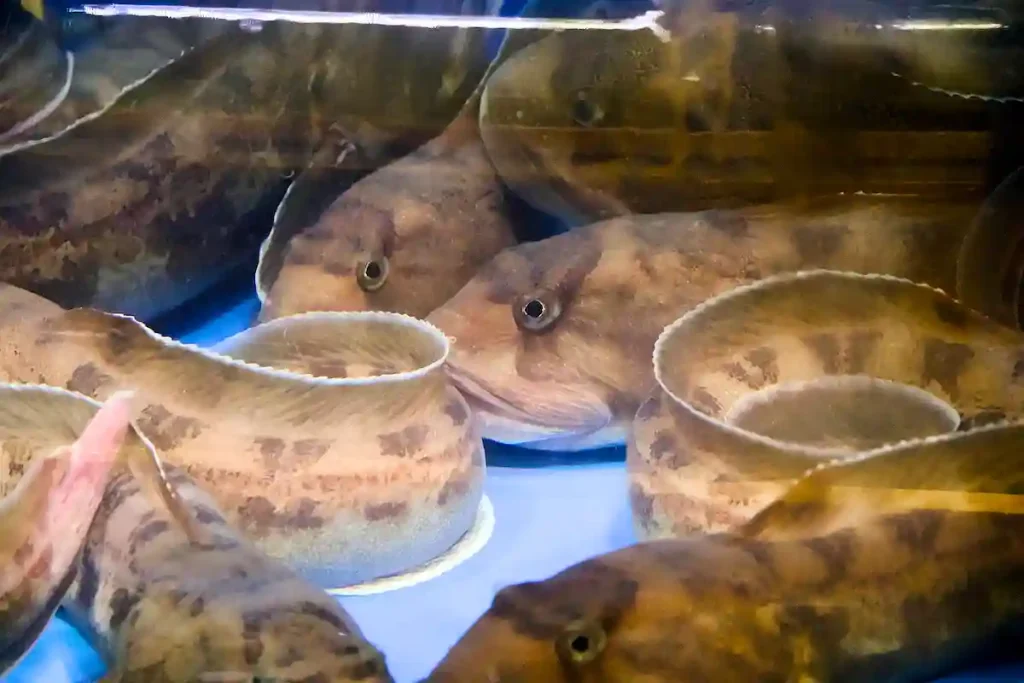
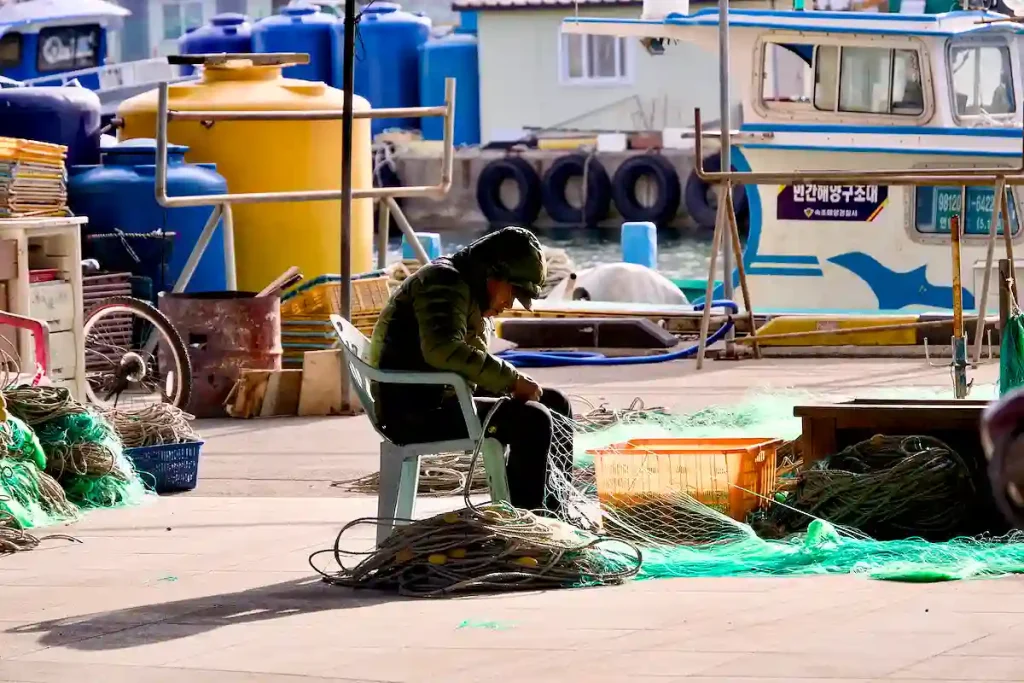
Sokcho is characterised by fishing; every quay in the large harbour is cluttered with fishing boats of various sizes. Most have rigs with rows of lights on deck (see above). Here, light fishing is allowed; the lights are turned on when the boat is out at night. It lures the fish to the surface and the catches become large. But then something unusual happens. They don’t dump the fish into the cargo hold to let it die, they place the catch in tanks filled with water. In the harbour, the tanks are quickly transported to the public fish market where we see hundreds of large aquariums with fish, crabs, and molluscs. How you shop can be seen in the clip below.
It doesn’t look good to see fish and seafood so crowded in the aquariums. Sometimes a dead fish floats on the surface. But you probably can’t get fresher fish than this.
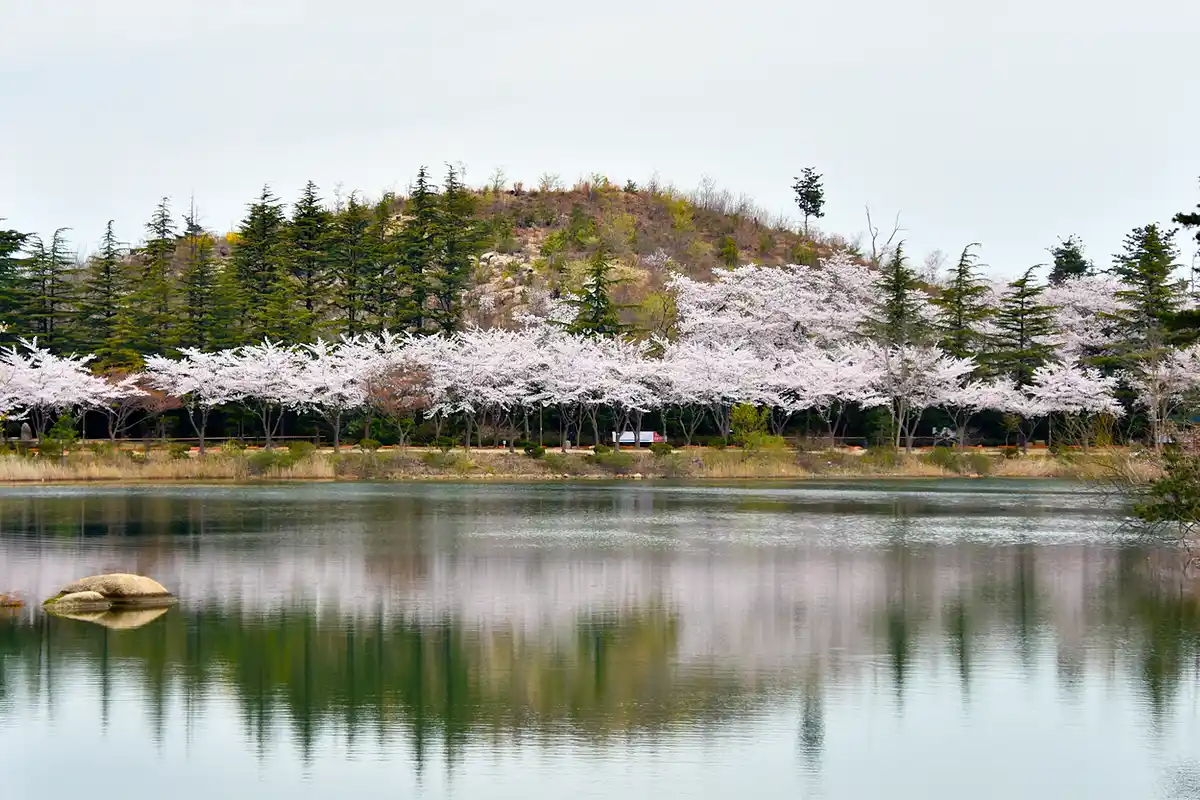
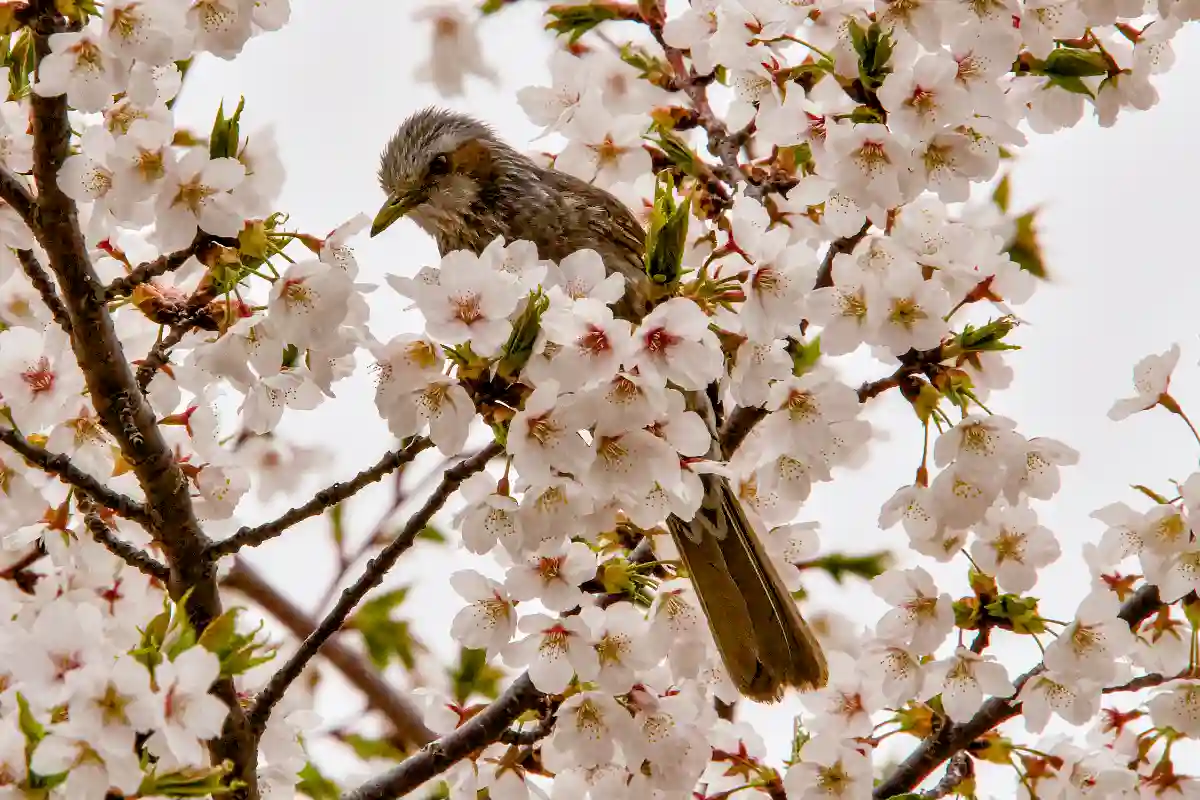
We also take a stroll in a park around a small lake in Sokcho. The cherry blossoms are at their peak right now, and one who seems to be happy about that is a bird, a Japanese bulbul.
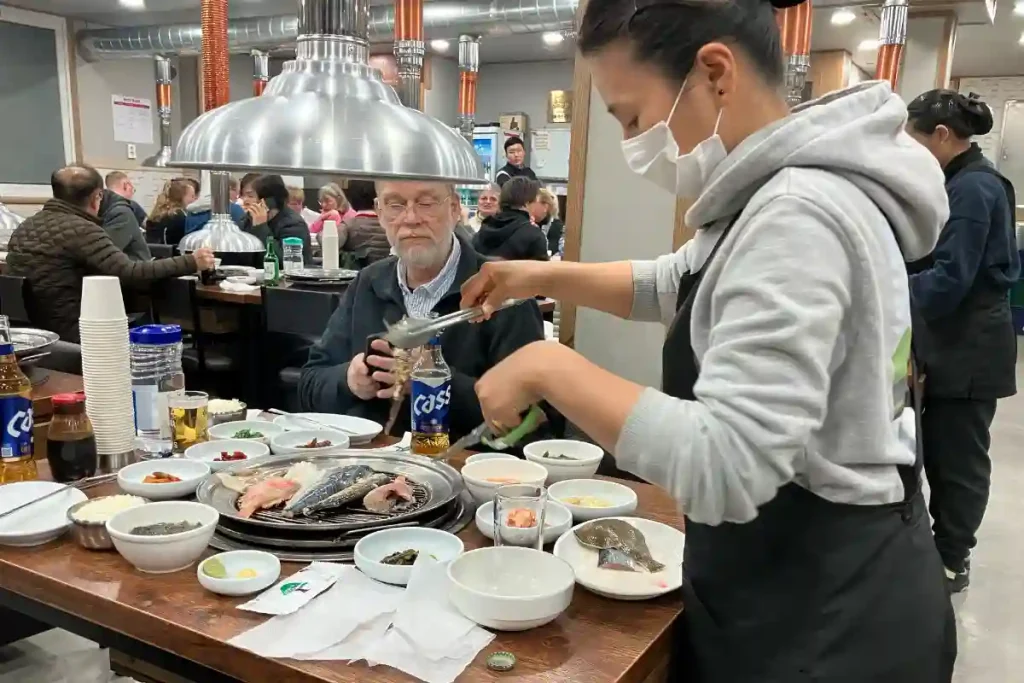
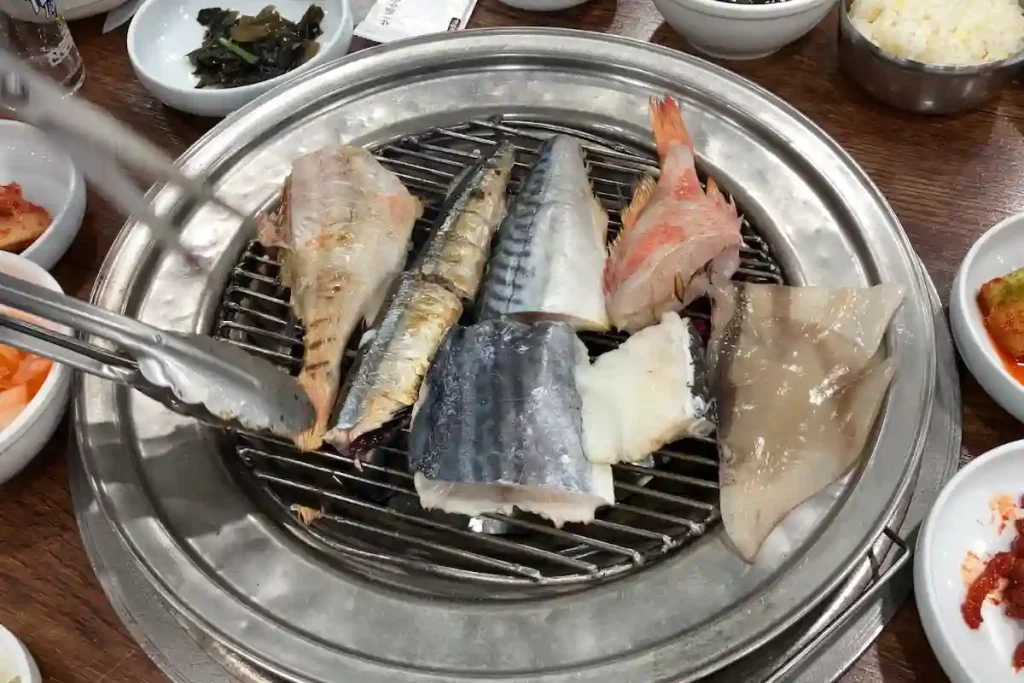
And then there’s the thing about the food again. In Sokcho, we try a “Korean Barbecue” for the first time, a type of grill restaurant that is found everywhere in Korea, and also in Vietnam and Cambodia. The setup is simple – you order a piece of meat, usually pork, and then the staff brings out glowing hot stones that are placed in a circular depression in the table. A grill rack is placed on top, and the piece of meat is put on that. In the same way fish is grilled; pieces from different types of fish are placed on the grill. And since they are super fresh, no seasoning is needed, they are simply delicious! Lots of piquant additions make the icing on the cake.
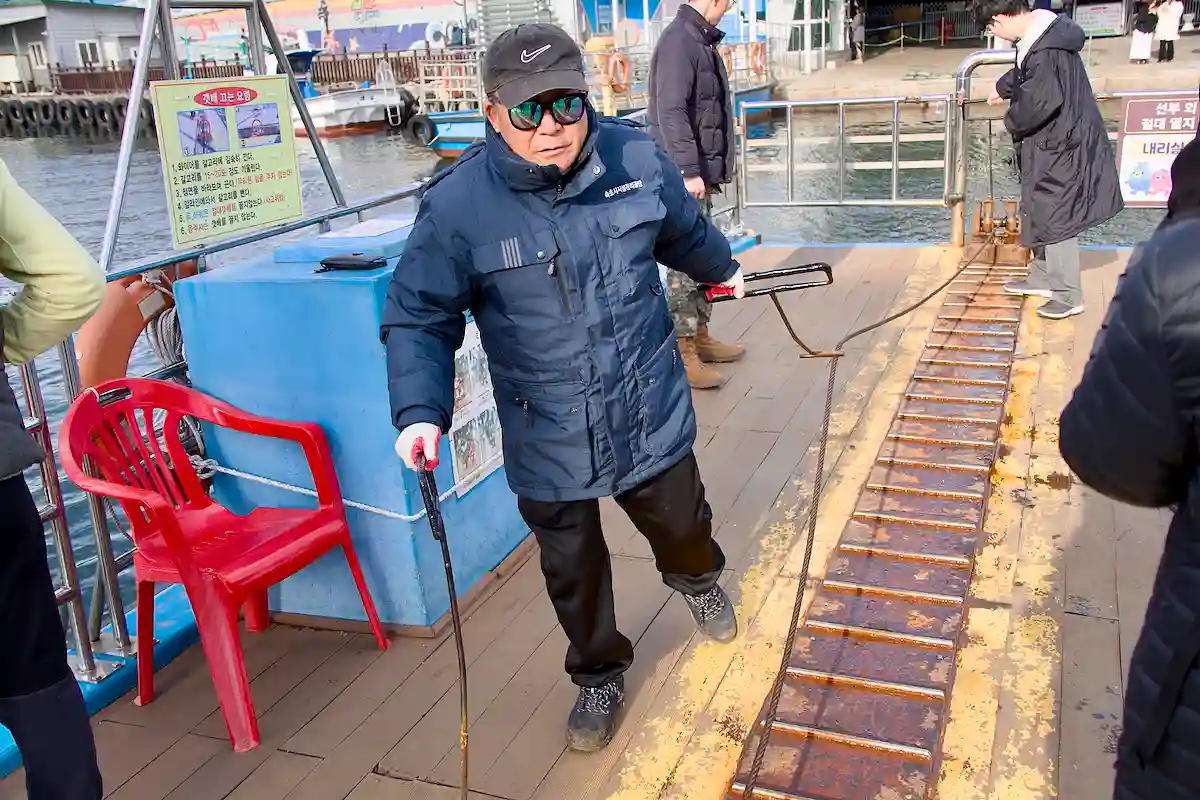
Down by the beach, there is an exciting part of Sokcho’s modern history. To get there, you have to hop on a small, old-fashioned ferry. It has no motor, it’s is pulled by hand! Strong travellers have to help out by pulling a wire with a kind of tow hook.
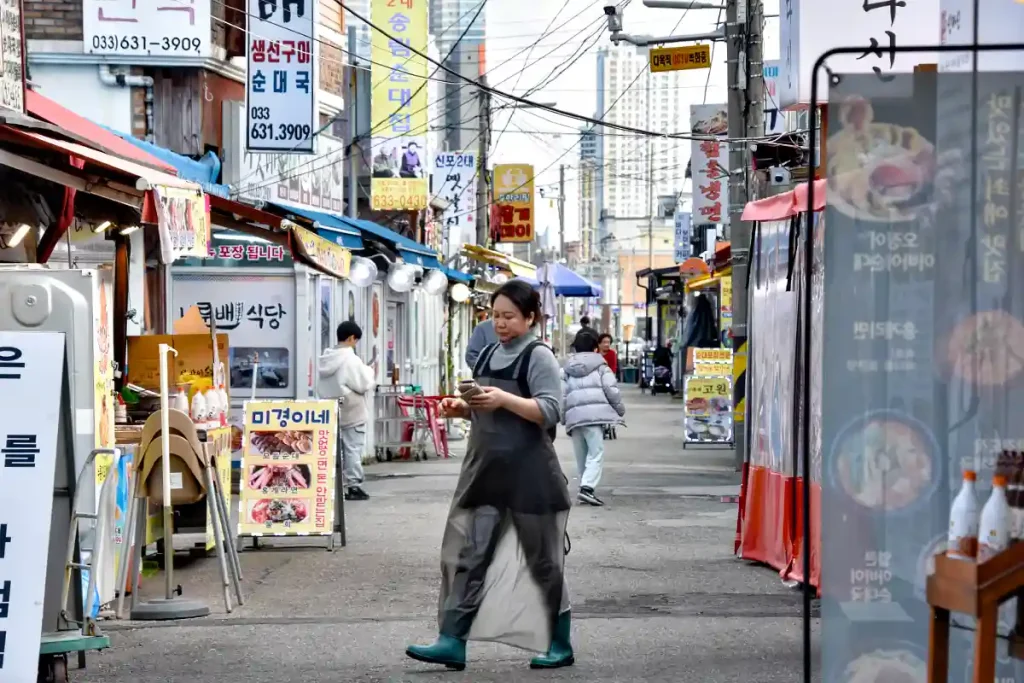
After a short ride, we hop off in a part of the city that seems to have been left over when the rest was filled with high-rises. Low, simple houses, often with shops or cafes, and narrow streets and alleys. This part is called “Abai village,” and it is said to have been built by refugees from the north during and after the Korean War. Abai means “elder,” as it was apparently mostly old people who lived there.
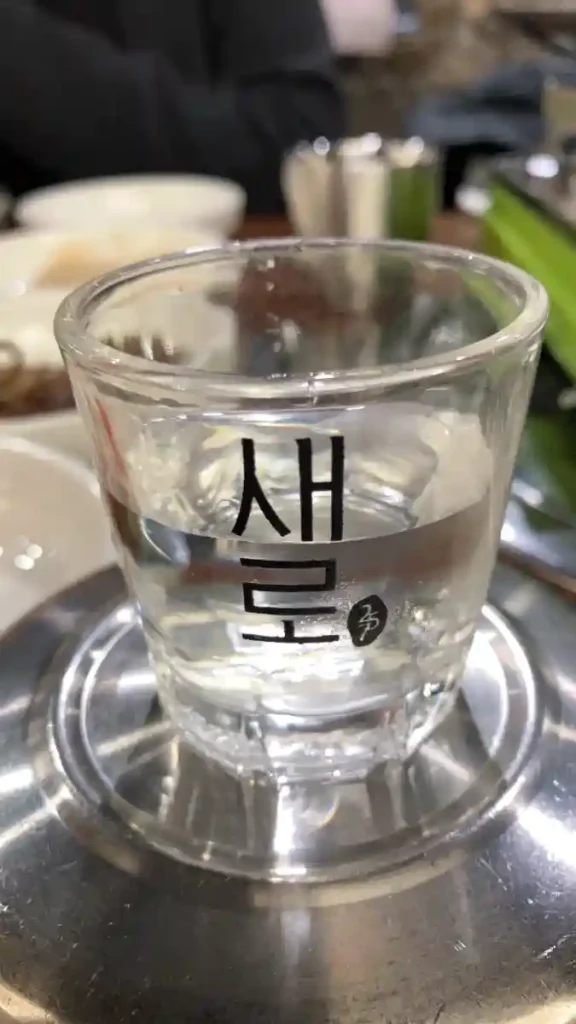
We made a new acquaintance in Sokcho. We saw that most of the table neighbours at the restaurants were drinking a clear liquid in small glasses. At one place, we gathered our courage and asked. The drink is called “Soju,” a type of rice wine with a long tradition in Korea. We each got a sample, and it turned out to be a lightly anise-flavored drink, excellent with the spicy food. It became a little tradition, so to speak, for the rest of our trip in Korea.
Korea has excellent train connections, but now it gets complicated. We take a taxi, change to bus, take a taxi again, and then train with a transfer, to reach the next destination, the city of Andong almost in the middle of the country.