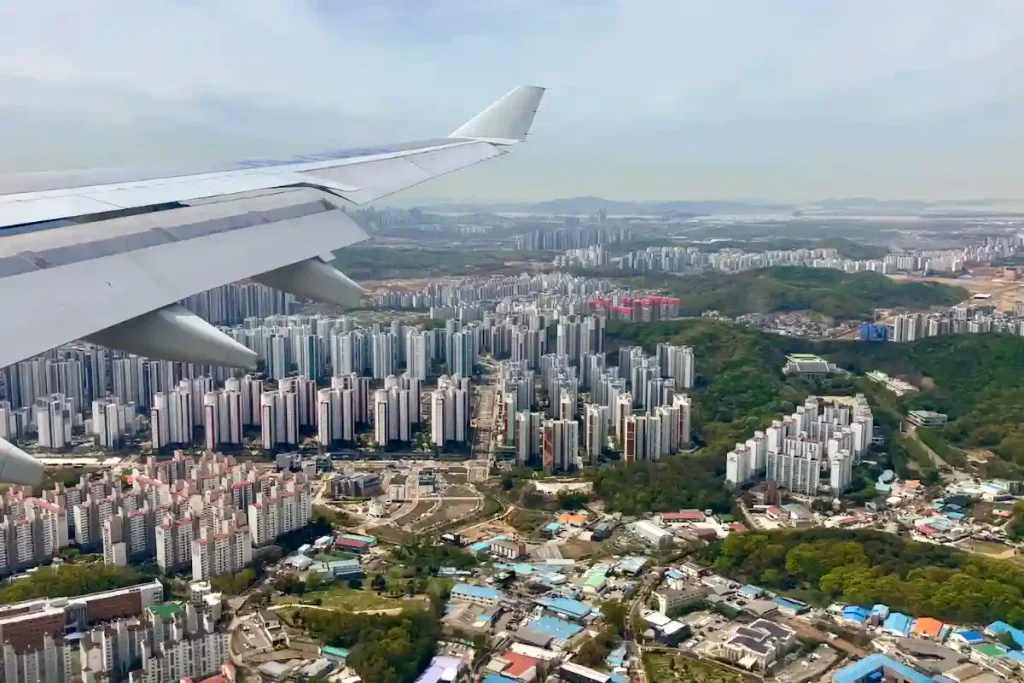
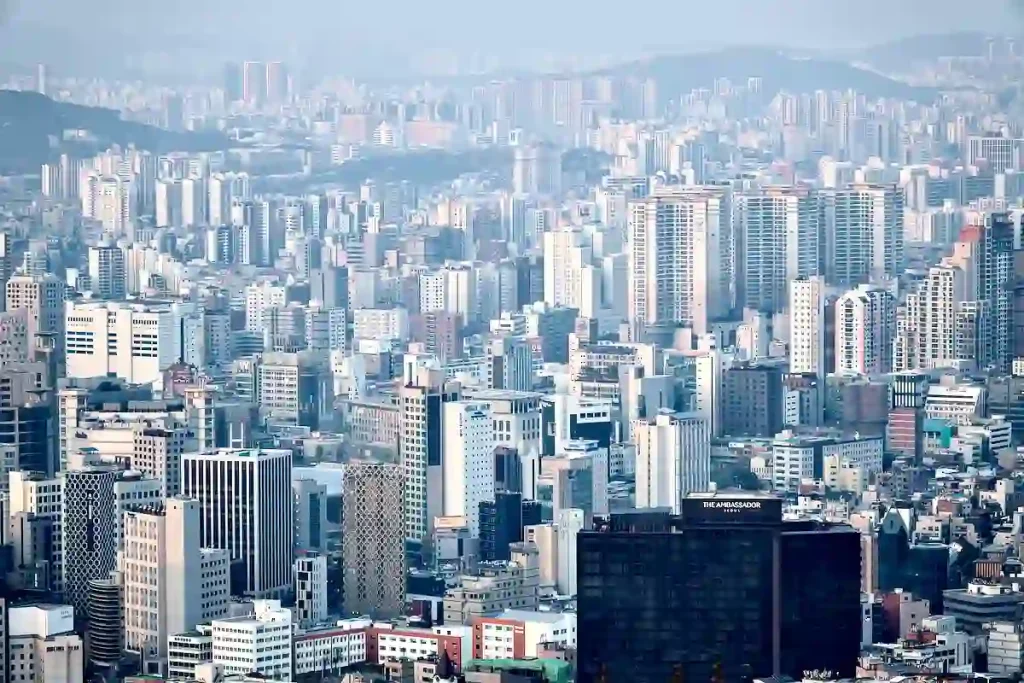
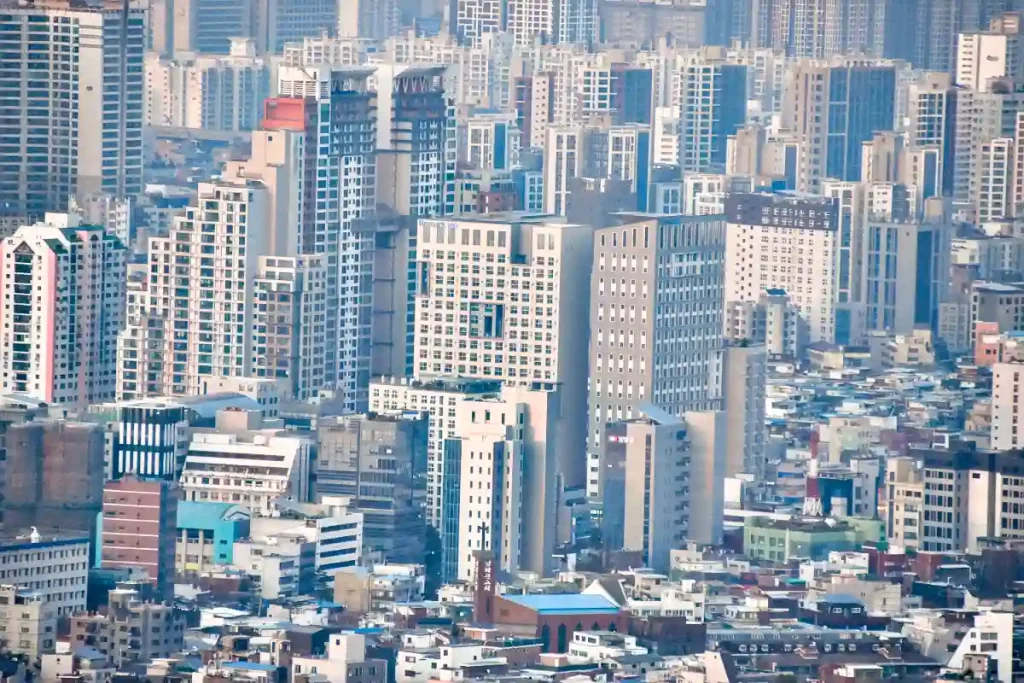
Our journey through South Korea takes us to various large cities, but “various large” here means either very large or gigantic. The capital city, Seoul, is incomprehensibly large; when you leave it by train, it seems to go on forever. Probably countless suburbs are included, but you can’t see the seam between them.
Everywhere, in cities and suburbs, even in what seems to be pure countryside, clusters or islands of exactly equally tall skyscrapers appear, like their own vertical villages. These skyscraper clusters will later be seen in both Vietnam and Cambodia, but nowhere are they as frequent as in South Korea.
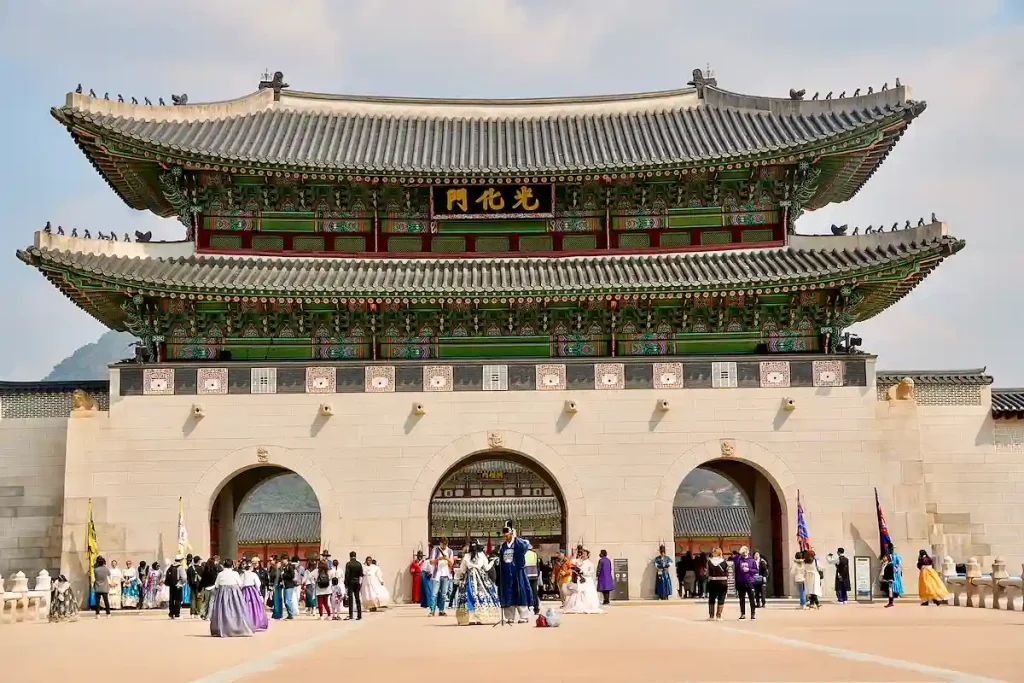
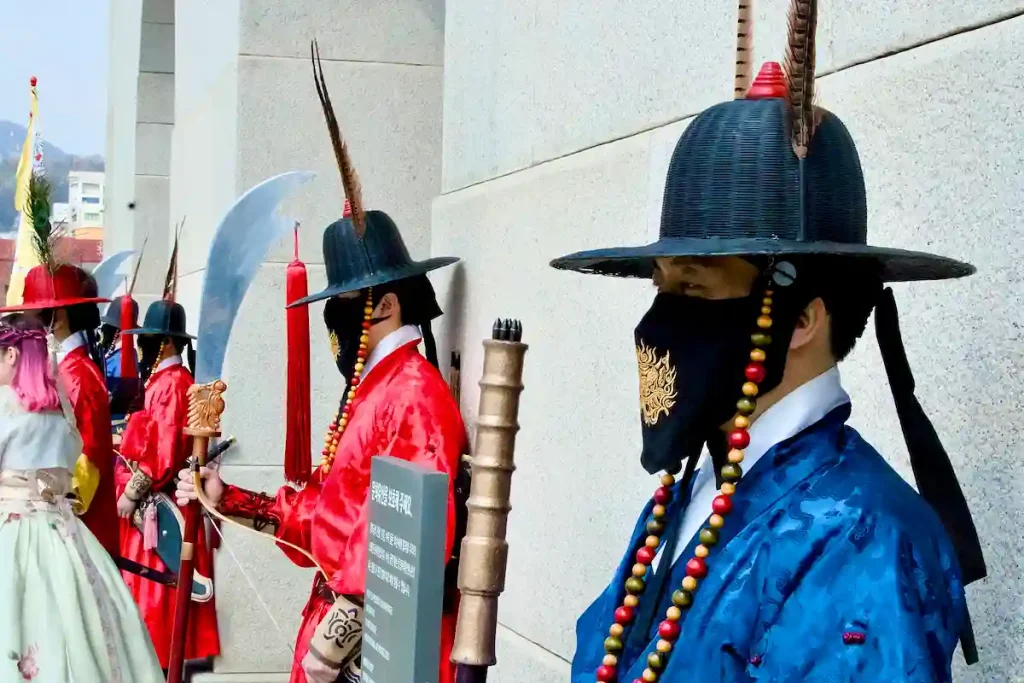
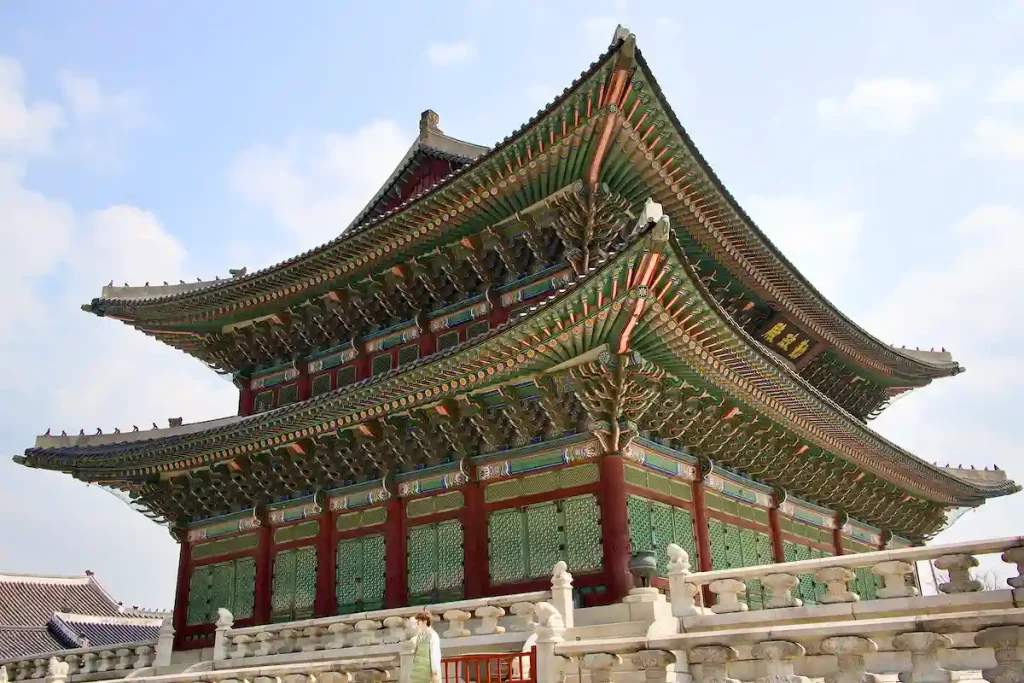
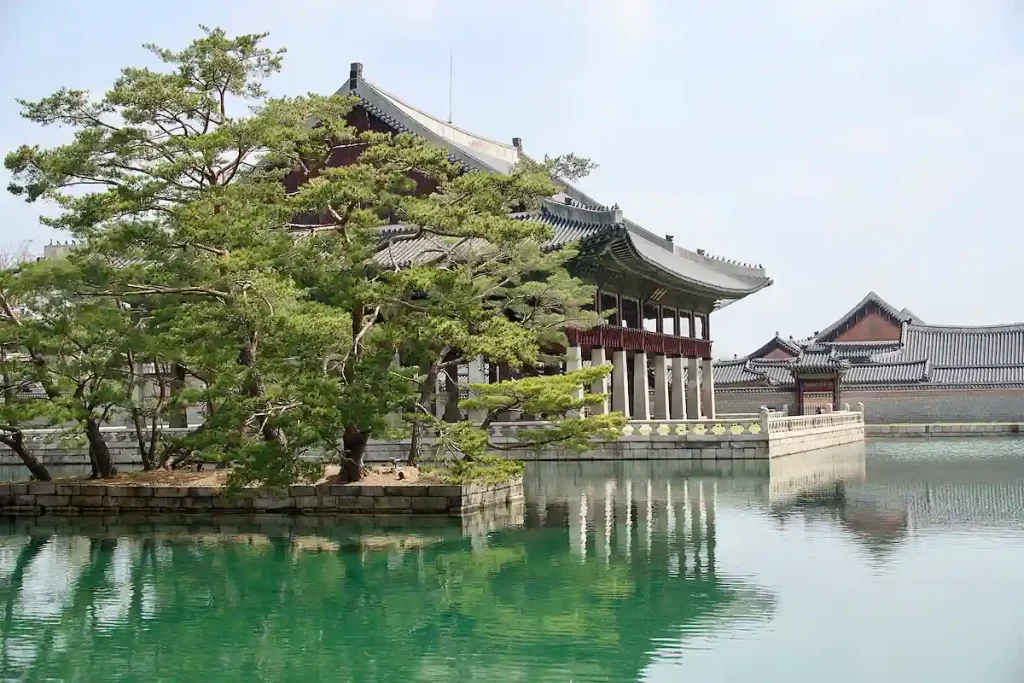
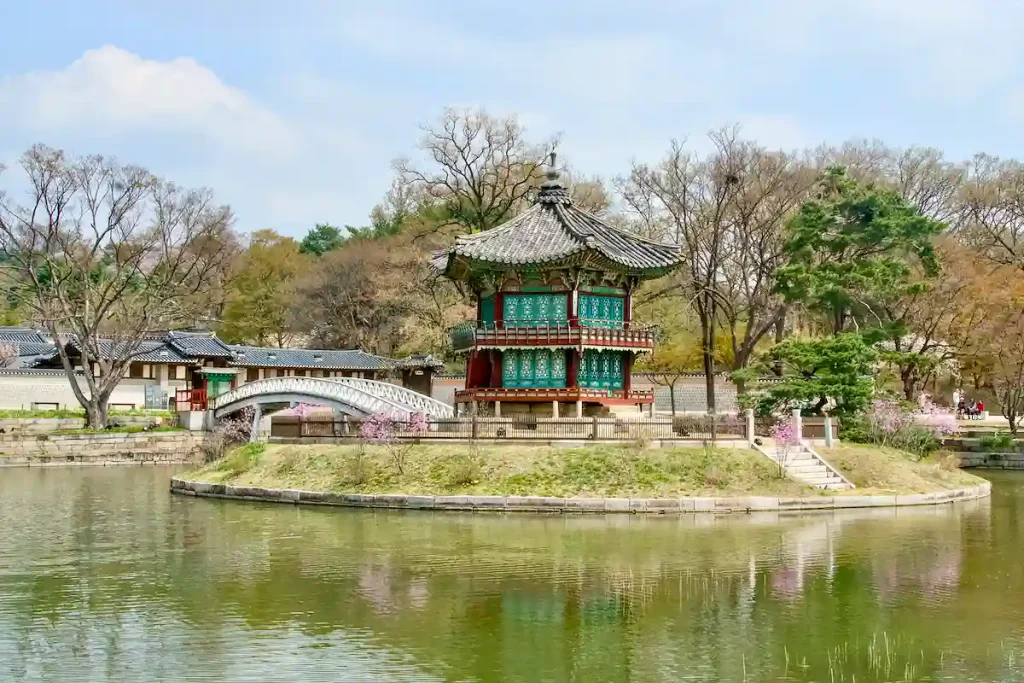
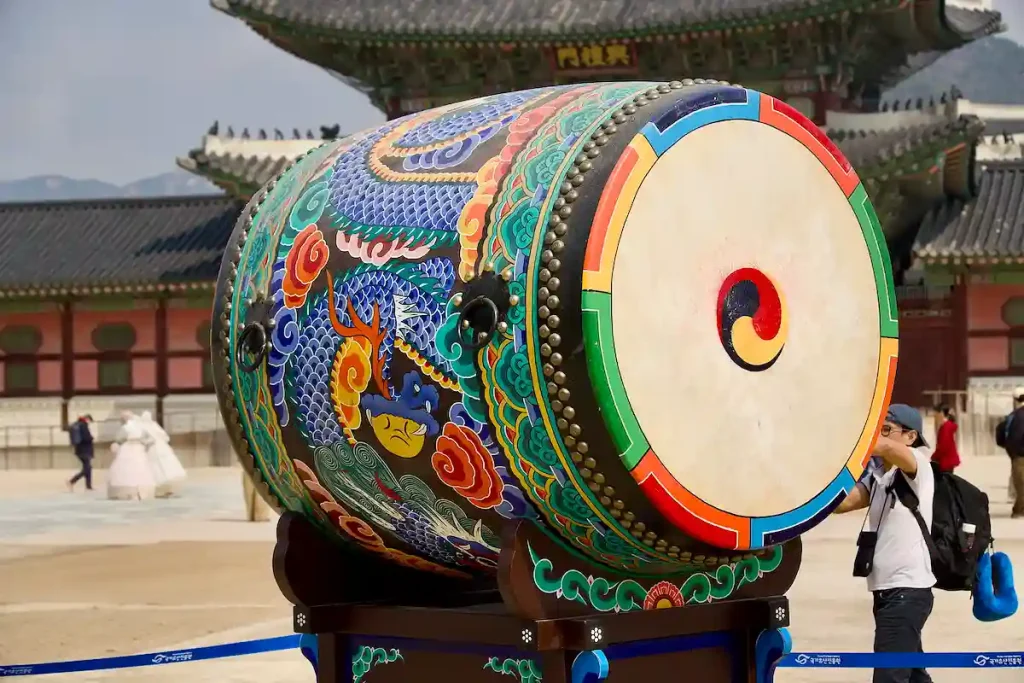
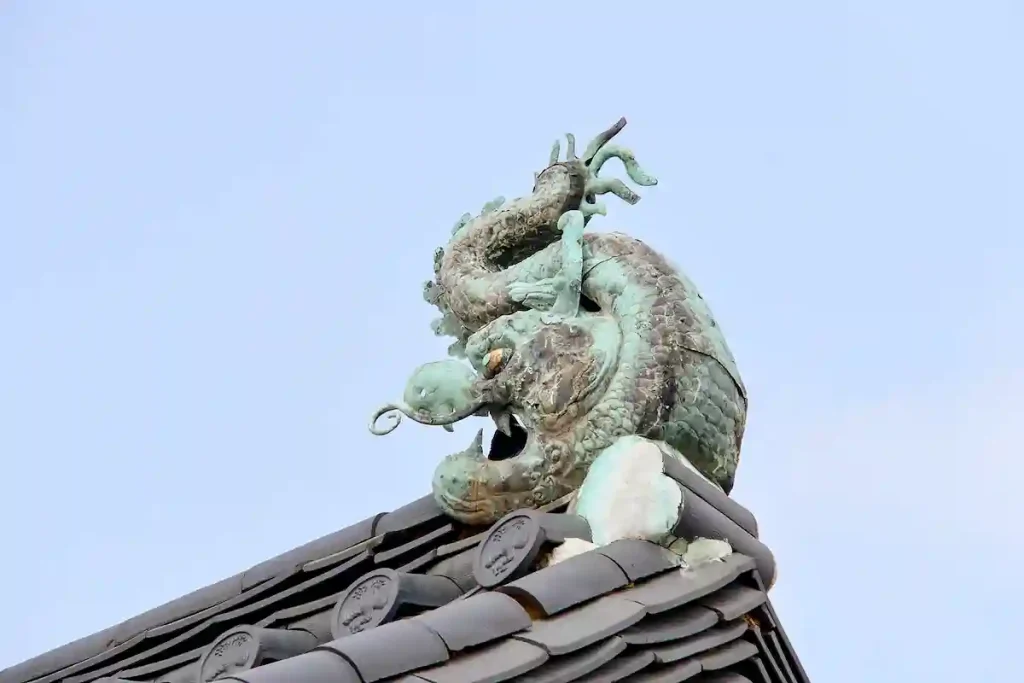
Seoul shows us its best side as we stroll down the grand avenue Sejong-Daero towards the famous Gyeongbokgung Palace, which has been the seat of kings since the 1300s. The palace is a jumble of various buildings, surrounded by walls within walls with majestic gates. It strongly resembles the settings in the film “Crouching Tiger, Hidden Dragon.”
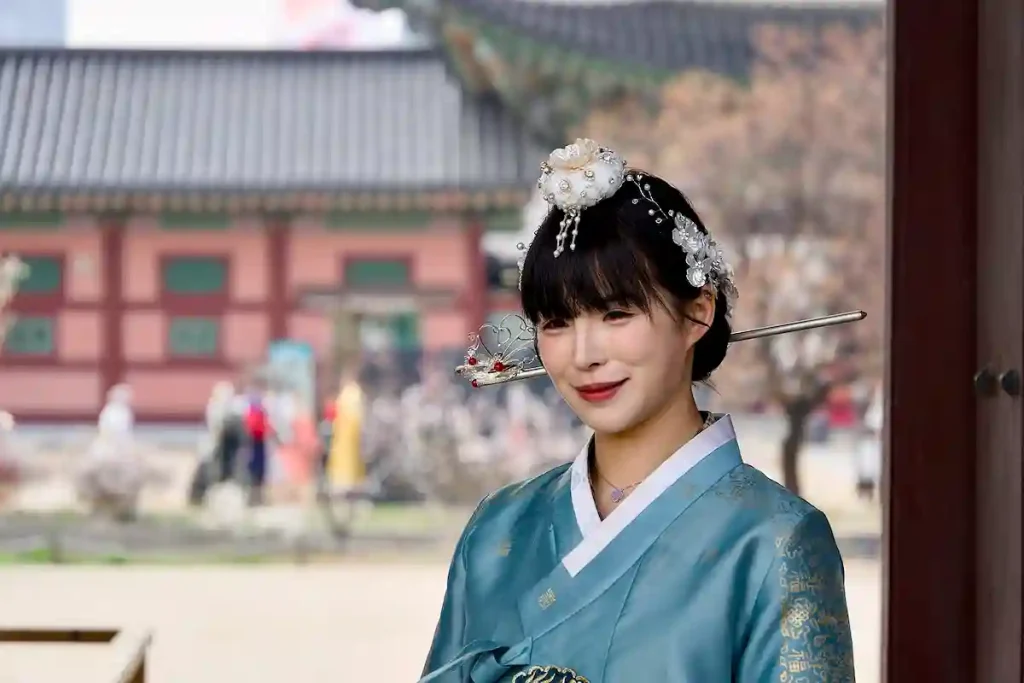
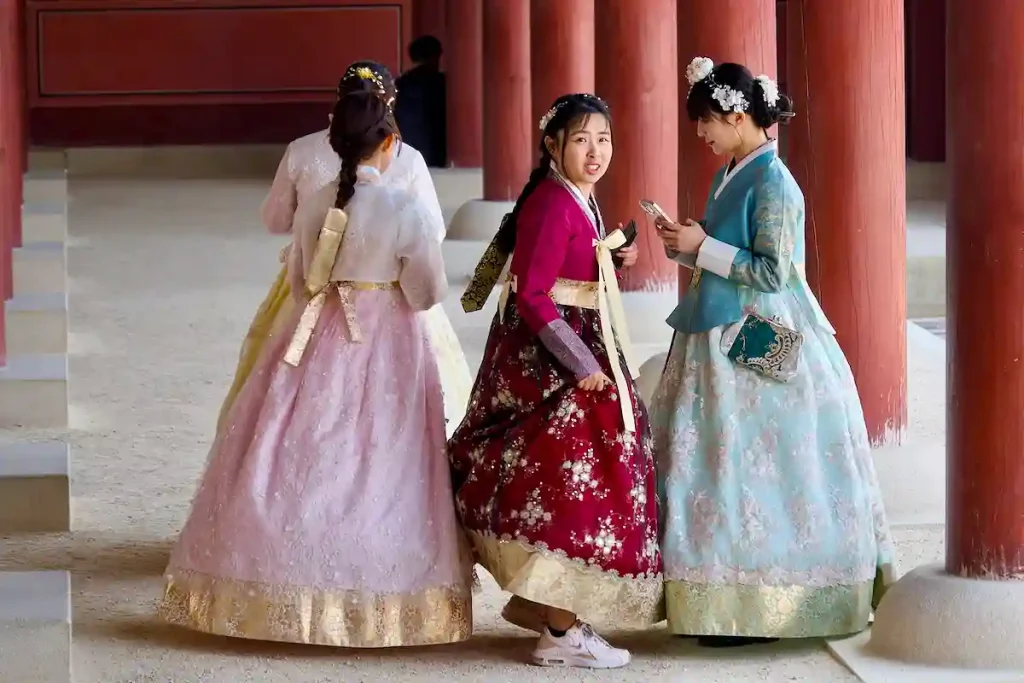
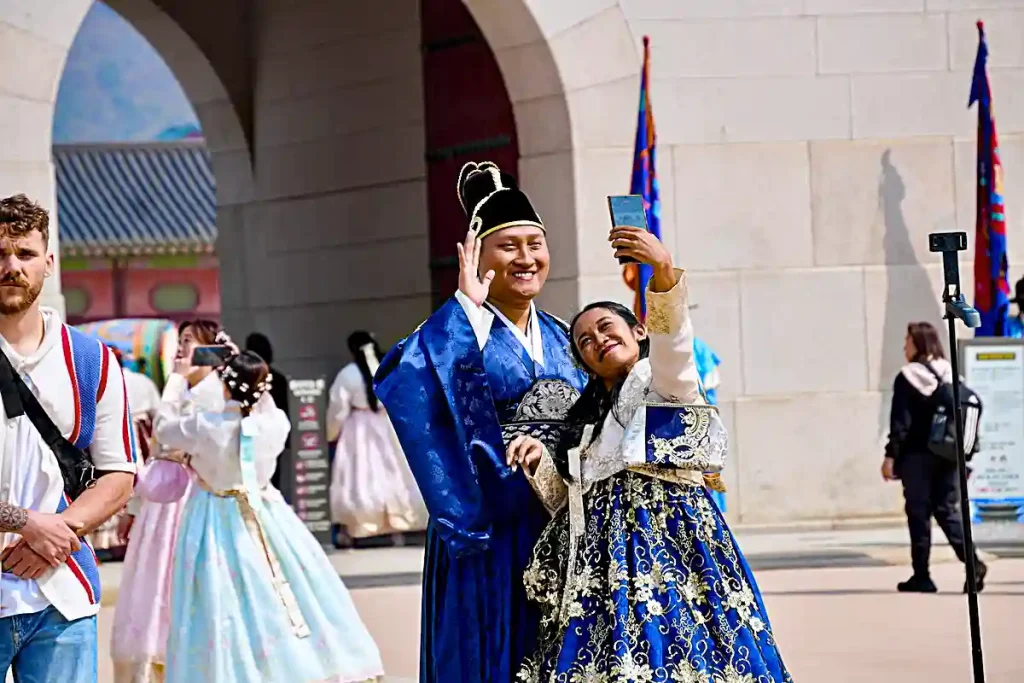
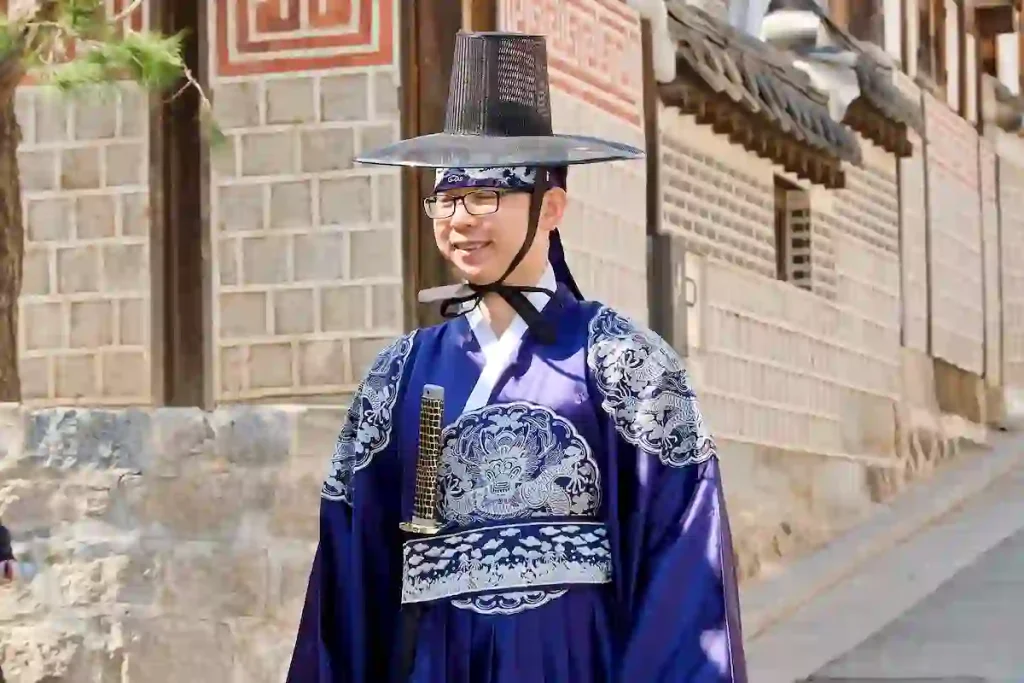
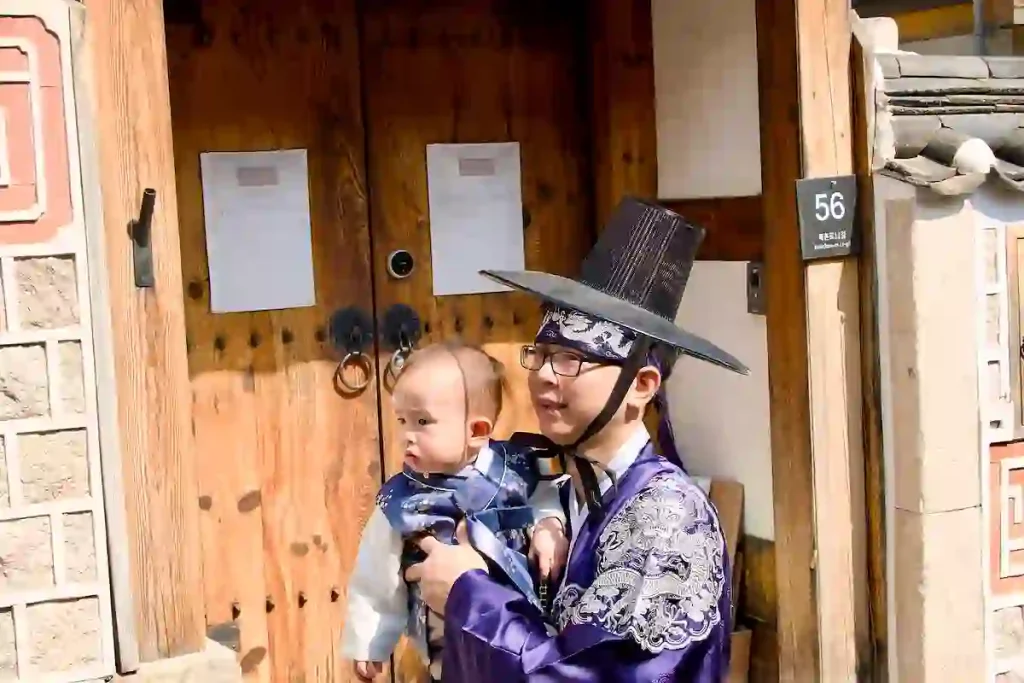
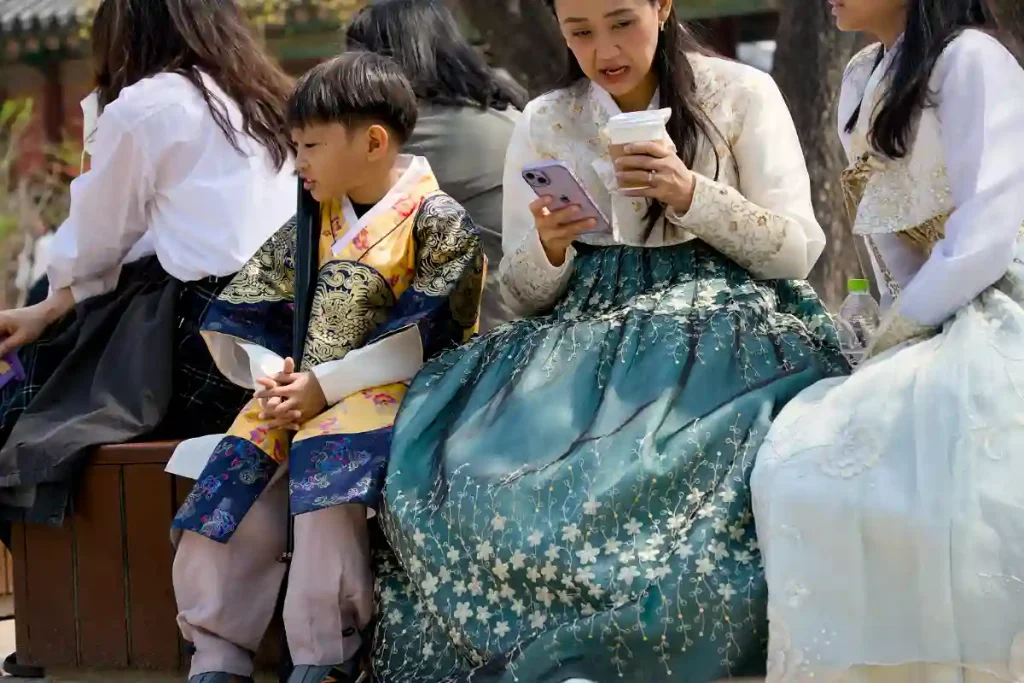
But these are not the original buildings we see; the palaces have burned down and been ravaged by conquerors, and each time they have been rebuilt. Beautiful it is, in any case, and most of those who visit the palace are dressed in traditional colourful costumes, so-called “hanbok.” These are rented out by shops in the surroundings, and those who wear them get free entry to the palace. A constant live experience.
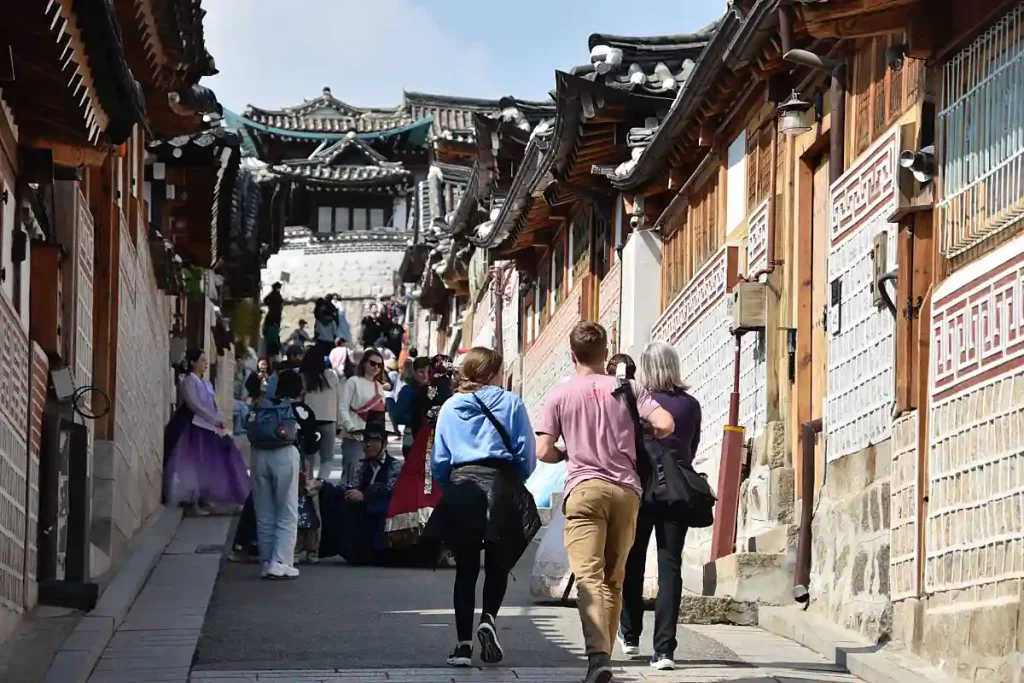
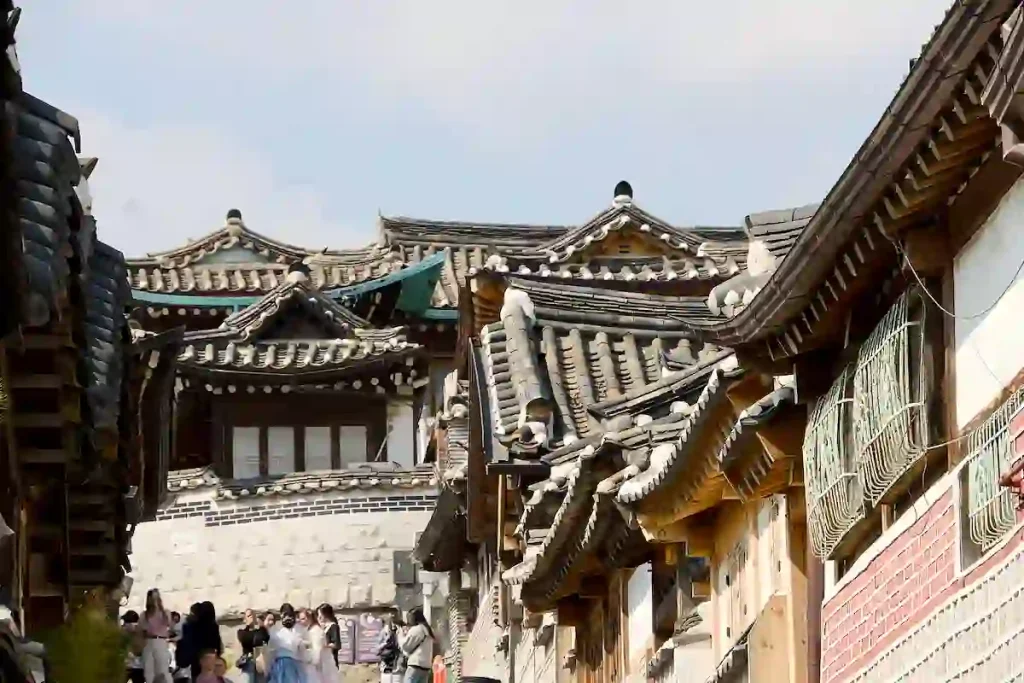
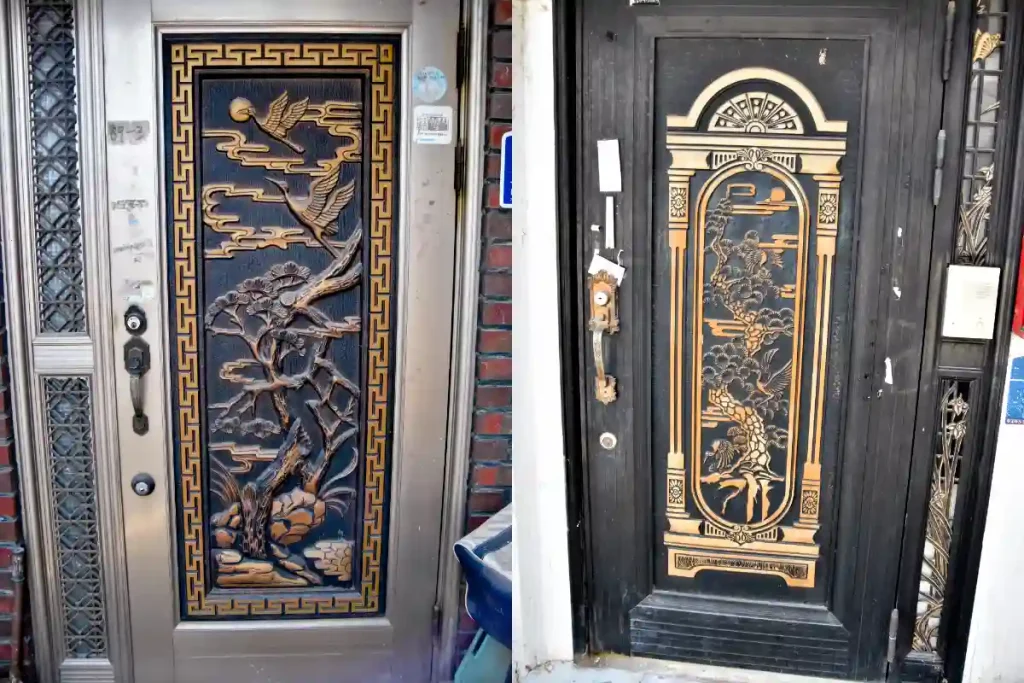
Modern Seoul consists of tall skyscrapers closely packed together, but in many parts of the country, even in the cities, old small-scale buildings known as “hanok” have been preserved, somewhat like our heritage parks. But the difference is that here they are more or less inhabited. These pictures are from Bukchon Hanok in Seoul, where visitors are asked to be quiet because the residents are heartily tired of all the crowds of noisy tourists.
The cherry trees in Seoul are in full bloom, and in many parks, it is a popular pastime to stroll under the large white clouds of flowers. And yes, it makes you happy.
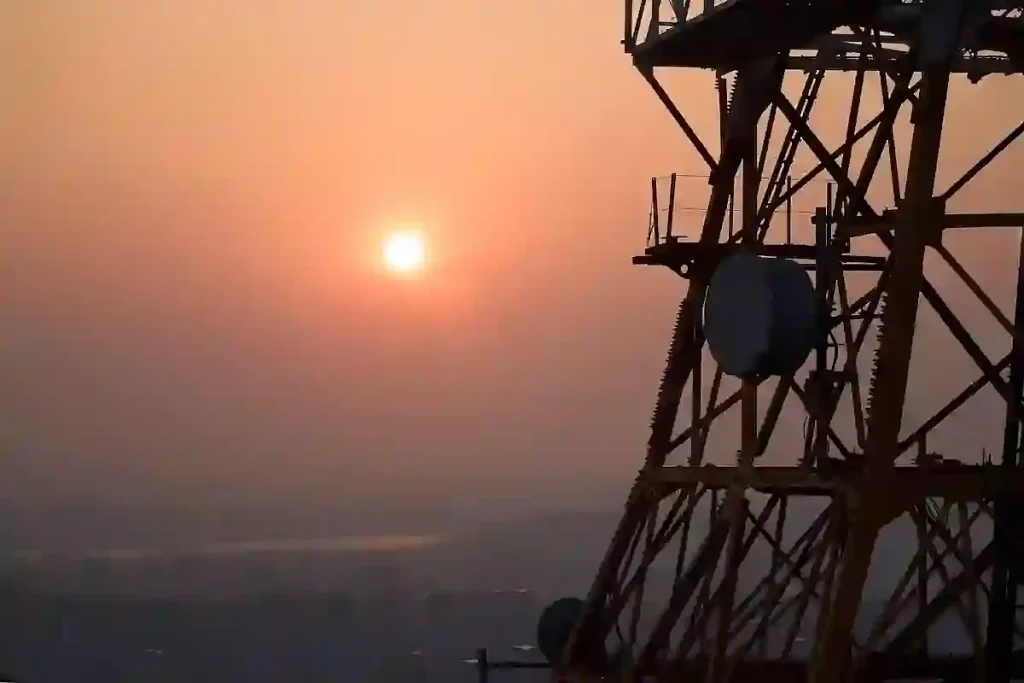
Another popular and well-visited landmark is the TV tower, which is located on a high mountain peak in Namsan Park. The easiest way to climb it is by cable car. We do like everyone else, go up there when the crowds are at their peak, at dusk when the sun descends into a red haze.
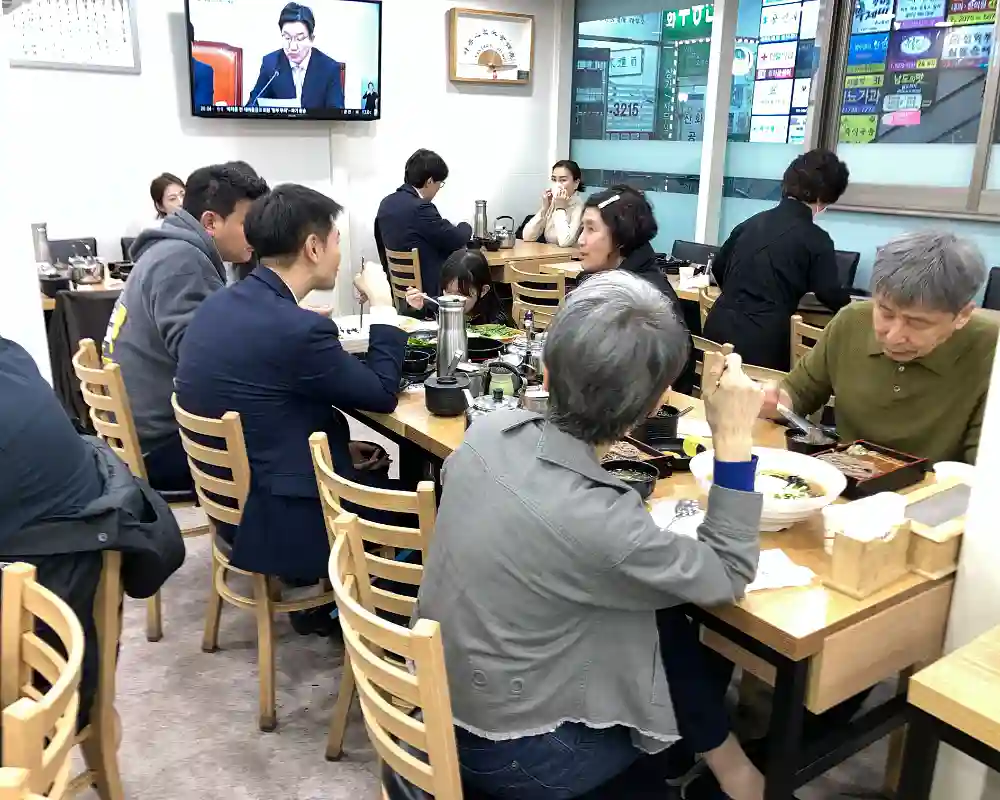
We were really looking forward to exploring the food spots in Seoul, as Korean food and food culture are not only something we highly value ourselves, but also a modern trend in many western restaurant kitchens today. But it wasn’t quite as easy as we thought to find the gems. For safety’s sake, we first checked out small places recommended by the Michelin Guide. But the first two were disappointments, boring food and quite “uncozy.” Strangely enough, the small taverns have plenty of diners but dull decor and often cold fluorescent lighting in the premises.
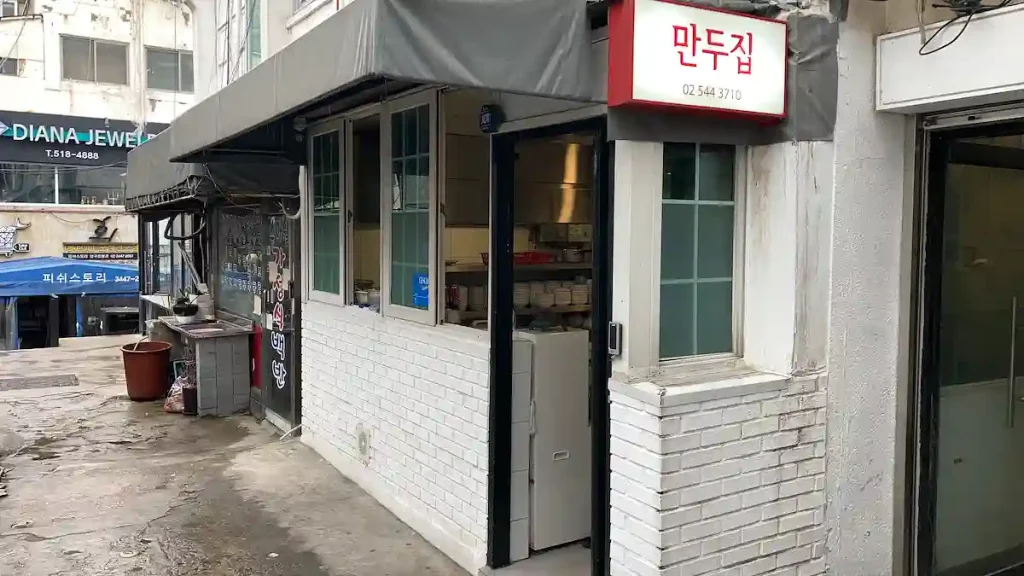
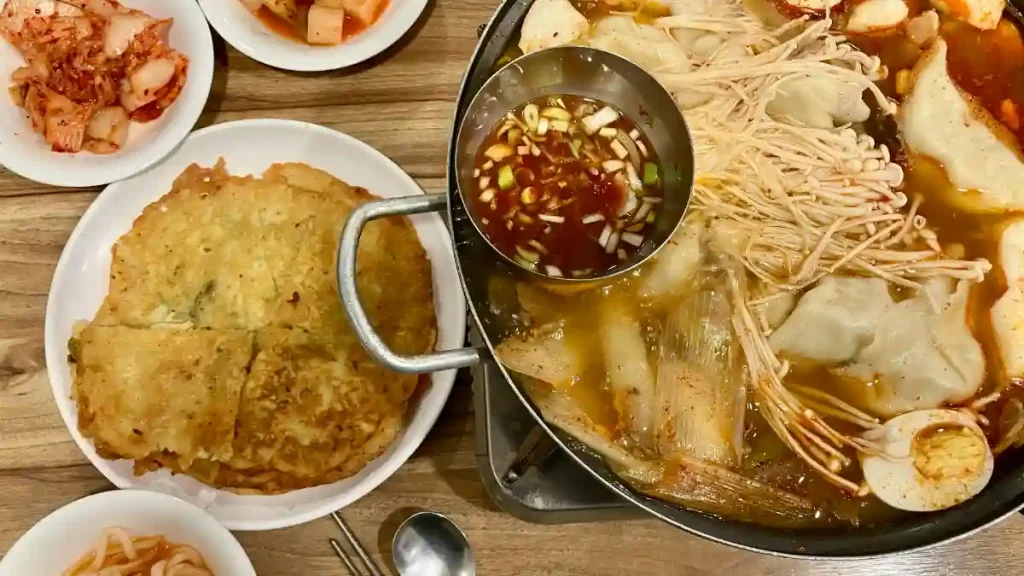
Our third attempt was significantly more successful. In the district of Gangnam, which is pleasantly bohemian, behind a completely anonymous facade we find Mandoojip, a dumpling restaurant where we have their specialities (and almost the only thing they serve), namely hotpot with dumplings and “bindaettok,” a mung bean pancake. A perfect score, but unfortunately, it turned out to be surprisingly expensive. If we had settled for the popular dumpling soup, we would have gotten away much cheaper.
Of course Seoul, like all cities in Southeast Asia, has street food stalls lining some streets. But we don’t feel confident about the level of hygiene, so we abstaine. Sure, it looks good, but getting a stomach bug at the beginning of a long trip is not something you look forward to.
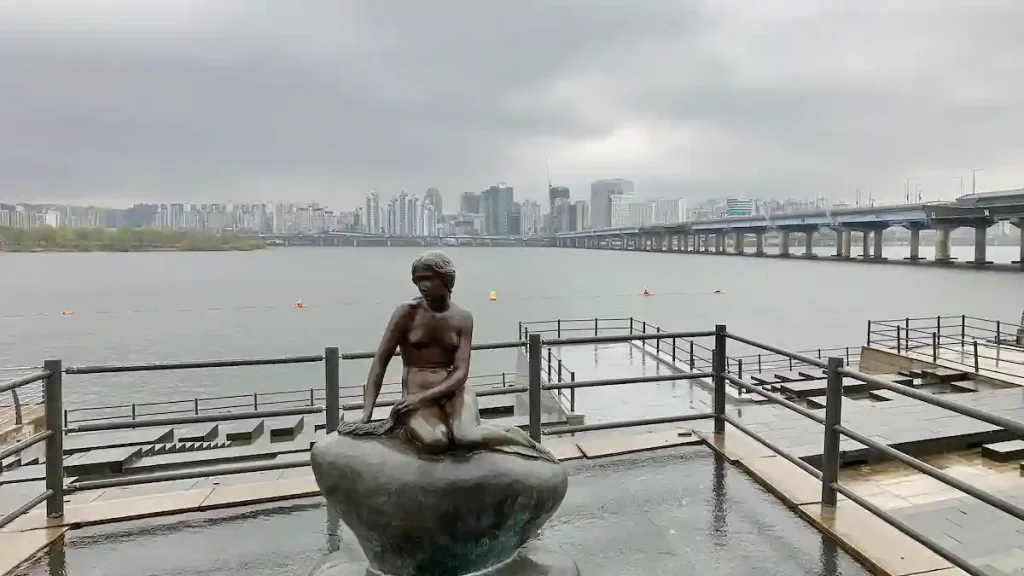
On the way from Gangnam back to the hotel, we pass something familiar. A nearly exact copy of Copenhagen’s iconic “The Little Mermaid” sits on a rock by the river. It turns out that the statue was donated by the City of Copenhagen as part of an agreement between the cities to cooperate in a range of areas, including culture and innovation.
And a few hundred meters further ahead, under the bridge’s abutment in the background of the above picture, we find ourselves at a mini-concert with a young and talented pop band. An audience of enthusiastic boys and girls tries to keep warm in the chilly and rainy weather.
You can probably spend a month in Seoul and still miss some of its gems. But we leave Seoul after just two days to explore other parts of this exciting country. Join us in Sokcho, a city on the northern east coast where fishing shapes most of the community life.