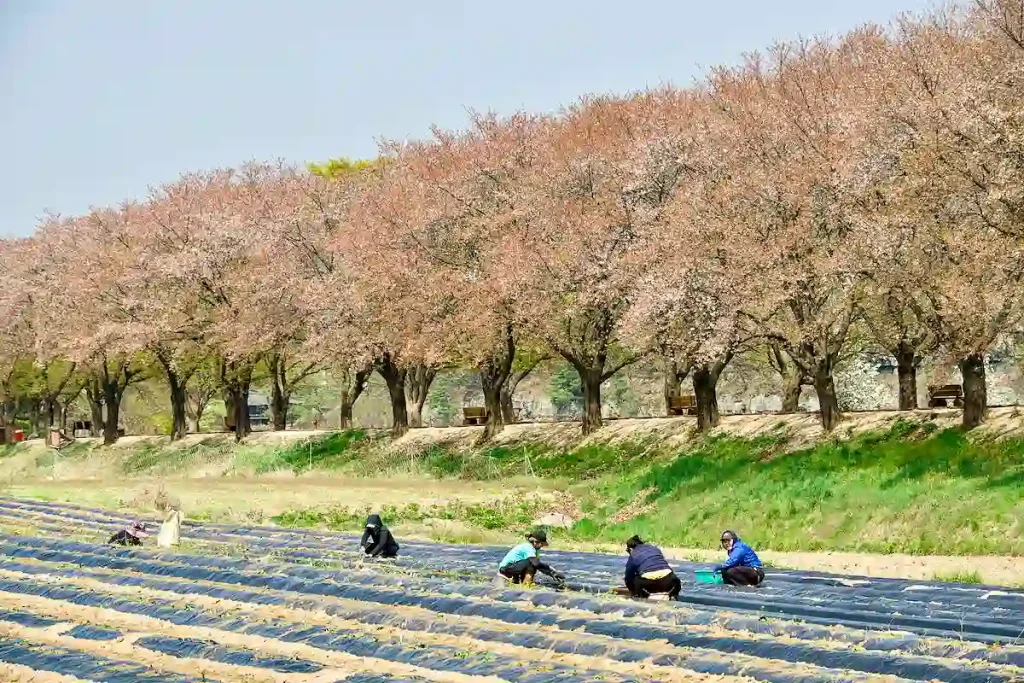
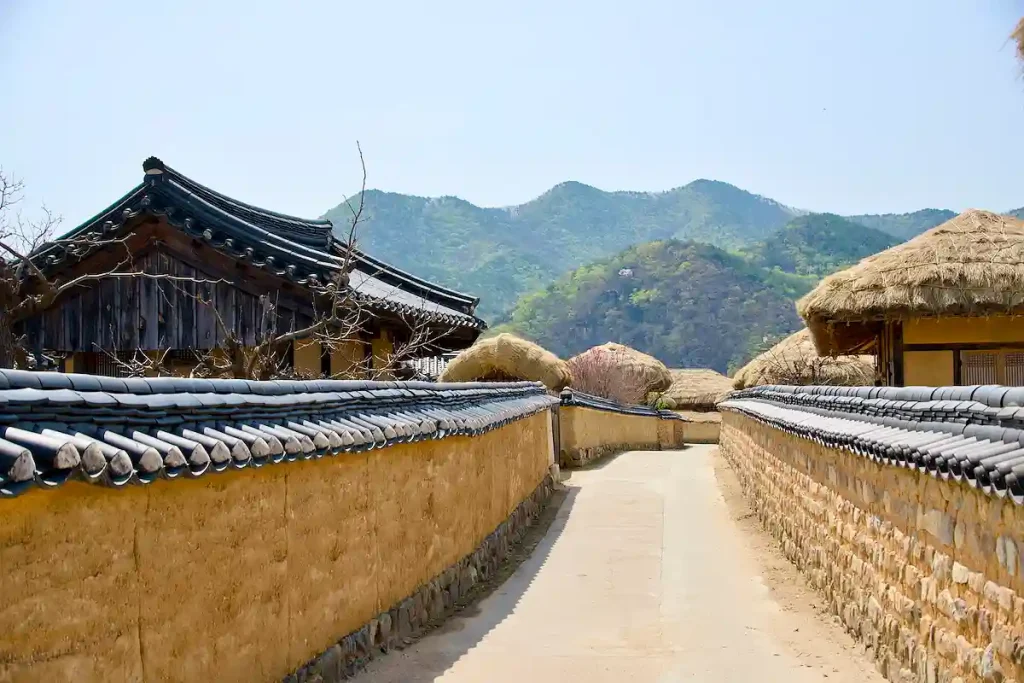
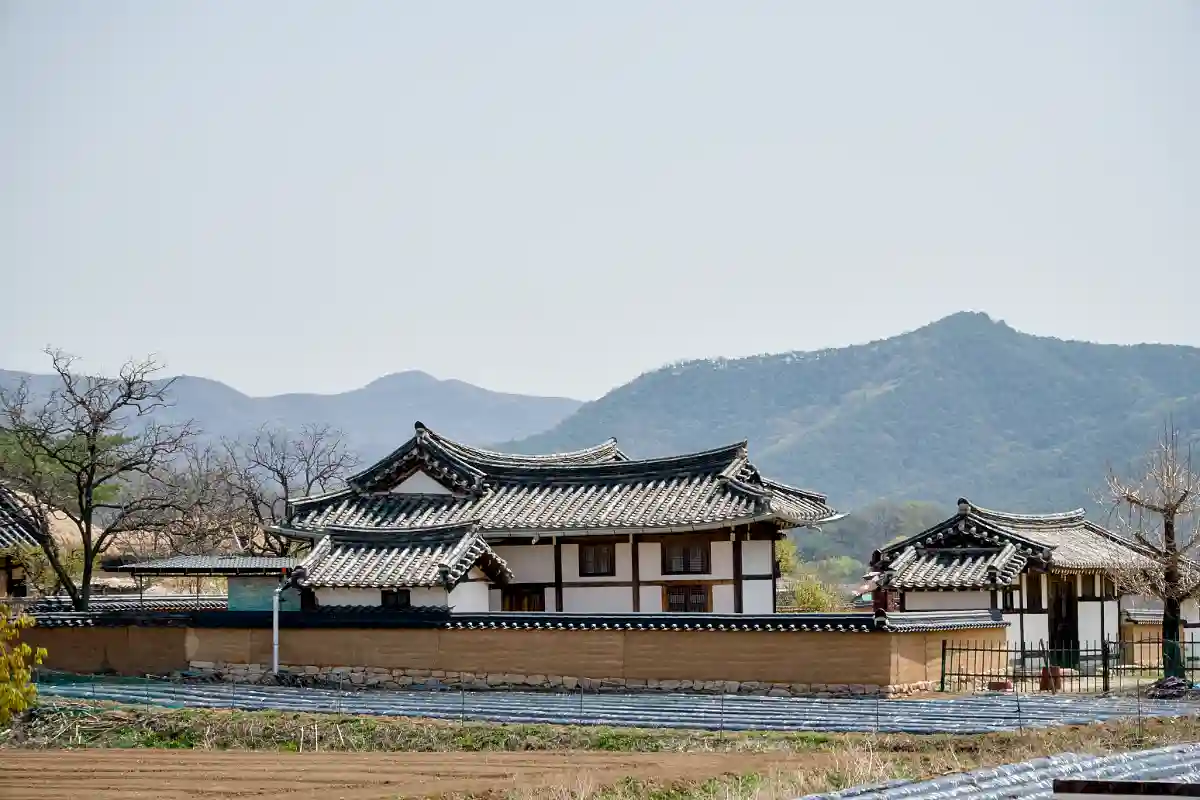
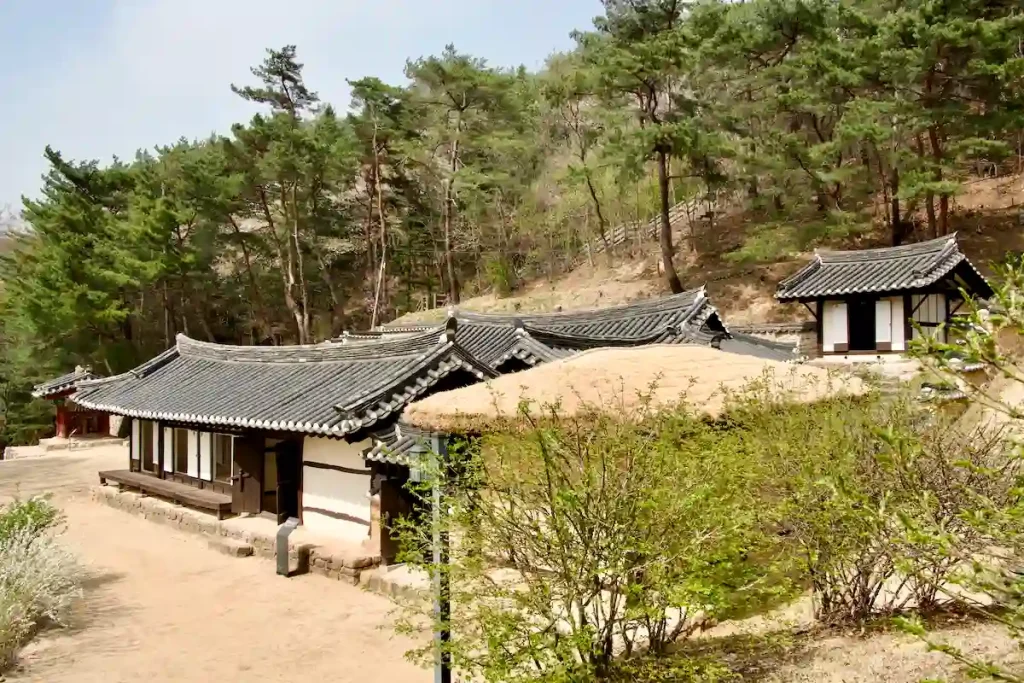
Andong is a fairly large city almost in the middle of South Korea. The city itself doesn’t have much to offer a visitor, but a popular excursion destination in the surroundings is “Hahoe Folk Village.” It is a “hanok,” meaning a village where the old houses have been preserved along winding alleys. Unlike many other similar villages, this one is inhabited, and the residents tend to the fields in the surrounding farmlands.
Hahoe village is surrounded on three sides by a wide river bend, and here time seems to have stopped; everything is peaceful stillness and tranquillity. Many houses do not have the special tiled roofs we have seen before, but are covered with a thick layer of reeds. Over the reeds, a netting prevents it from blowing away in the wind.
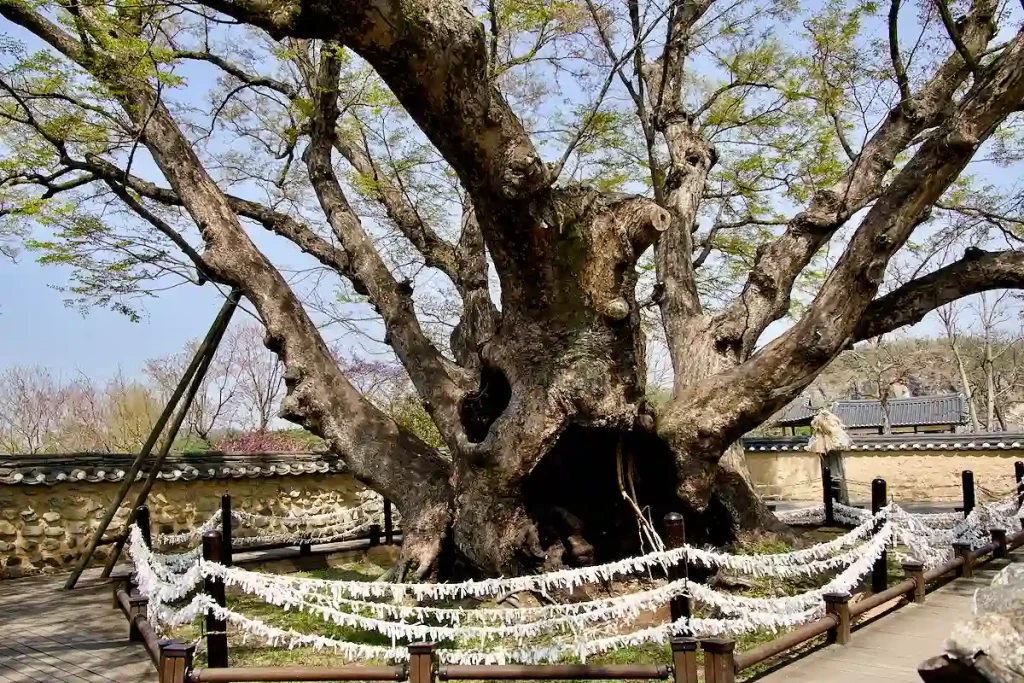
In the middle of the village stands a sacred old tree in an open space. It is largely hollow, and around it run strings with tied paper strips. Maybe they are wishes. In any case, it is a tree that is a bit magical and commands respect.
In Hahoe, we also get to see a cherished tradition, a performance where the actors appear in wooden face masks. The roles are assigned as in Commedia dell’arte, but the plot is quite daring and cheeky. Fun with the balls of a bull, a horny monk and a urinating young woman are some of the components of this immensely popular show with dance and music.
Some ladies get so excited after the show that they start putting on a show for themselves at the bus stop. The ladies really know how to groove!
Hanok villages can be found in many places in Korea and many people visit them, most of whom are Korean tourists. Perhaps there is a nostalgia for tranquillity and small-scale living in a society that otherwise rushes headlong into the future.
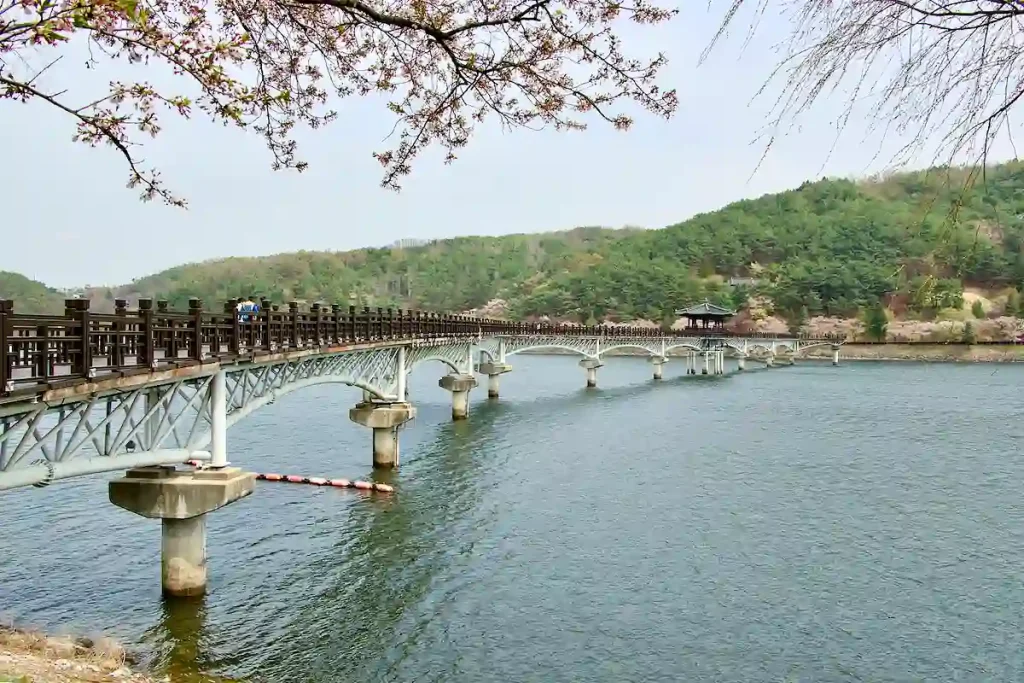
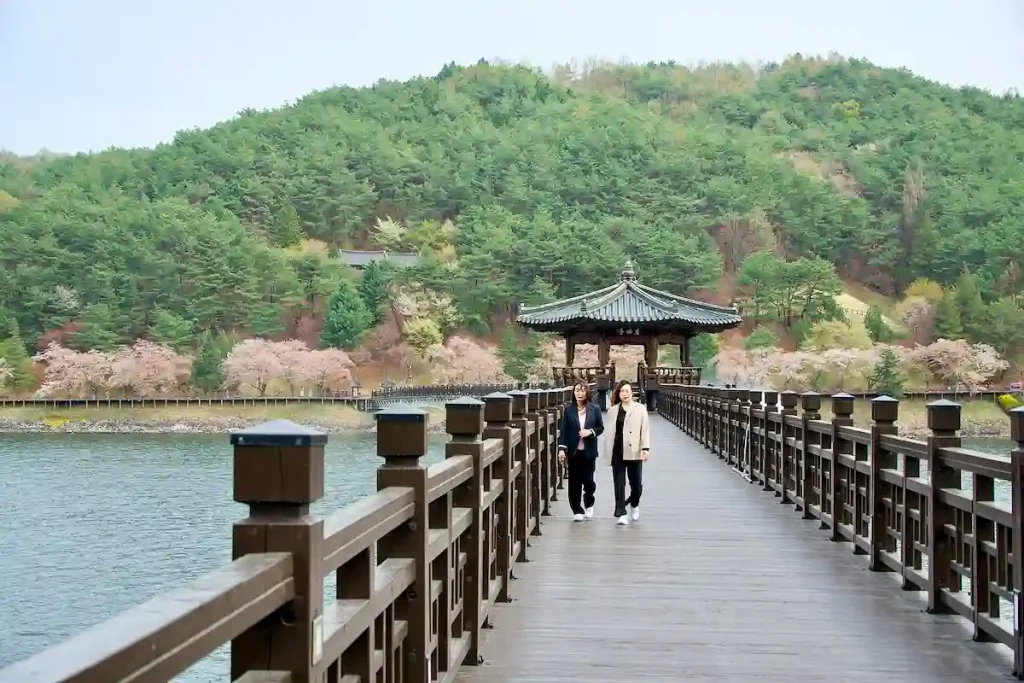
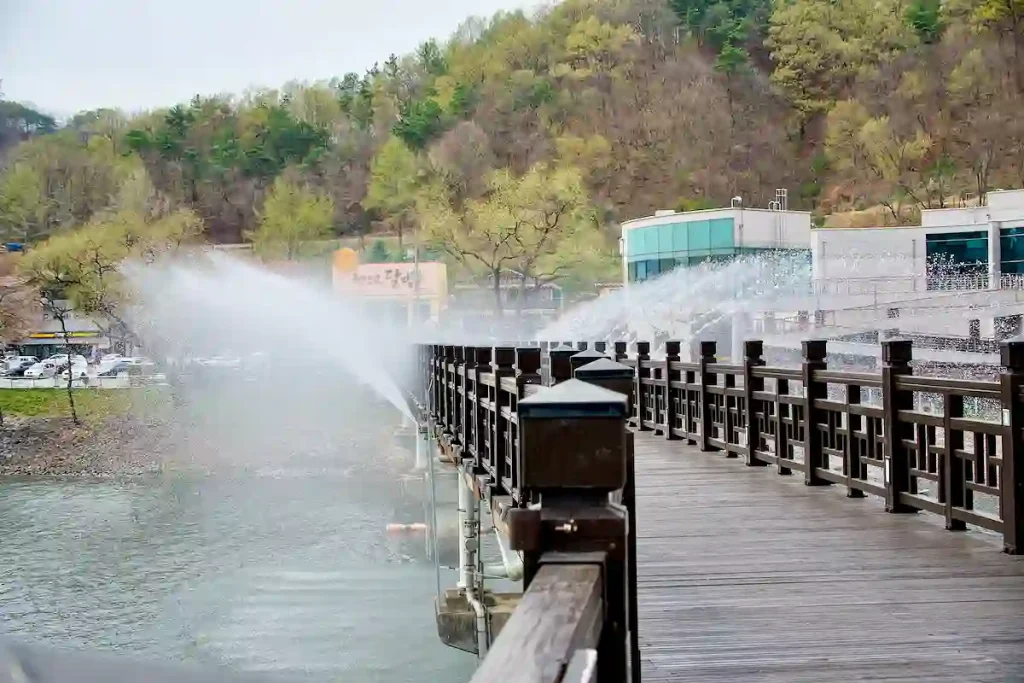
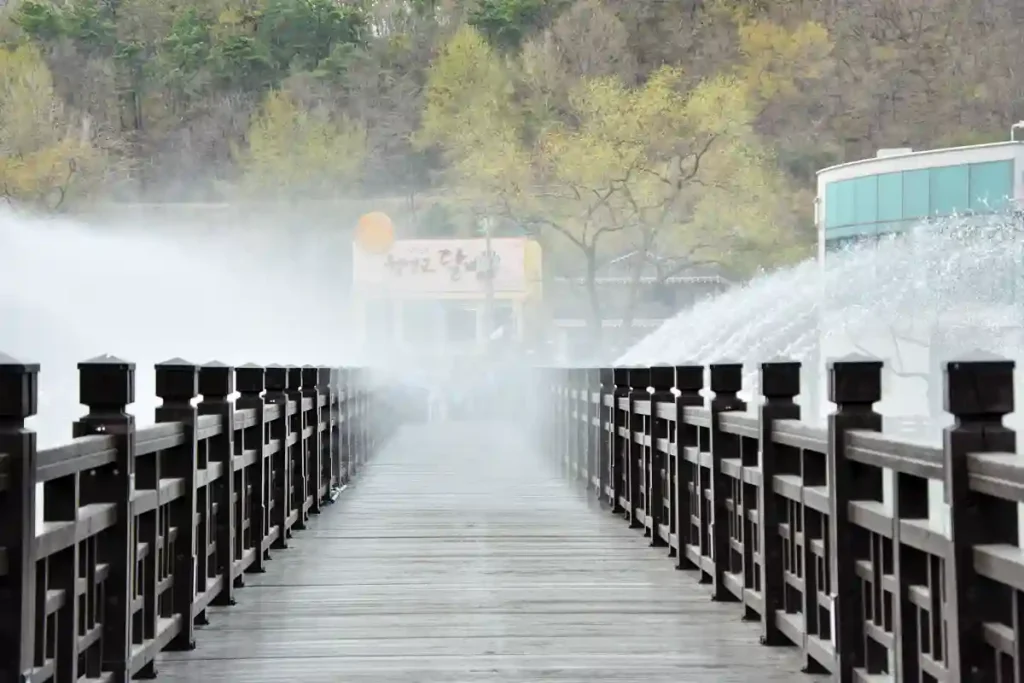
In Andong city itself, there isn’t much to see, but we head to a dam on the Nakdong River that flows through the city. The dam was built in 1976, and as a consequence villages along the riverbanks were drowned. But some of the houses were saved to a kind of heritage park on the slopes above the dam. We cross the dam on the “Moonlight Bridge,” the country’s longest footbridge, where, for some incomprehensible reason, water sprays out at the bridge’s supports. It is quite impressive, but now it is really windy and the water splashes up on the bridge. So we have to rush through the downpours.
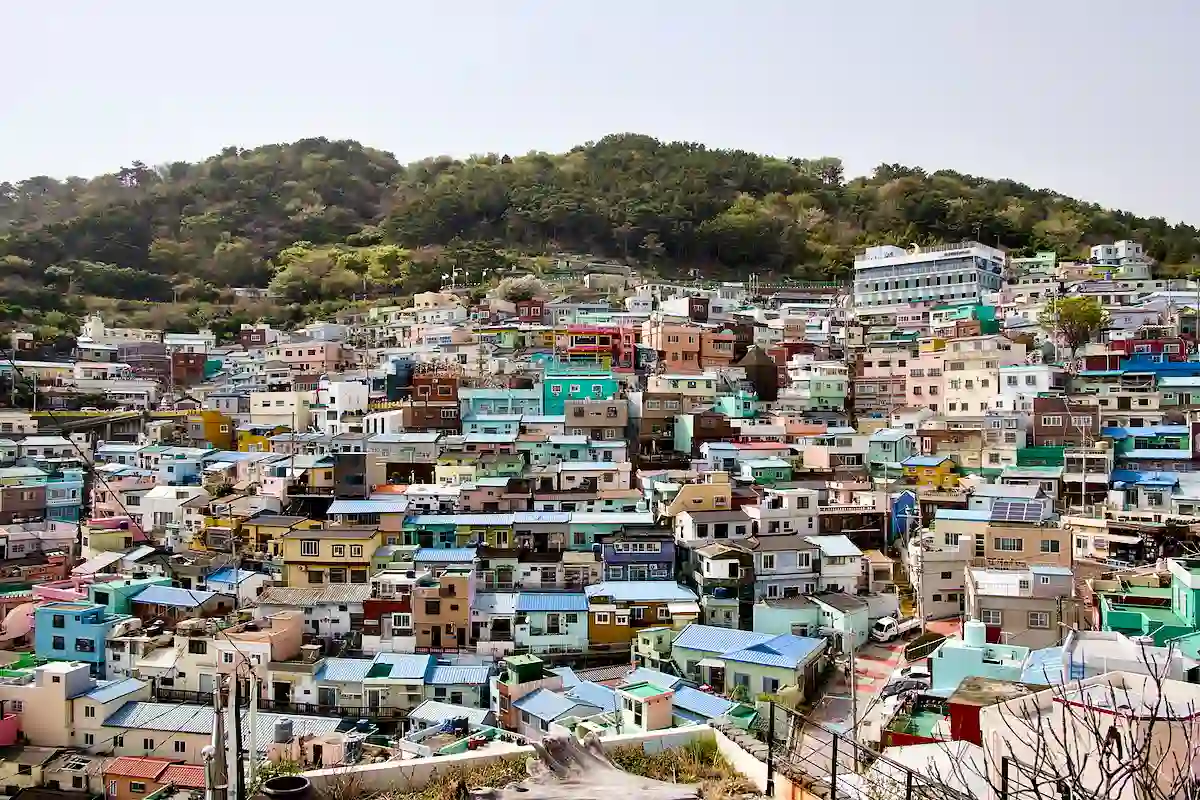
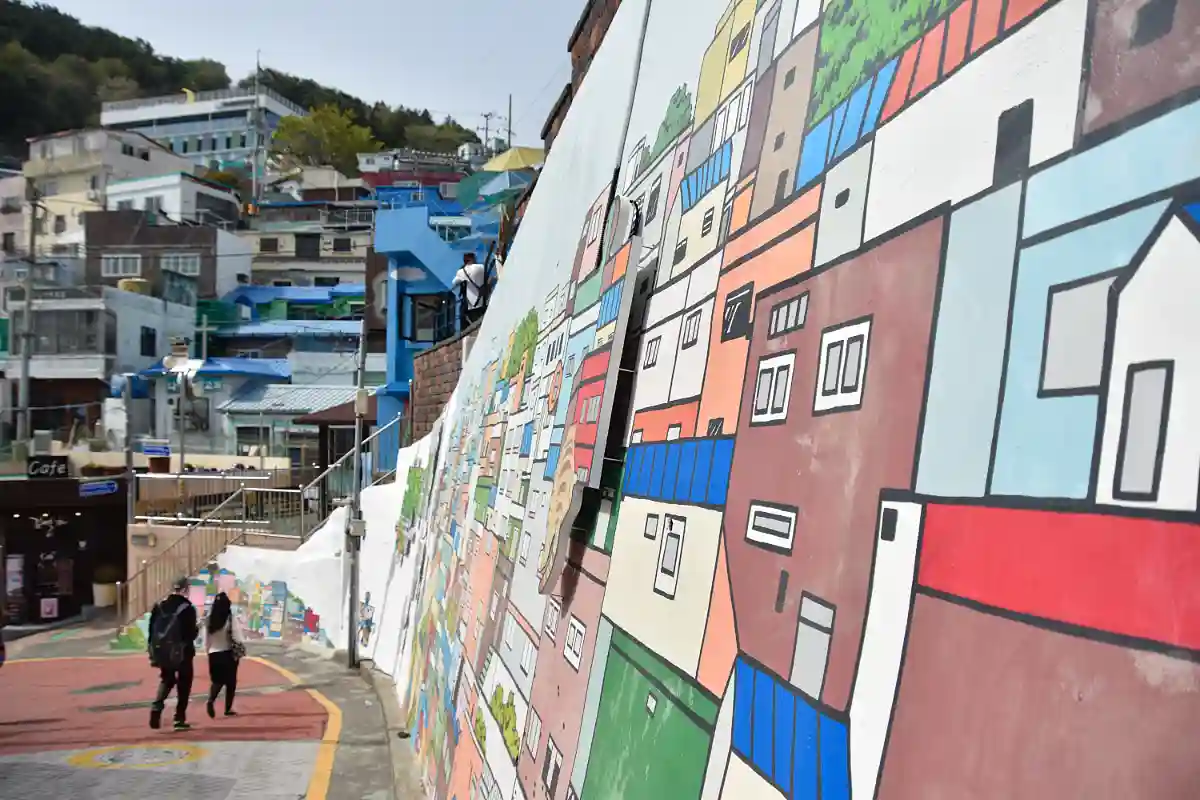
We take the train to the megacity of Busan, South Korea’s second-largest city. We make only a short stop since we will soon be moving on. But we have time to visit the neighbourhood of Gamcheon Culture Village, a bohemian collection of small colourful houses along a steep slope. This neighbourhood was also (just as Abai in Sokcho) built by people who fled from the civil war. In 2009, an artistic initiative was taken that led to murals and the brightly coloured houses we see today.
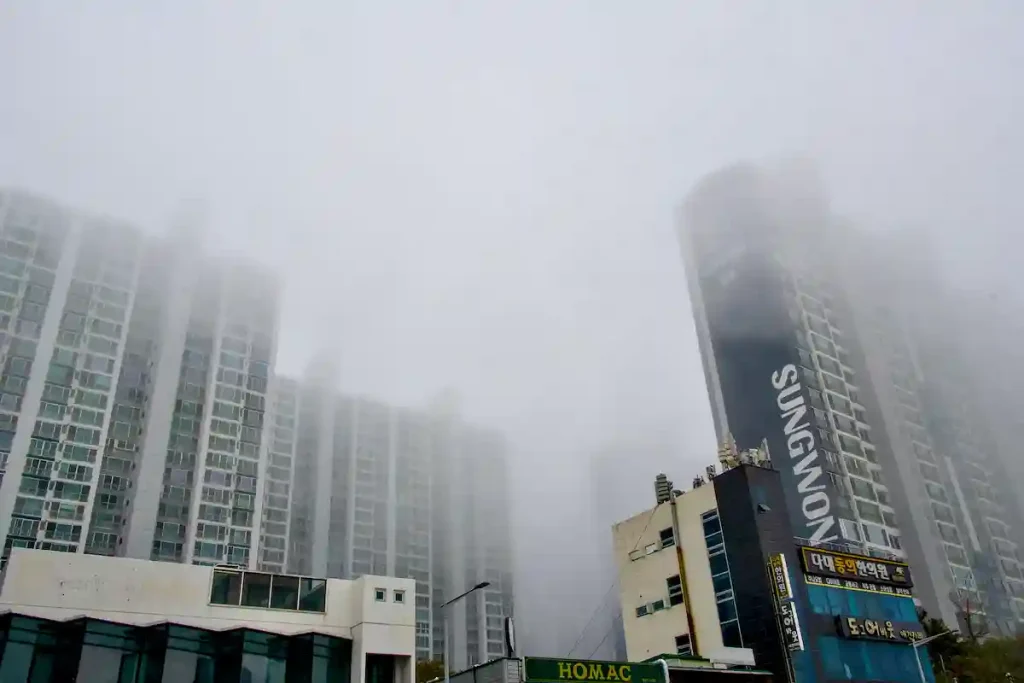
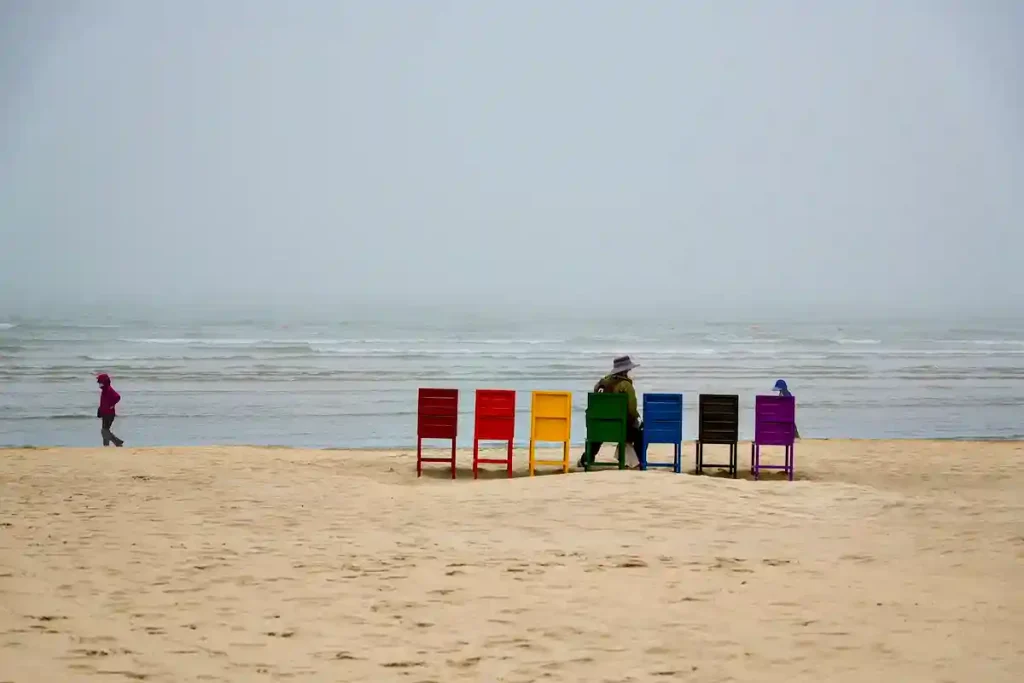
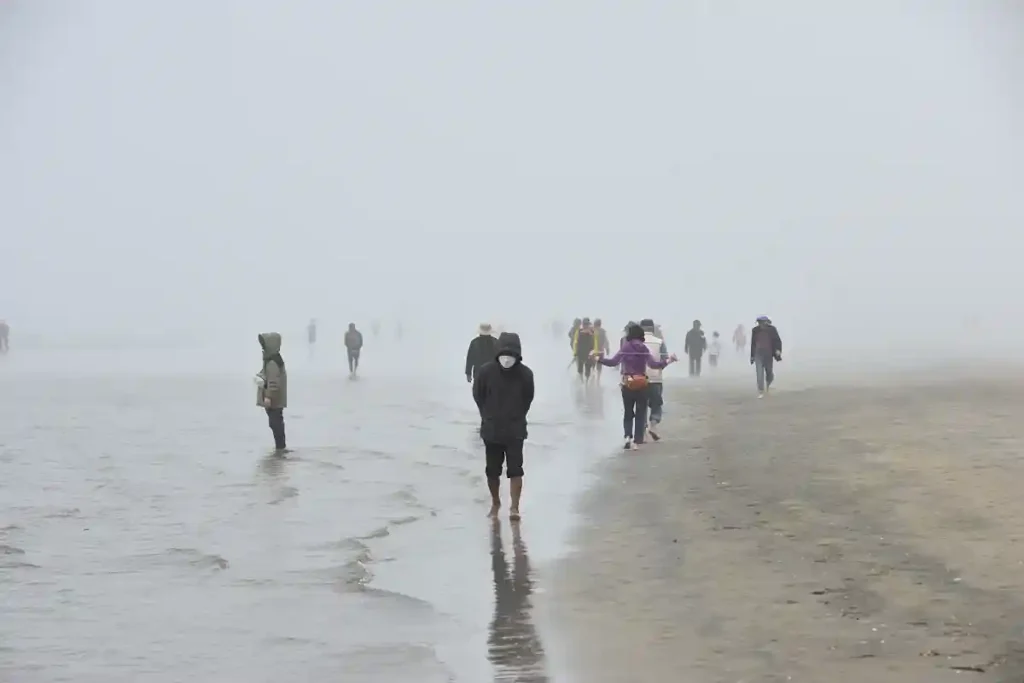
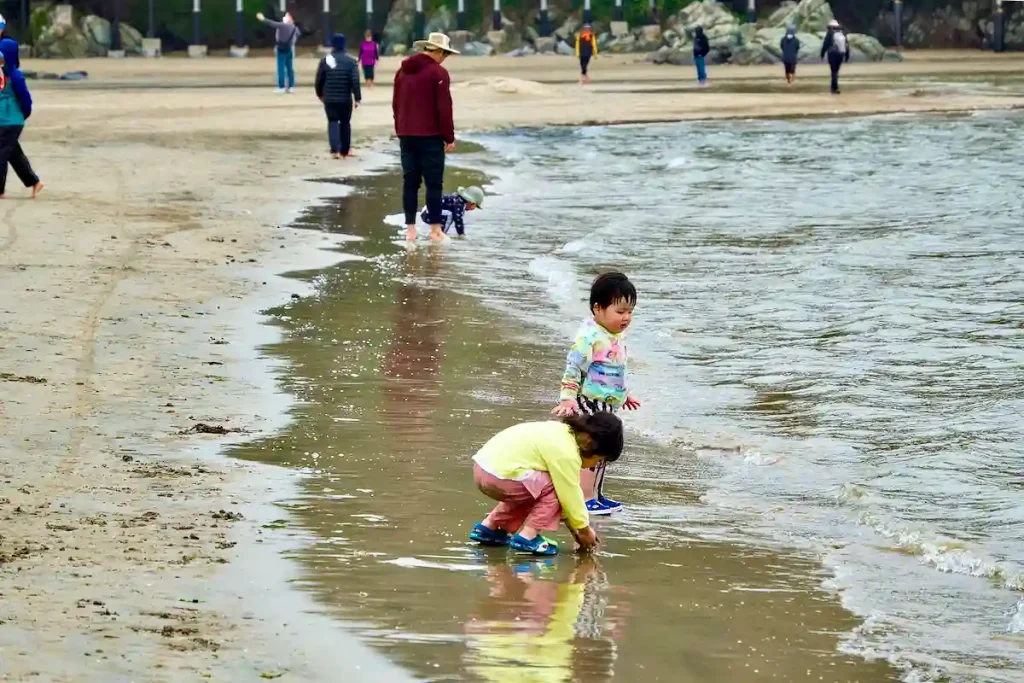
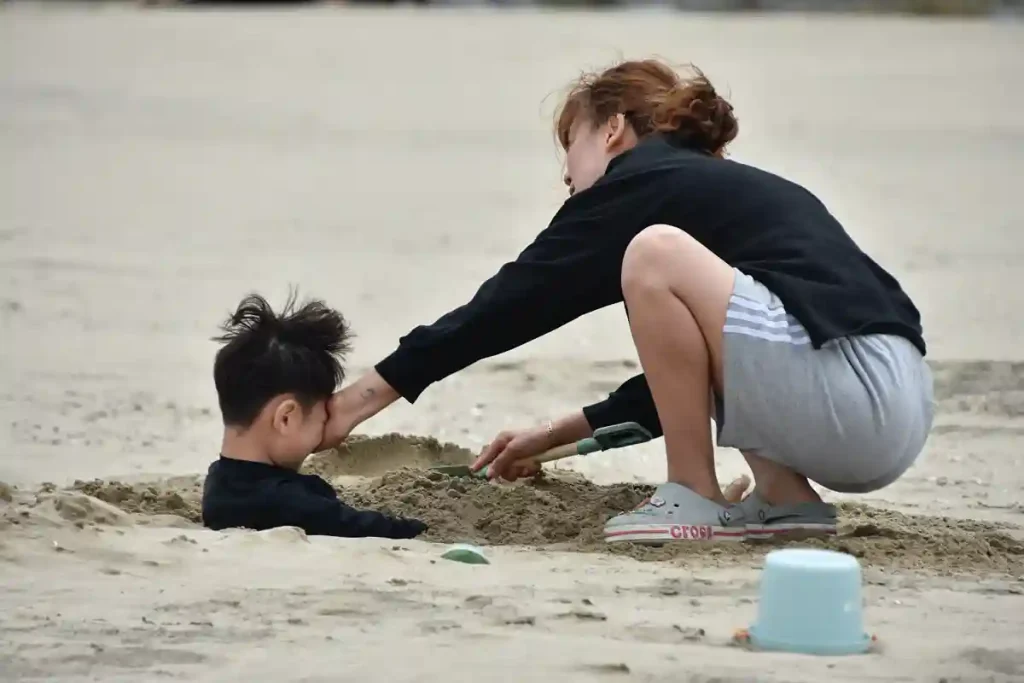
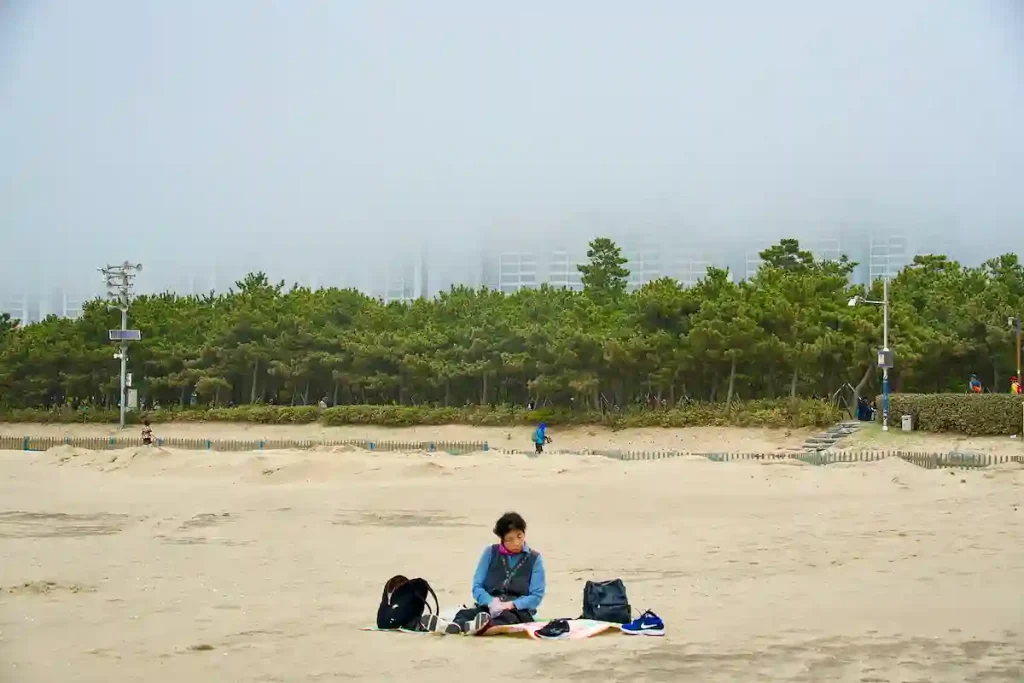
Busan has something that we also find in our hometown Helsingborg in Sweden, and that’s beaches right within the city. But in Busan, there are of course more of them. We choose the closest one, take the subway to its final station, and step out with great anticipation to see the sea. But no, on the beach the fog is thick. But that doesn’t stop people, families, and children from splashing and playing at the water’s edge.
One of the highlights of the trip is approaching. A visit to Jeju Island that offers many surprises. In the next episode!