Juchitán & Tehuantepec, part one
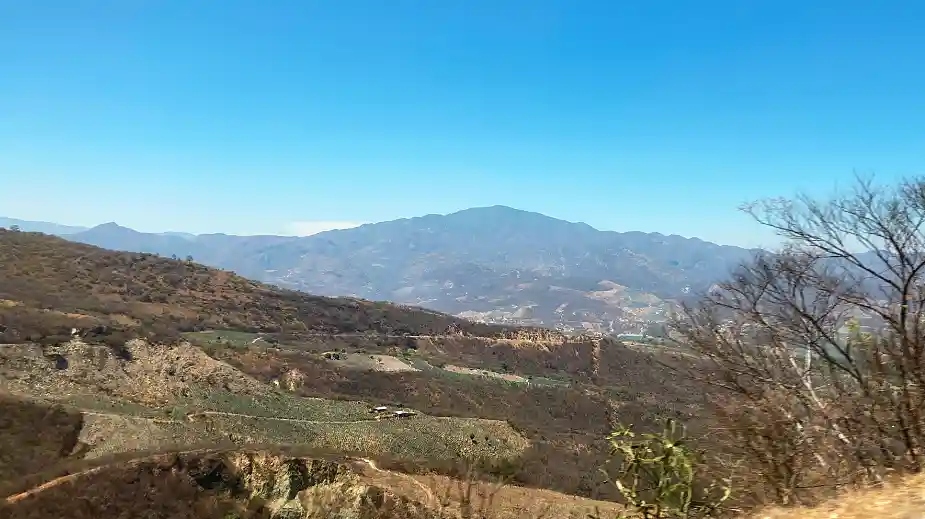
We’re now traveling further south towards the heart of the Zapotec culture. Our bus takes us on a meandering but beautiful journey through the mountain range called Sierra Sur. We pass countless fields of agave plantations and almost as many mezcal factories.
So what are we doing here? V writes in a Facebook post: ”More than 40 years ago I read a traveller’s story by a confused visitor to the Oaxaca province. He had stumbled around and ended up in Tehuantepec, where the men sat on street corners and knitted while the women took care of then business or plowed the fields. And the situation was the same in neighbouring Juchitán.”
40 years later we visit those two cities. Maybe it’s not like that any more, as in the story that made the outside world call these areas “matriarchies”. But there’s no doubt that the women here still dominate market businesses. They are proud, colourful and stubborn. Their work and good sense in economy promotes their independence in patriarchal Mexico where alcoholism and domestic violence is common.”
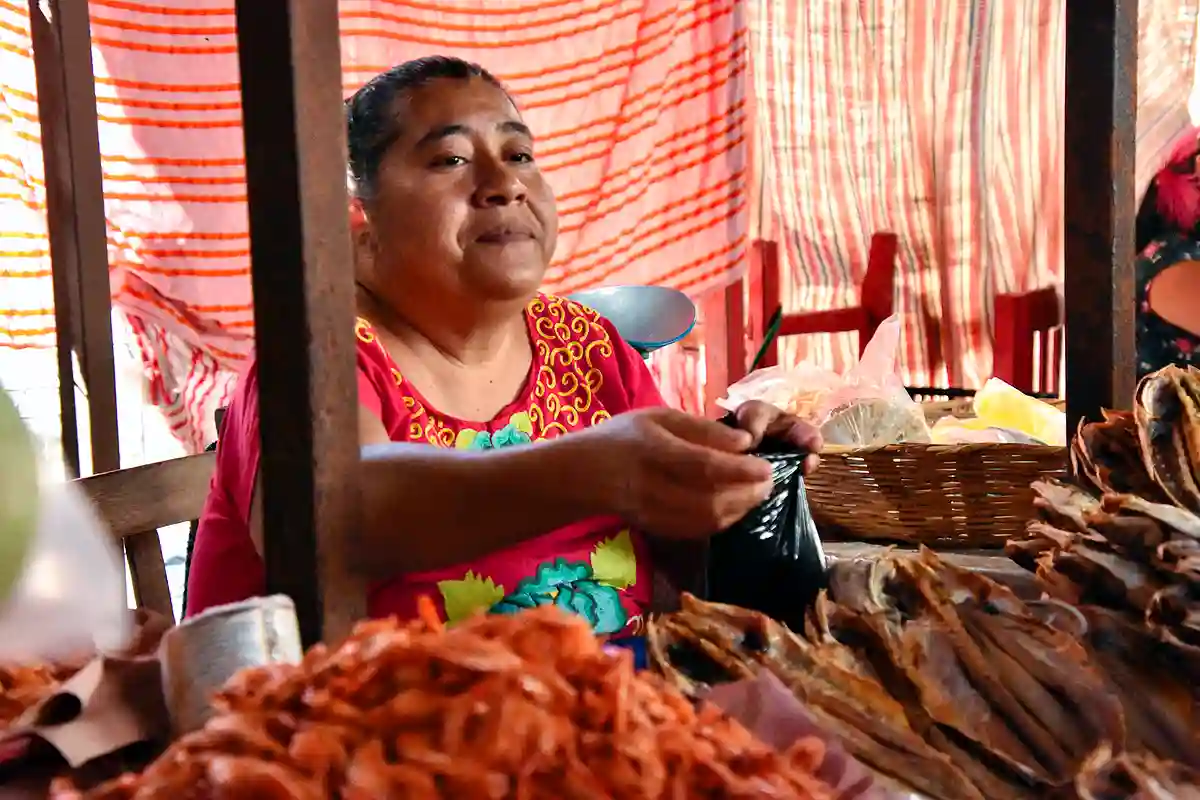
Twenty years ago the markets here were in fact female territory. Men who dared enter could be mocked. But today men visit the market and can even work there. Often as butchers or with transport. Yet the majority af the market business is done by women, and some of them are relatively rich and have high status in the community. One anthropologist we meet says that these women are easy to spot, “They are the fat ones”, she says.
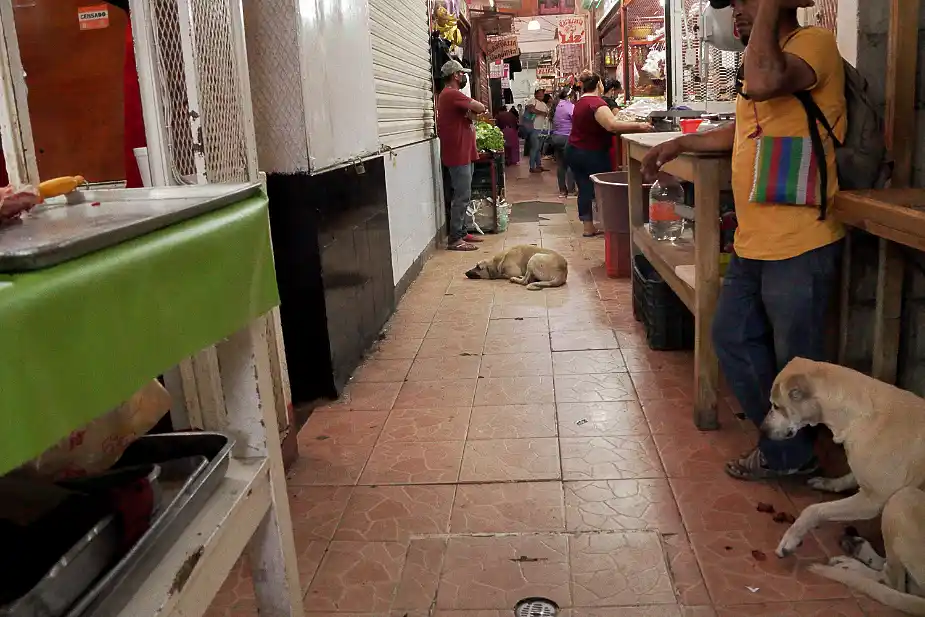
Juchitán lies in an area that five years ago was hit by a serious earthquake. Many houses were demolished, the market was one of them. But rebuilding started quickly and today it’s business as usual again. Inside it looks like most other markets in Latin America, it’s crowded and noisy, food is sold next to clothes, electronics or other kitsch.
A European health inspector would get a heart attack here. There’s no cold storage for fish or meat and if a piece falls on te floor it’s just picked up again and mixed with the rest. Shrimps sit in bowls in hot temperatures the whole day. And there’s always dogs and cats running around in the food stalls. But the market is the heart of a small town, and people circle around it constantly.
There is something else that we also want to find out more about in Juchitán. It’s a phenomenon called ”muxe”. Some people, including muxes themselves, say it’s a third gender. Dads have big problems with it, but mothers welcome it as a relief.
A muxe (pronounced “mushe”) is a boy who chooses to live as a woman. She stays in her parent’s house, helping her mother with the houshold chores, and when the parents die she most often inherits the house as a reward for taking care of them. In her own house she can decide to do what she fancies, many open beauty salons. Muxes are regarded as beauty experts and are in demand for women who want to look perfect for a party.
We meet “Victoria” a muxe with a beauty parliour in a house she inherited from her mother. Her father still lives but is an alcoholic, and he is exiled to a tin shed across the road. Today Victoria has a customer who gets ribbons braided in her hair. This is typical for the Zapotec culture.
She tells us that she discovered that she was different very early, and felt bad about it. And even though muxes generally are accepted in this society she is disappointed because she can’t find a man who wants to marry her.
Muxes are obviously a kind of celebrities here. We met “Mistica” in the market where she nobly paced around like a queen. And the whole community seems to be aware that a third, ”Felina”, celebrates her birthday right this day.
Juchitán is a veru small town, but but the noise in the streets is more deafening than in Mexico City. Every shop has an oversized loudspeaker pumping out old mex and new pop hits all day long. Each shop with it’s own soundtrack. And at sunset there’s another source of almost unbearable noise. A bird called Great-tailed grackle that in the day actually has a nice sounding song, in the evening gathers in huge flocks in the trees and just scream. The cacophony is terrible!