Edit Template
Edit Template

Who are we?

This travel blog is created by me, Lars Aldman, a Swedish journalist and traveller, always in the company of my wonderful wife V. who is also a journalist and a fantastic photographer.

I worked for many years for the Swedish National Radio and Television, as a reporter/producer/studio host and a bunch of other roles.but now I’m retired and do whatever I like.

We love to visit foreign countries and cultures and meet people all over the globe. So far we have been to Asia, Africa, South America and the Caribbean and of course Europe. And we’d like to share with You, dear reader, what we have experienced and seen. We hope You want to join us and possibly find ideas for Your own adventures.

PS. To see more of my photos from journeys far and near, head over to aldmangallery.com 

To contact us via mail: info@resormedv.se


Edit Template

More results…

Generic selectors
Exact matches only
Search in title
Search in content
Post Type Selectors
Search in pages

Travels with V

Walks

We love hiking because it’s such a great way to watch end enjoy things around you in a tempo that is exactly as slow as you want it to be. Scenery, birds, animals scuttling around or climbing in trees overhead, all can be yours if you’re patient. And all that clean air is a bonus. Here are some of our best walks.

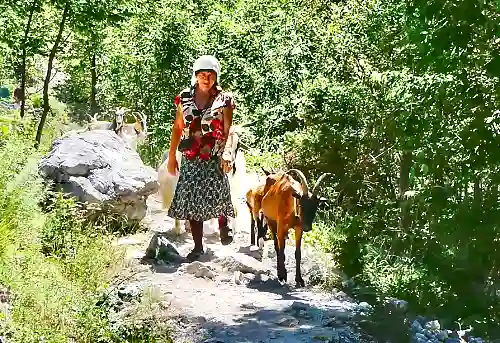
Albania’s Theth village is well-known in the hiking community, mostly for the trying mountain route to (or from) Valbona. The path is not just long and hard, there’s also a real risk that you might lose your way and you have to walk back, so that the trail gets even longer. 

Instead we went for the Grunas waterfall, a 4 km trail along the Lumi river ending in a steep upwards climb to get to the shelf where the waterfall splashes into a clear pool. Courageous people swim in the icy water. We didn’t. We opened our backpacks and ate some tomatoes, bread and cheese, and then walked home again.

Read more here

IKARIA, GREEK ISLAND

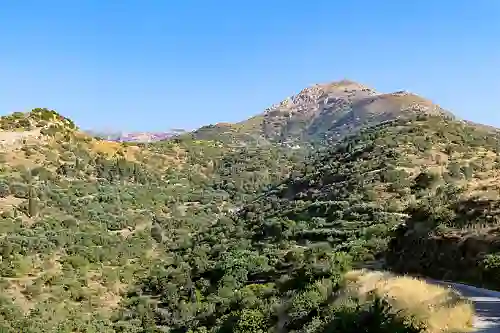
This spectacular island with its steep mountains and deep gorges may seem a bit too harsh for walks. But the fact is that Ikaria’s old “monopatia”, a network of paths tying the mountain villages together, are still there to a large extent. Devoted volunteers are busy regularly repairing or replacing signs and markers.

And there’s an excellent guide book describing a couple of these paths, called “Ikaria island, explore and experience”. It’s sold everywhere on the island. We walked one of the easier routes through the Ranti Forest, high on a plateau at ca 600 m.a.s.l. A great tour through forests and over hilltops with amazing sights. 

Read more here.

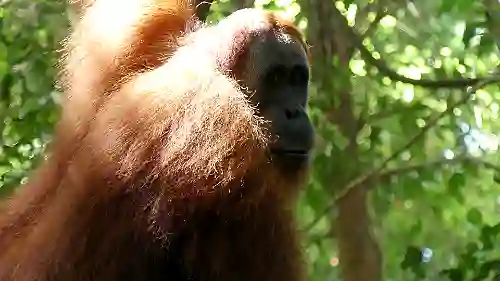
Northern Sumatra have forests where you still might see orangutans, though in the rest of the country their numbers decline sharply because of the expanding oil palm plantations.

But in Bukit Lawang there is a protected forest where orangutans rescued from markets or zoos or private homes are put back the environment where they can live as free as their ancestors. They are not particularly shy of humans, and chances to see them are relatively high.

We hiked for six hours in this jungle forest, an ordeal that ended in a catastrophe (you can read about that here), but we saw about ten orangutans, some at quite close range. These creatures are extraordinary!

Read more here

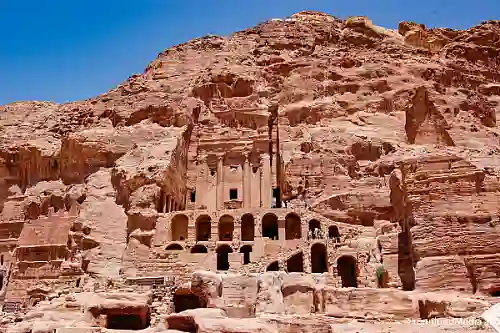
We have all seen pictures from Petra, the forgotten city hidden in a desert in Jordan, below wind- and water-sculptured cliffs. But no image can beat the real thing, to see with your own eyes these mighty temple facades hewn out of the rocks. Of course it’s a tourist trap in many ways, but at the same time something you just mustn’t miss.

And just as fascinating is the story behind the city’s rise and fall, and it’s rediscovery.

From where the bus stops it’s a half-hour walk down to the city. The path winds down a ravine, beneath hillsides that sort of lean in over the ever narrowing walkway. Just before you enter the city you can hardly see the sky above you. It’s possible to ride down on a camel or a horse, but that’s a waste of money, there’s a lot to see on the way.

Read more here.

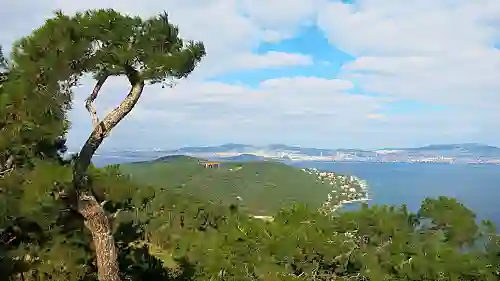
Not far from hectic Istanbul, an hour’s boat ride from Yenikapi in Fatih, or from Kadiköy by the Galata bridge, a handful of lush peaceful islands awaits the traveller. They’re called the Prince Islands, and have for the last hundred years been a summer sanctuary for well off Istanbul families that have built magnificent wooden palaces here. Combustion engines are forbidden in the streets, so the traffic is limited to horse carts, bicycles and electric scooters.

We hop off at Buyukada, with its great ottoman style ferry terminal, stroll around the lovely village and rent a pair of bikes. We pedal up to Lunapark, where all the island’s roads meet. From there it’s onwards and upwards on foot, past bushes where young women have tied colourful ribbons in hope to be blessed with pregnancy. A tradition that maybe has something to do with the small christian monastery at the top. There’a also a restaurant up here, hanging over a steep cliff and with great views. 

Read about our trip to Istanbul here.

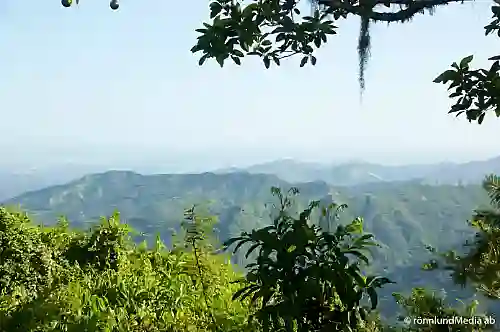
The Sierra Maestra mountain range covers most of Cuba’s south-east coastal area, with dense jungle forests and high mountains. It was here that Fidel’s guerrilla hid for years and built up strength to implement the Cuban revolution in 1959.

The area is now a national park and and with a guide you can walk jungle paths up to the base camp of Commendancia la Plata. Here the troops lived, trained and made up strategies. You can see some of their quarters, among them the hut where Che Guevara treated sick farmers from the villages nearby.

It’s a great walk, not too difficult, but heavy with history, and rewarding with some stunning views of endless green mountains.

Read more here.

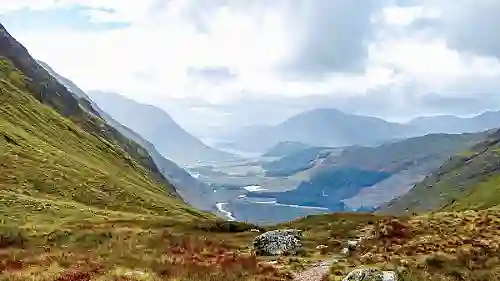
Fort William, north of Glasgow is a hotspot for Scottish hiking, with a multitude of trails in all directions. Some of them are really tough (like the one going up to the top of Ben Nevis), others are  relatively easy. But they’re not as clearly marked as for instance trails in Sweden are.

In Glencoe we totally missed the one we had intended to walk and instead found ourselves climbing ”the devil’s staircase”. Wind and rain whipped our faces and visibility was poor, but once we were up the clouds lifted and we could enjoy the wild views.

This area is very popular with hikers, and going down we meet old ladies with walking sticks and young men carrying bikes up the steep and winding devil’s stairs.

Some of our pictures of dramatic Glencoe can be seen here.