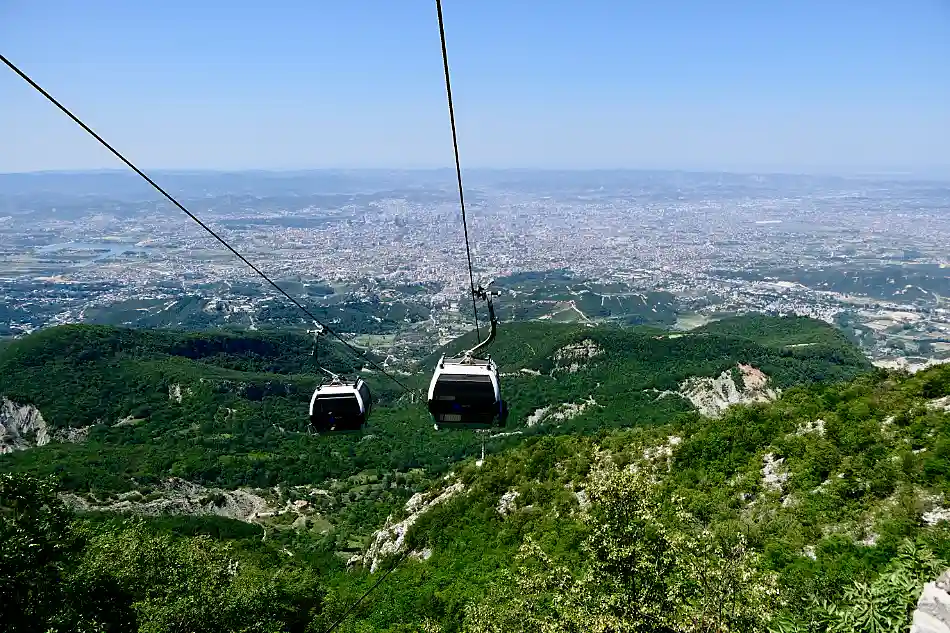
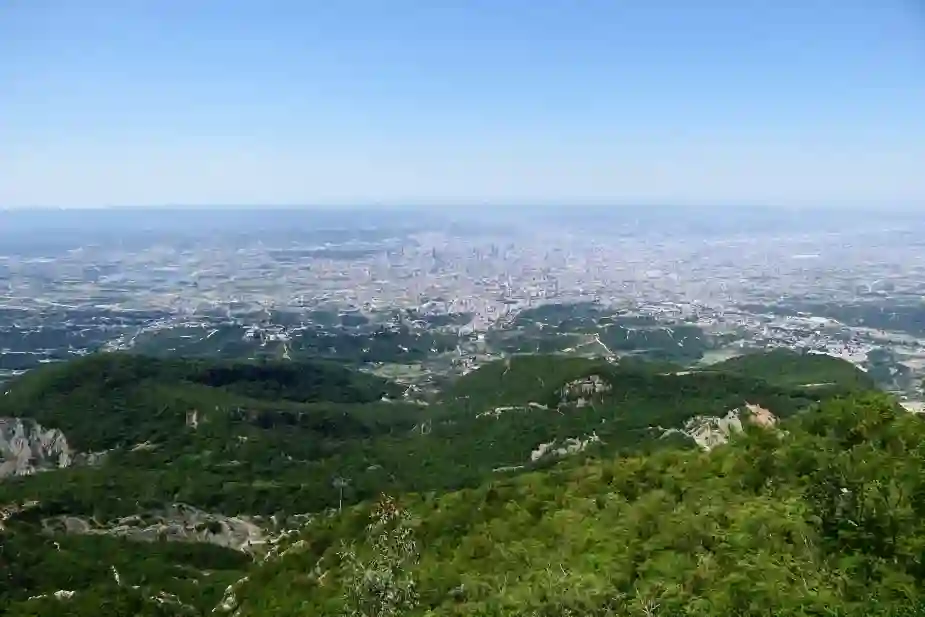
Tirana, the capital city of Albania is a bit of a surprise for us. It’s big, much bigger than we had imagined. Exactly how outstretched it is is revealed while we’re going in for landing at Mother Teresa International Airport, or from the top station of the cableway to Dajti, one of the high mountains on the edge of the city.
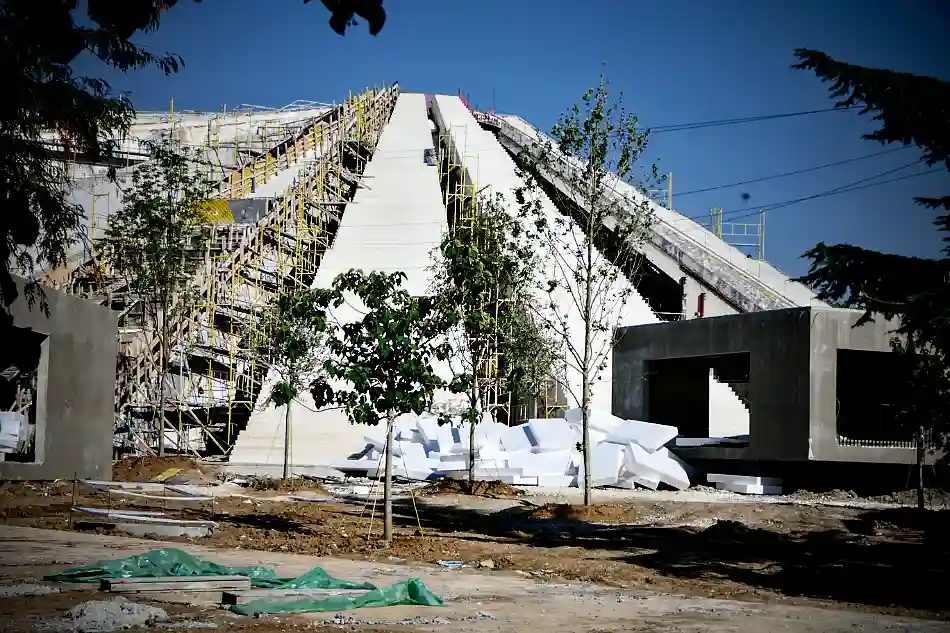
And rolling in through the city boulevards we’re surprised to see all the elegant shop windows. New modern buildings spring up everywhere, and old abandoned, sometimes torn down houses are still standing. One remarkable building in the city centre that has been abandoned for a long time is now under renovation behind fences. It’s called “the Pyramid”, a large cone built as a museum for the dictator Hoxha. What it’s going to be now is a bit unclear, maybe some kind of cultural center.
Everyone we speak to in Trana is frustrated. The economy is at the bottom, prices soar and the politicians are impotent. One evening traffic is halted by some 20.000 demonstrators showing their anger in the city center. People tell us they’re probably going abroad for work. To Italy, Greece or Germany, maybe even the US. At the same time they hesitate because they love their country and their city.
One man tells us he’s lived for seven years in Italy, but then homesickness forced home to go home.
– But I might be off again soon. Life here is too hard, he says with a sigh.
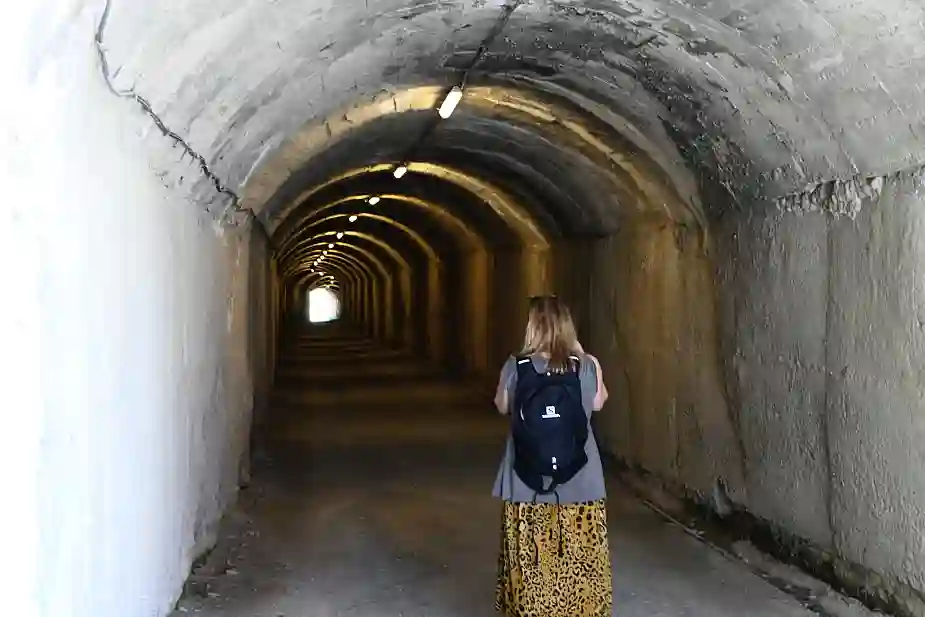
On our first day in the capital the temperature reaches 35 degrees Celsius. Every step we take is heavy and sweat runs like rivers. The next day it’s maybe one degree lower, not that it makes much of a difference. But on that day we visit the “BunkArt” (see previous chapter) underground bunker and it’s much cooler down there.
We also jump on the cable car, the ”Teleferik” that takes us up to mount Dajti where the wind cools nicely and butterflies flutter all around. From here we can see all the way to the ocean 30 kilometers away. There’s a panorama restaurant where we eat a tasteless lunch, but the views are fantastic.
And then we go down again in the cable car:
It’s actually not so easy to find a good restaurant in Tirana, most of them are cheap fast food joints. And there are at least twenty bars/cafés for every restaurant. Food guides usually recommend the Blloku area, but we were seldom happy with our meals there. Guidebook favourite Mullixhiu was a total disaster, tasteless food and service all but non-existing.
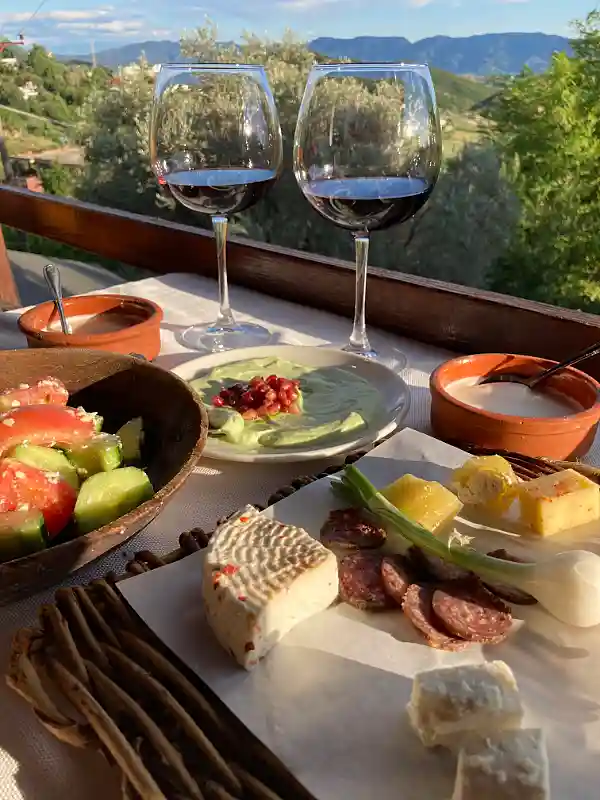
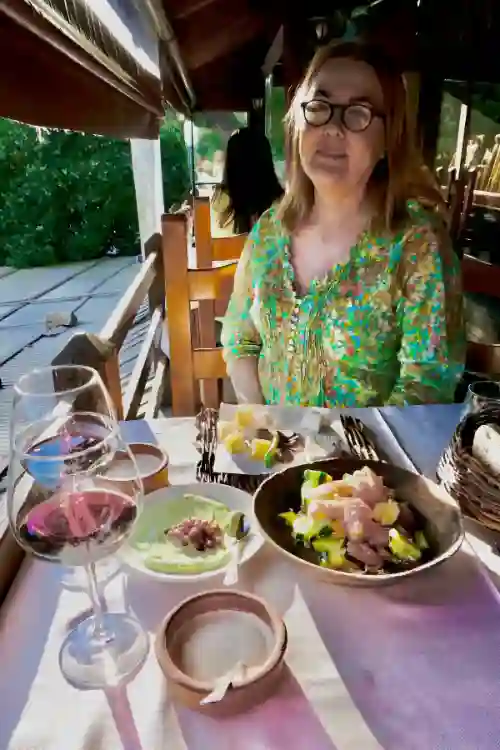
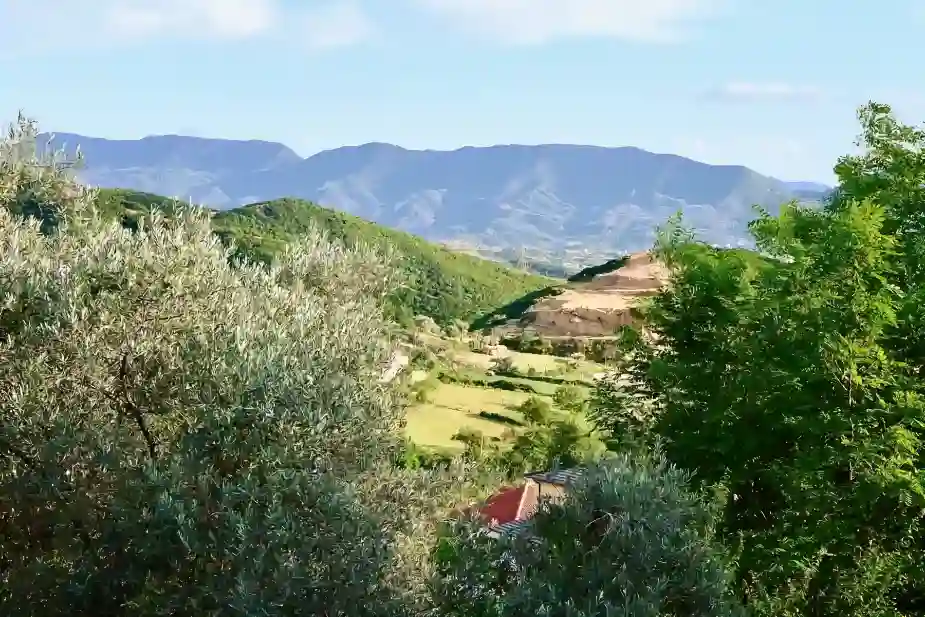
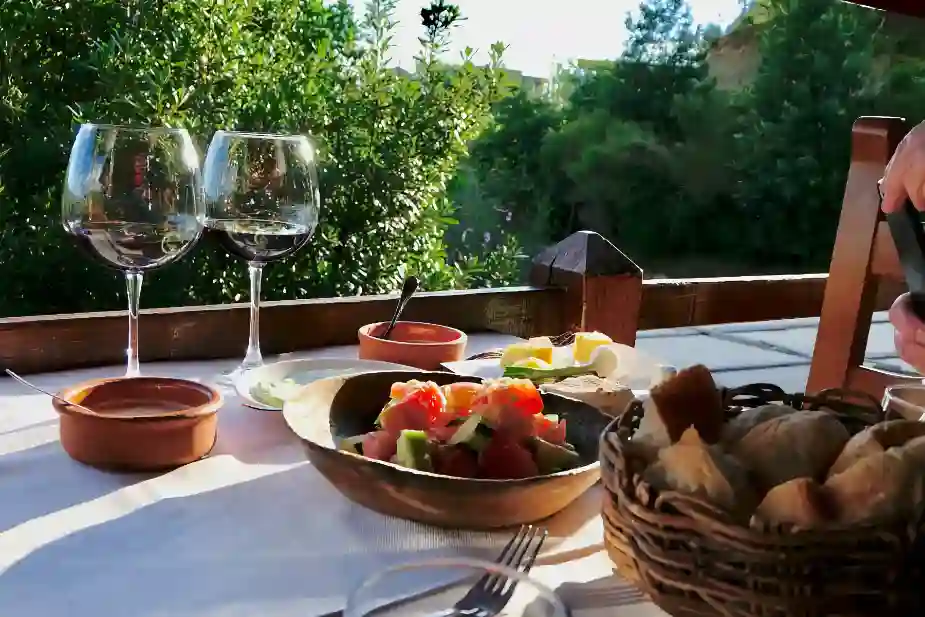
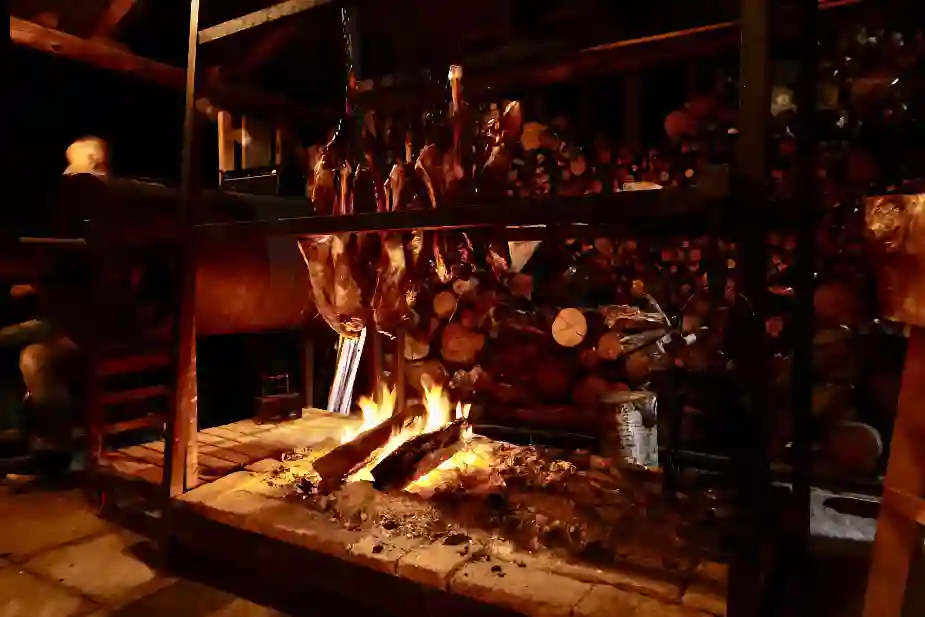
But a bit out from the city, up in the mountains is Ceren Ismet Shehu, a farm restaurant serving their own fresh product. There’s no menu, you get a dinner with many courses, typical Albanian and absolutely delicious. Yoghurt sauce, burek, grilled goat, hash browns and a fantastic local wine to go with it. The best dinner in Albania! And they have a sister restaurant in the city, with the same food but no views.
On our third day in Tirana we change our plans and take the bus to the city of Shkoder, two hours to the north. Here V interviews Elona, whose husband was murdered in the old and ugly tradition of bloodfeud, still existing in the north of Albania. More on that later.
When we leave Elona there’s thunder and heavy rain over Shkoder and we’re soaked when the bus that takes us back to Tirana finally arrives.
Next up: We somehow manage to drive a car out of the traffic chaos in Tirana and set the course to the north, towards the region that is famous for its nickname: The Accursed Mountains.