Ecuador: Galapagos part two
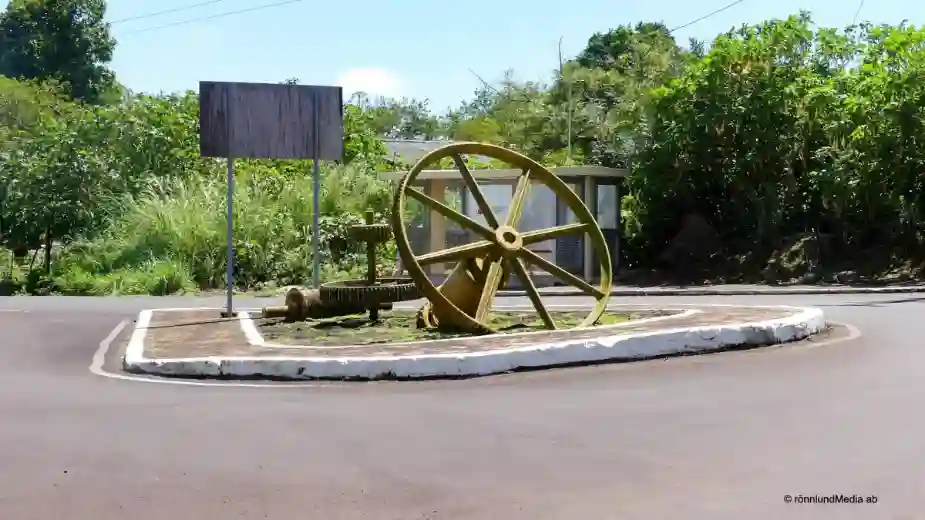
Not far from the little island capital there is a small village grandly called Progreso. This was once one of a handful of attempts in the 19th century at creating a new kind of settlement in the at that time mostly uninhabited archipelago. The strategies were similar – a group of pioneers were convinced to participate in an industrial activity. In the case of Progreso it was a sugar mill. But the conditions were hard, and in order to obtain cheap labour they imported prisoners from the Ecuadorian mainland. The factory turned prison managers were harsh people and everywhere it ended in rebellion, sometimes the manager was killed (that’s what happened in Progreso) and the project and village was abandoned.
Today all that remains of the sugar mill are some large cog wheels in a roundabout.
Living in the Galapagos was a constant challenge back then. Most difficult was (and still is) the water shortage. There’s no accessible fresh water during six months of the year. To survive you have to work together and cooperate, which not many seem to have been able to do.
Recommended reading: Another immigrant project on the island of Floreana is so bizarre that one wonders why there hasn’t been a movie made about it (actually there has – a documentary called “The Galapagos Affair – Satan Came To Eden”, and the 2024 movie “Eden”). German proto-hippie nudists, murders, people disappearing, a false baroness, her two (!) lovers and a dead donkey are some of the ingredients in this drama. (Click here)
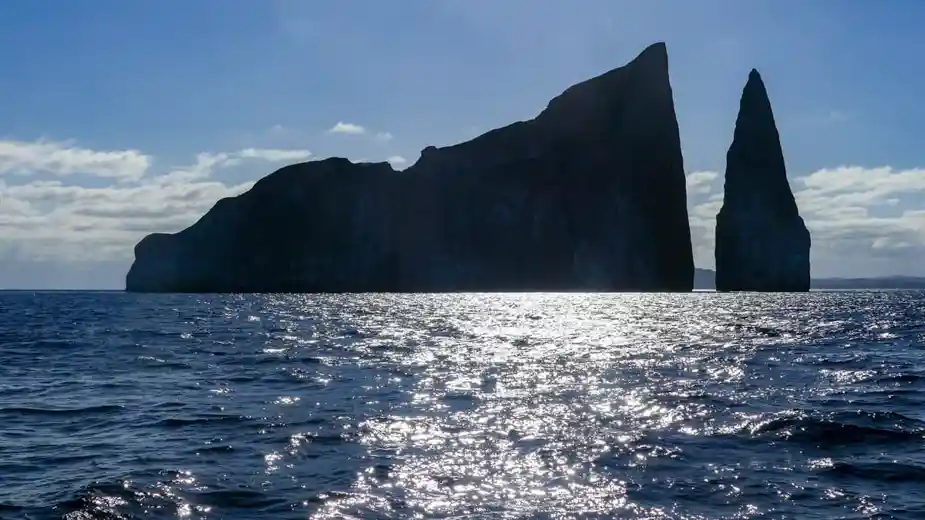
Day two on Galapagos we make a round trip by boat around the island San Cristobal. Our first goal is a steep cliff rising out of the ocean. In Spanish it’s called Leon Dormada, the sleeping Lion. In English it’s name is “Kicker Rock”. Dressed in snorkeling equipment we jump in just ten meters out from the rock. The first feeling is terror. I’ve snorkeled a lot before, but I could always see the sea bottom then. Here that bottom is about 200 meters below in complete darkness. Looking down it’s just a big emptiness, and I almost feel a little dizzy.
Demanding my senses back I concentrate on a sea turtle gracefullly floating by the cliff wall, munching on the algae. Such a slender swimmer, why did they ever decide to leave the sea and walk so clumsily on land?
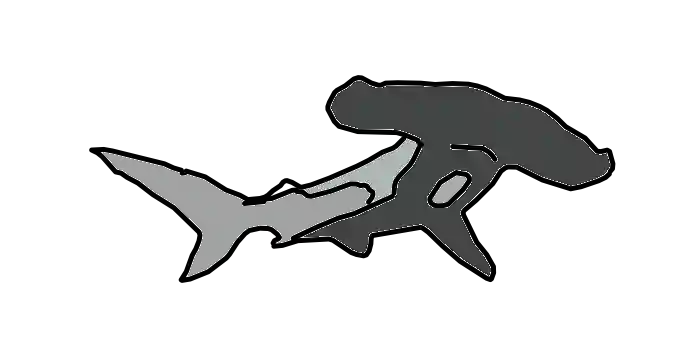
When I’ve gathered some courage to look down again I see schools of quite large fish, and suddenly I hear the guide scream: “Hammerheads! Hammerheads!” And way down, just barely visible I can see big grey bodies with the characteristic winged heads. They are maybe 30 meters below me, and after just a few seconds they disappear in the dark. Such strange animals!
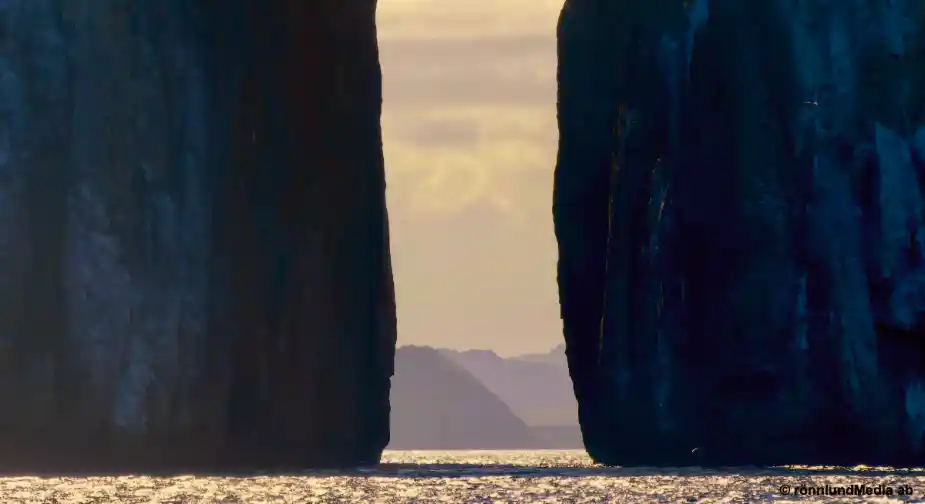
We swim through the crack in the cliff, observing lots of fish, among them some small sharks, maybe each a meter long.
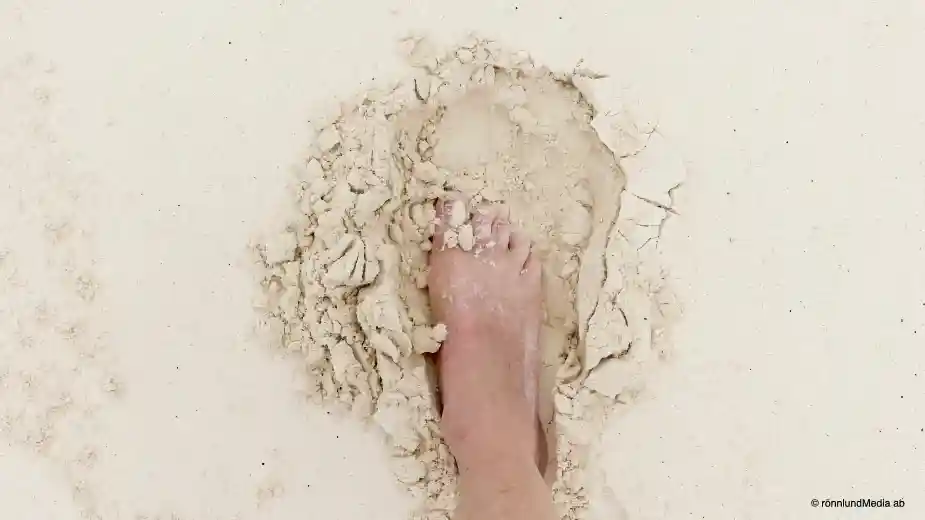
The next stop is by a sandy beach so pristine it could be in your dream of paradise. A huge half-moon of sand that is really just soft yellow powder. If it was anywhere else on earth it would have been crowded with people, screaming kids and ice-cream vendors, deckchairs and parasols and with a sunscreen scent lingering in the air. But here it’s totally deserted, left to seabirds and crabs. So unnecessary. And so beautiful.
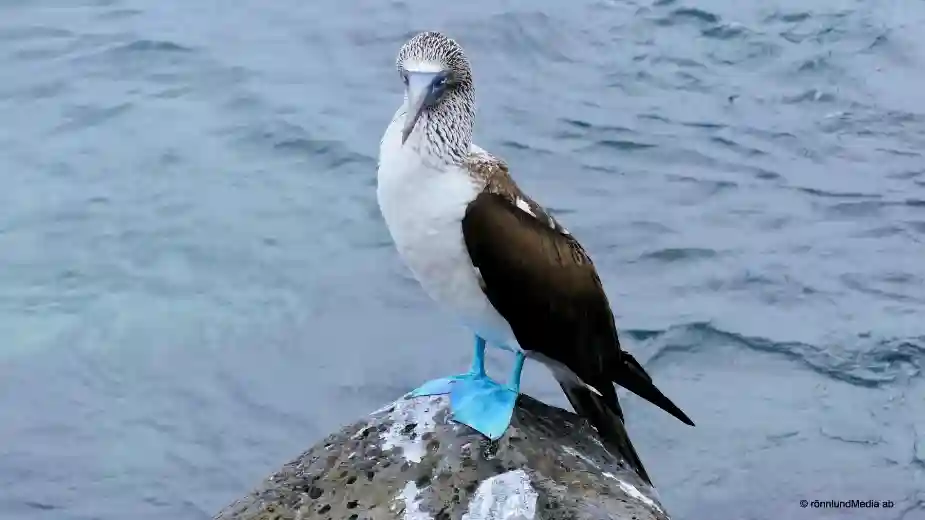
I’m strolling around on cracked up lava fields with dry plants. Almost immediately I see a bluefooted boobie, an iconic bird in Galapagos. A few meters to the side a pelican sits looking at me with some curiosity, but seemingly totally without fear.
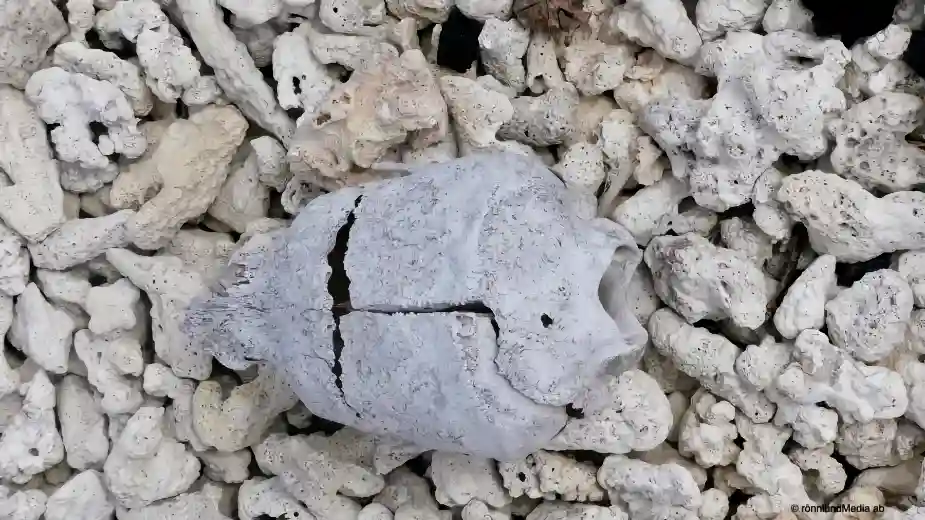
I continue my walk and enter a sad part of the beach where the ground consists only of dead parts of coral. The remains of a once flowering reef.
Our guide explains that the corals were killed by a rush of lava, and that may be true. But I’ve also heard that the El Niño weather phenomenon has caused a lot of damage to the reefs along the coast. In any case, it’s really sad.
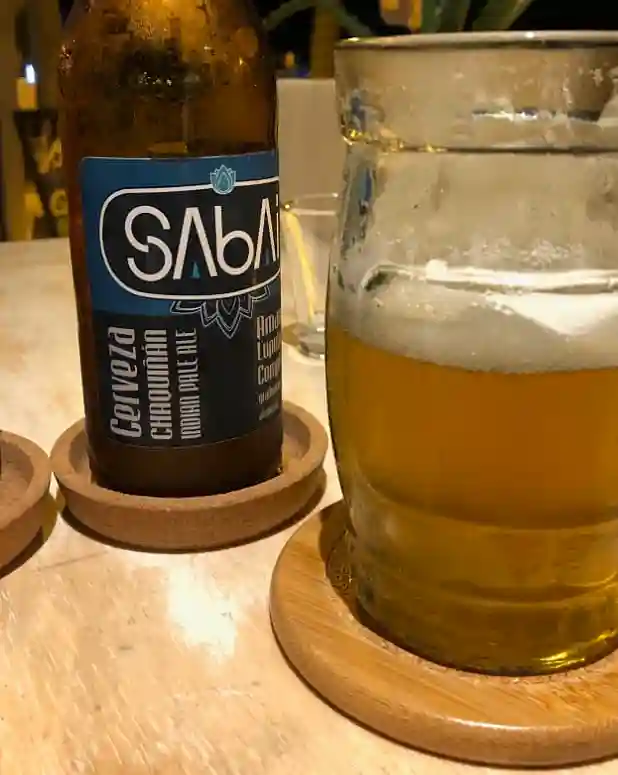
Our plans for the evening involve a Japanese restaurant, but are are scrapped when we learn that it’s fully booked. So we rethink walking along the promenade and there, by the northern end there is Muyu, an Asian restaurant inside a rather elegant hotel. And it’s a stroke of luck, for the first time we get to eat really well cooked fish, and drink a local IPA to go with it.
The next morning we’re greeted by a cloudy sky, and a few raindrops too. And this weather stays with us the whole day. We find an info center that has a lot to tell about the biology and history of the Galapagos islands. We read about the unsuccessful settlements and the once senseless killings of animals that took place here. The turtles were driven almost to extinction by the industrial production of turtle oil that fueled the street lamps in many western cities. Later it was the whales who got the same treatment. The short-sightedness of human greed is a monster. And no one will object until it’s too late.
Our days in the Galapagos are coming to an end. In the next chapter we think about Charles Darwin and return to Santa Cruz.