Getting from Cairo to Alexandria means choosing between bus and train. They take about the same amount of time, around 3.5 hours. But the ‘regular’ trains, which are amusingly called ‘vip’, are not recommended. And the better trains are very expensive.
Several bus companies operate on this route, but we have been advised to choose GoBus, which has some good and comfortable vehicles. But when we arrive at the terminal in good time, the bus is cancelled, without warning, and we have to wait three hours for the next transport. We spend that time having a loooong lunch at the Hilton hotel next door.
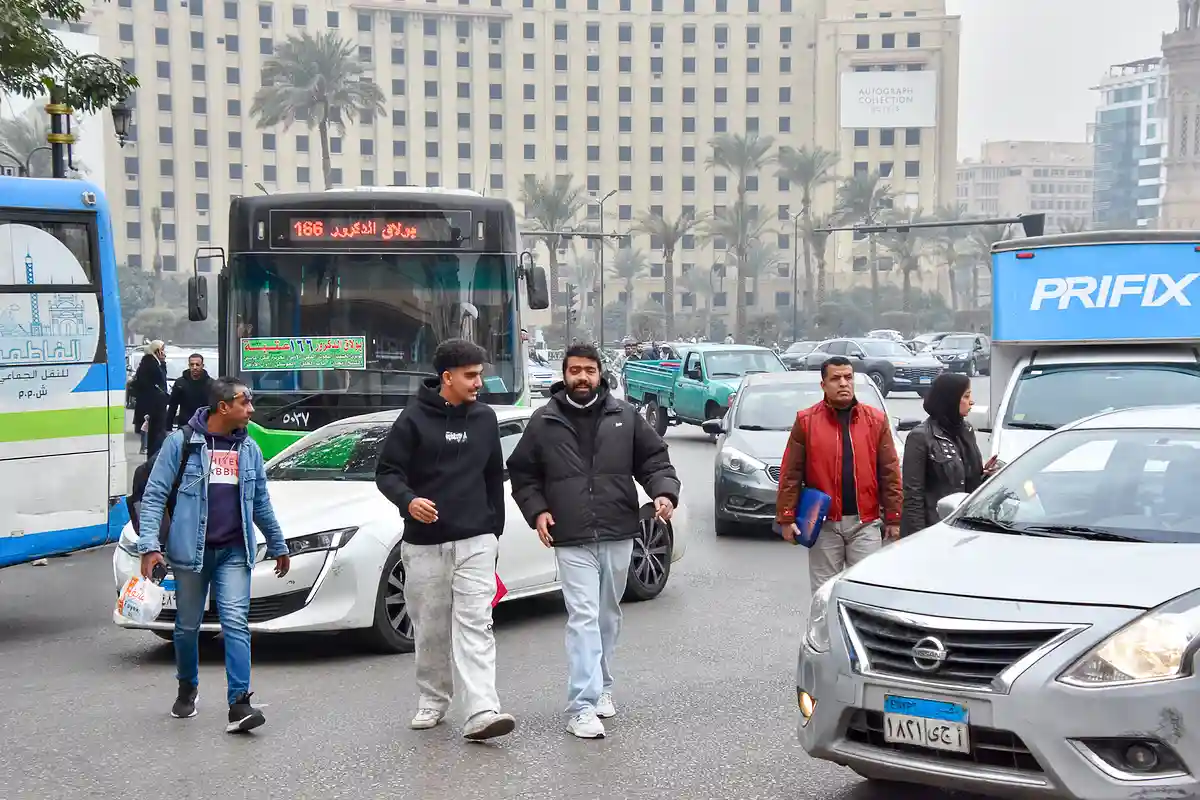
When the time comes, we rush like crazy across two five-lane roads full of fast driving cars. Because that’s what you have to do in Cairo. There are no pedestrian crossings whatsoever here.
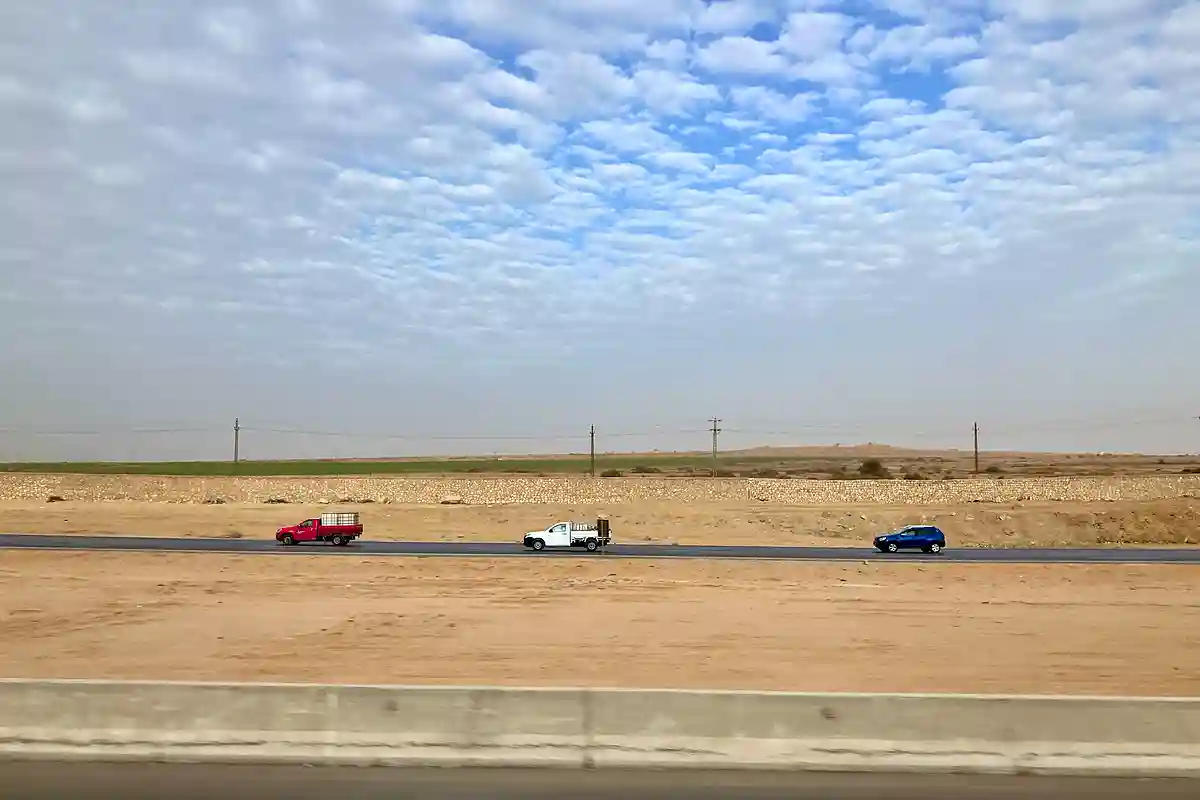
But we make it across unscathed and the bus drives north through the desert ,to Alexandria at the mouth of the Nile in the Mediterranean sea.
The name Alexandria does not sound particularly Egyptian or Arabic, but it comes from the city’s founder, the Macedonian king and commander Alexander the Great. In 332 BC, he founded the city, which was intended to be a bridgehead for Greek/Macedonian influence in Egypt.
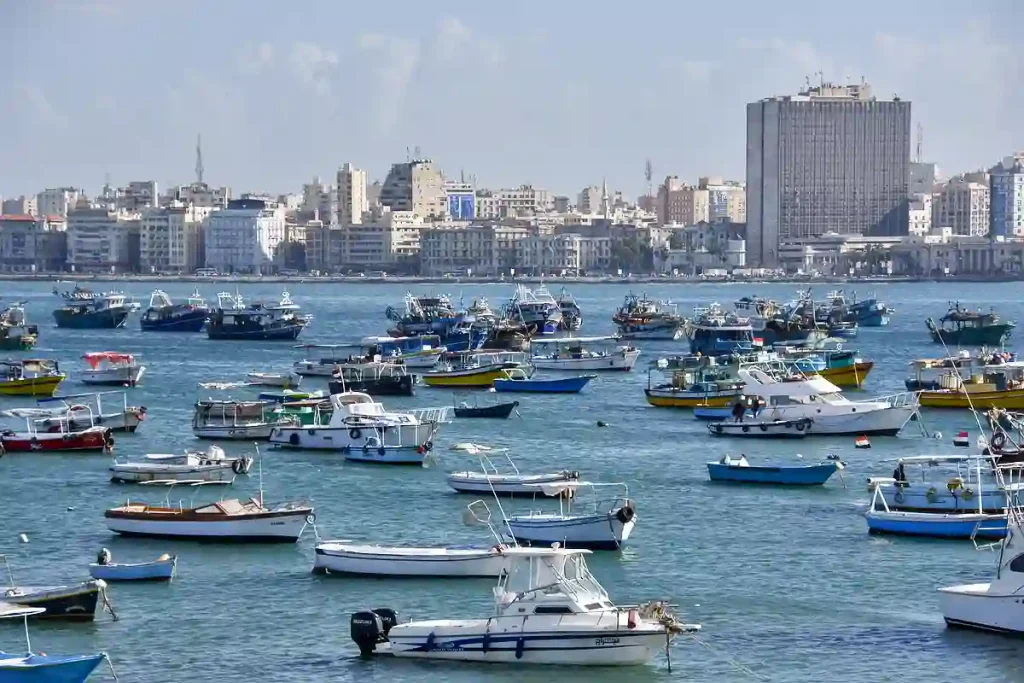
Just a few years later, a sturdy kilometre-long pier was built from a northern headland to a small island called Pharos. Behind this, a harbour that was protected from the northern winds was created. And on Pharos itself, a 120-metre-high stone tower with a lighthouse on top was built to guide ships into the harbour. It was named one of the Seven Wonders of the Ancient World.
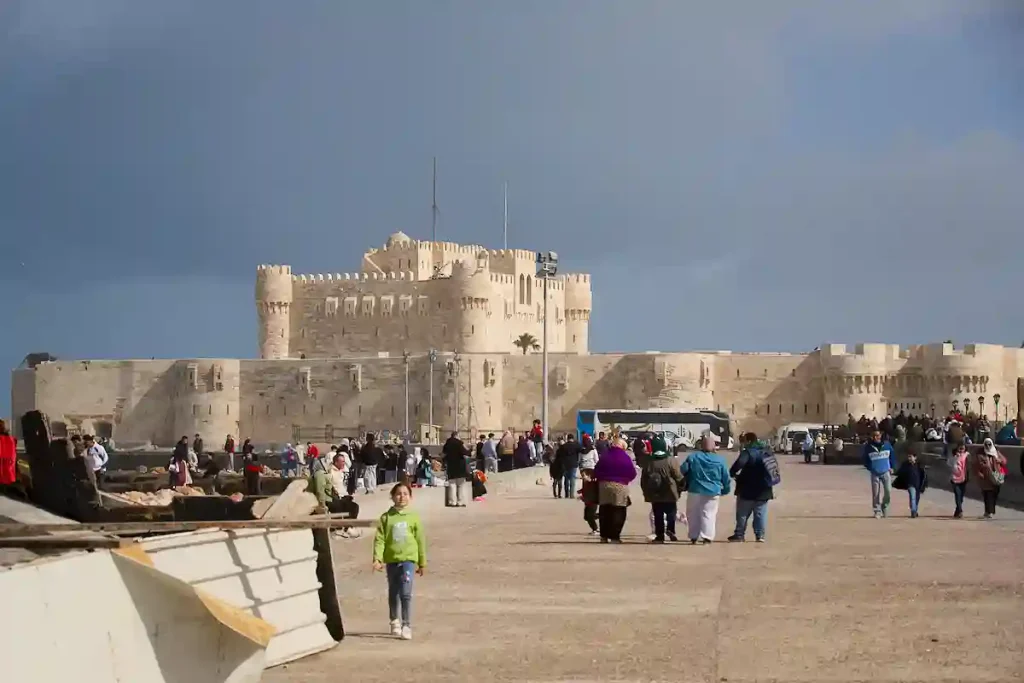
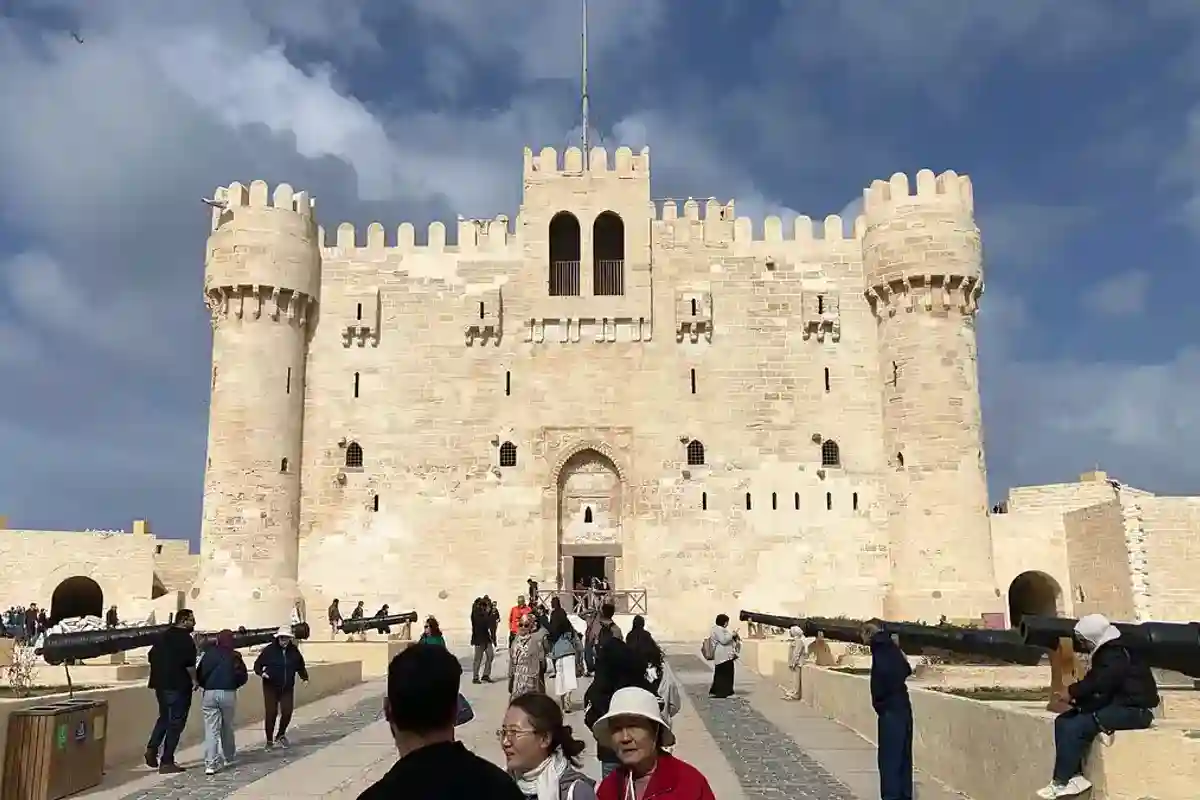
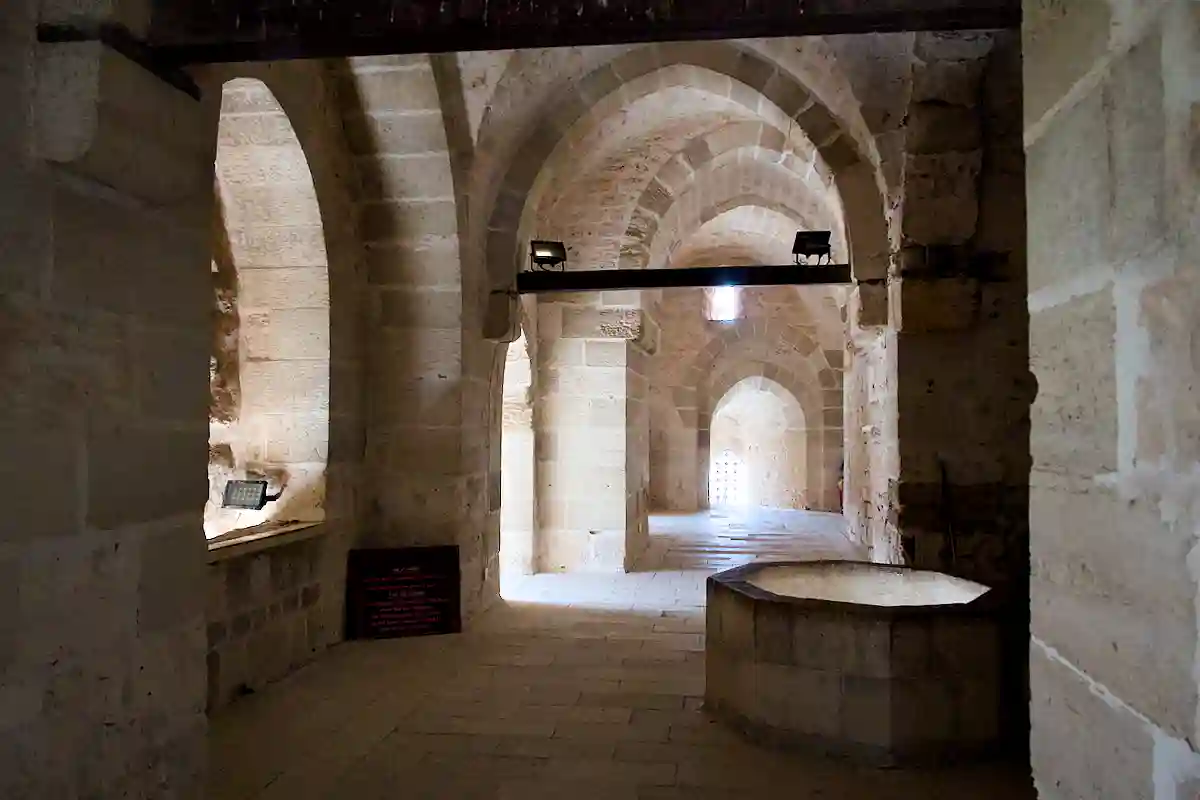
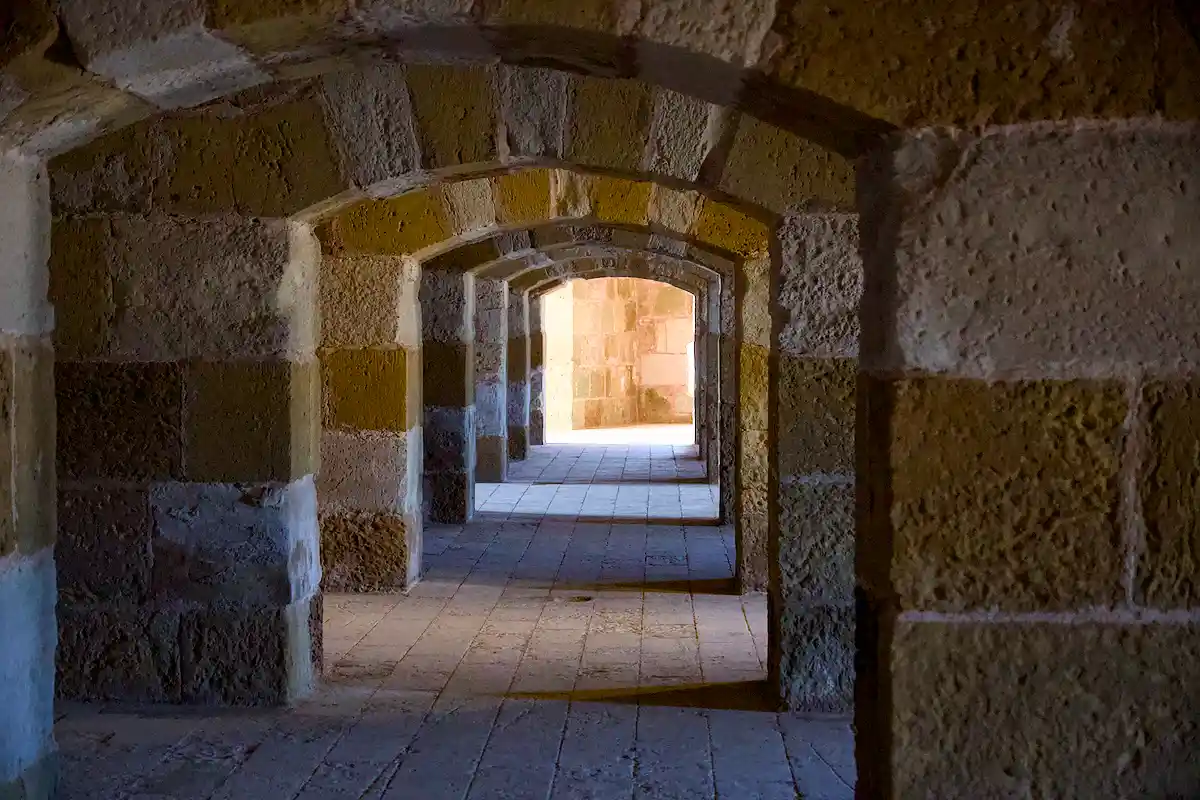
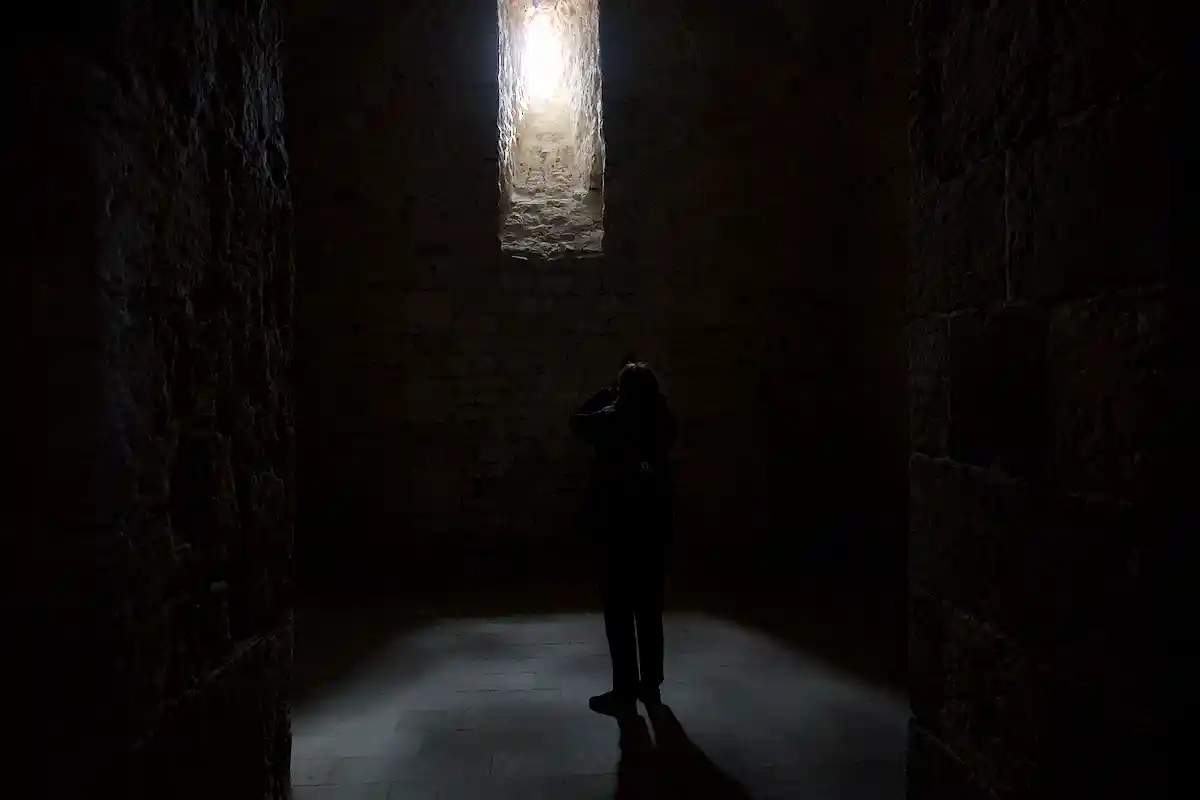
However, during the 14th and 15th centuries, several earthquakes caused the lighthouse to collapse into the sea. From what remained, a large fortress, Qait Bey, was built to protect the harbour from attacks.
The fort looks impregnable, but Alexandria has been conquered many times throughout history. As early as 30 BC, the Roman Empire took over. After the fall of the Romans, the city came under the Byzantine Empire, and in 616 a Persian army invaded Egypt. But just 26 years later, the Arab Empire stepped in and incorporated the country into the Islamic sphere.
In 1798, Napoleon conquered Alexandria, but three years later he was expelled by the British. At that time, the city was just a small fishing village, but it experienced an upswing when a canal was built from the Nile to Alexandria. It silted up again after only twenty years, but the upswing continued and the city is now Egypt’s second largest city.
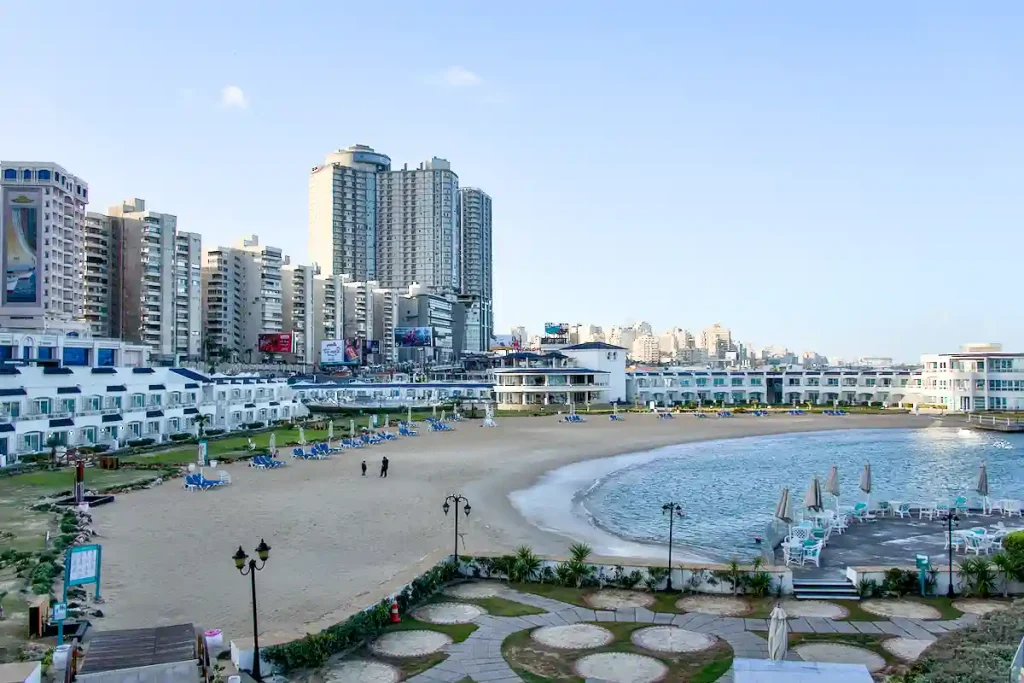
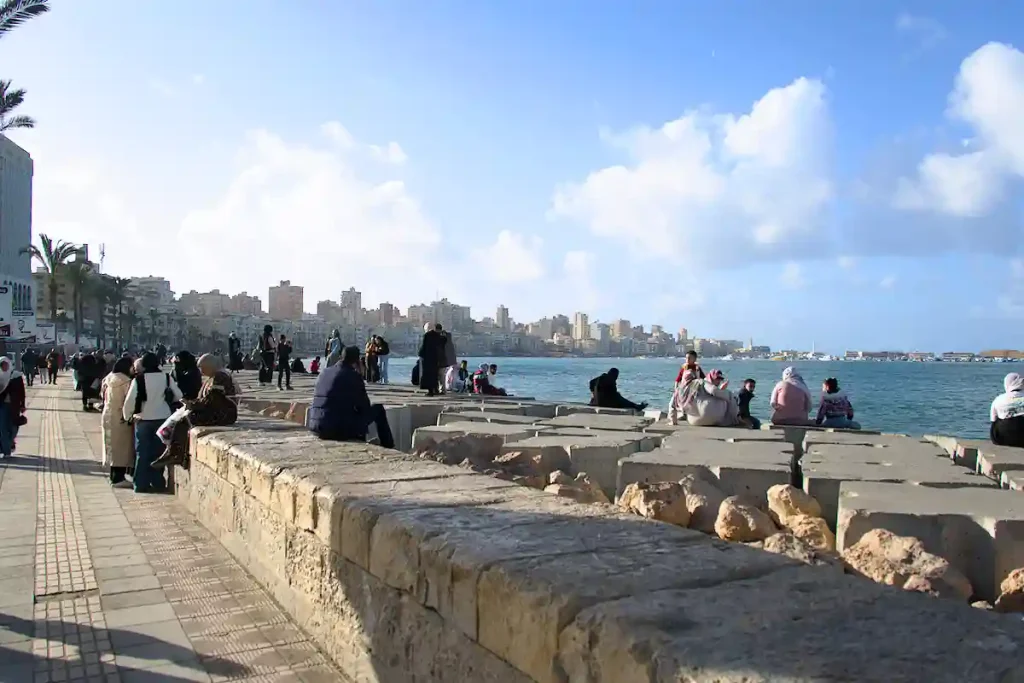
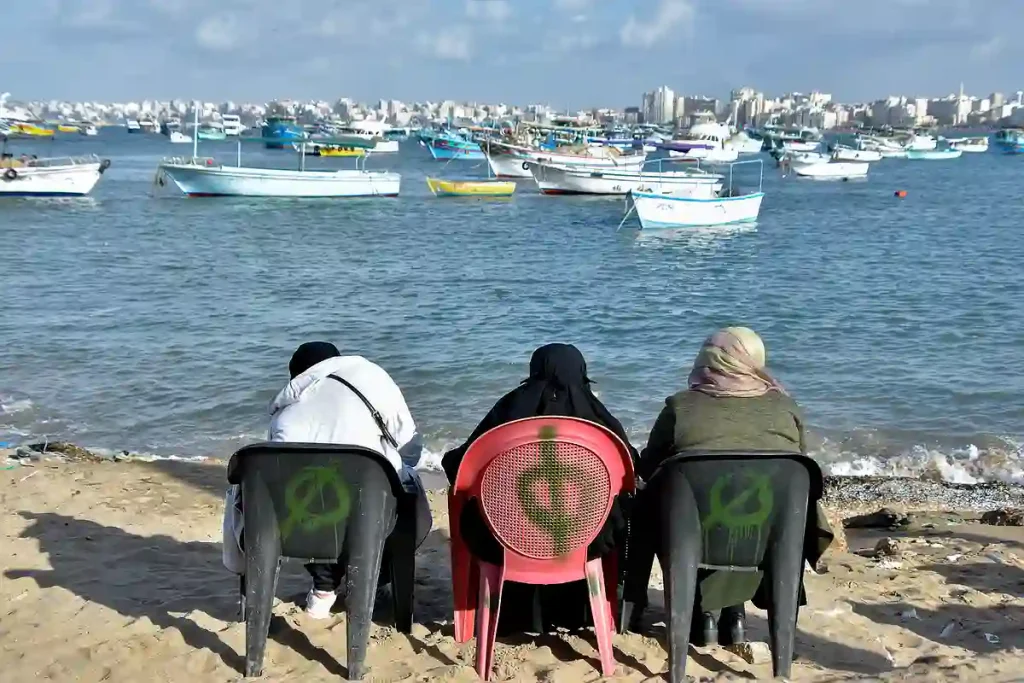
Today, the fort marks the western end of a kilometre-long beachfront known as the Corniche, which is now mostly lined with restaurants and hotels.
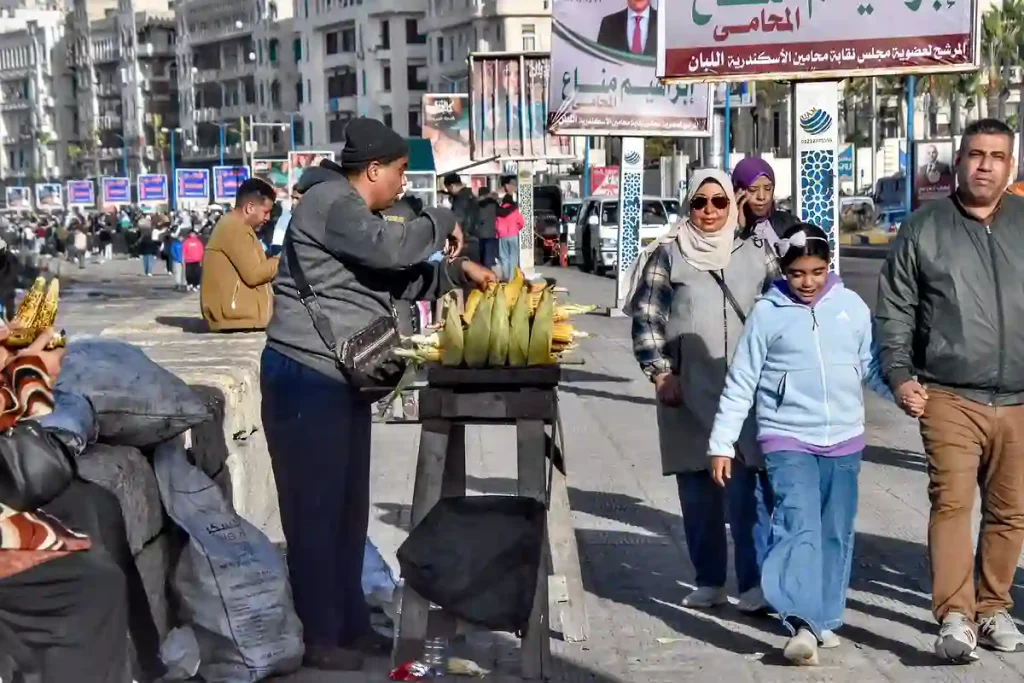
Closest to the fort, there is a perfect semicircular bay with a classic promenade that runs along it. This is always full of people strolling, eating freshly cooked corn or just hanging out.
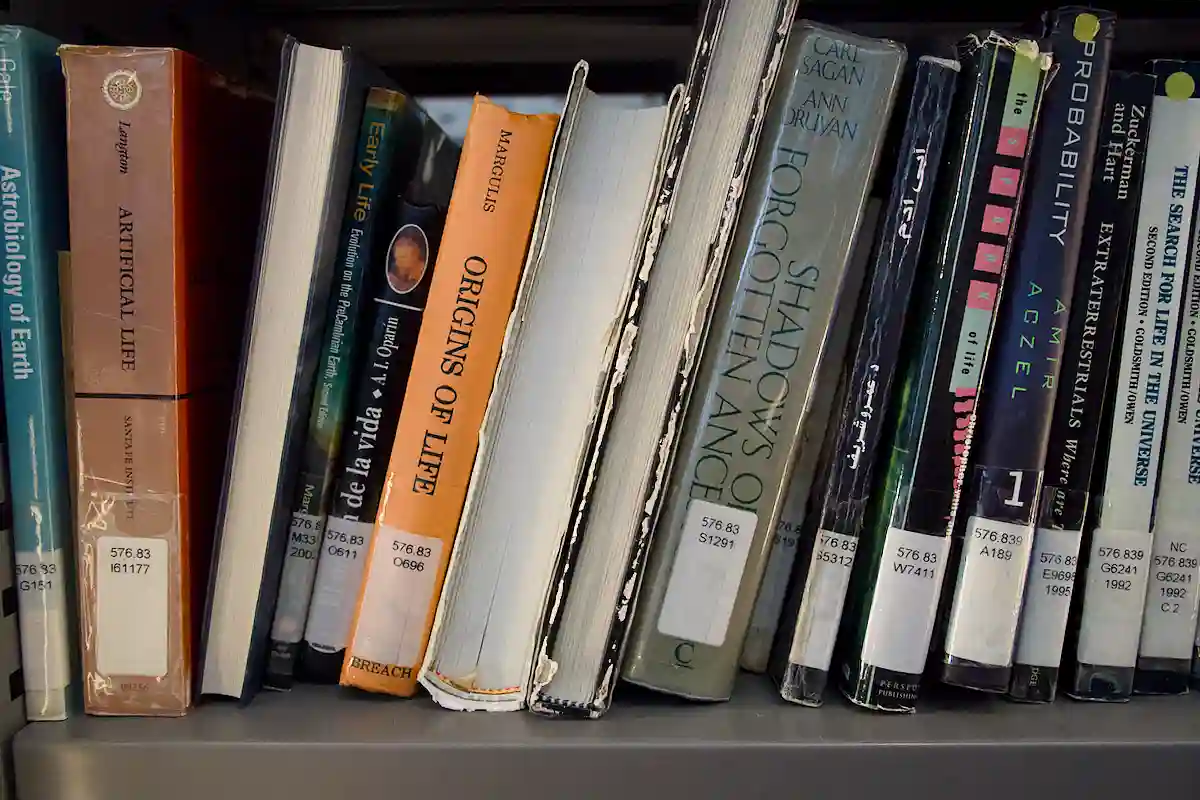
At the other end of the semicircular bay, it is believed that in ancient times the world’s largest library once stood. There, scholars, researchers and translators worked to disseminate the collective knowledge of the entire known world at that time. It is estimated that the library contained between four hundred thousand and seven hundred thousand scrolls in various languages. It was a beacon of knowledge, just as the lighthouse at Pharos was for seafaring.
But sometime in the centuries around the birth of Christ, something happened, and the library disappeared. What happened and when exactly is unknown. One theory is that it burned down. Others believe that it was gradually abandoned and fell into disrepair.
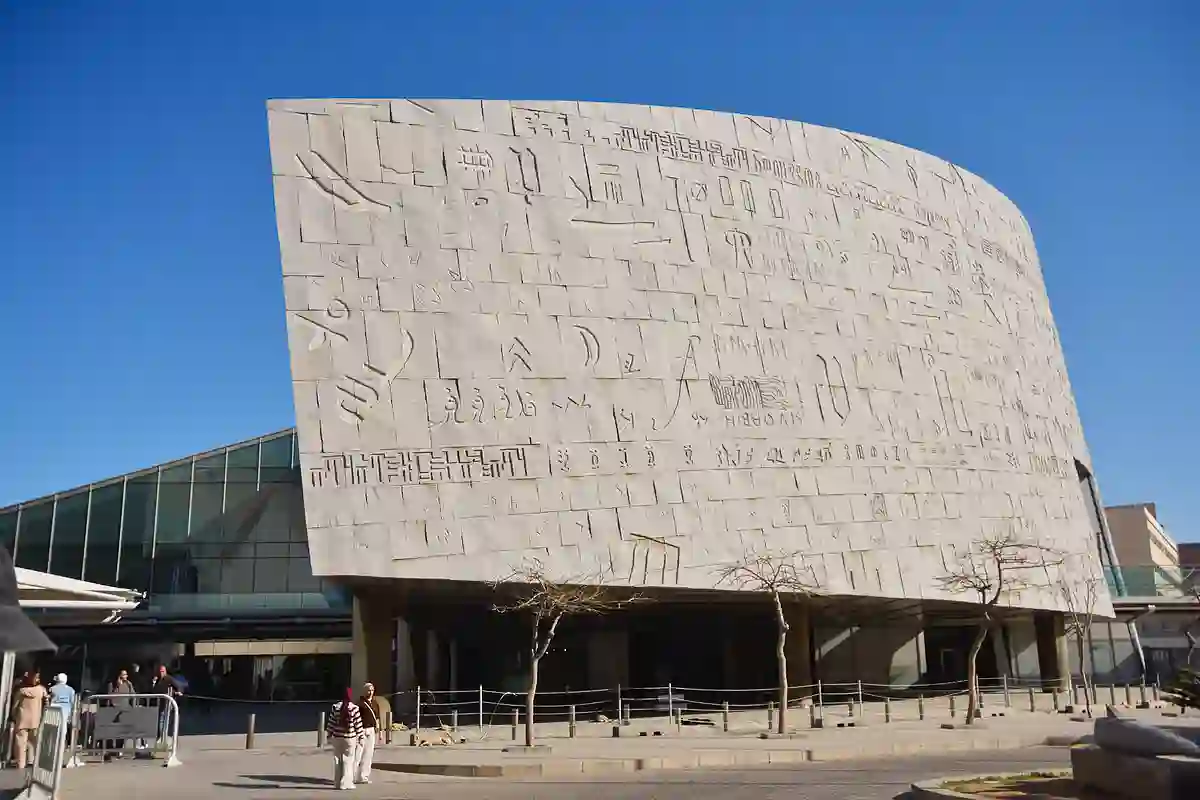
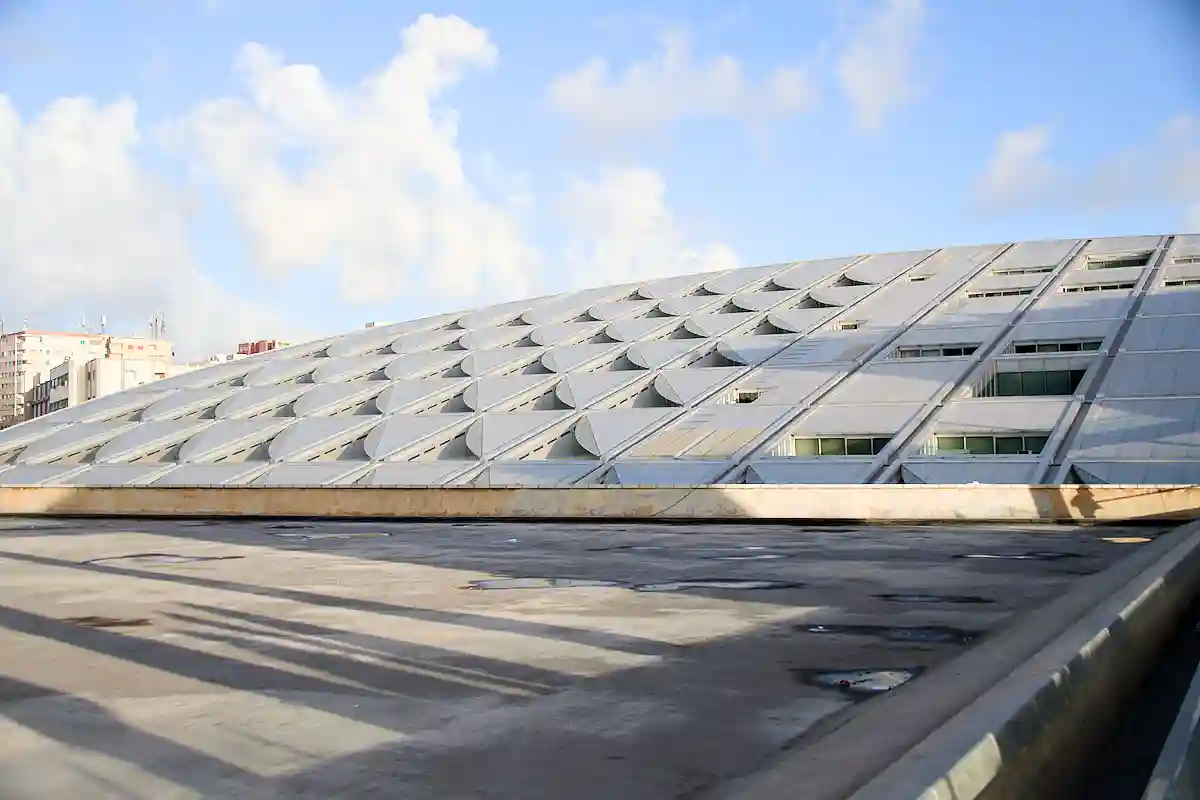
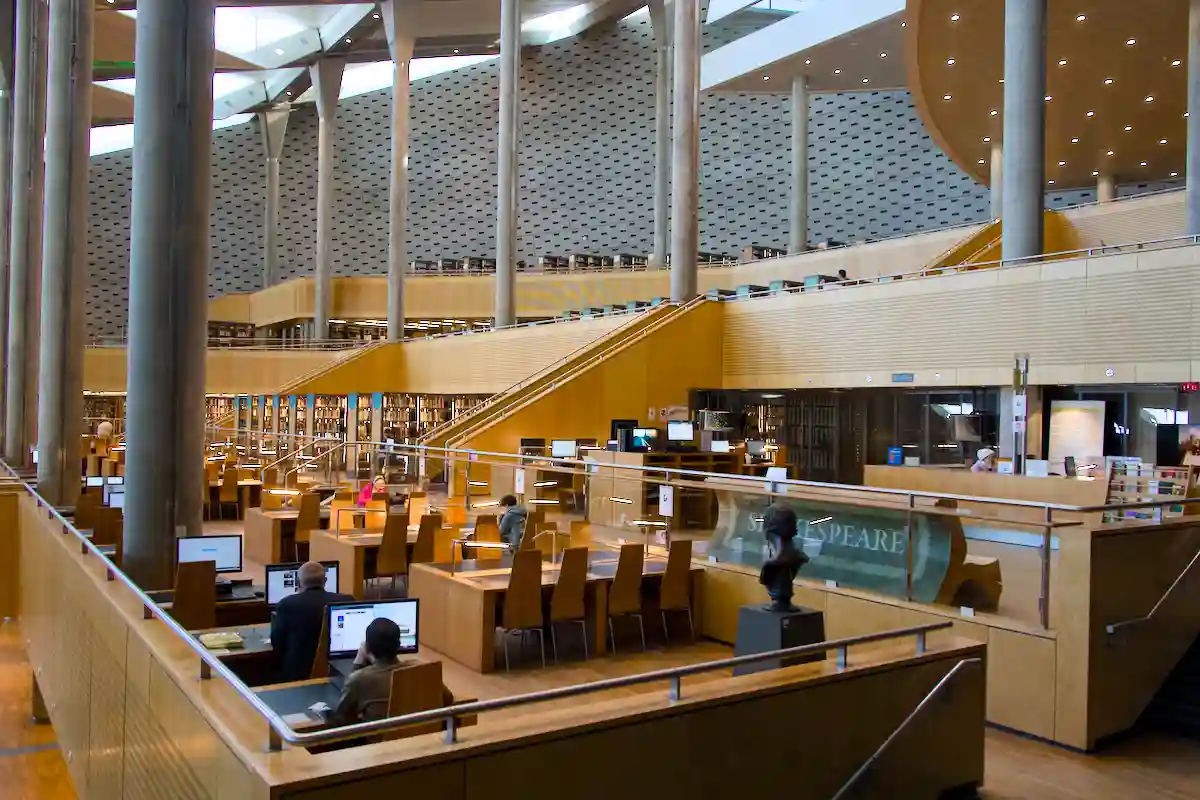
But two thousand years later, it was decided to revive this grand tradition, and with the help of Norwegian architects, a new research library was created in Alexandria. It opened in 2003 and is truly amazing from an architectural point of view. The ‘front’ facing the sea looks like a huge sloping circular slab, reminiscent of the ancient Egyptians’ worship of the sun disc. Under this roof, the library’s departments and research areas are arranged in terraces.
The library entrance is at the ‘back’ which is crowned by a large curved stone-like concrete slab, filled with hieroglyphs and other symbols.
The library contains several museums and exciting contemporary art hangs on the walls. It is incredibly impressive and very beautiful.
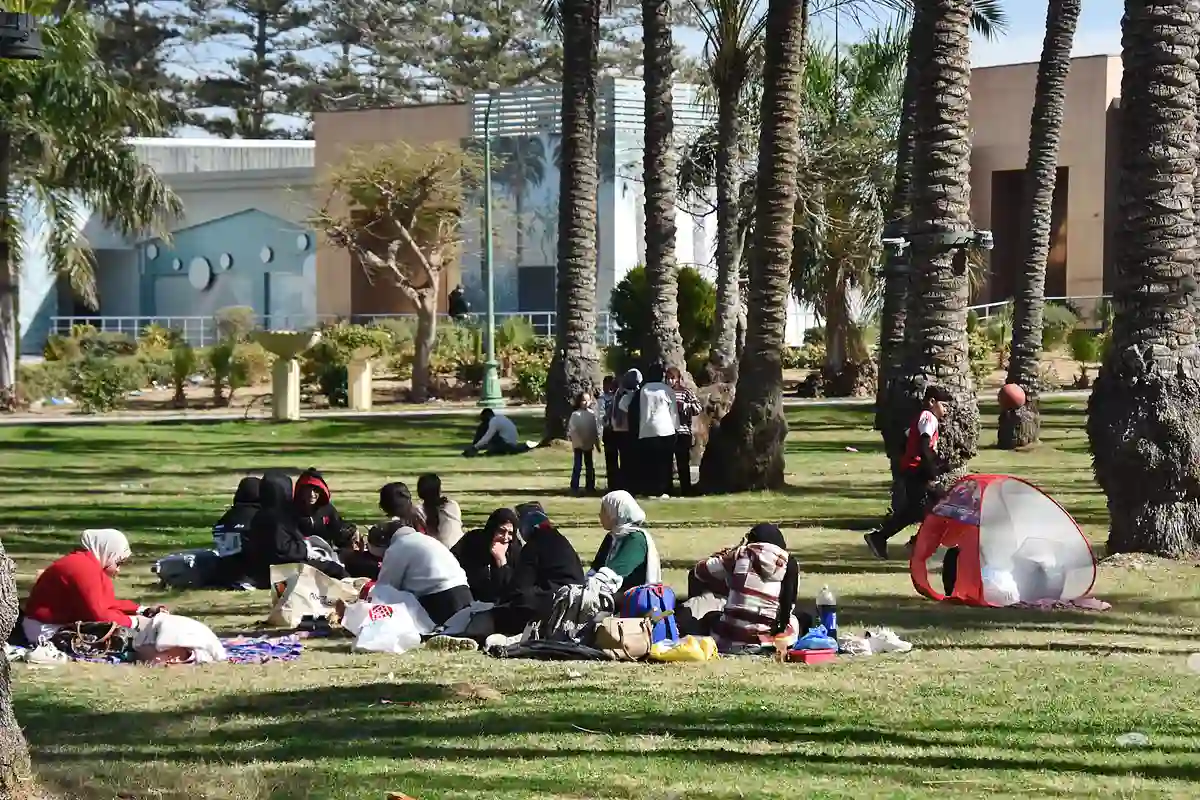
In Alexandria, we unfortunately catch a nasty virus and we don’t feel like going out much. But we do visit the only large park here, Montazah. It’s not really like the parks we’re used to. It’s basically just a big green lawn with palm trees. Families picnic here, fathers play football with their sons, and people eat food they have brought with them.
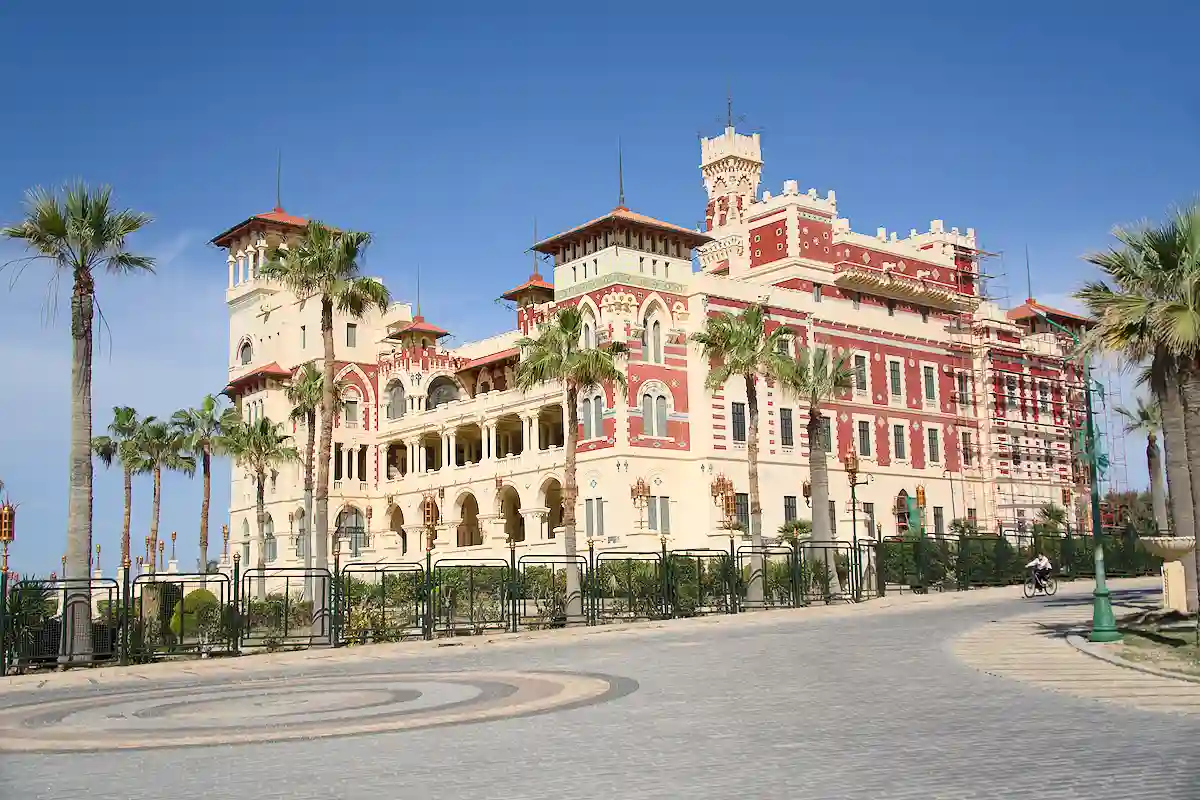
Overlooking the sea is a very beautiful palace that once was the residence of the president Anwar Sadat and his successors. Visitors are transported across the park in a kind of open bus, but otherwise there is not much to see.
A last note. We have already established that Egyptians like loud music, and this becomes apparent at our hotel in Alexandria. It is beautifully located right by the sea, but also seems to be popular with people and businesses in the city. The building has a large hall that is used for various events, and during our stay there is a mobile phone launch. The event always ends with music at an insanely high volume. Here is a taste of what you can experience.