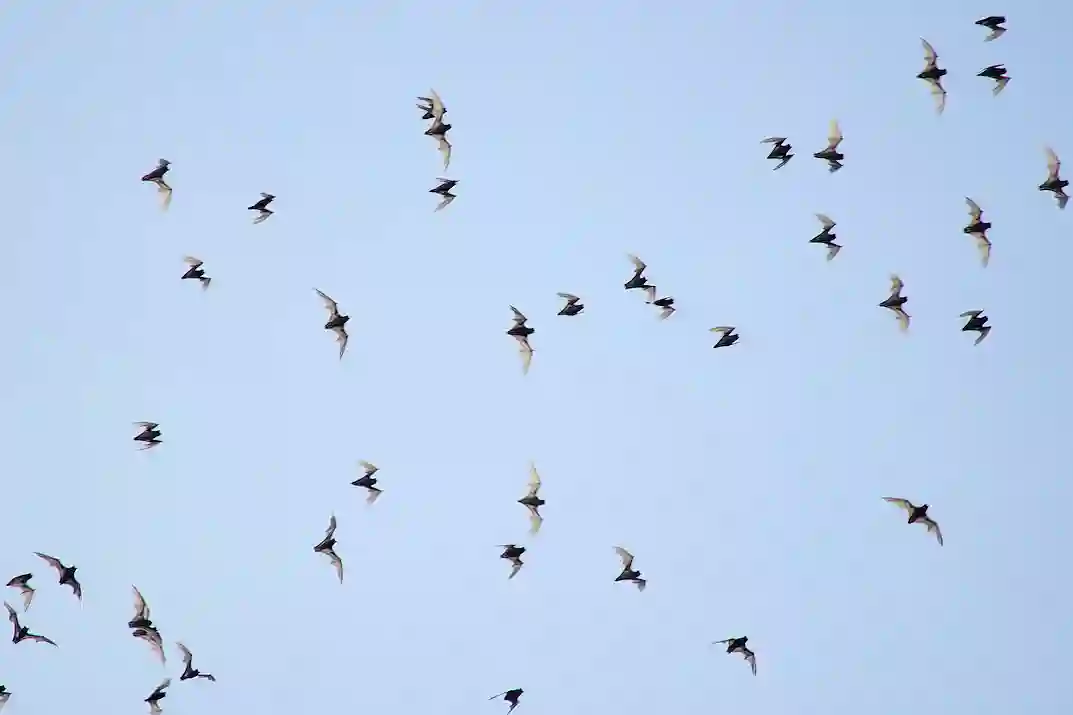
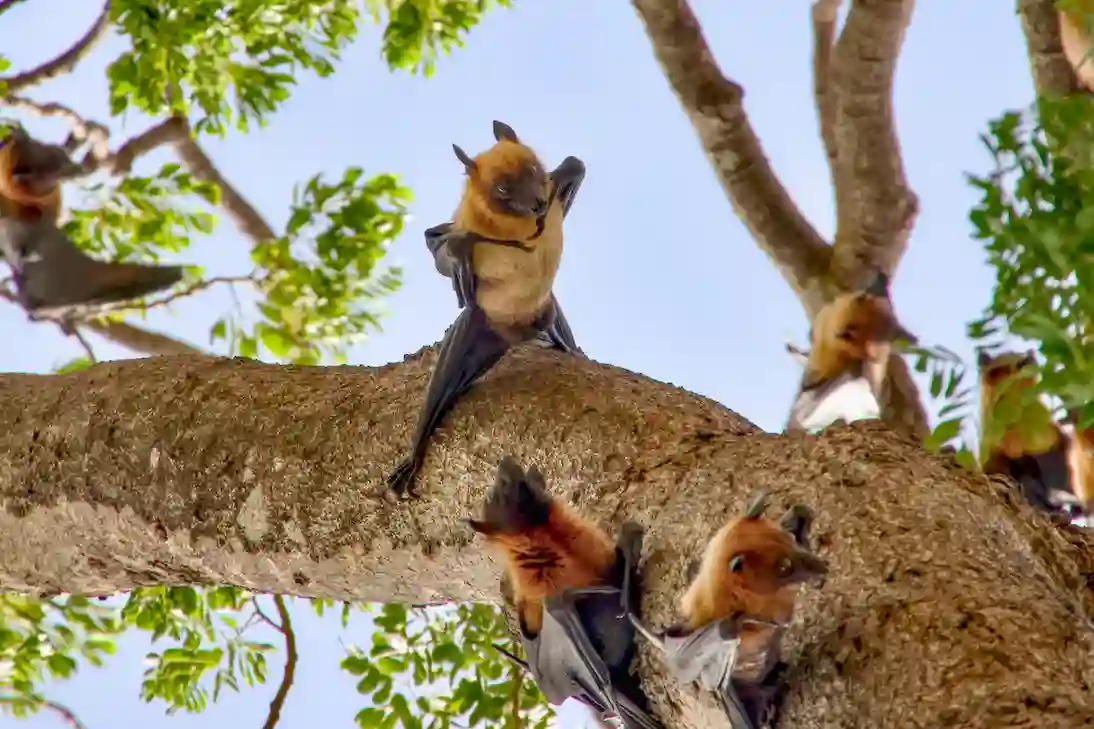
These bats are insectivorous and can consume as much as their own body weight every night. It has been calculated that by eating insect pests that would otherwise destroy rice plants, bats save two thousand tonnes of rice every year. Good job!
Another excursion is by primitive wagons on a rickety railway through fields and scrub. Called the “Bamboo train”, it was originally built by the French colonisers to carry rice and other rural supplies. After liberation from the Khmer Rouge, it became a way for local people to solve communication problems.
Now it’s just a tourist attraction, but an interesting one, demonstrating a simple method of meeting transport needs. Each cart consists of just three parts: a petrol engine, a plate of bamboo slats in a steel frame and two pairs of wheels. If you meet someone going the opposite way, this is how you deal with it:
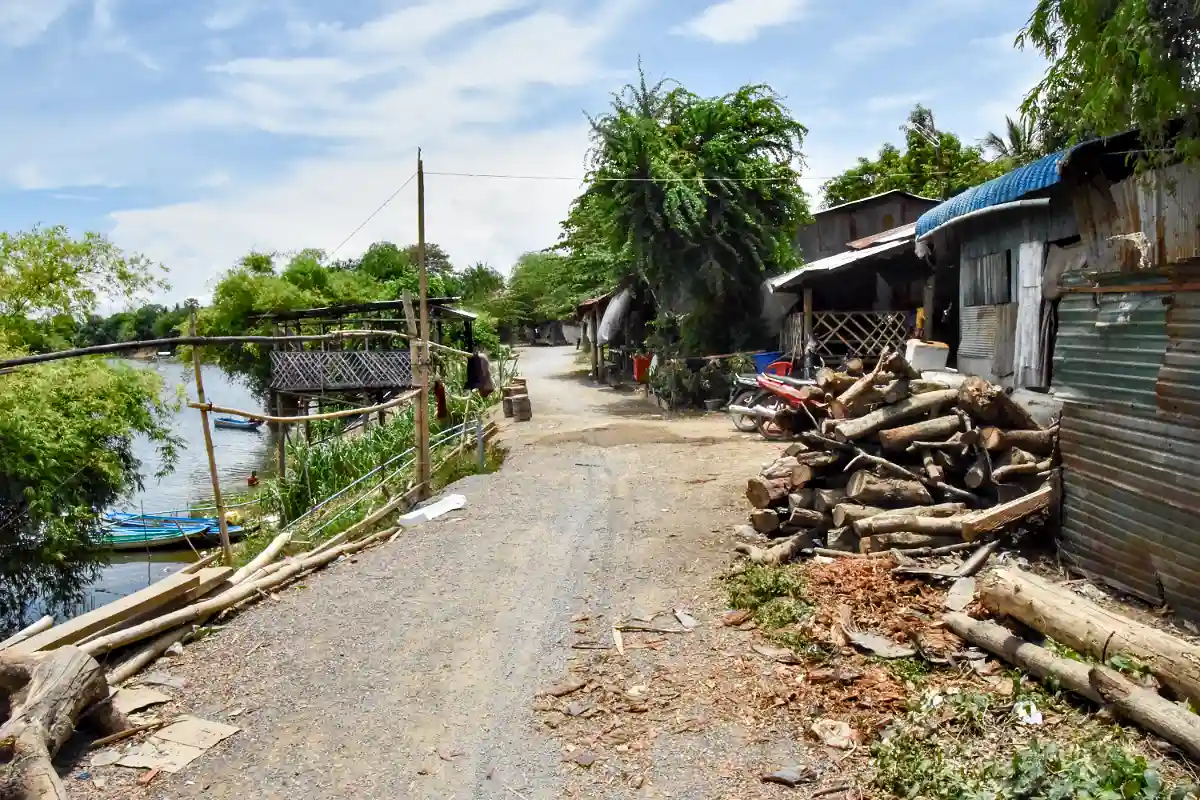
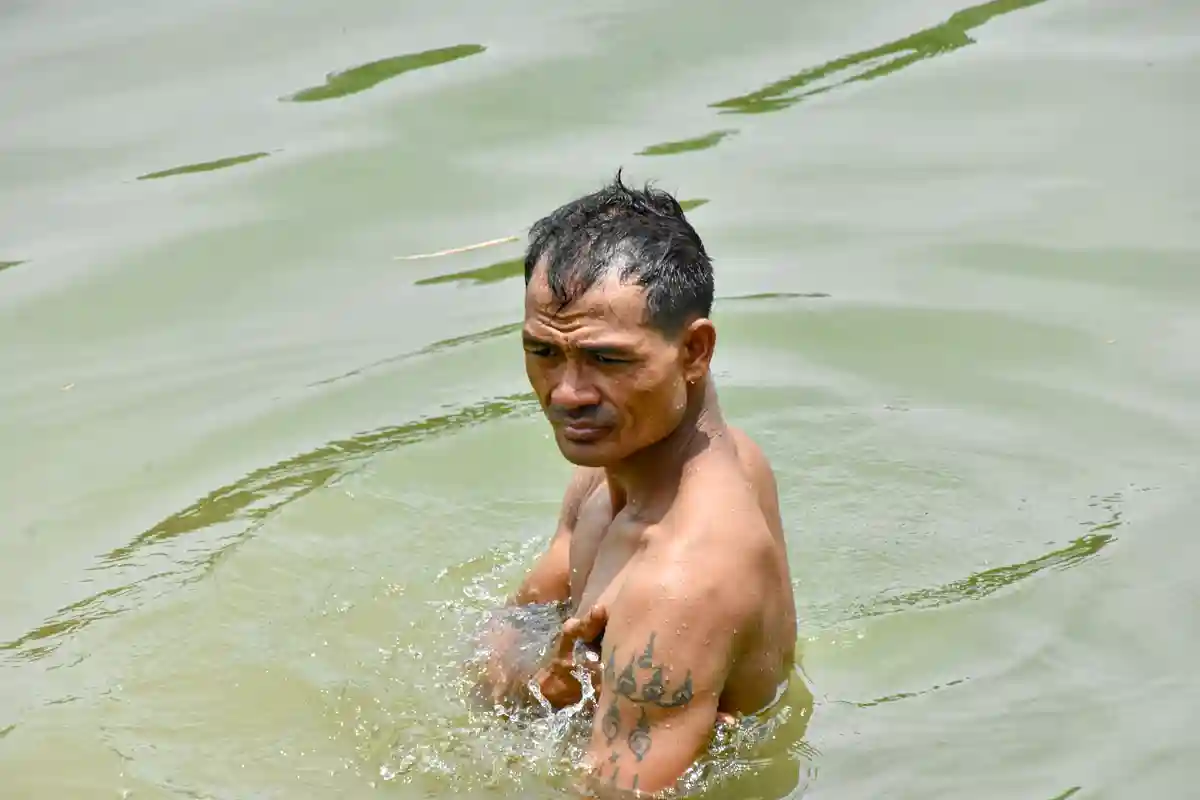
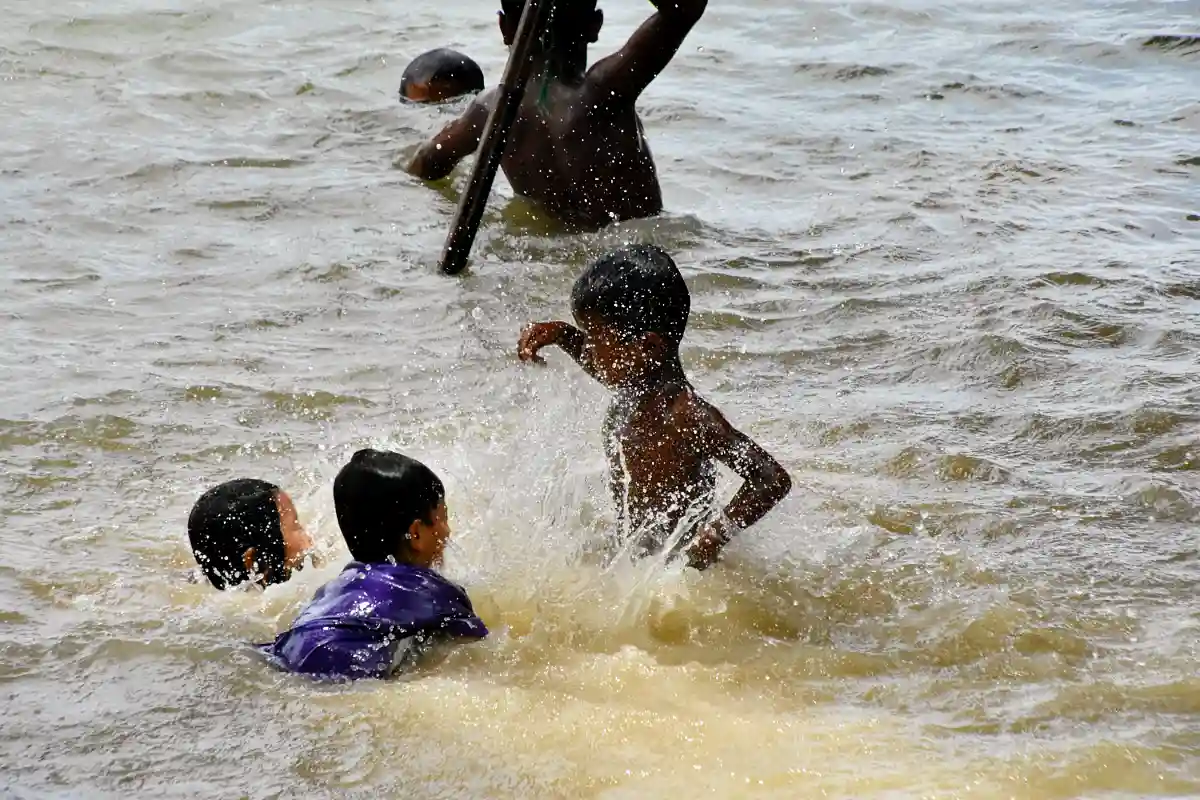
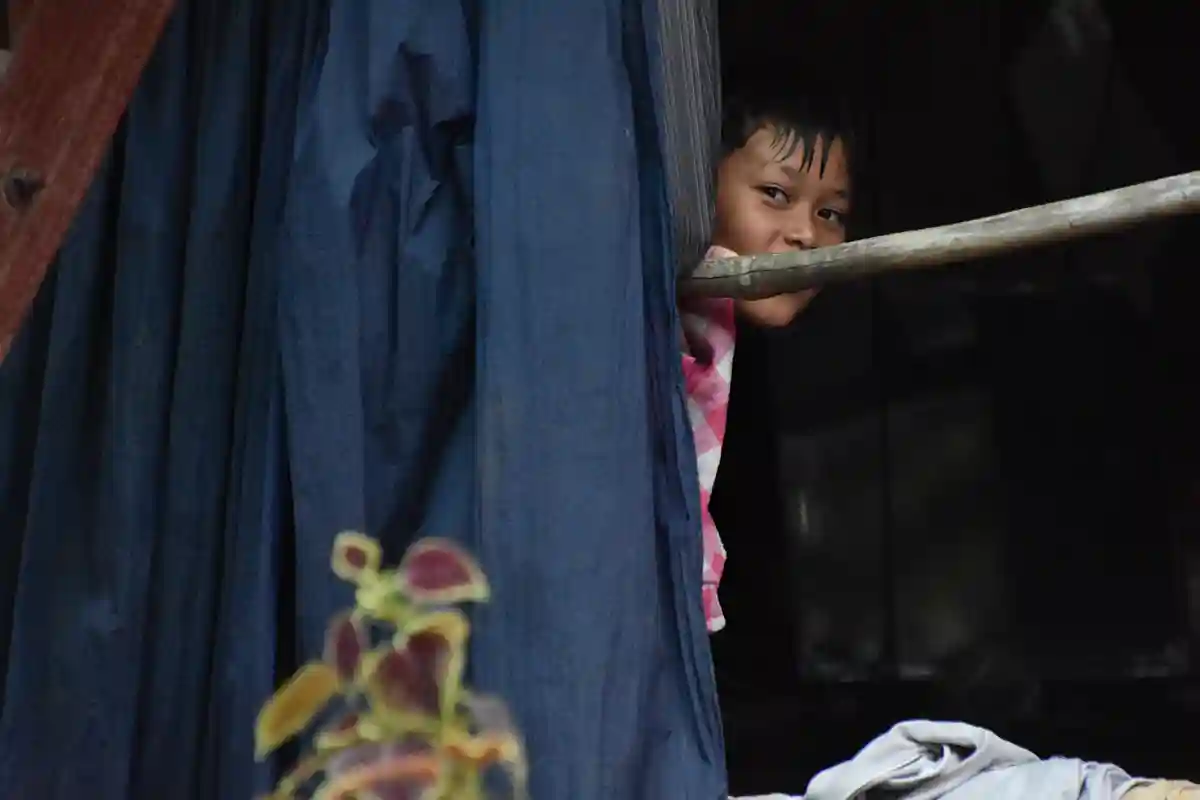
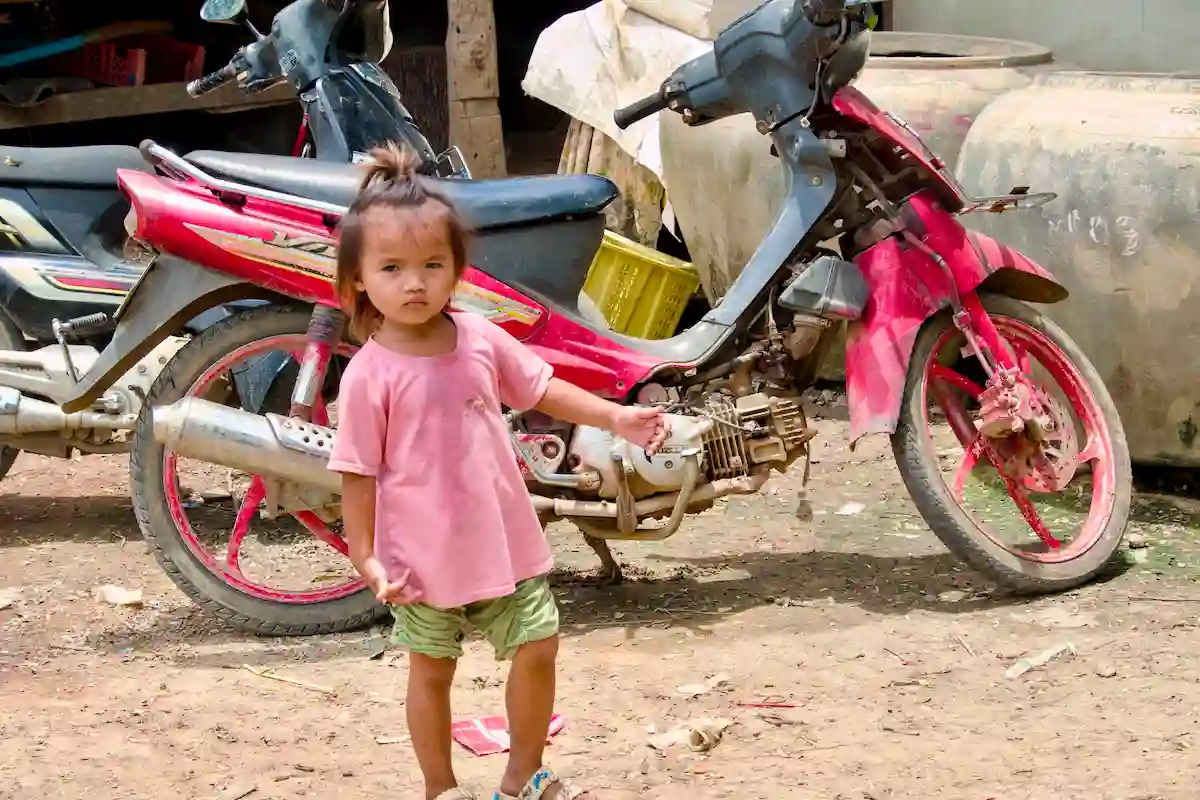
We also visit a small village where people traditionally live by fishing in the murky Sangker River that runs through the village. Here the inhabitants are Muslims, most likely Cham people, who often live on fishing by the rivers. The Cham suffered greatly under Pol Pot, who abolished all religions. But we are told that today there are no religious conflicts in this country, which is devoutly Buddhist. And that is very positive. In any case, the villagers here are very friendly.
Just a few kilometers from the village we see flying foxes, like the ones we first saw in Sri Lanka. They hang in droves in tall trees, but sleep restlessly and often flap away to another tree. In the heat they are constantly fanning themselves with one “wing”. They eat fruit and are in no way dangerous to humans or animals. And they do have very fox-like heads, don’t they?
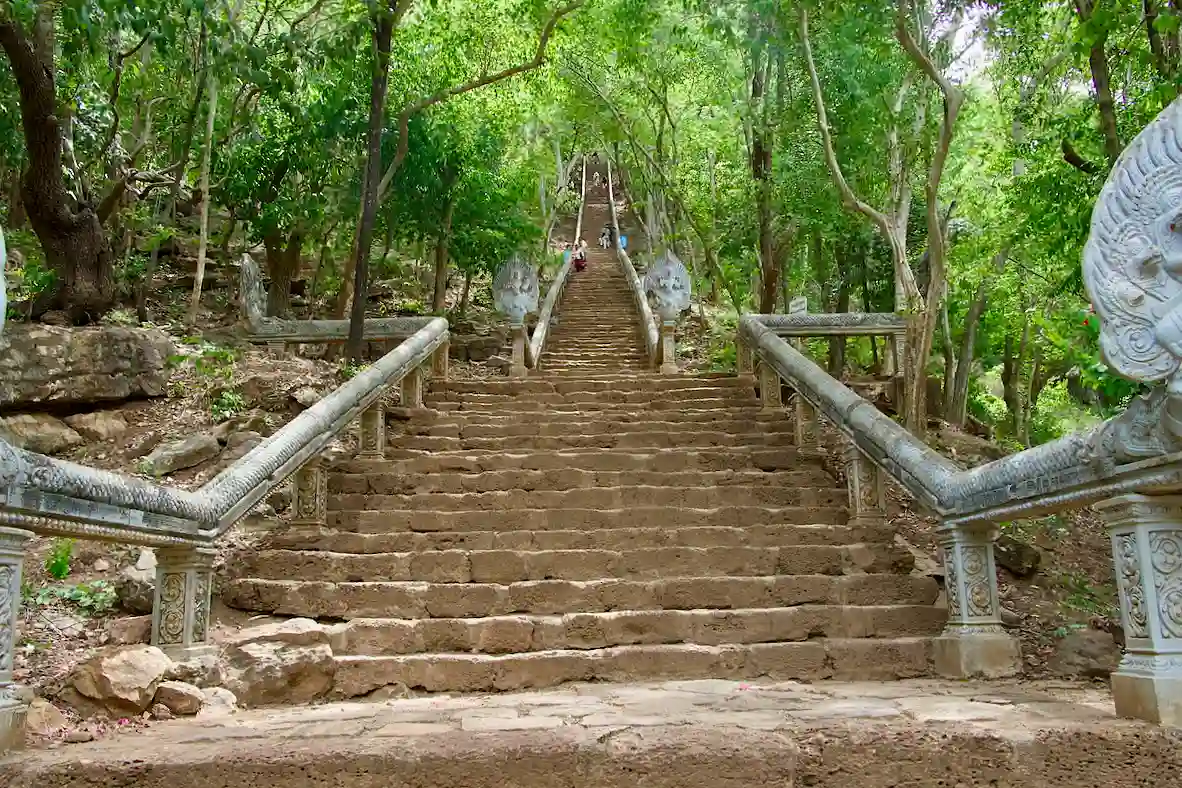
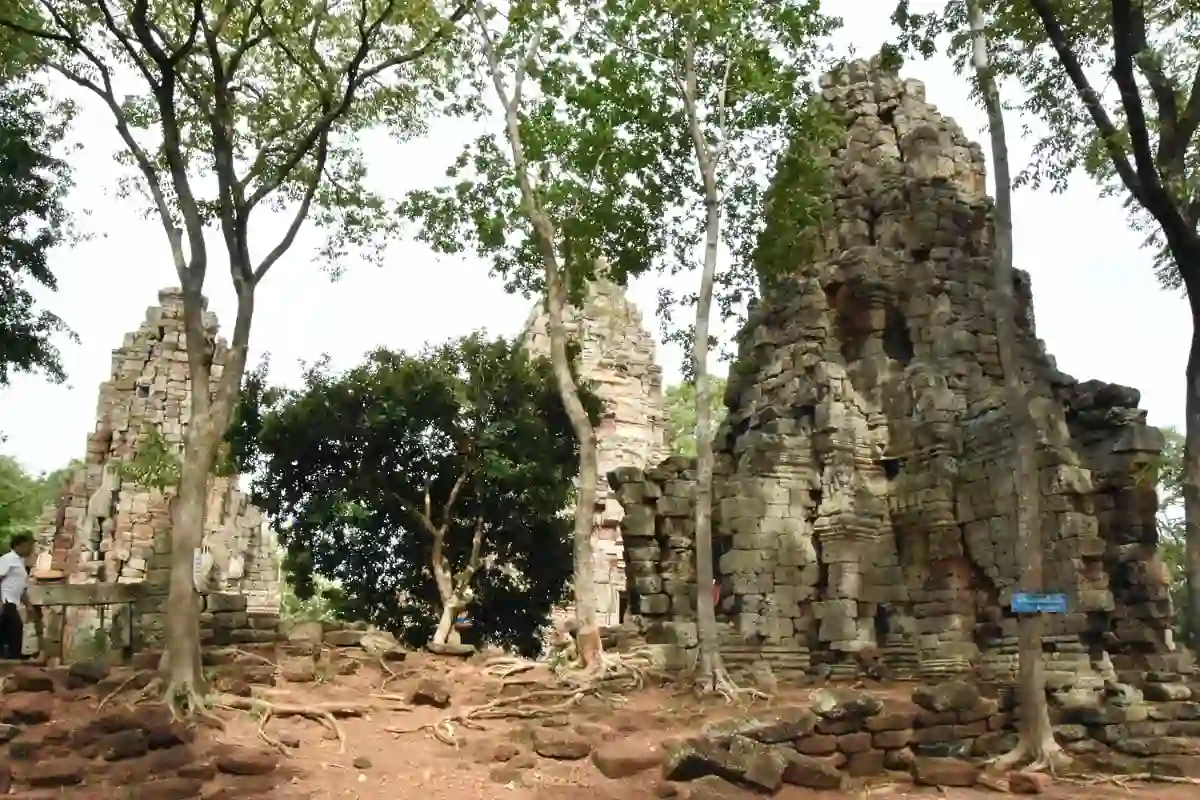
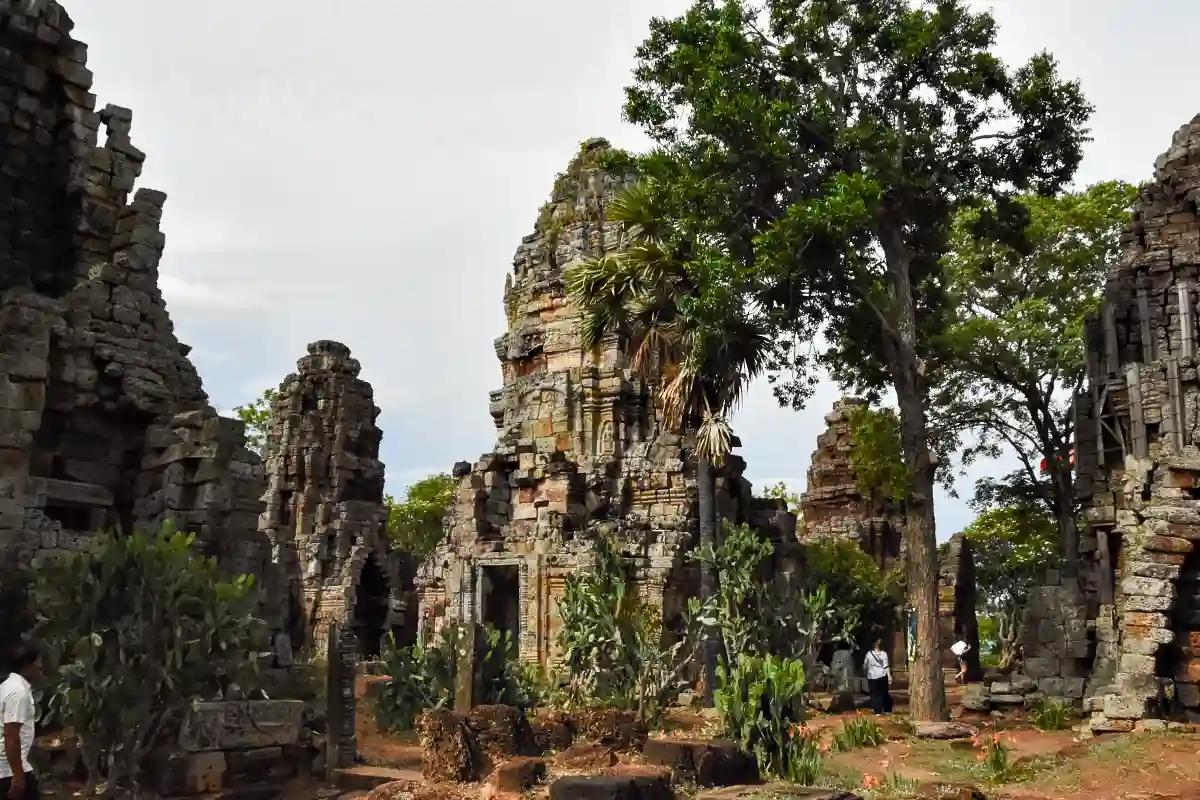
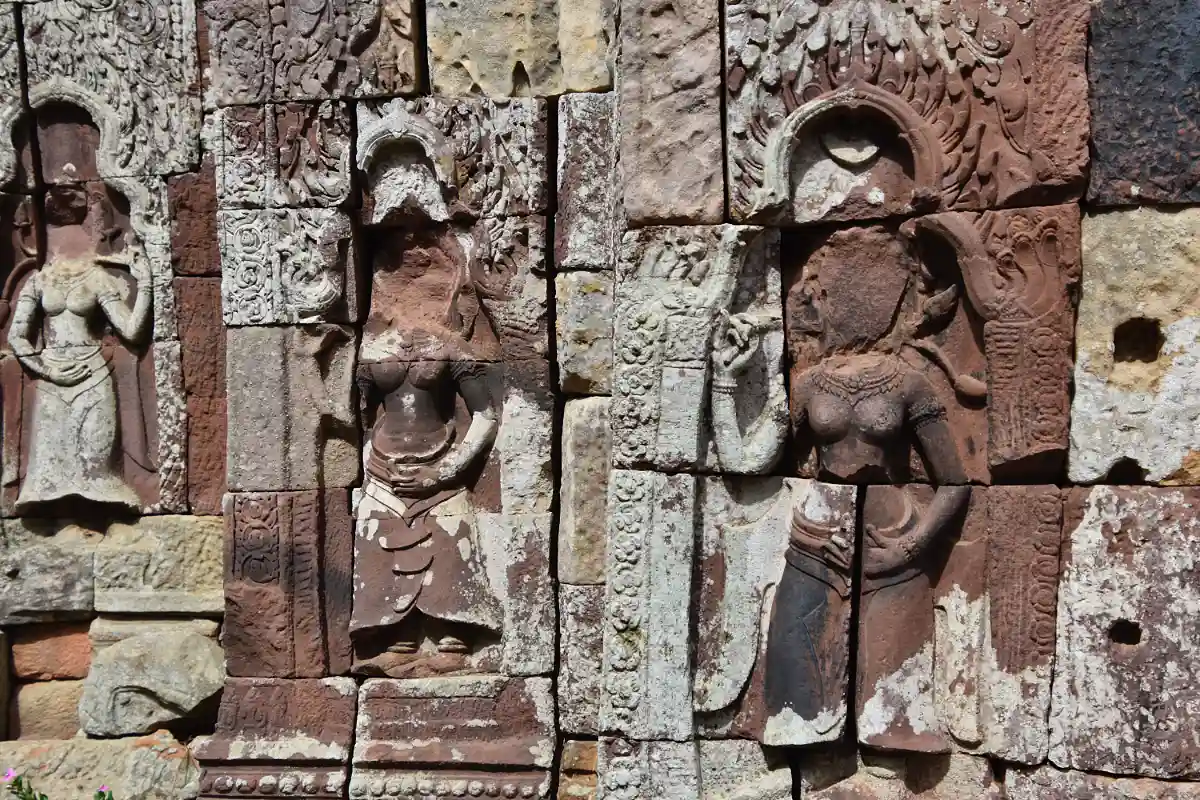
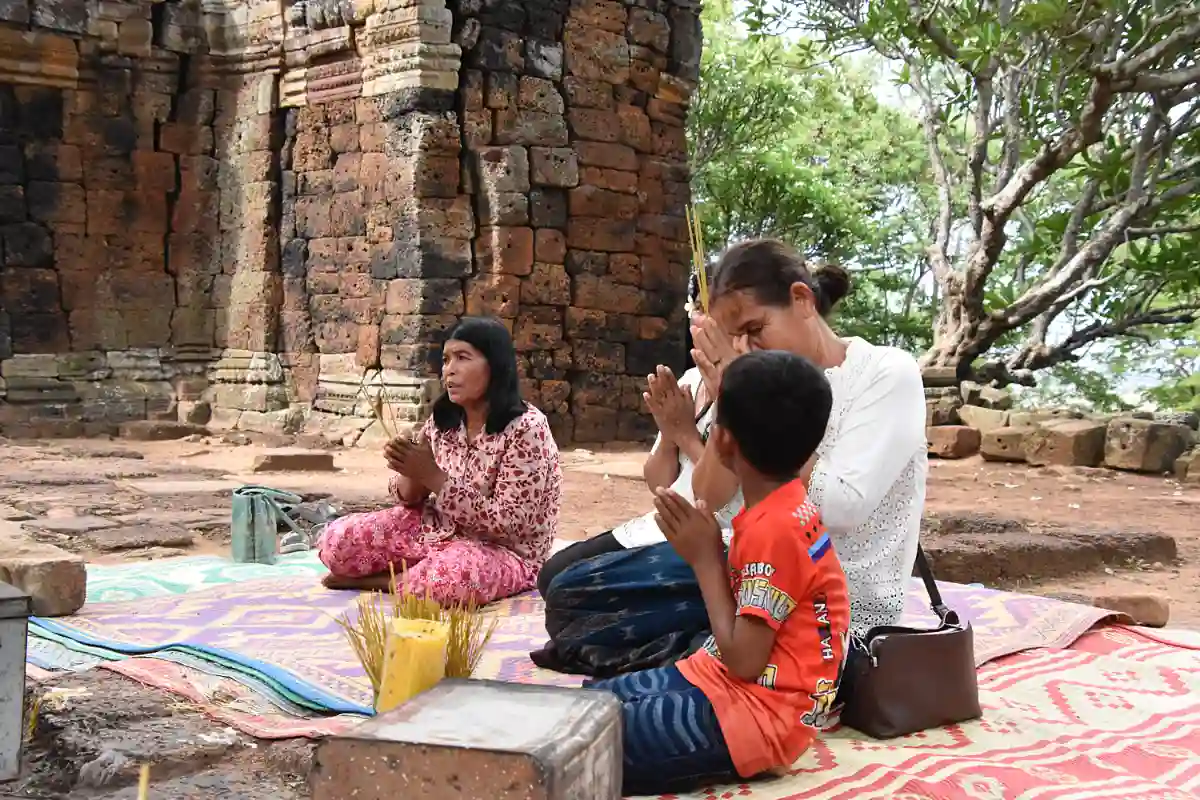
An old and rather battered original Hindu temple can be found high up on a mountain south of Battambang. 350 steps, some very steep, lead up to Banan Vat, built in the 11th century as a shrine to the god Shiva. Several of the reliefs depicting deities have had their faces cut off, probably by Buddhists who later made the temple their own. Many people climb the long and steep path to pray for protection, happiness and wealth.
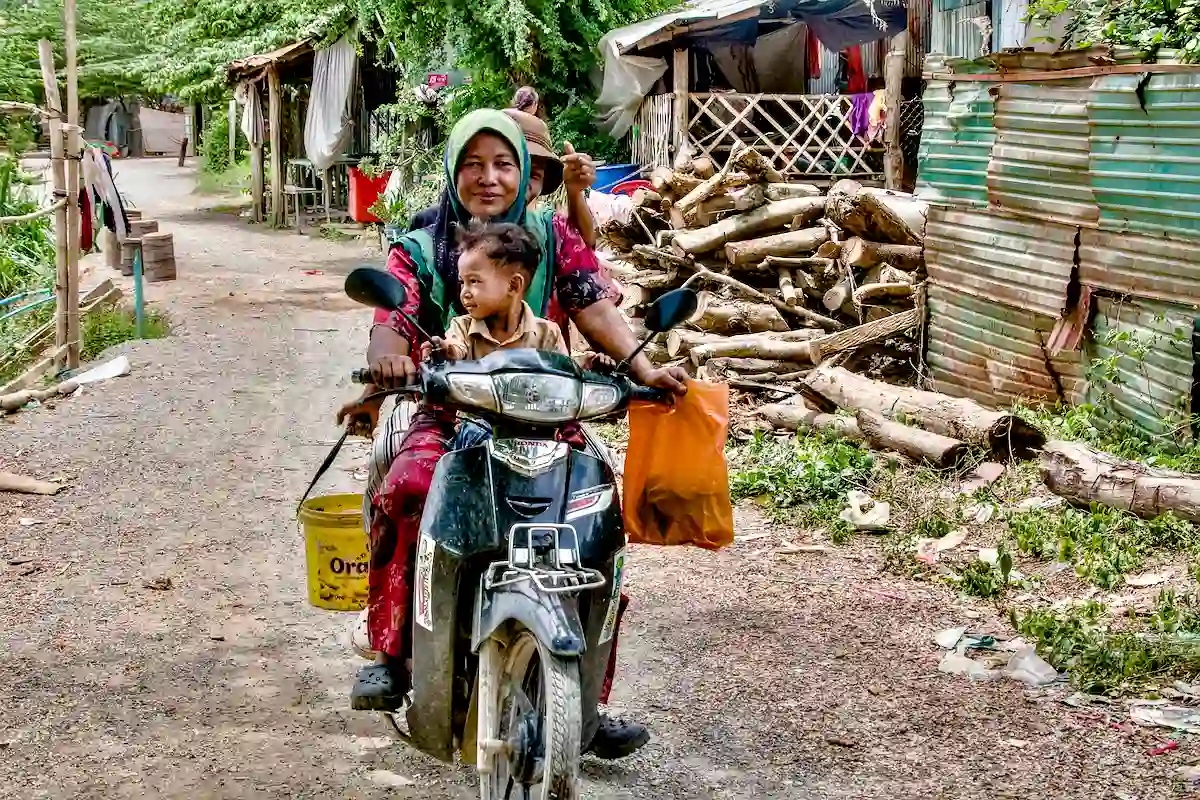
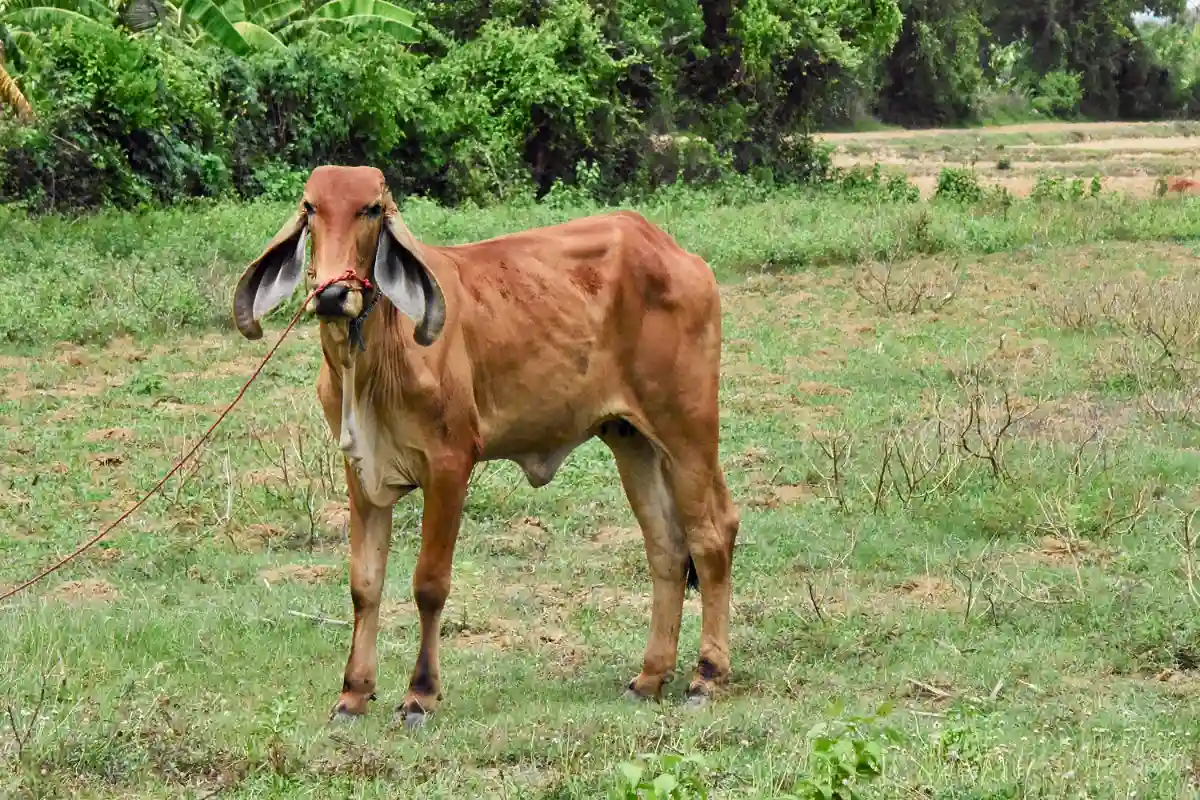
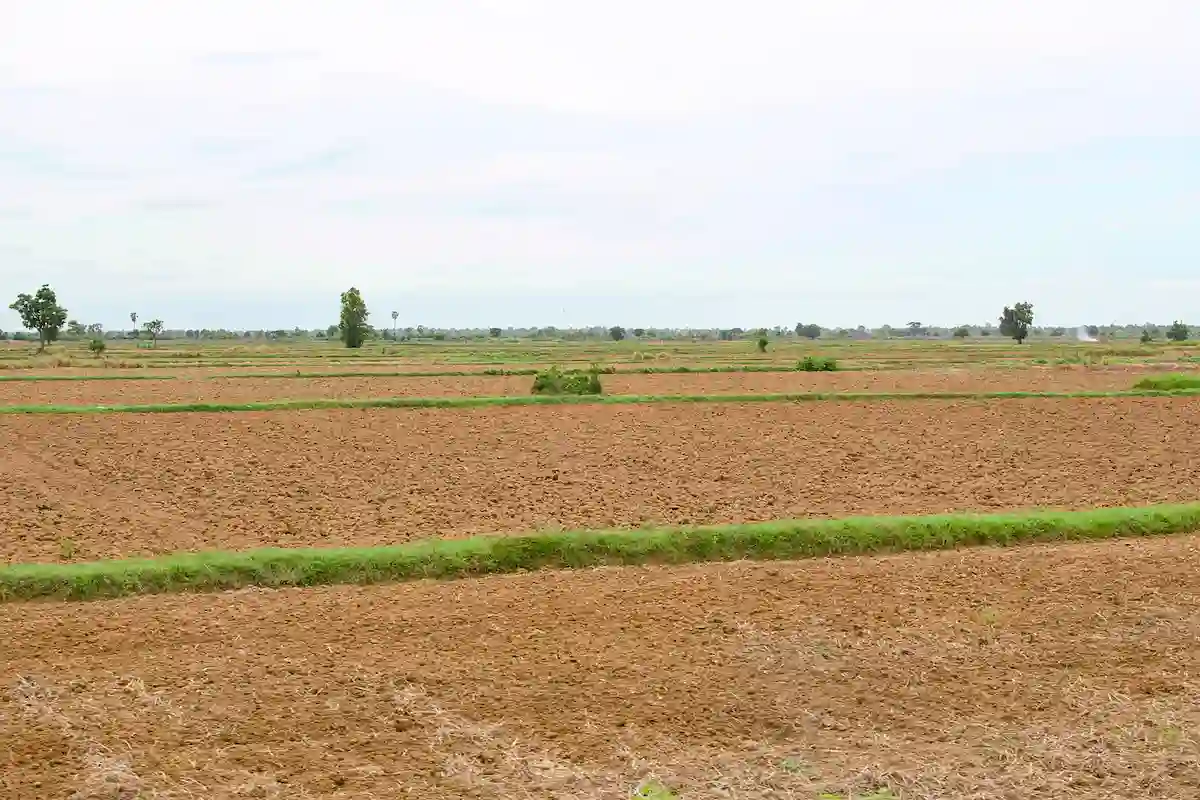
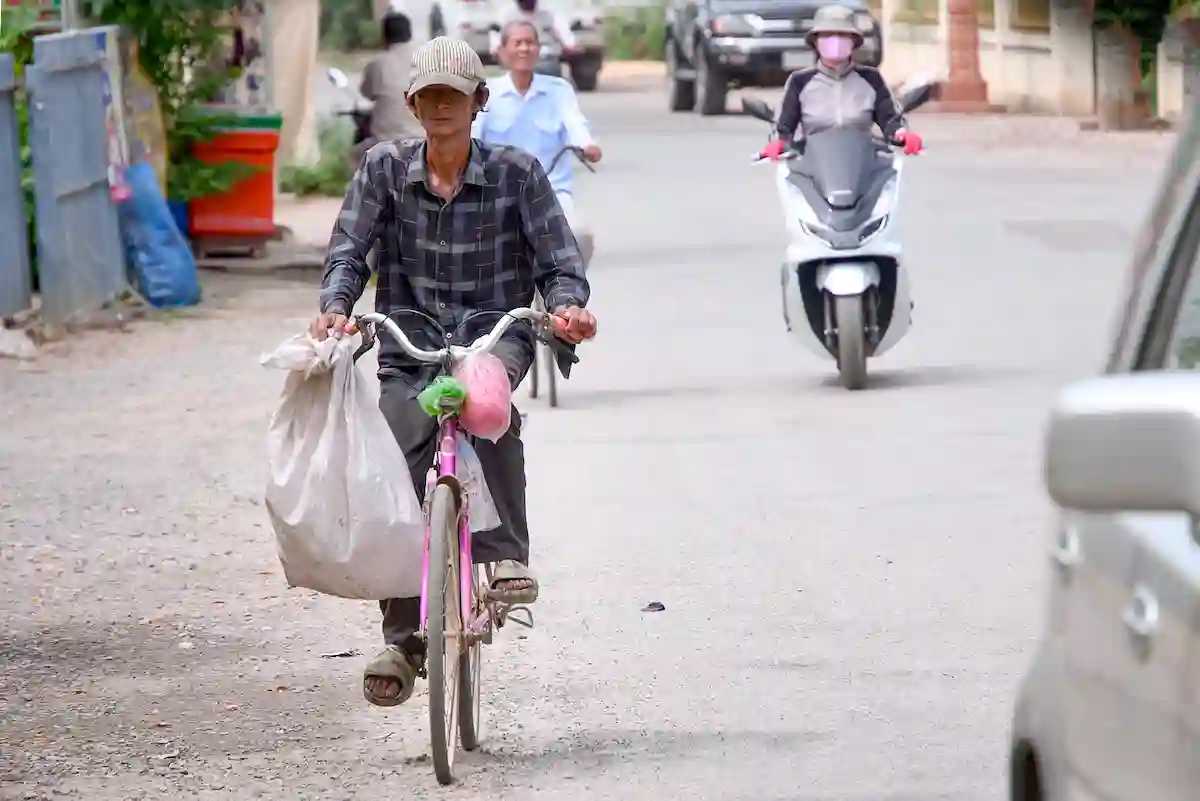
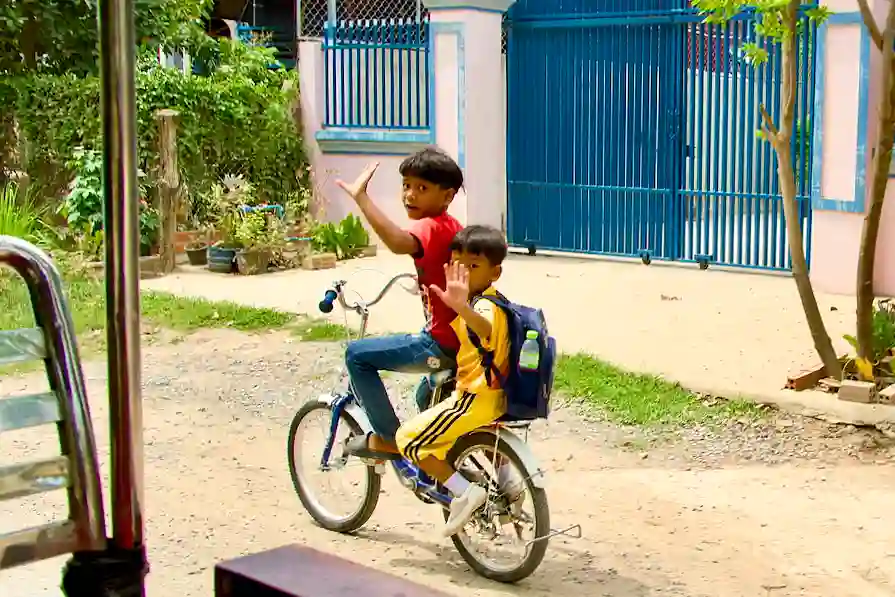
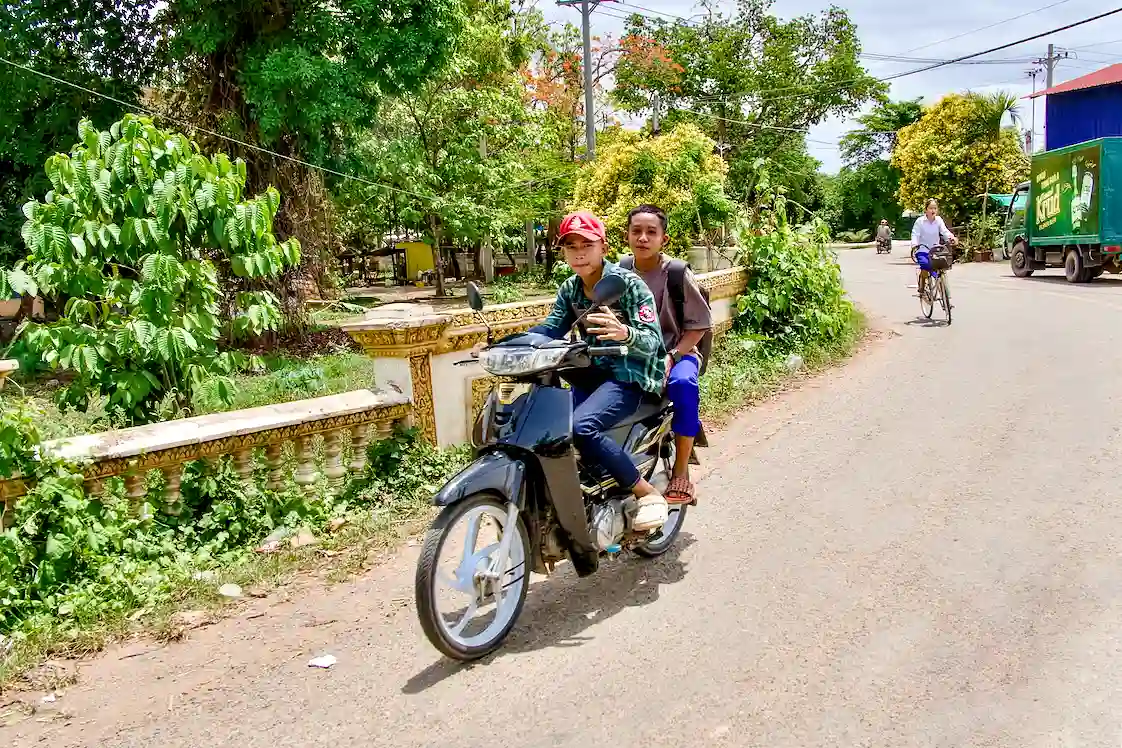
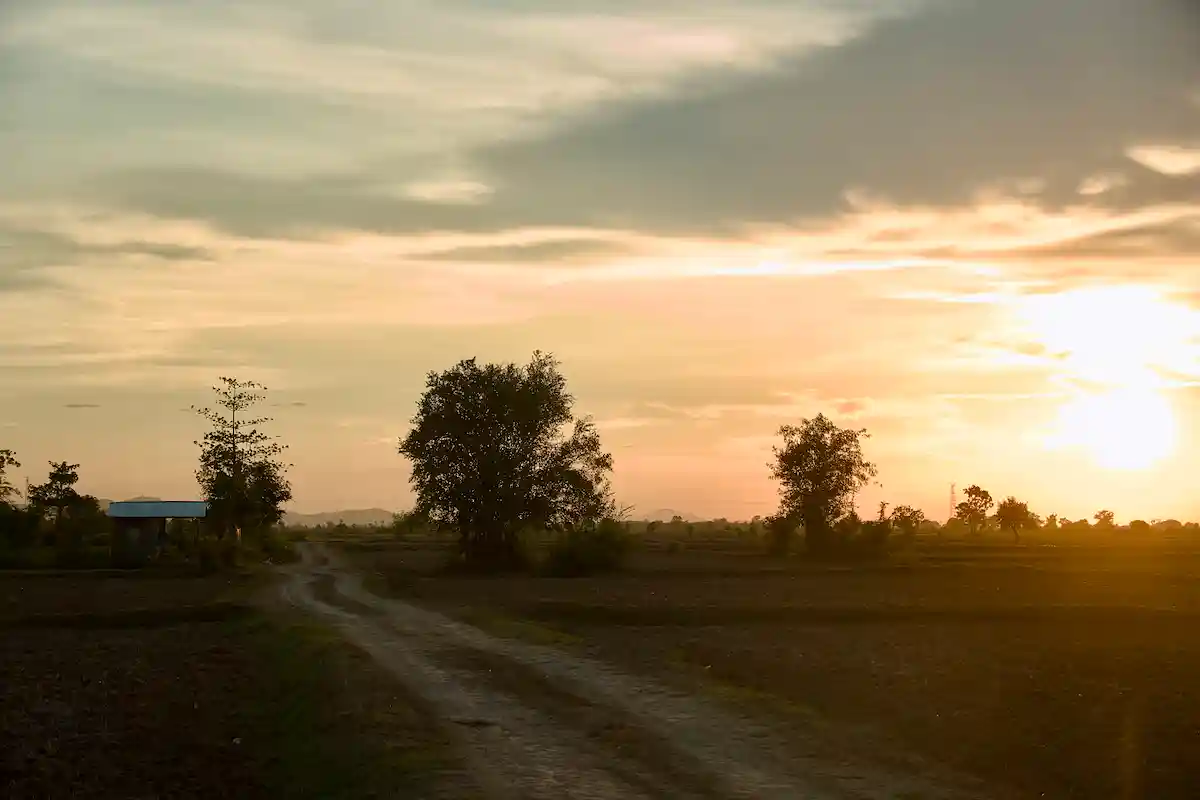
We travel around the countryside until late afternoon when the sun sets over the endless rice paddies, which are dry this time of year. Here and there, slender Indian cows with long hanging ears glare at us. Everywhere people are on the move, on bicycles, mopeds and motorbikes. Many wave happily as we pass.
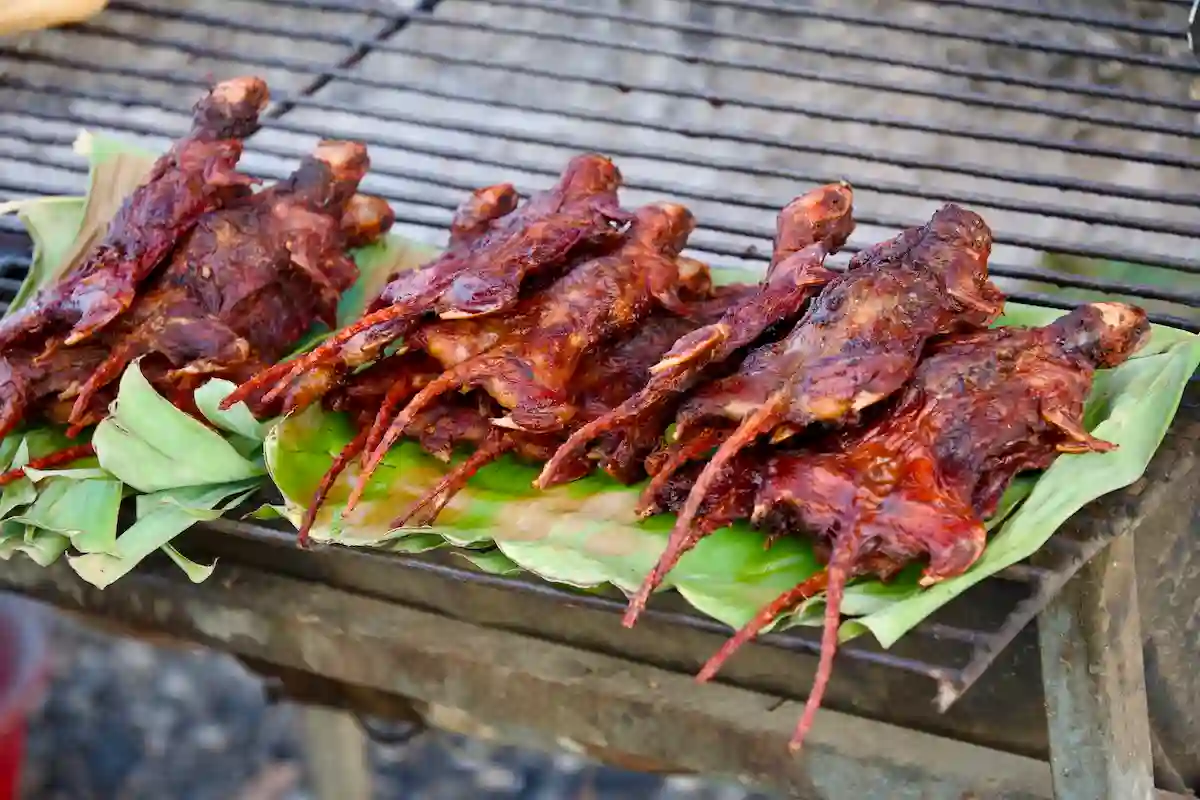
Speaking of rice fields and rice farming – on our way home from our excursions, our guide stops next to a roadside barbecue stand. He points to a pile of grilled animal carcasses and says: “These are grilled rats, they live in the rice fields. Would you like one to eat?”
Now we continue northeast and the absolute highlight of the trip. The temple city in the jungle that was almost forgotten, but is now Cambodia’s and perhaps all of Southeast Asia’s most magnificent memorial.