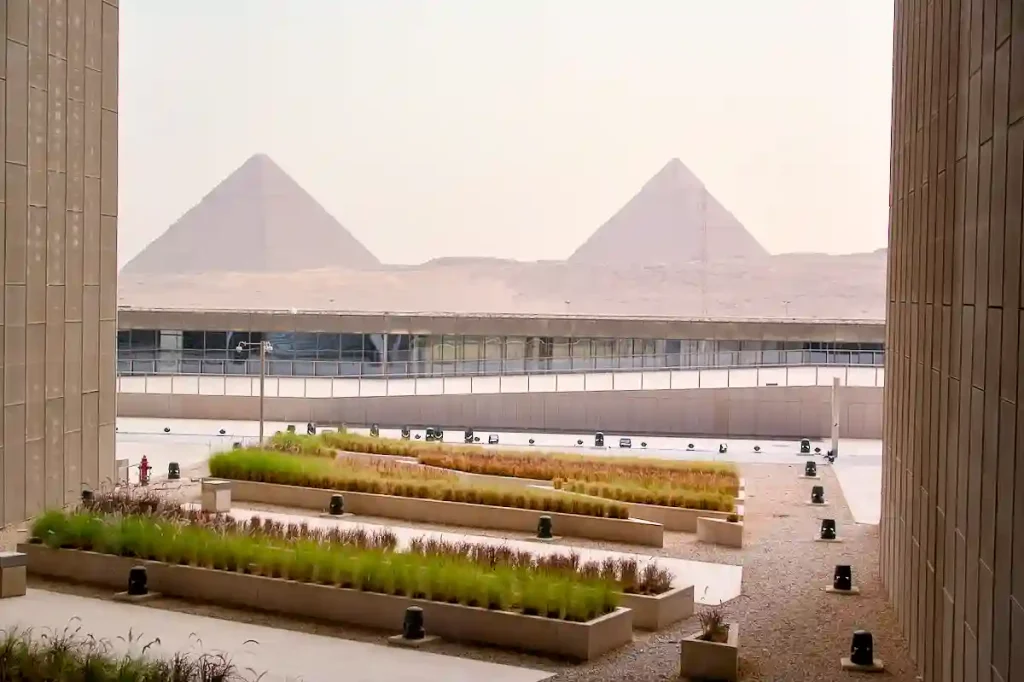
From windows in the GEM museum, you have a nice view of the great pyramids, which appear to be just a stone’s throw away. But in reality, they are a couple of kilometres away; you are deceived by the pyramids’ immense size.
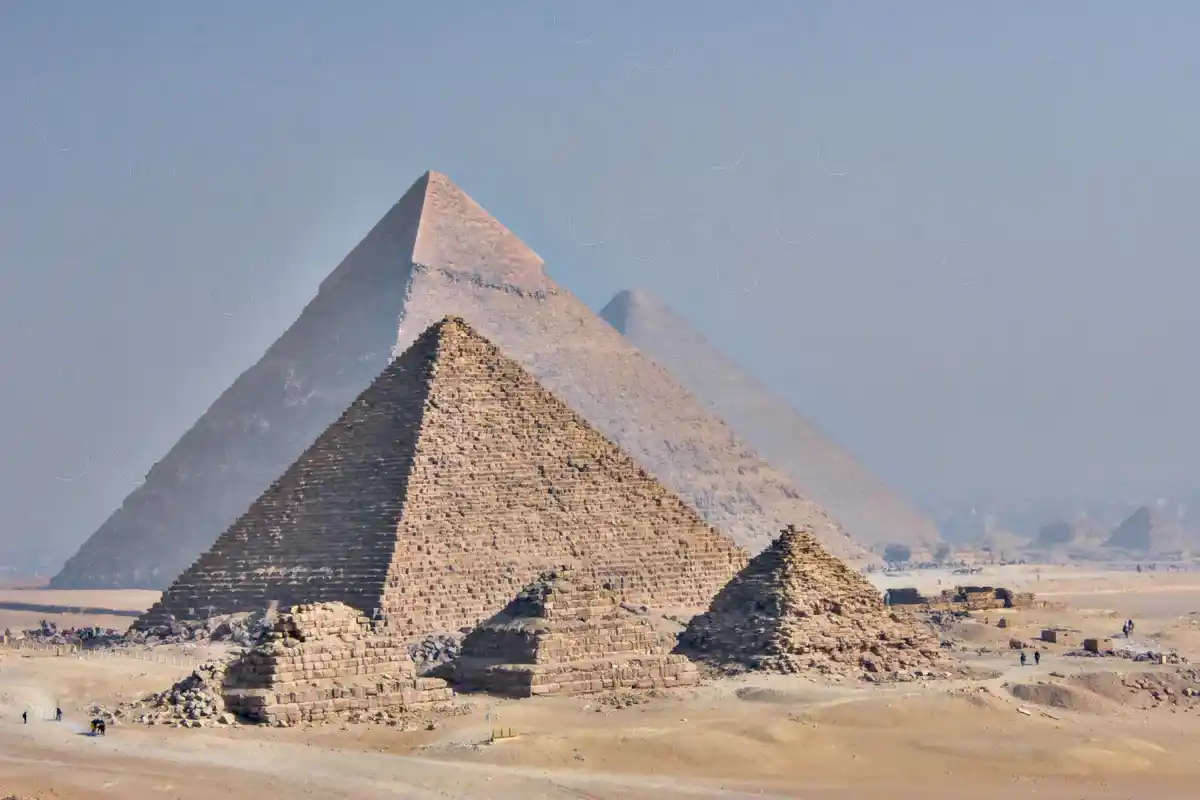
After passing the ticket office, you enter another world, now surrounded by desert in every direction. And then there are the three silent giants: Menkaure’s pyramid is the smallest, the larger one (with the ‘cap’) is Khafre’s pyramid (‘Chefren’ in Greek) and the largest is Khufu’s pyramid. Father, son and grandson. It is most often referred to by its Greek name, ‘Cheops’. All were built during the 25th century BC.
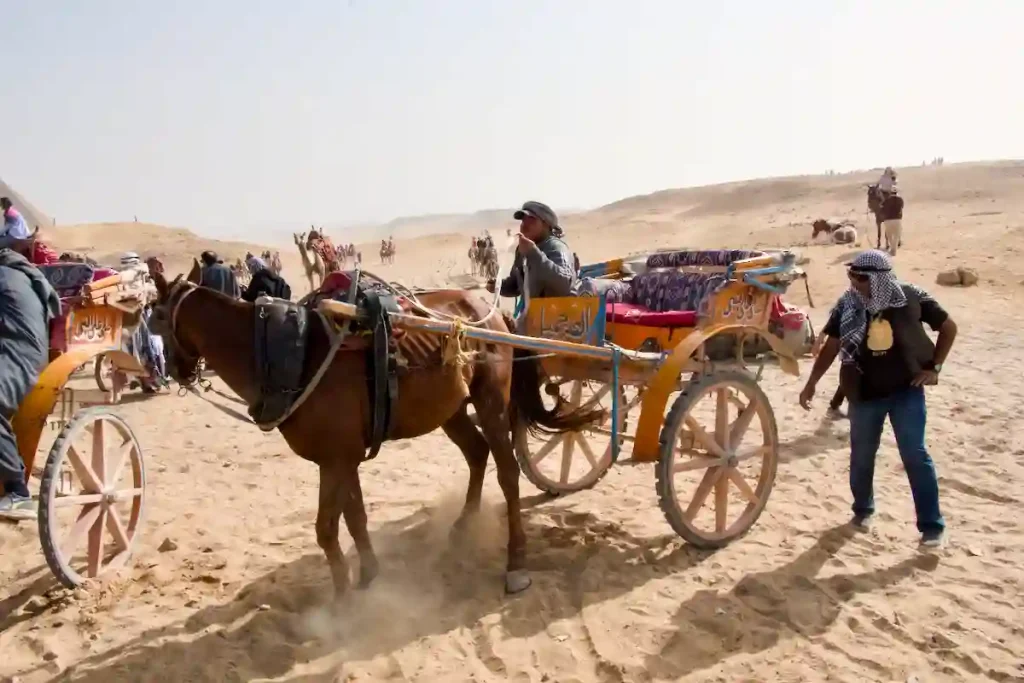
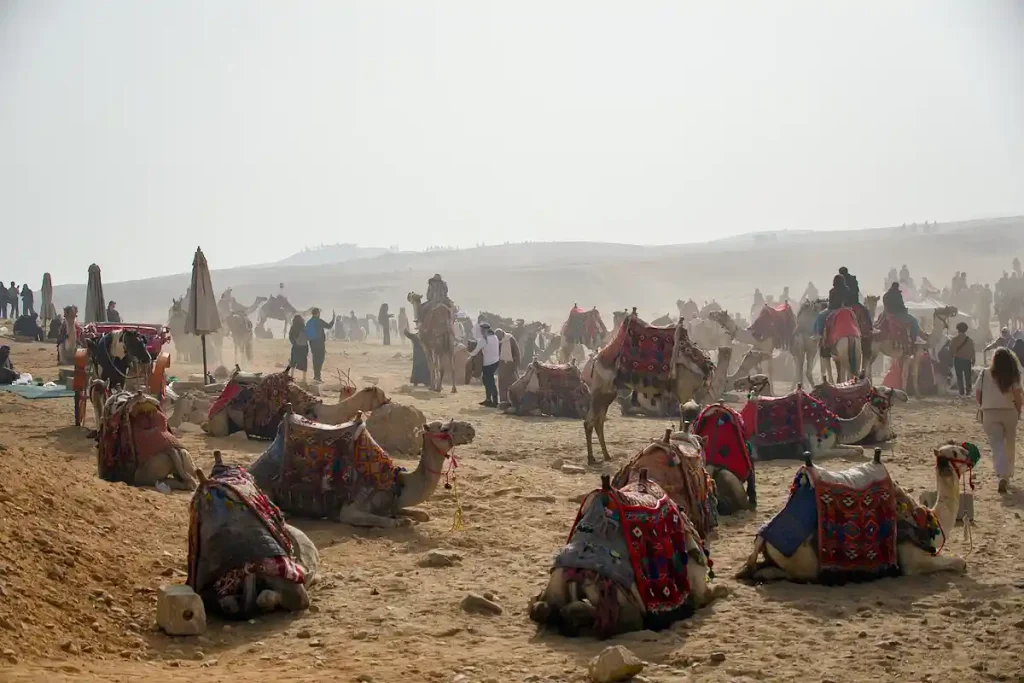
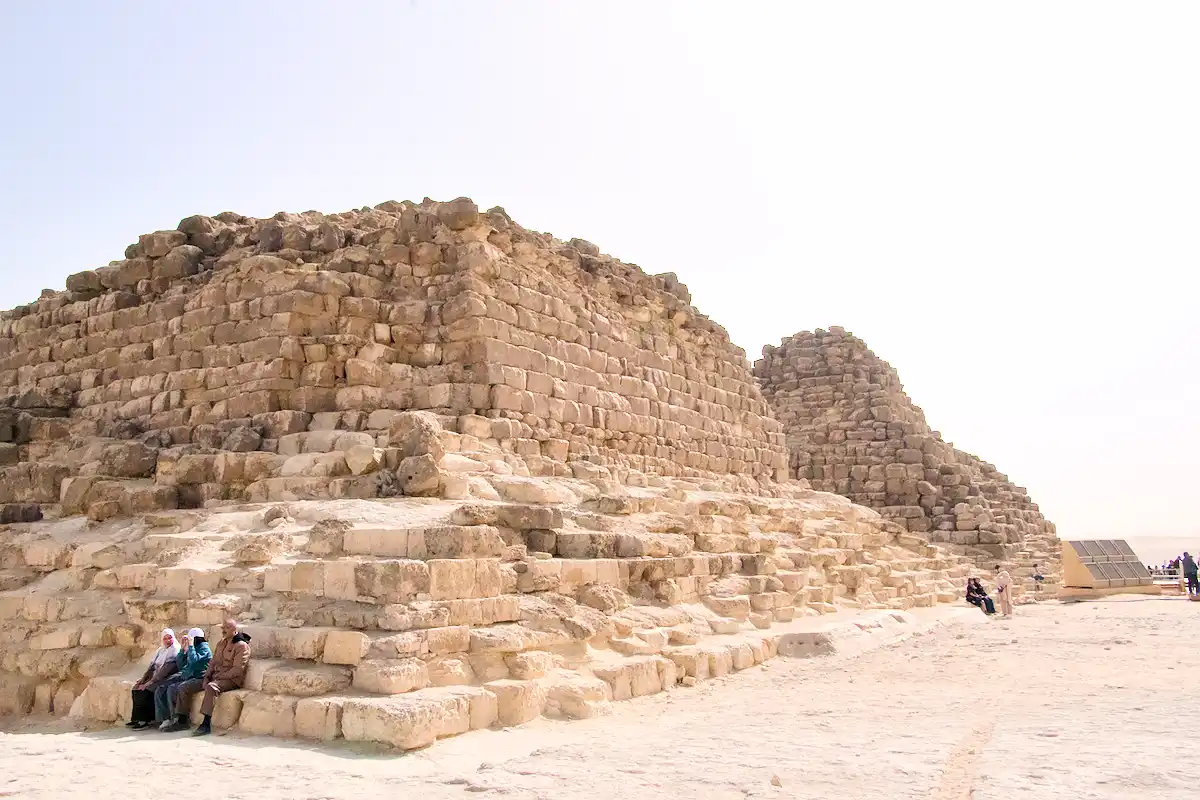
To make things easier, we join a group of visitors. First, we move on to a hill a short distance away so we can see and experience all three, and also see the small pyramids next to them where queens are buried. Unfortunately, it is too far to walk, so we have to choose between riding a camel or taking a horse and carriage. We have ridden camels before, so we take the carriage. Sadly, the poor horses are not at all comfortable pulling heavy loads in the heat and sand.
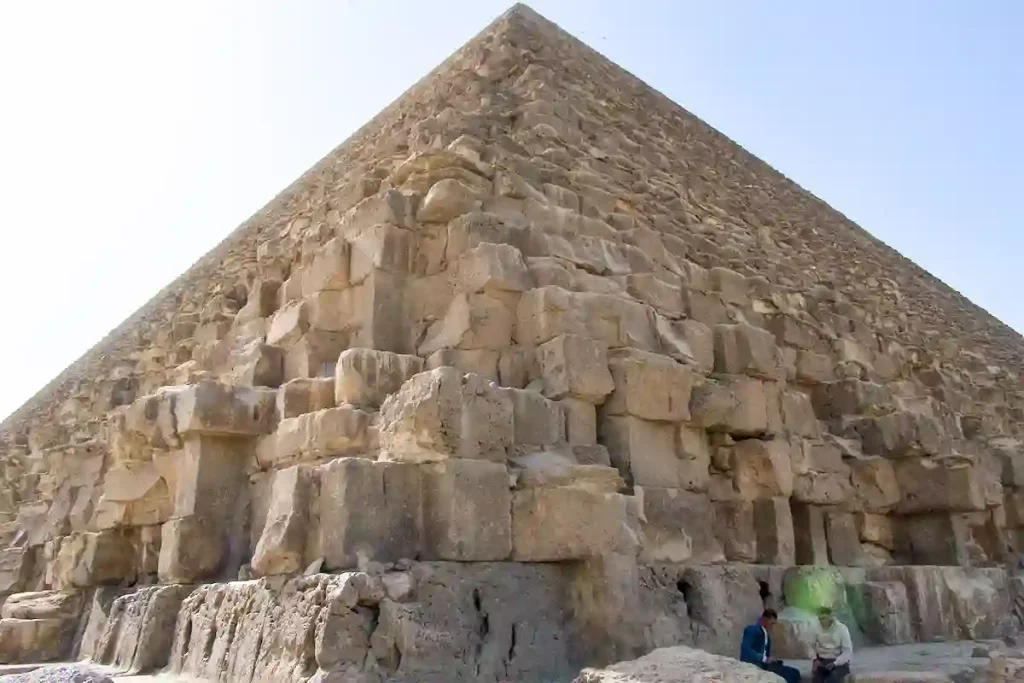
Then we get up close to Khufu’s pyramid, and seeing the size of the stone blocks that make up this 147-metre-high colossus is surreal. But this is not how it was supposed to look – originally, the sides were clad in light limestone that would make the pyramid shine in the sunlight. It must have been an almost supernatural experience to behold. But the limestone was the first thing that looters removed from the pyramids. Eventually, the looters also found the entrance and stole as much as possible of the grave goods, sometimes they even stole the mummies.
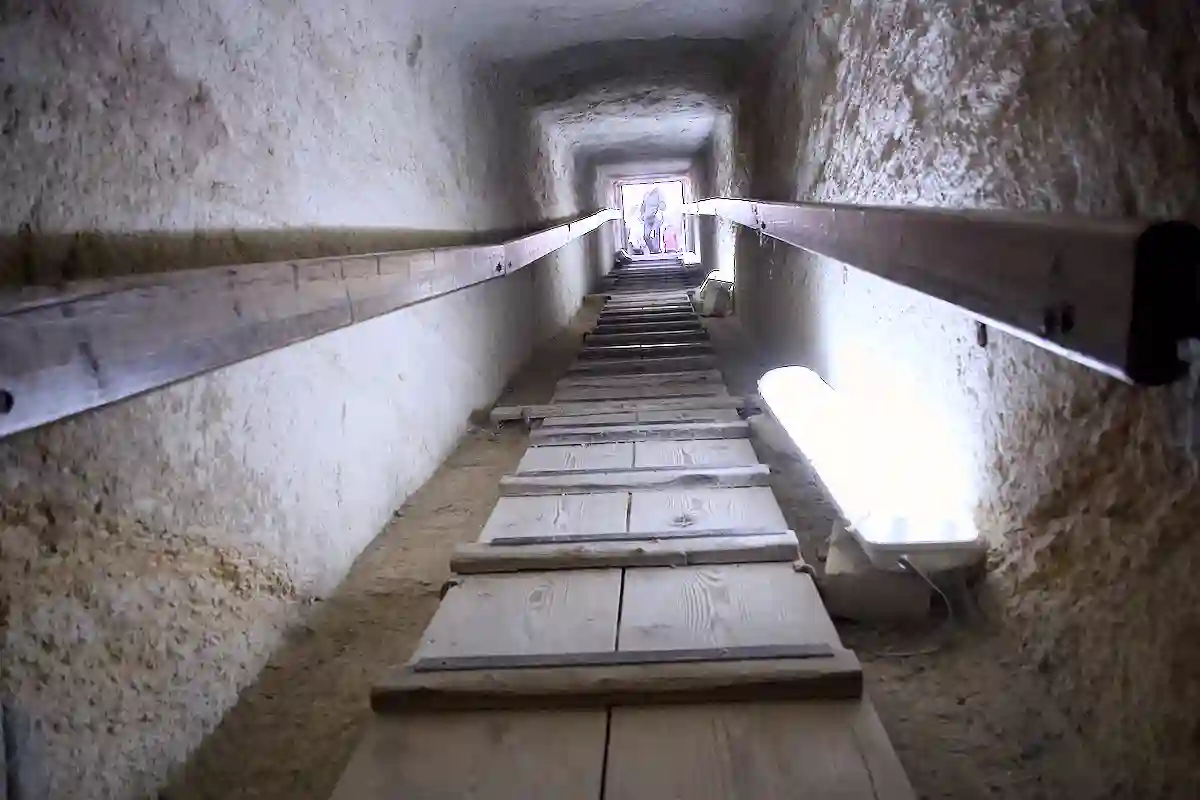
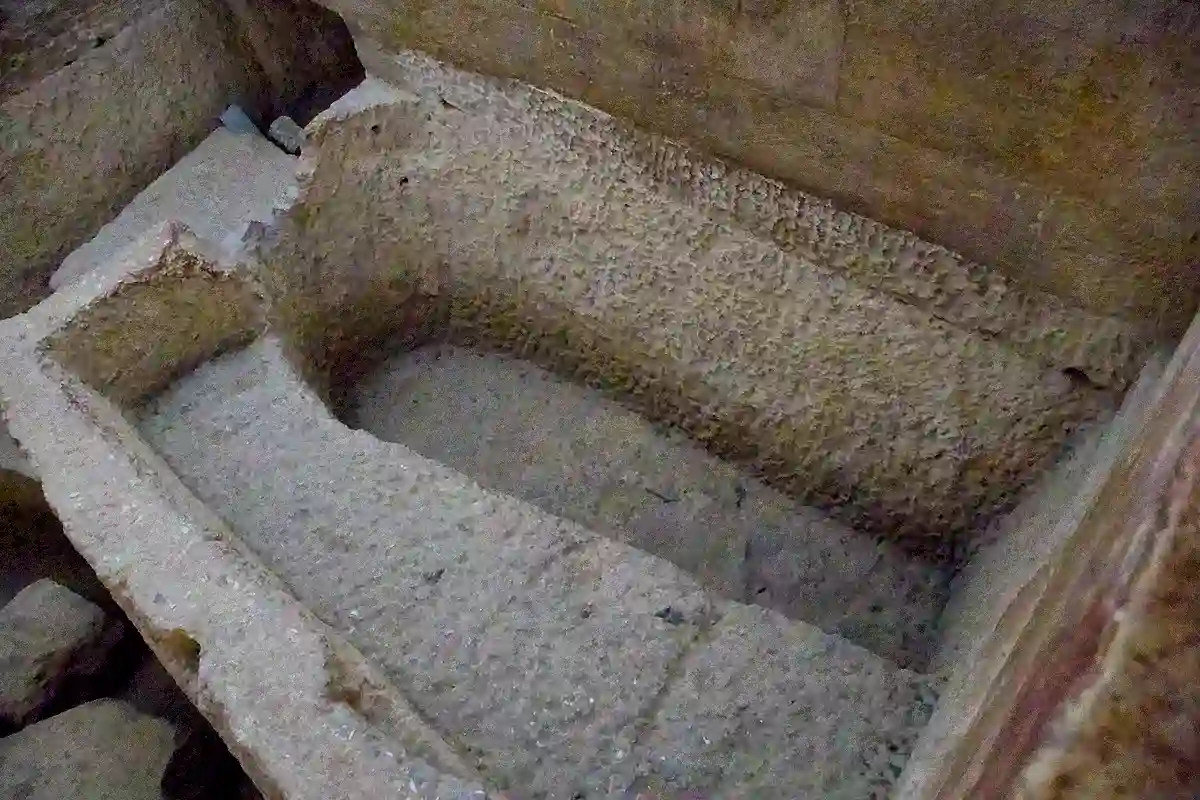
You can go inside the Kufu pyramid. Not through the actual entrance, which is now blocked, but through a new entrance further down. However, this requires an additional ticket, which we think is a little too expensive. Instead, I take a free option and climb down into one of the small queen pyramids on the side. First through a fairly steep sloping passage that is best walked down backwards. Then you come into an antechamber that is perhaps two by three metres in size. From there, a small staircase leads down to the actual burial chamber with two carved cavities for coffins. They have once been covered with heavy stone lids that now lie in pieces on the floor.
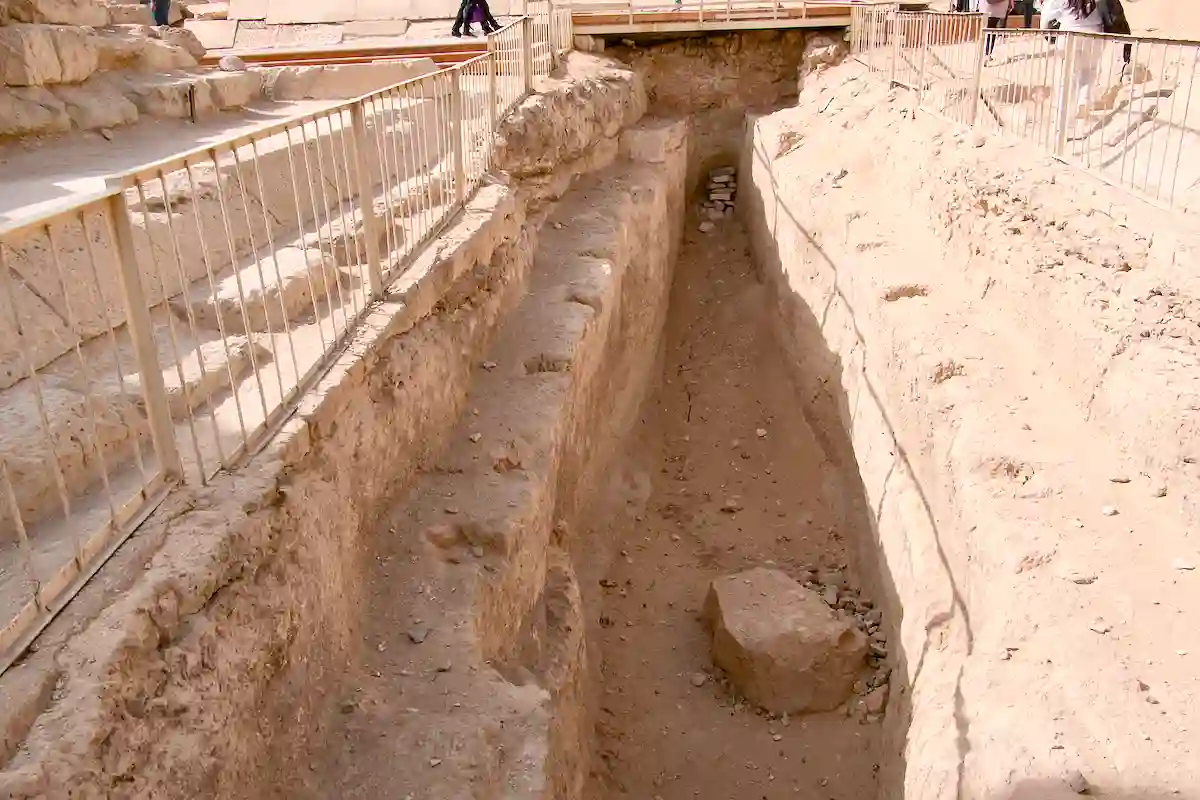
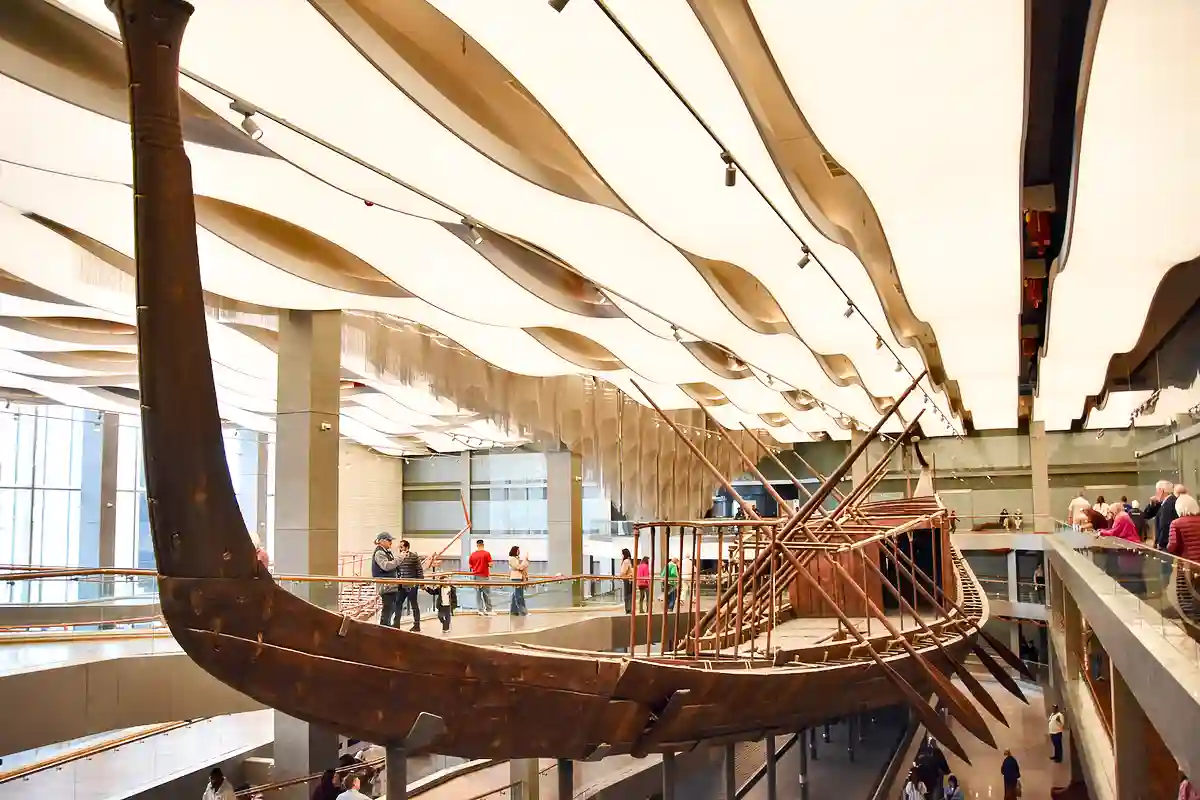
Between the Queen’s Pyramid and the Great Pyramid, there are several shafts, approximately five metres deep. This is where the big boats that are now on display at GEM were found, dismanteled.
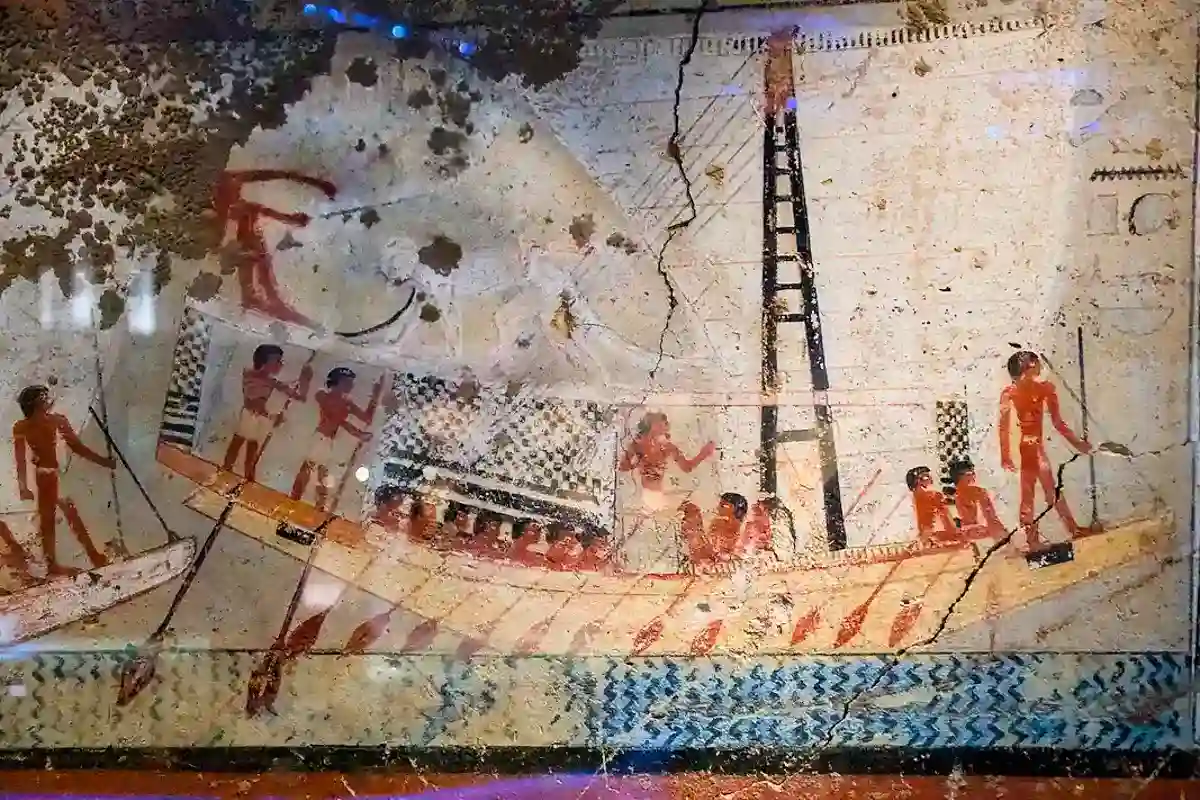
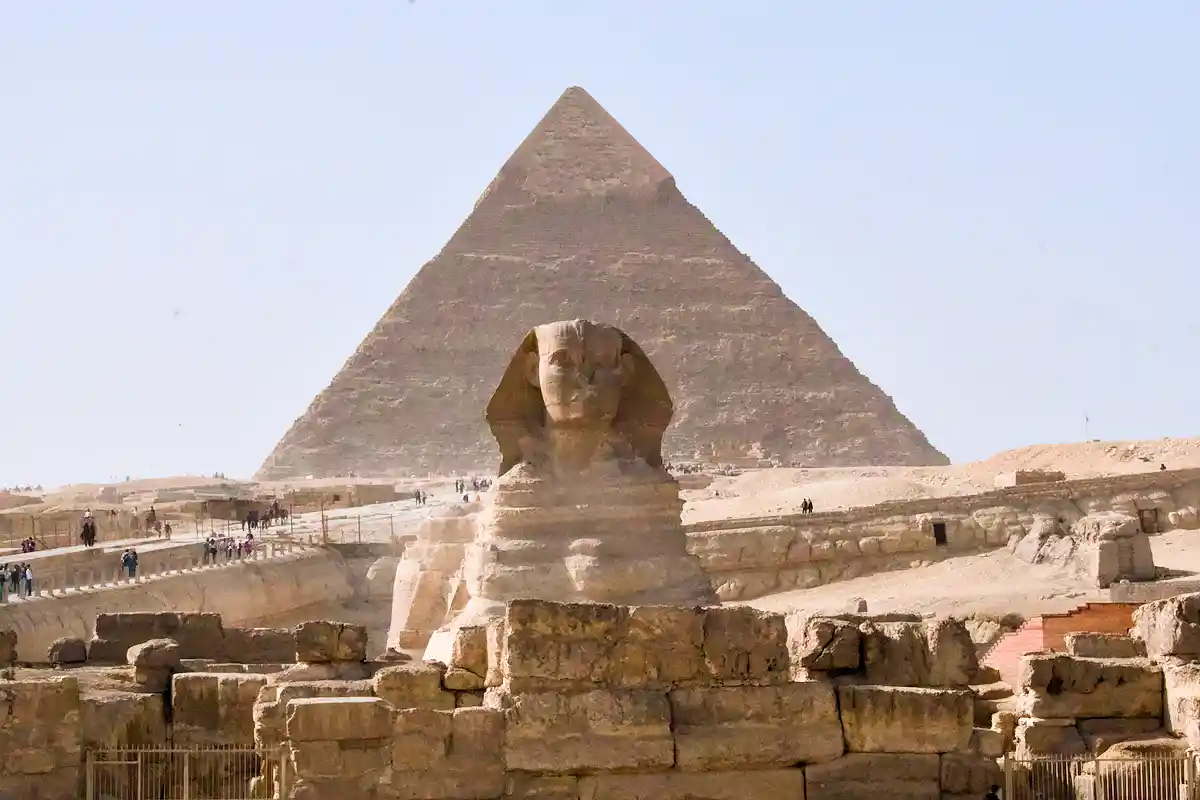
Finally, we must of course visit the sphinx that stands guard in front of the pyramids. In the past, a branch of the Nile flowed here at high tide, and this is where the funeral procession’s boats moored to carry the deceased along a ceremonial route to the Pyramid after embalming and mummification.
During embalming, the deceased’s intestines, stomach, liver and lungs were removed and placed in separate vessels so that they could be used in the next life. The brain was also removed with a special tool, but strangely enough, it was not preserved. The heart was left in the body because it was believed to perform the functions of the brain.
We still don’t want to miss the old Egyptian museum at Tahrir Square, even though it’s now a bit of a hollow shell since many of the artefacts have been moved to the GEM. On the other hand, it’s not very crowded here.
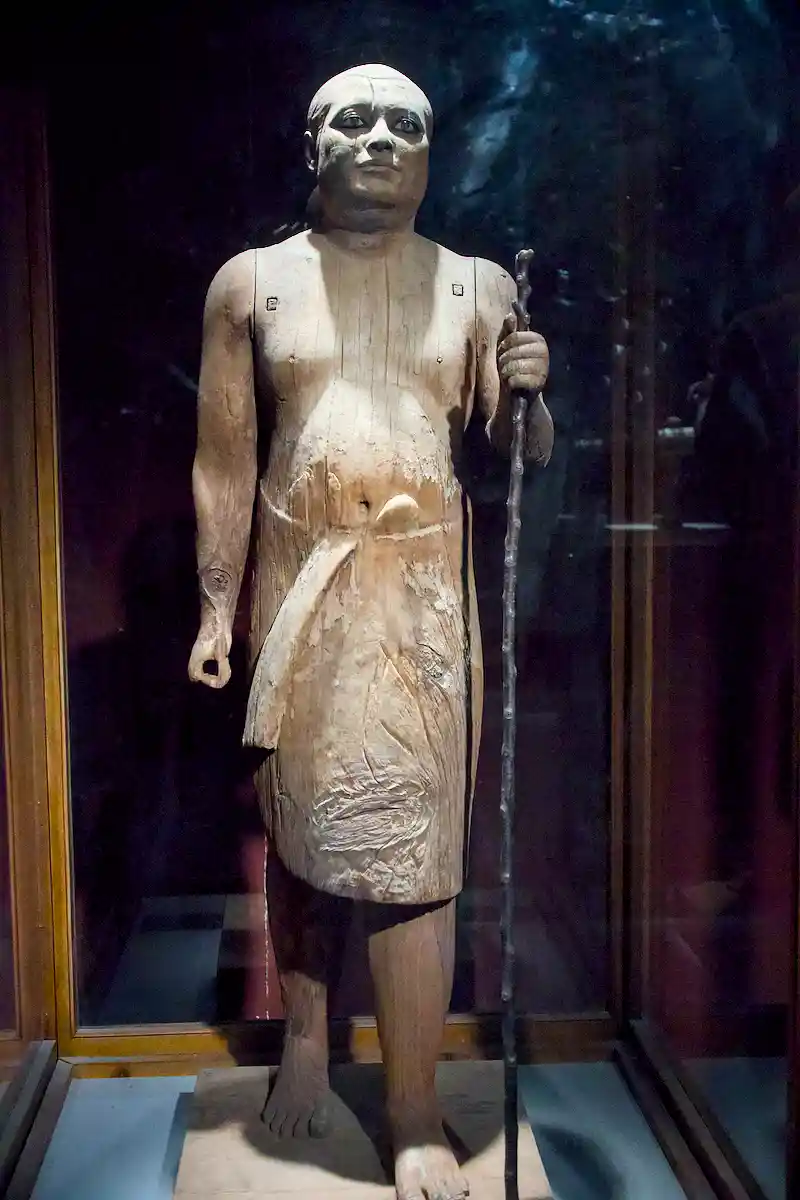
But there are definitely still many exciting things left to see. For example, a famous wooden sculpture of the satire and slightly pot-bellied official Ka-Aper. It is realistic in a way that the pharaoh sculptures never are. He has glass eyes and looks eerily lifelike.
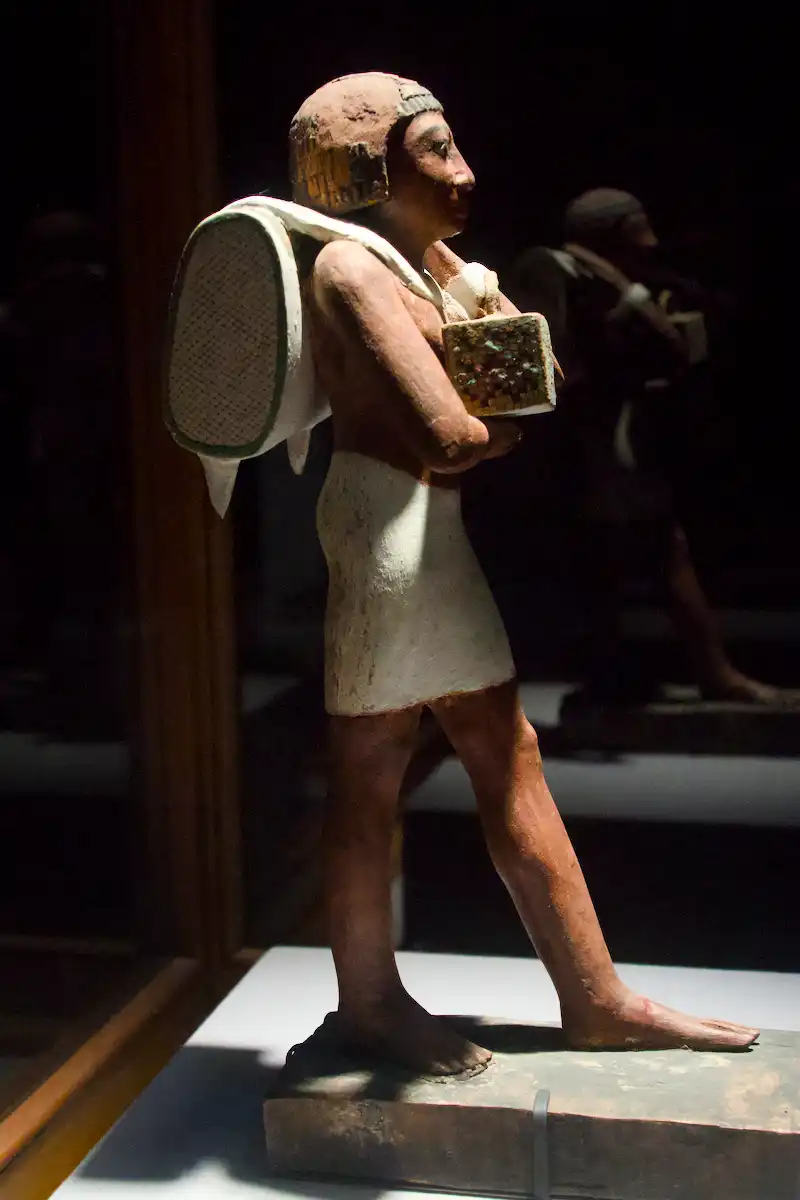
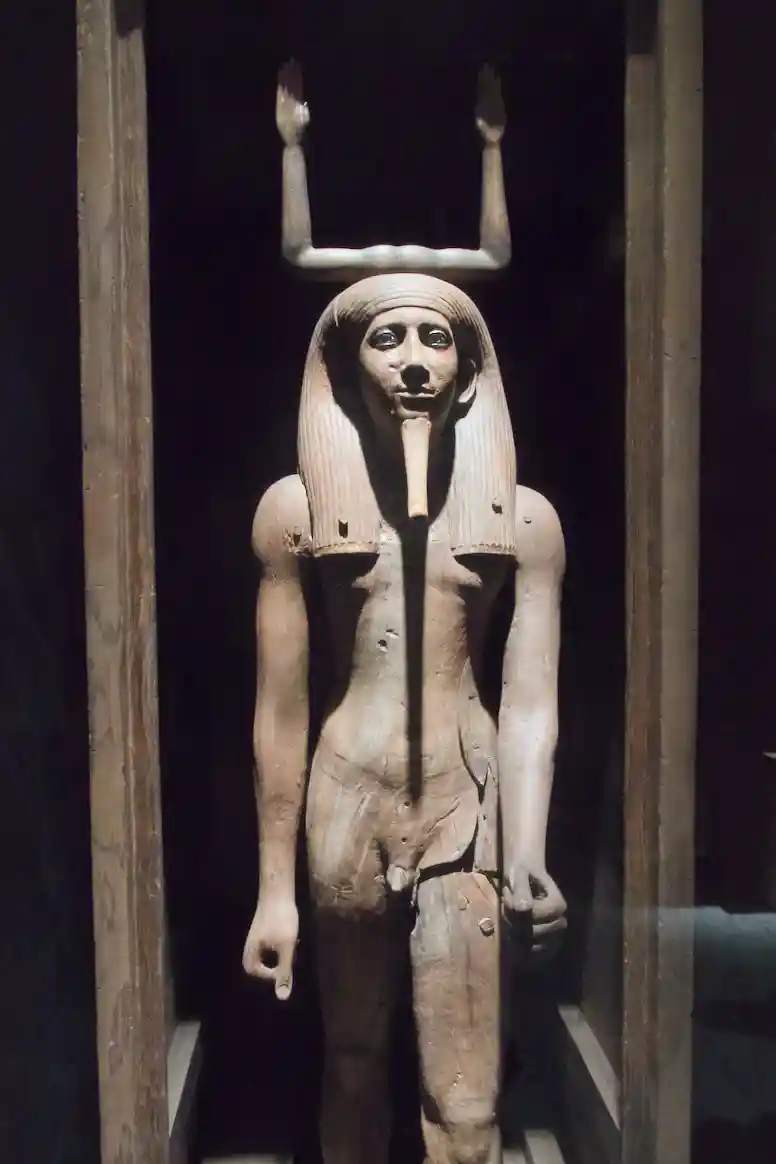
Nearby, we see what is claimed to be the first depiction of a backpack (!). Furthermore, something as unusual as a depiction of a naked male figure with extra arms on his head, with his palms stretched out. A ‘Ka’, which was a body part that was mostly like a spirit. It protected the body.
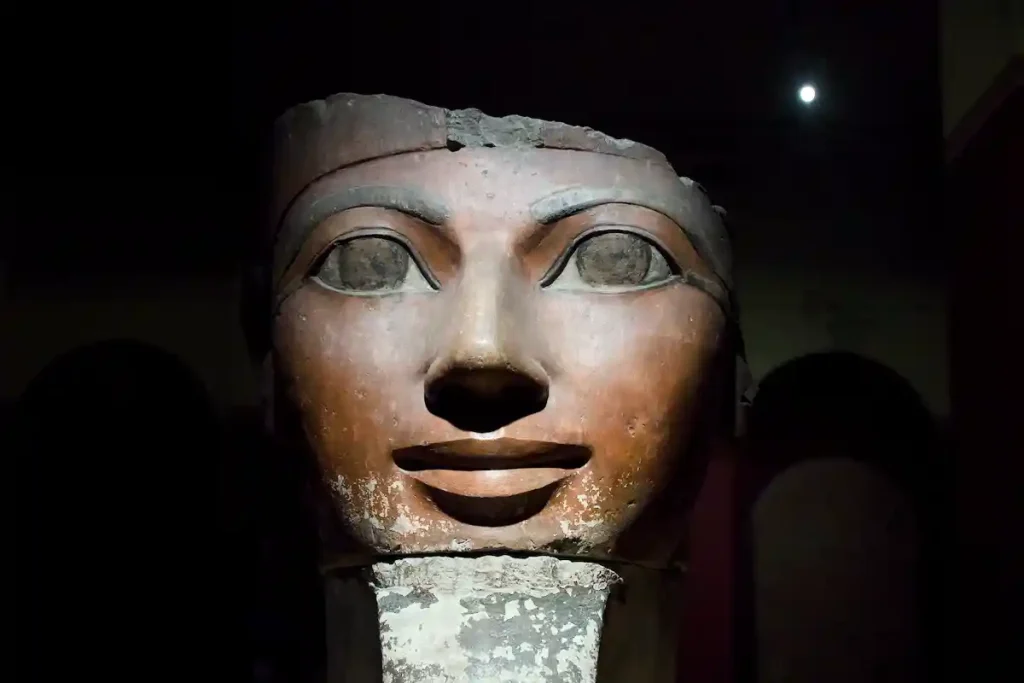
And then there is perhaps the museum’s most exciting exhibit. A fragment of a statue depicting Queen Hatshepsut, known to be the only woman to have held the title of pharaoh. Which was unacceptable to some, even though she is said to have been a good and successful ruler, her successor, her own son, did everything he could to erase all traces of her. That is why we only see this part of a face that nevertheless radiates such a mysterious smile. The Mona Lisa of antiquity?