We belong to the minority that has never been to Thailand. The major tourist routes have never attracted us. But now Bangkok became an initial extended stop-over on our journey through Korea, Vietnam and Cambodia. For many Westerners, Bangkok is the hub to which they travel and then continue to one of the seaside resorts on the coast. Therefore, contact with this giant city is often a bit superficial and temporary.
We knew very little about Bangkok, as we had never been inspired to learn about Thailand holidays, but we had an idea that the Khaosan district was a centre with many restaurants and bars. So we compromised and chose a hotel midway between Khaosan and the UNESCO-labelled destination Royal Palace.
We can also make one thing clear right now: Khaosan is best kept away from. Hordes of westerners in flip-flops roam around there with wandering eyes but without purpose. Everyone is constantly being accosted by the restaurant throwers and many places play music at a noise level that makes the whole street rattle. It’s expensive, crowded and flat, and the air reeks of hashish smoke, especially in the evening when the night market opens.
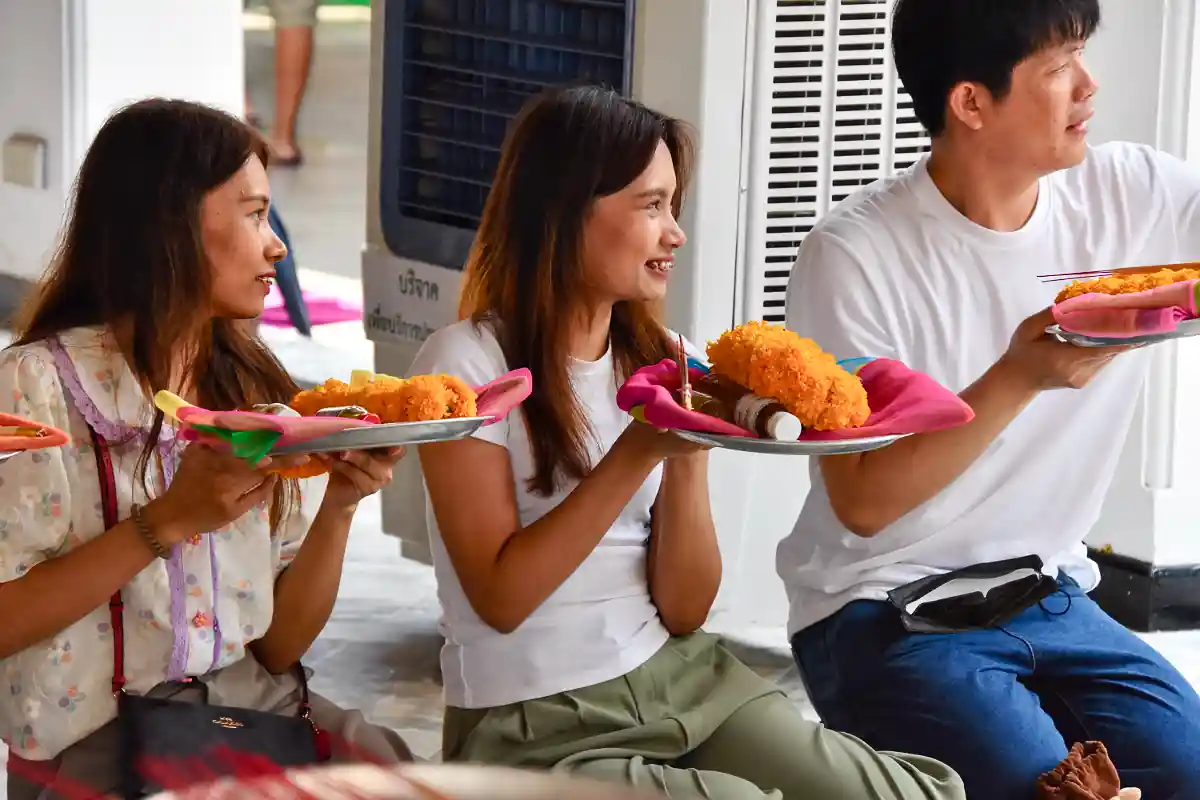
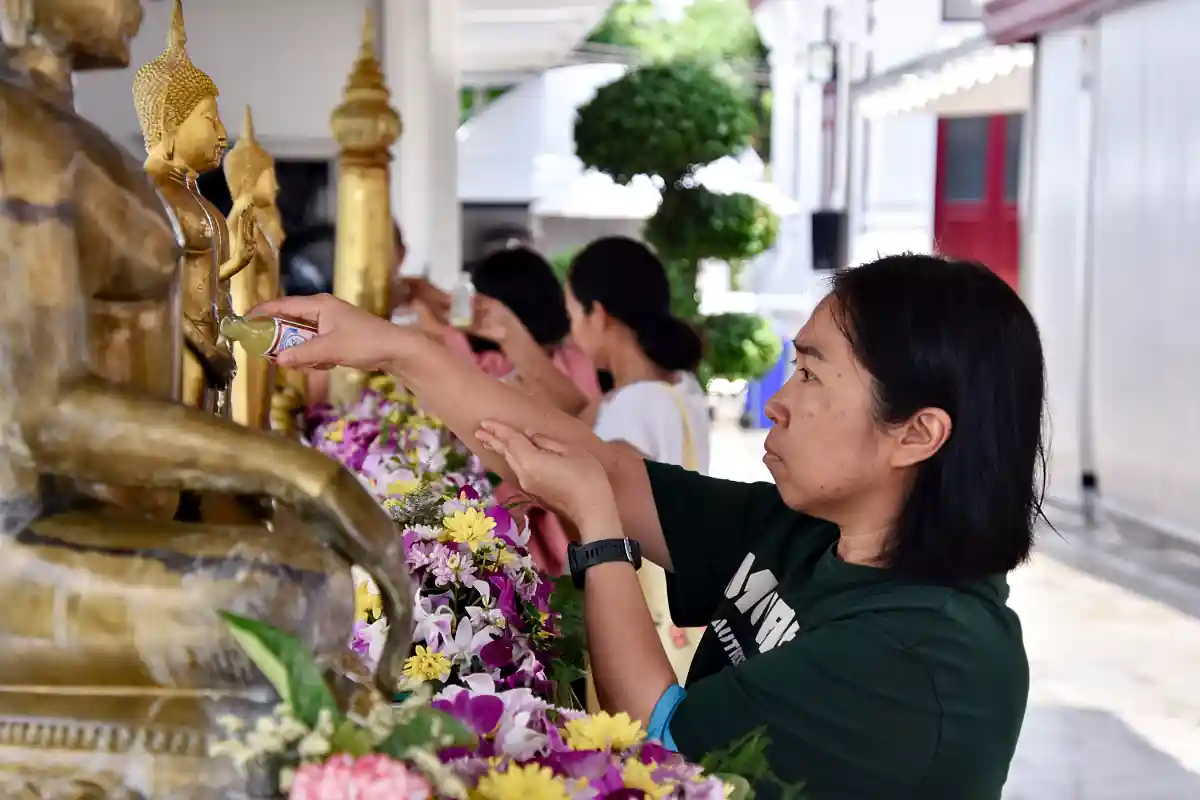
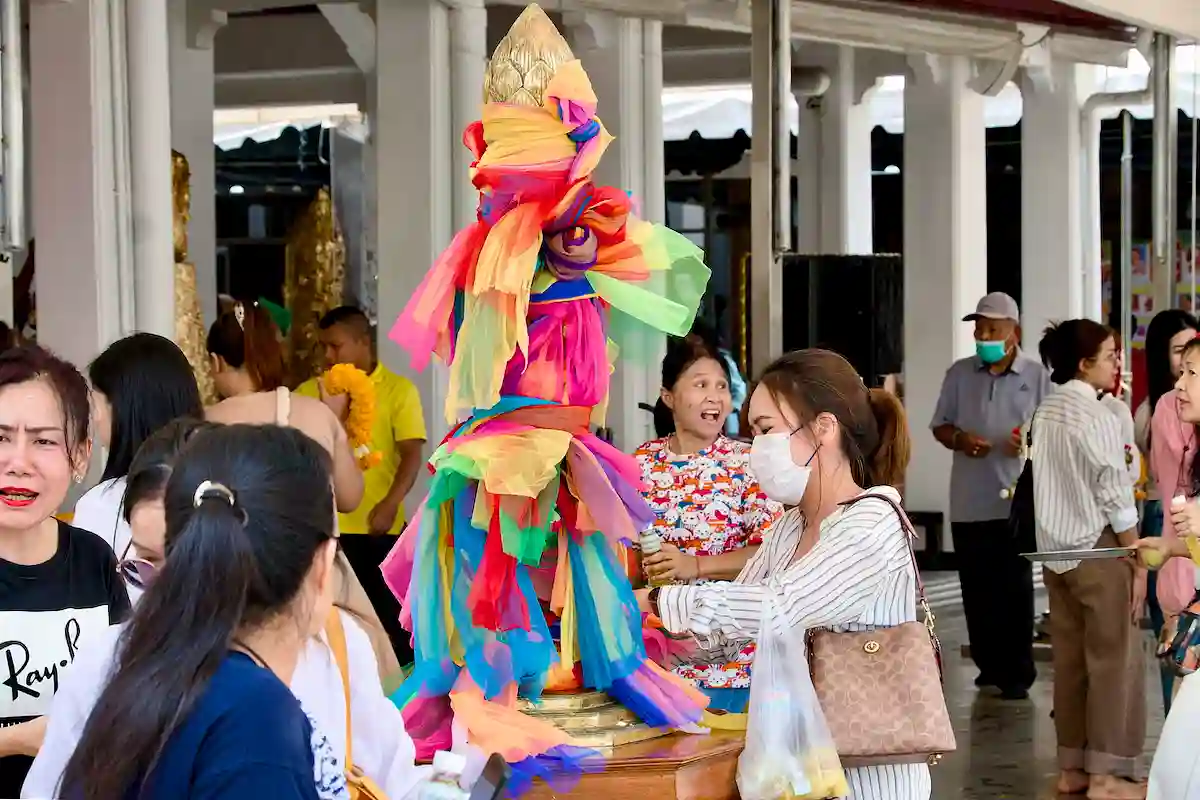
Instead we go the other way, southwards past Sanam Luang park. As we start to see the temple roofs of the Royal Palace, we have another fairly small temple on our left, and it’s full of people. It’s a rather famous temple called ‘City Pillar Shrine’ and the people here are praying and carrying offerings, anointing Buddha images with oil and wrapping coloured cloth around statues of lotus flowers. It’s like a folk festival.
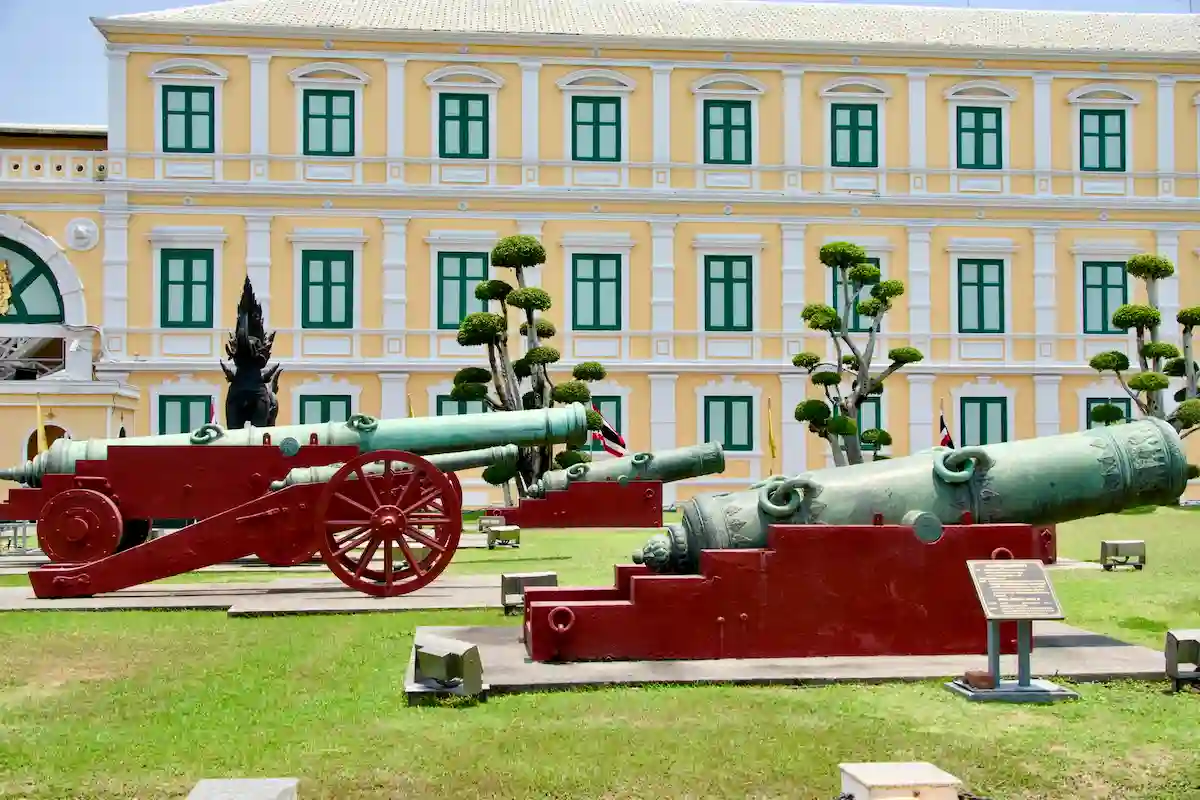
On a lawn next to it, big guns are lined up, this is the ‘Old Big Gun Museum’. no we’re actually right by the Royal Palace, but unfortunately at the back. So we walk around it, past long white walls. Tuk-tuk drivers are buzzing around us, asking if we shouldn’t go with them instead. When we politely decline, they ask us where we’re going. When we tell them, they look at us with grim faces. ‘You can’t go like that,’ they say, commenting on our sandals. ‘They won’t let you in!’ And some say ‘the palace is not open today!’
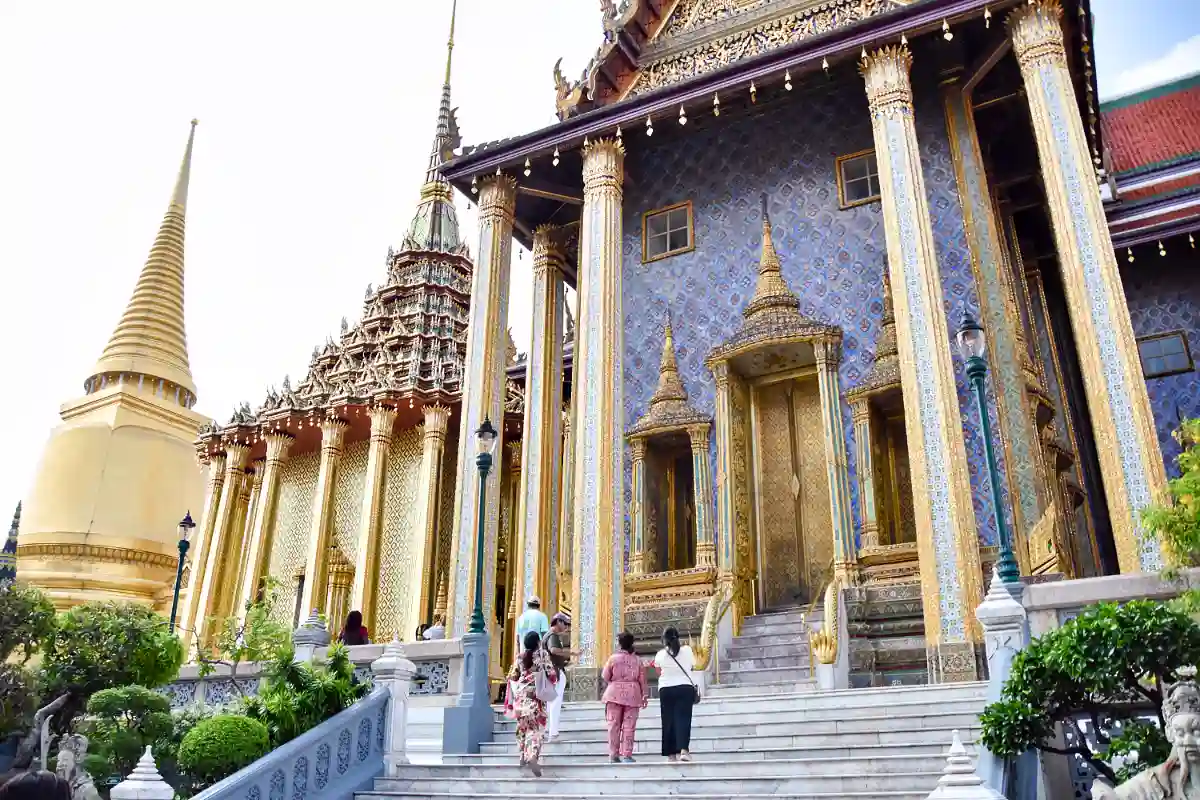
But we have found out that this is just bs. talk. For some unclear reason, some people, often older men, try to mislead the tourists here. We eventually find the entrance to the palace and get in well before they close. In sandals and half-length trousers. But the shoulders must be covered, on both of us.
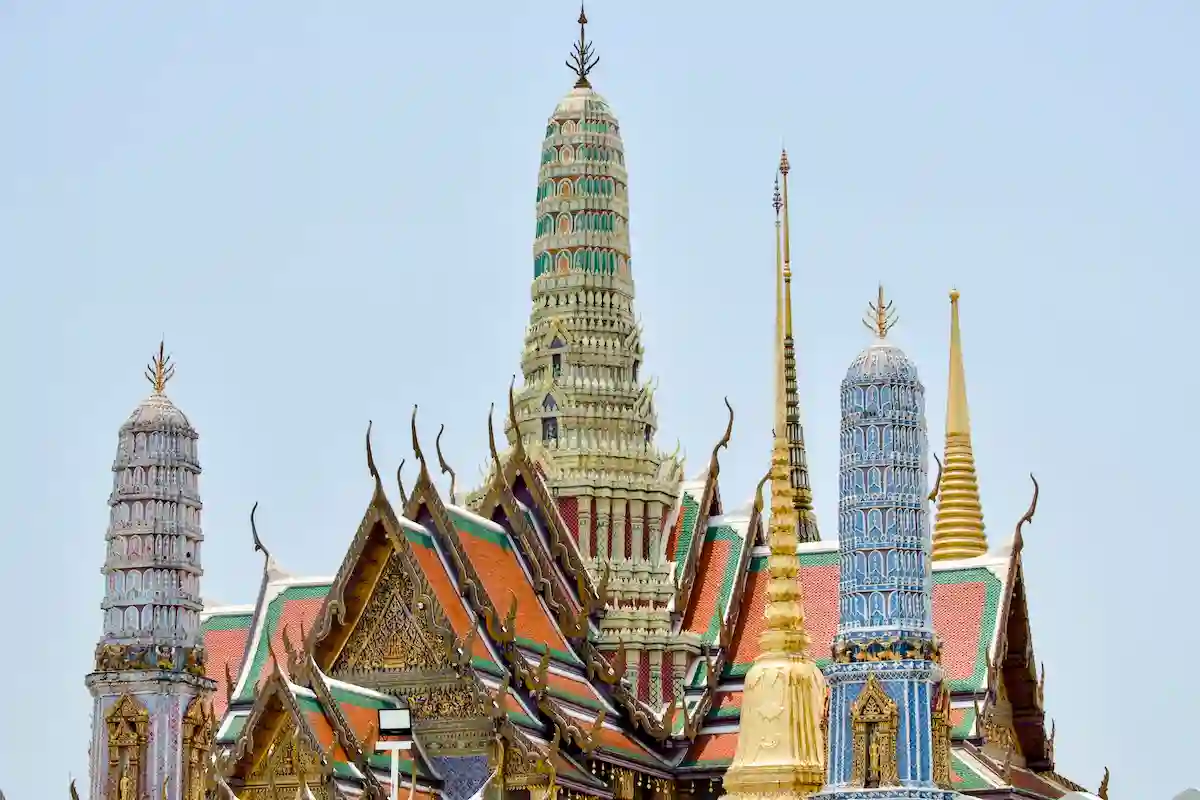
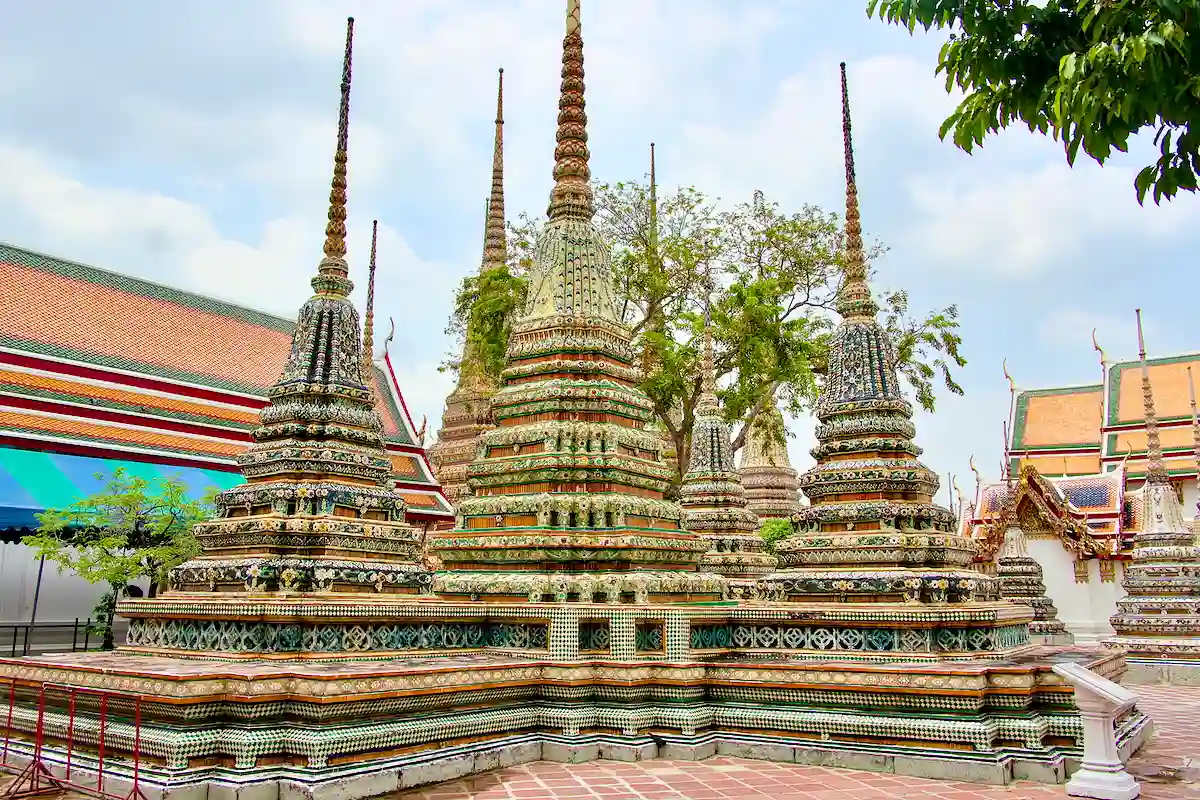
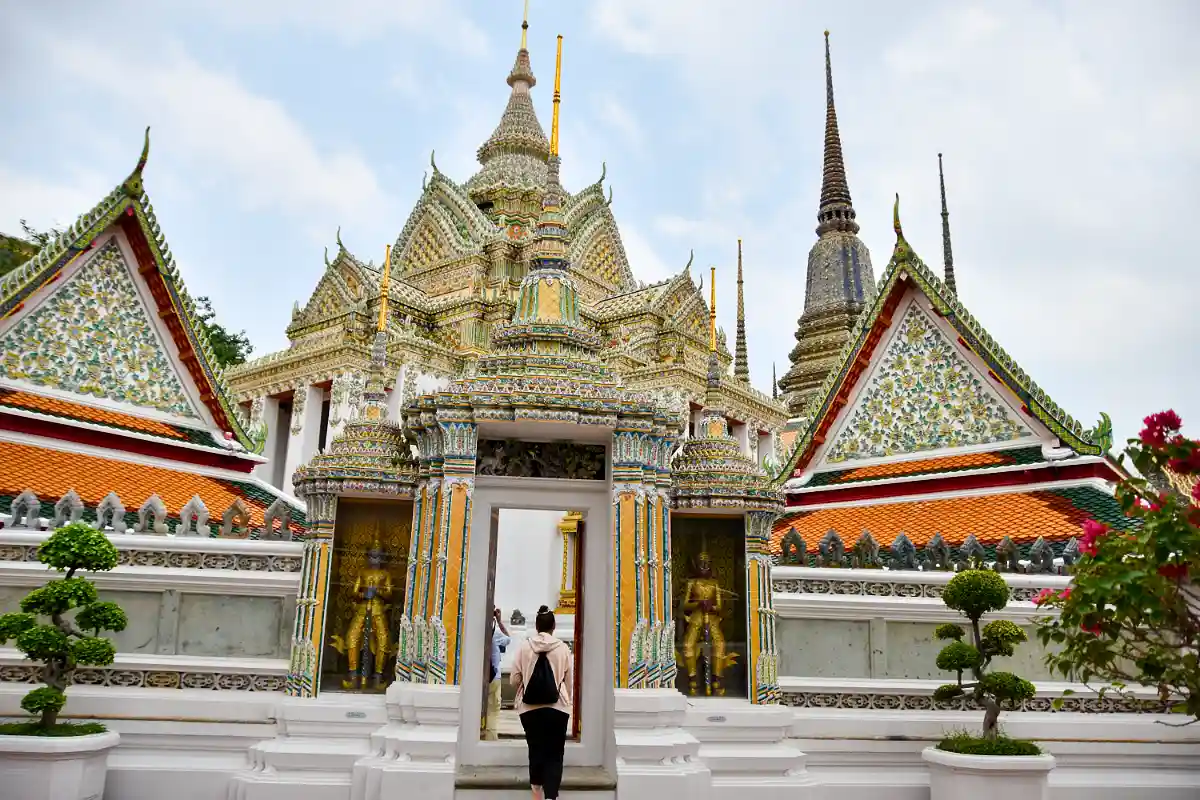
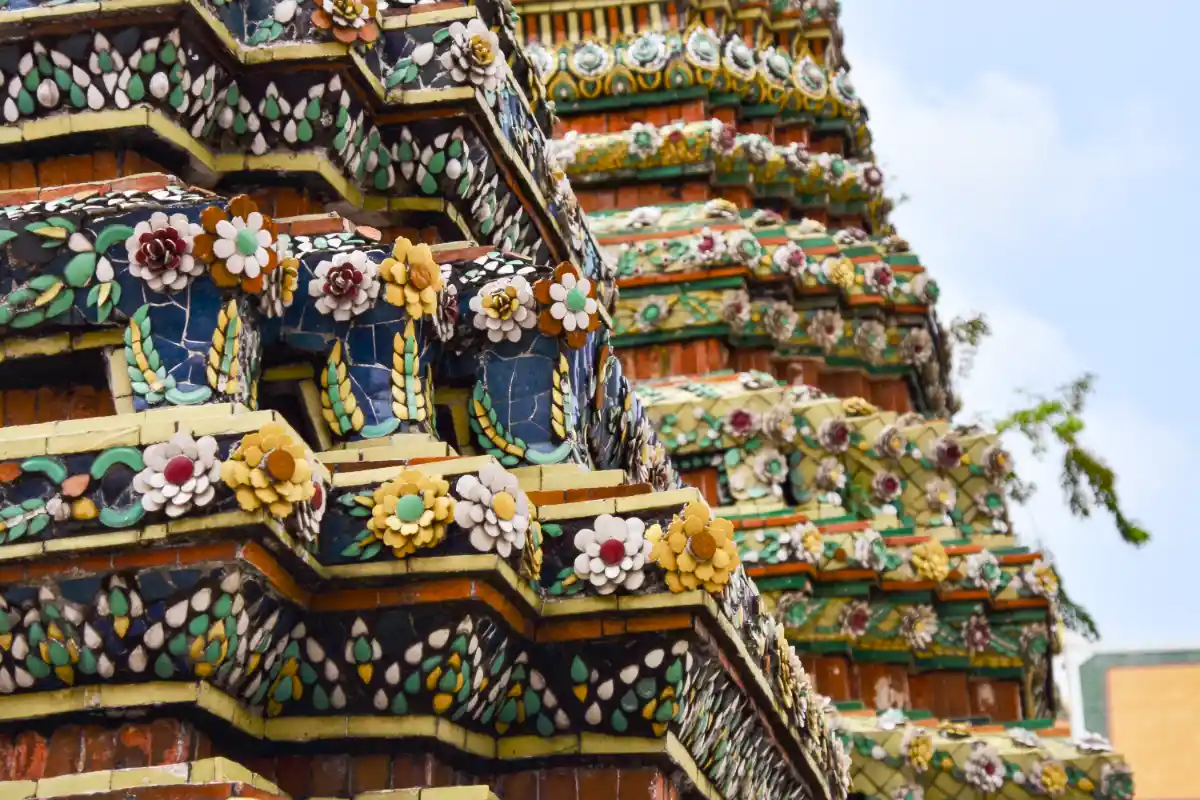
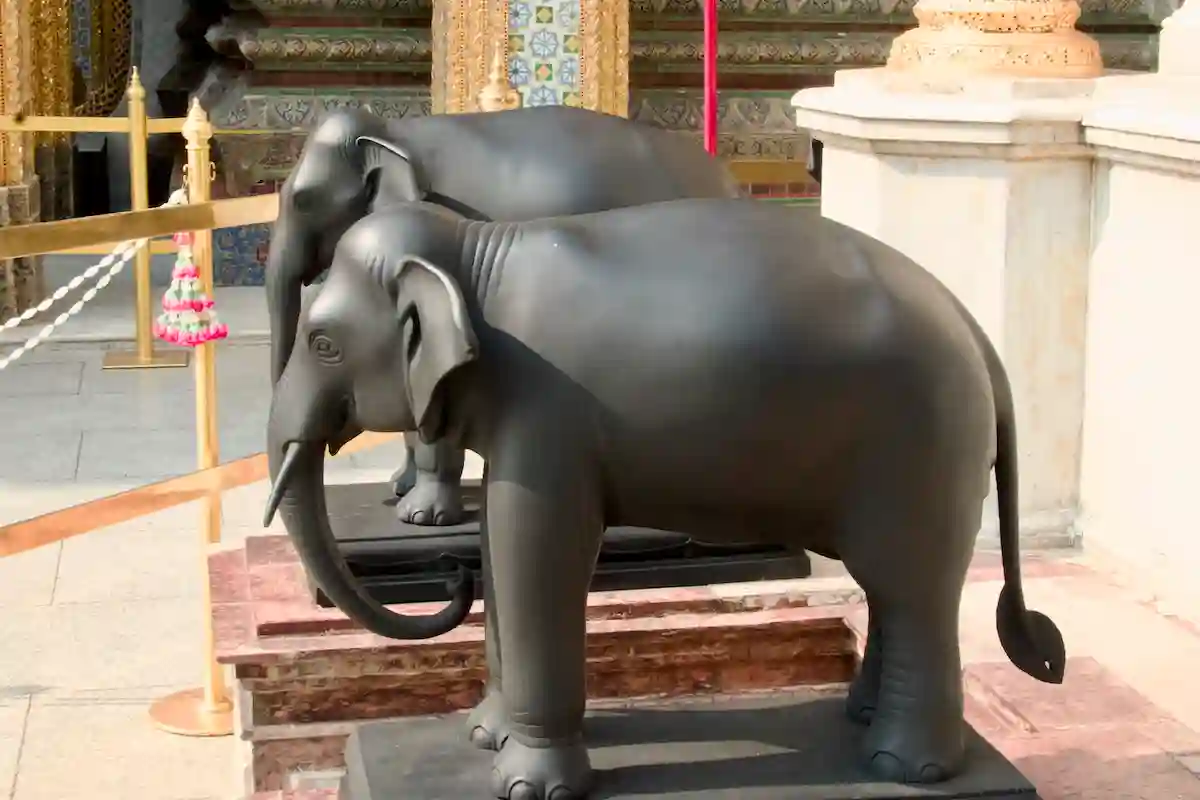
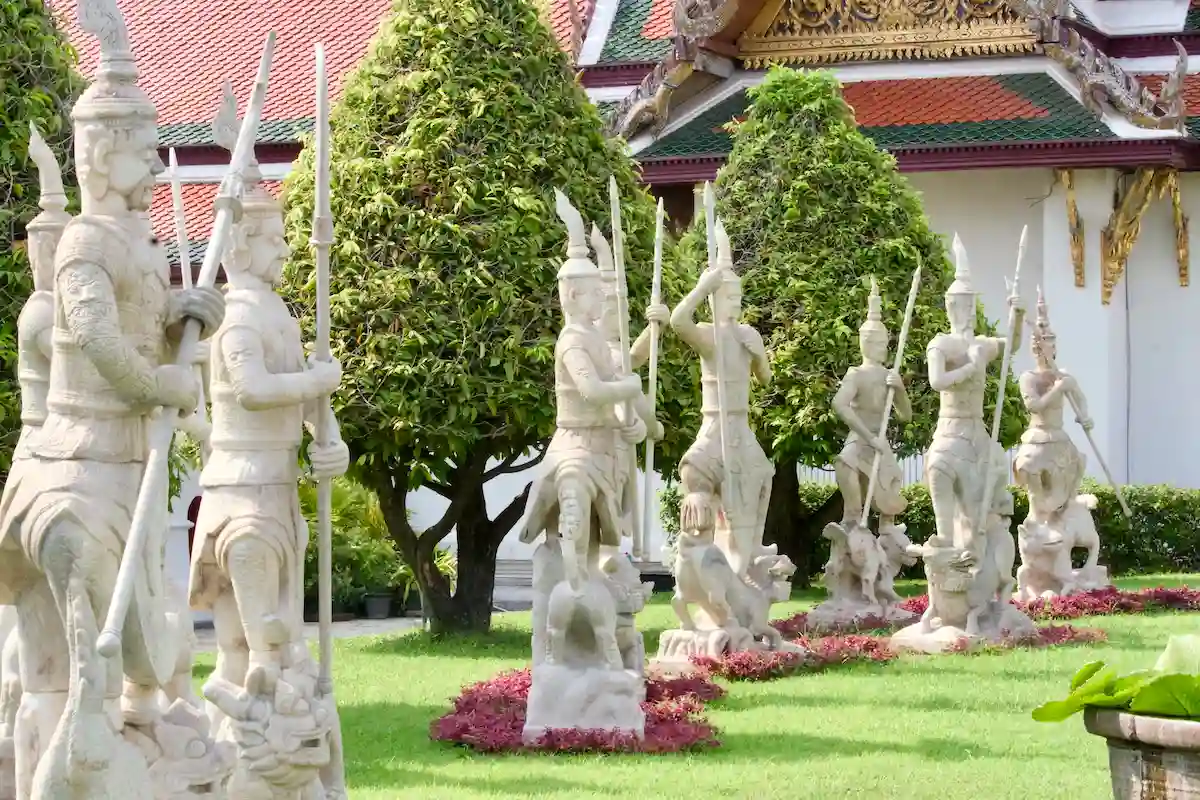
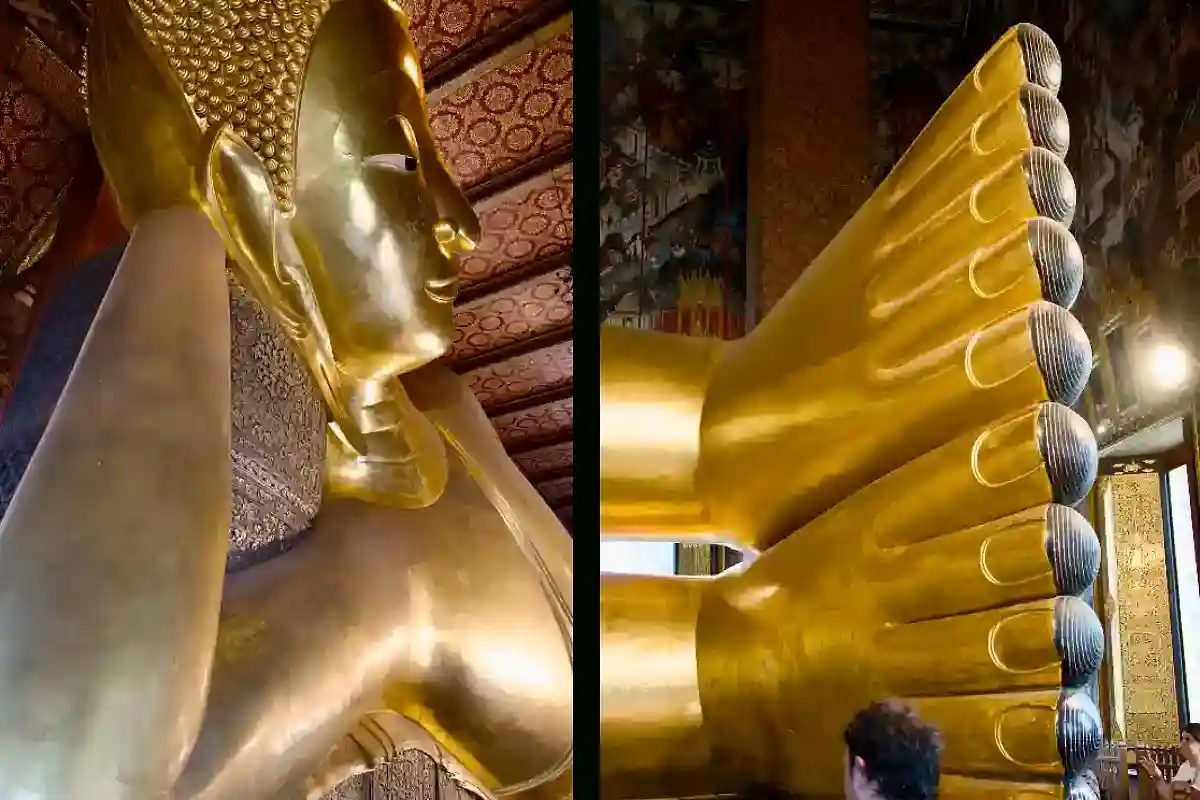
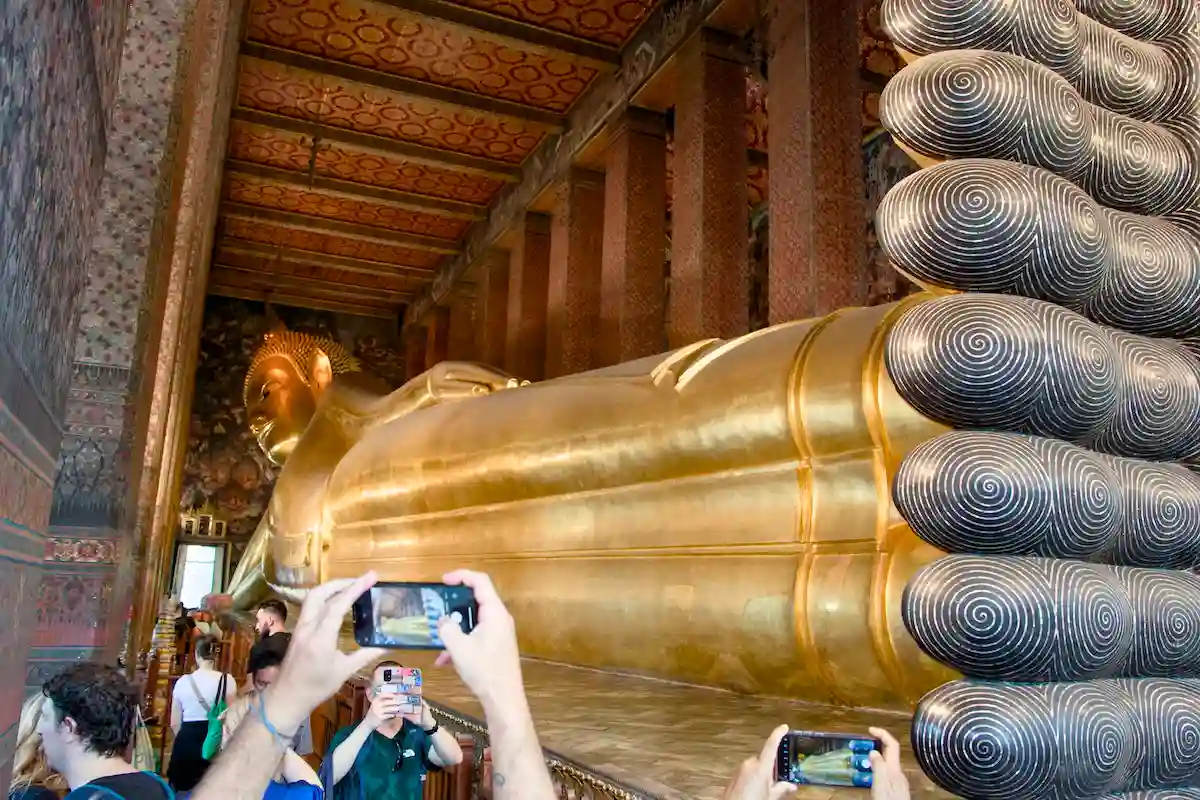
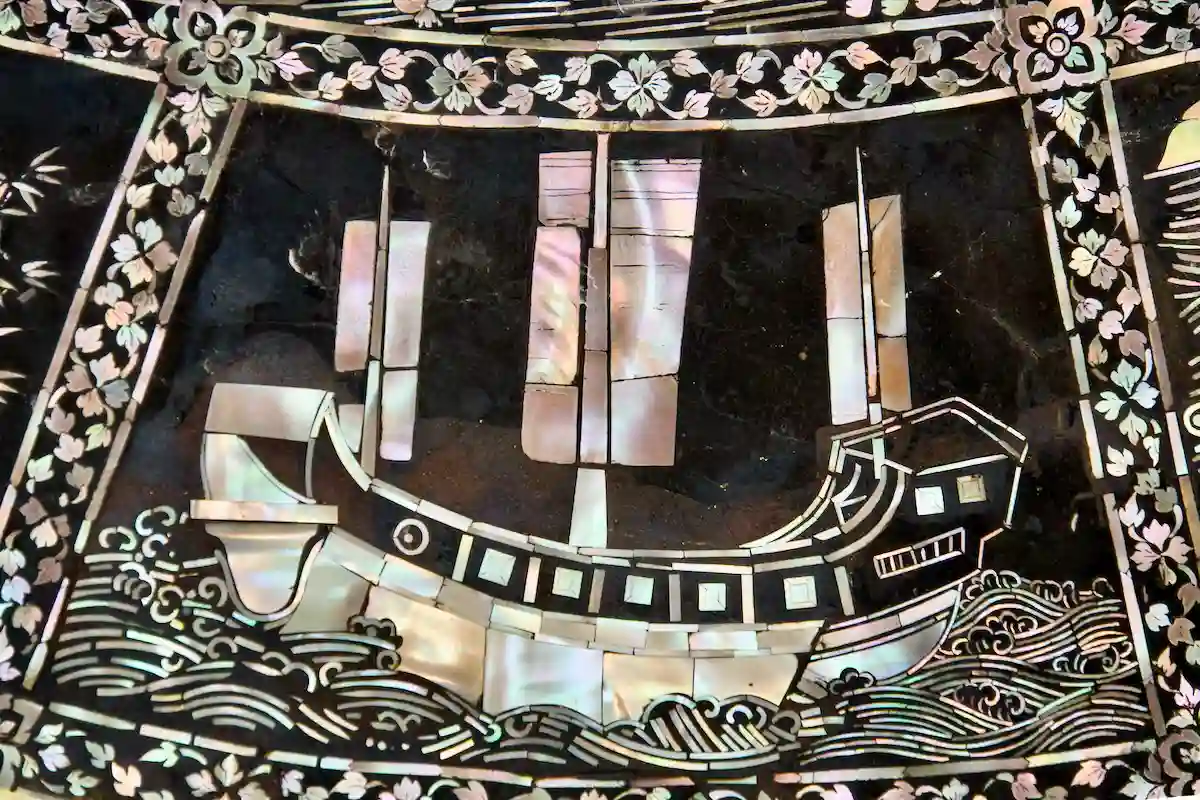
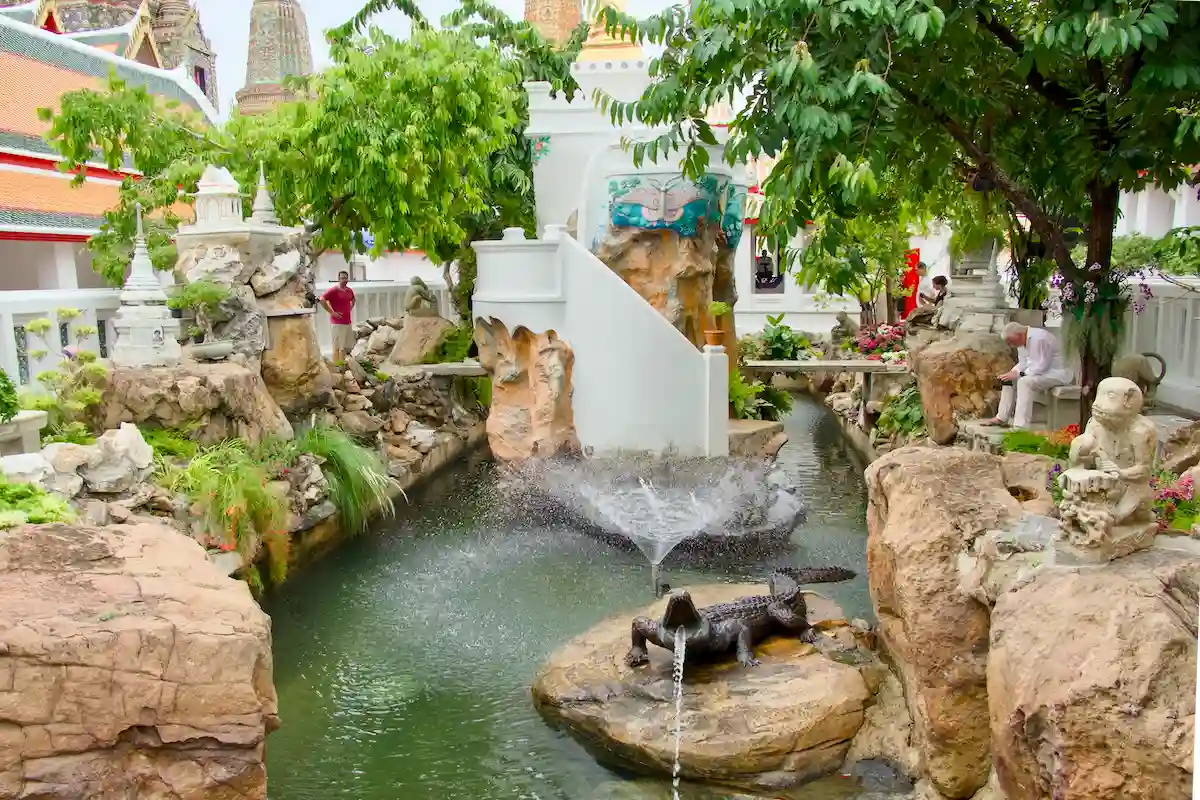
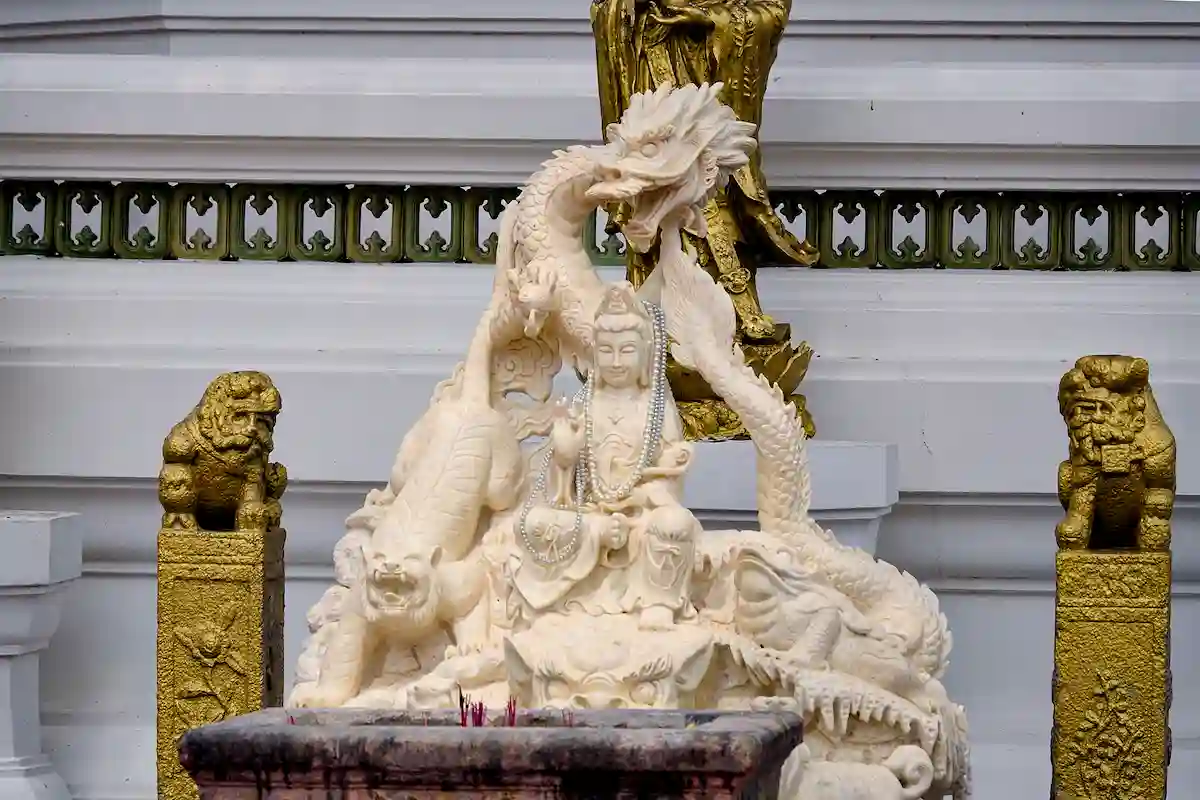
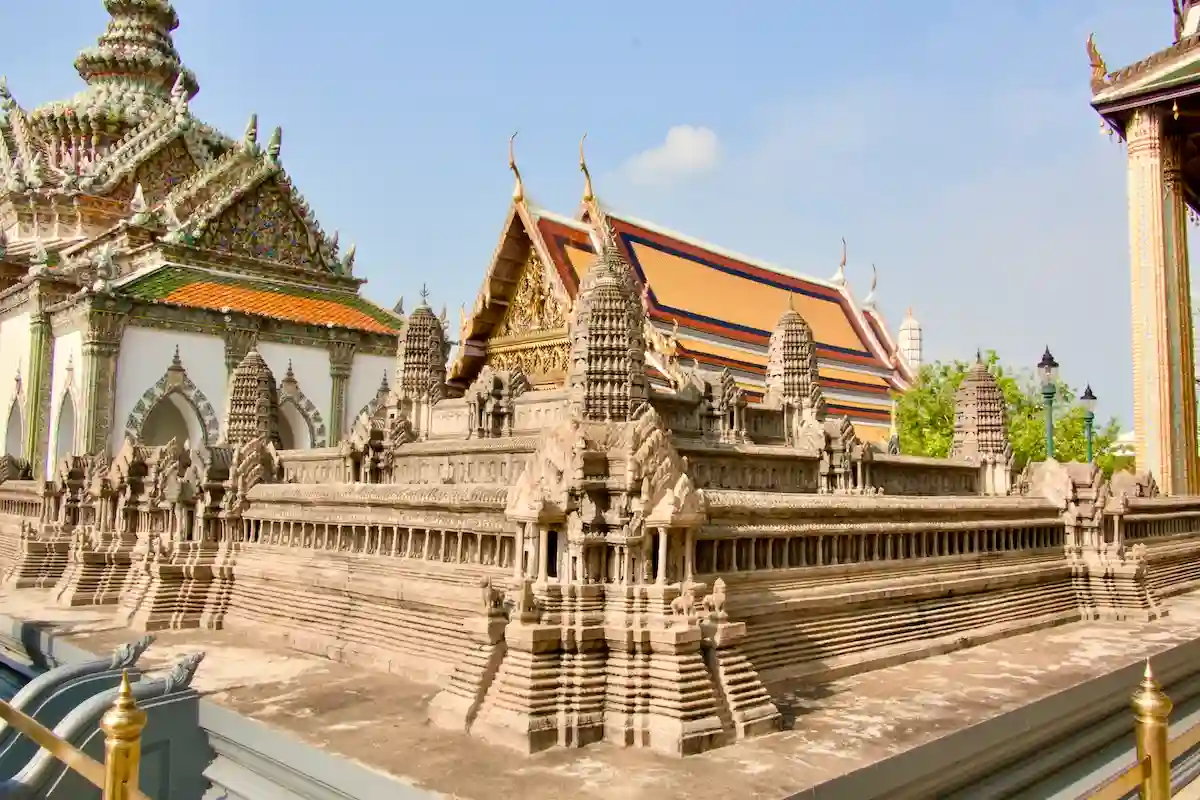
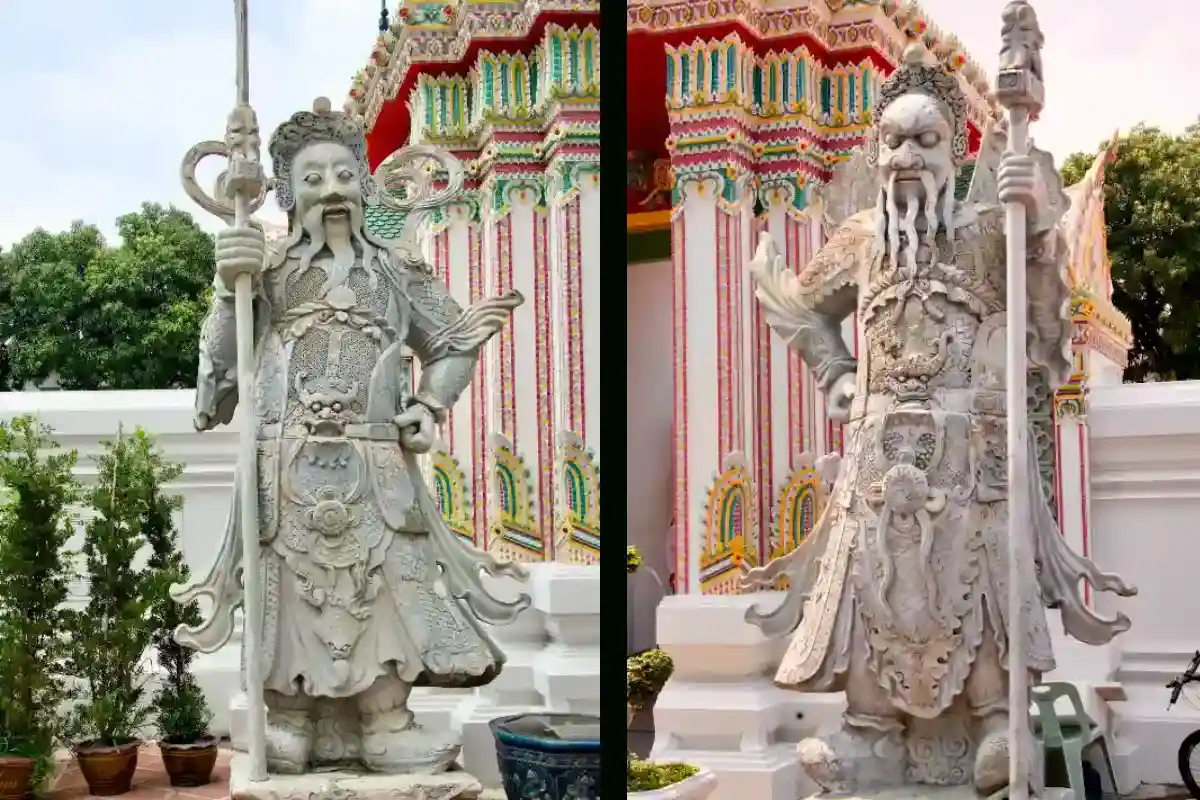
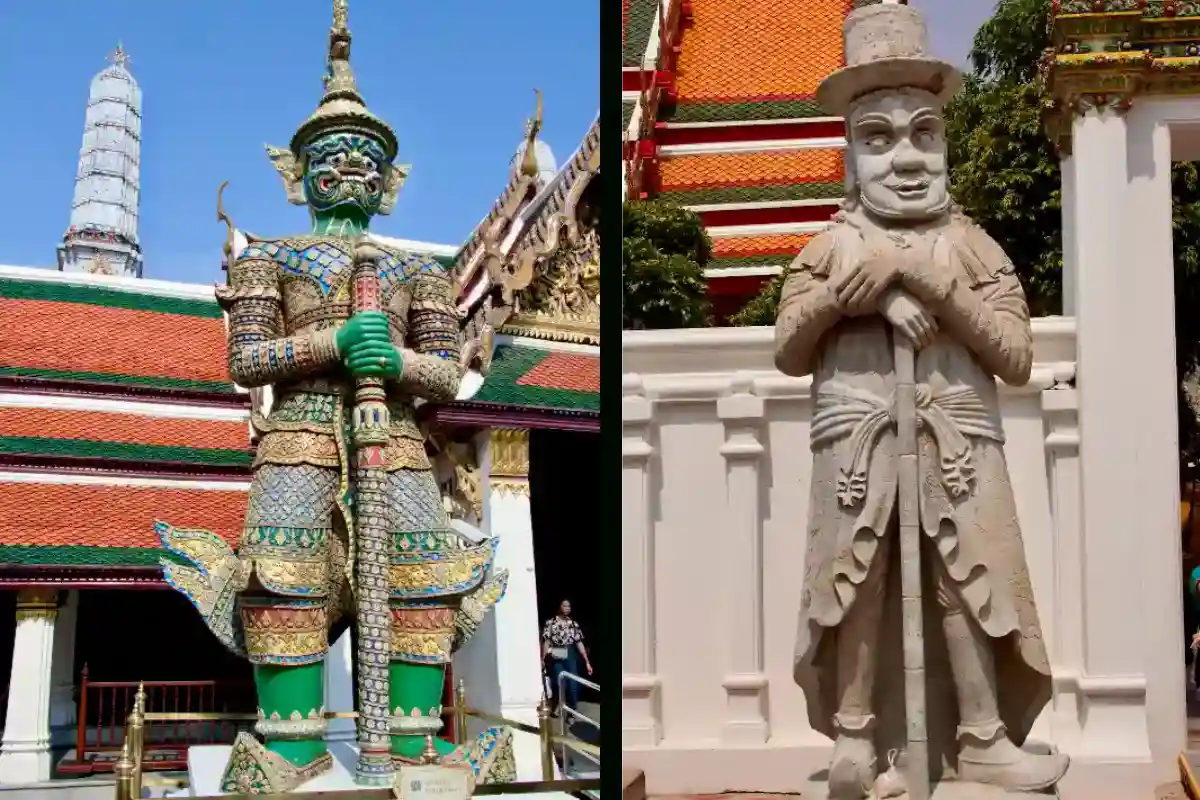
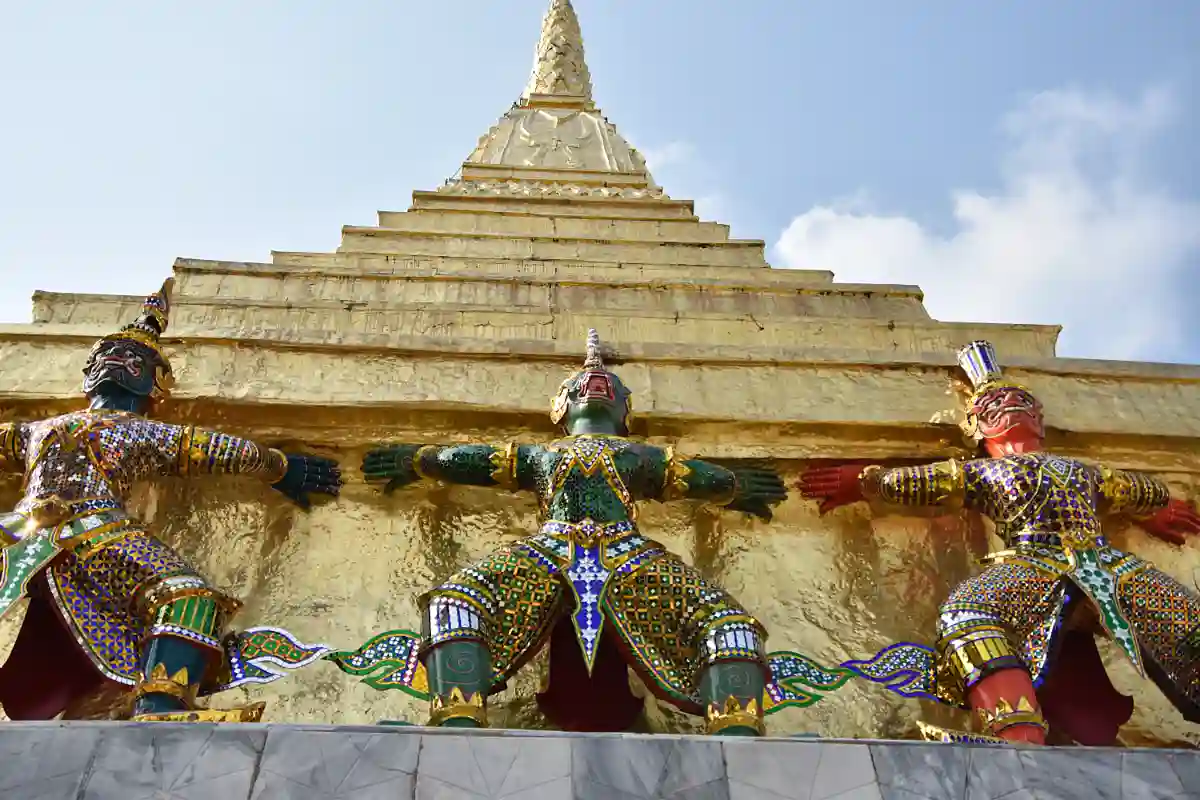
The palace was first built by king Rama I in the 18th century, but was gradually rebuilt and expanded by later kings. So there are now many palaces, temple and courtyards, and the one called Vat Pho is littered with ornate and rather dramatic stupas (called “chedi” here) and statues. Scrawny guards, athletic hermits, elephants, pigs, crocodiles and lions. Even a moustachioed man in an English uniform. A giant reclining Buddha and a scale model of the Angkor Wat temple area in Cambodia, as it once looked are also found here. Lots of gold and mosaics. Stone crocodiles and a live squirrel.
In the next chapter we’ll visit a floating market and another market that turns into a railway when needed.